A record of documented arms, meaning and origin, researched for the Pasley family lines. Documented in 3 countries.
Reg. 6031 · French, P–S
Meaning of the Pasley family crest colors & symbols
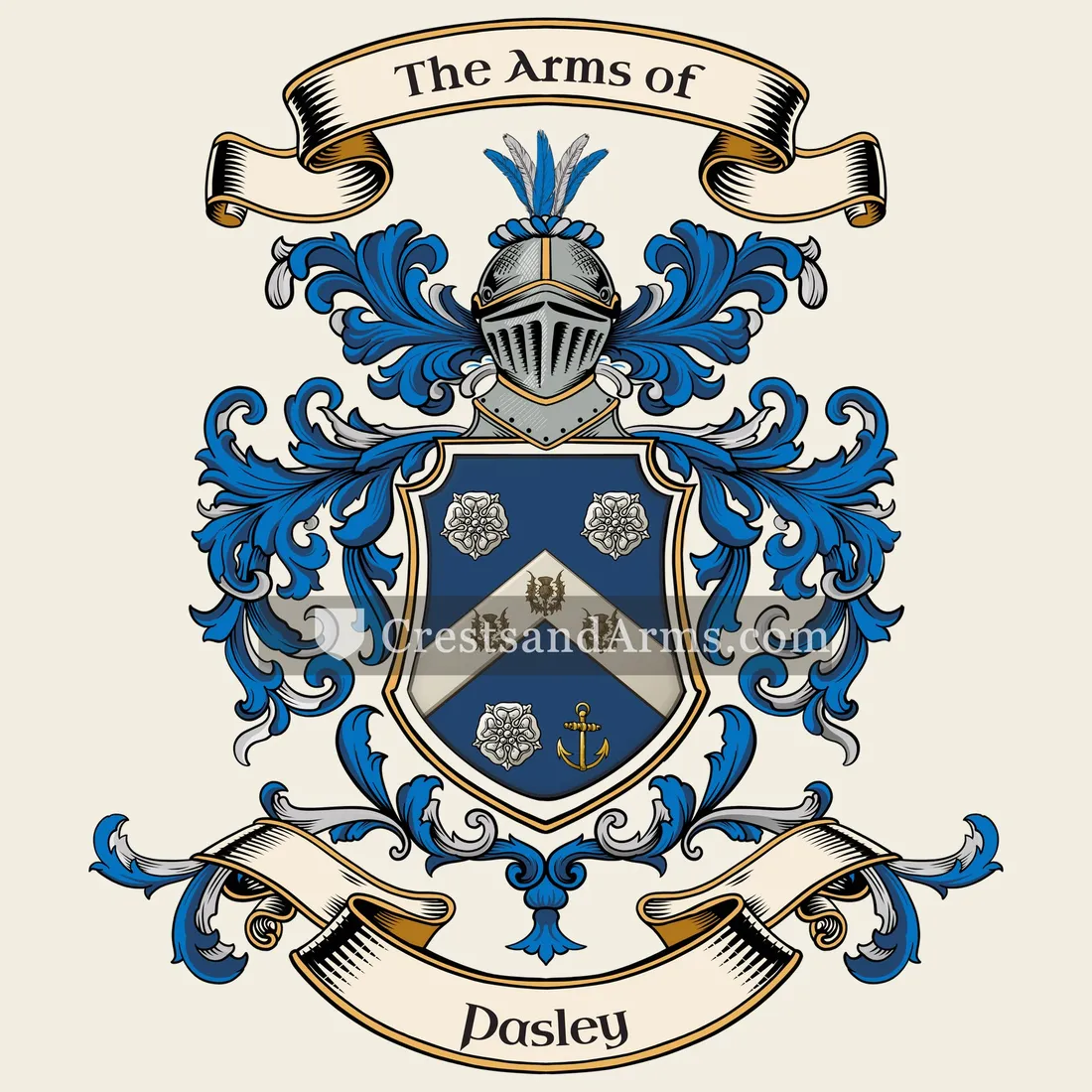
Symbols on this shield
branchPeace, and new growth
towerGrandeur and solidity, and a stronghold defended
mulletThe third son, and a divine quality from above
Colours
Gold (Or)Means: Generosity
Black (Sable)Means: Constancy
Historical info
Source
J. B. Rietstap, Armorial Général, Gouda: G. B. van Goor Zonen, 1884–87
Blazon (the actual original written record)
“d'or, ch. des mots: SUB CUJUS PEDE FONS VIVUS EMANAT, en lettres de sa. [Une branche porte aux 2 et 3 une seule tour, surm. de l'étoile, et pour devise: SUB EJUS PEDE, etc.]”
Francec. 1725
Digital archive packCoat of arms PNG, gold border print PDF, vector SVG and the certificate of authenticity. Sent to your email in minutes.
Map of France showing where the Pasley arms are recorded
The Pasley arms were recorded in France, c. 1725.
Arms such as these were typically recorded in Bretagne.
More families held coats of arms in Bretagne than anywhere else in France. The land was divided into many small estates rather than a few large ones, so far more households counted as gentry, and each needed a shield of its own to be told apart.
This is where the arms were entered in the register. Families often moved to other parts of the country, so the same name can turn up in more than one region.
The body that granted and recorded arms in France in this period.
Louis XV of France
Sovereign of the period
Louis XV of France
1715–1774
Reigning in France when the Pasley arms are first recorded.
How Arms Worked in France
In France, a coat of arms was a mark of honor that passed down through the male line to all legitimate descendants. Families often used the same shield without changes to show their shared heritage. If a branch wanted to stand out, they could add a small mark to their shield to show their specific place in the family tree.
Granting authority
The Juge d'armes de France acted as the official authority that regulated and verified coats of arms across the country.
How they got arms
Families typically inherited their arms from ancestors, though they could also receive them through royal grants or by proving their noble status.
Where arms were recorded
Coats of arms were officially recorded in the Armorial Général de France, which began its main collection in the year 1696.
The family's standing
Recorded among the armigerous families of France.
Origin & History of the Pasley Family in France
The history of the Pasley name in France is deeply rooted in the cultural landscape of the Brittany region during the early eighteenth century. By 1725, records confirm that members of the family were established within this coastal province, a time when the area was known for its distinct linguistic traditions and strong maritime connections. The name likely evolved as a localized variation of regional surnames, reflecting the way families were identified in small rural parishes and growing port towns. Life for these early ancestors involved navigating the complex social structures of the French kingdom, where families often stayed within specific geographic pockets to maintain land and trade ties. As the family settled into the Breton way of life, they became part of a long tradition of regional identity that defined the social fabric of northwestern France before the major political shifts of the later century.
Meaning of the Pasley family crest colors & symbols
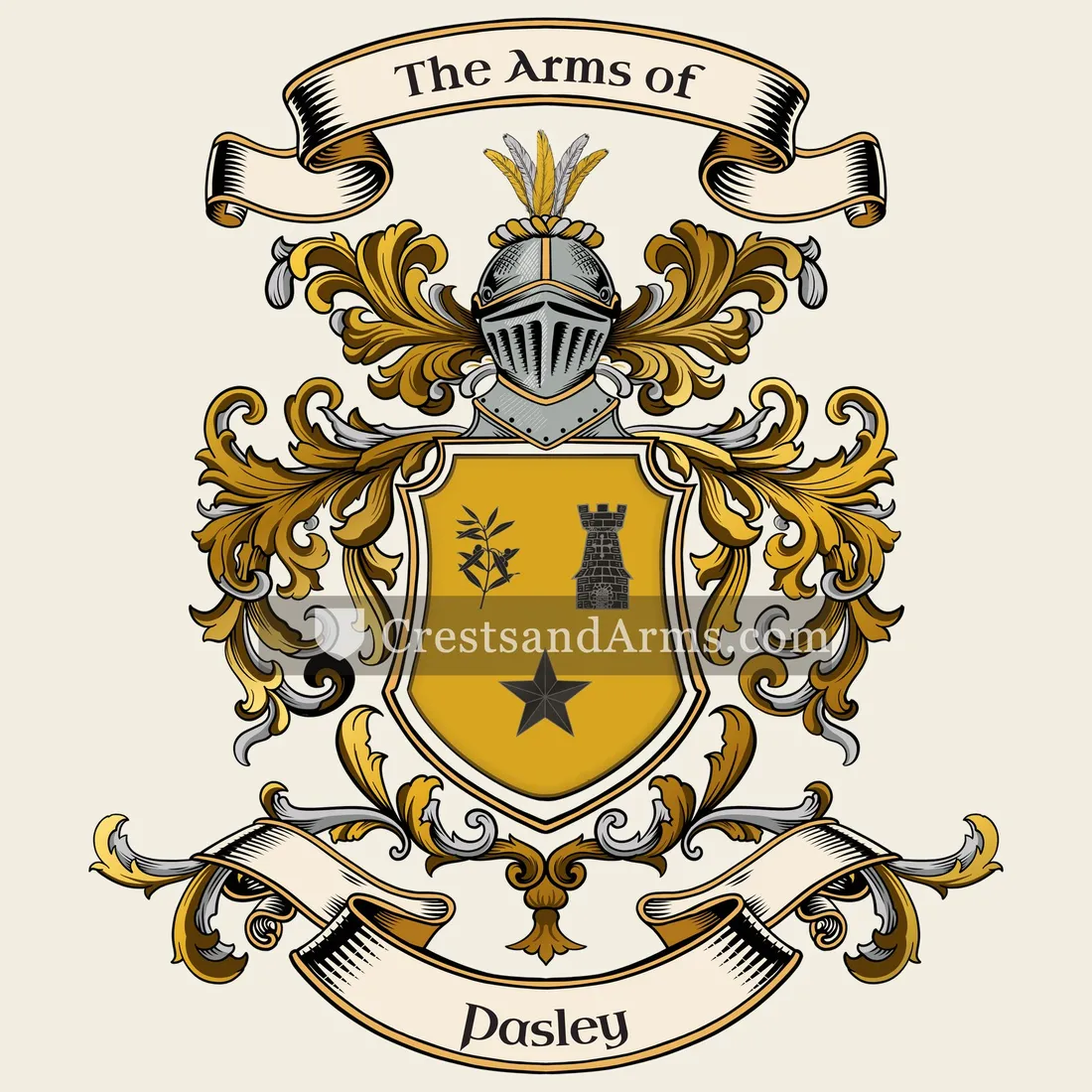
Symbols on this shield
lionCourage, strength and royalty
Colours
Red (Gules)Means: Military strength
Silver (Argent)Means: Peace and sincerity
Historical info
Source
Sir Bernard Burke, The General Armory of England, Scotland, Ireland and Wales, London: Harrison & Sons, 1884
Blazon (the actual original written record)
“Gu. a lion ramp. tail double queued ar”
KentKent, c. 1620
Digital archive packCoat of arms PNG, gold border print PDF, vector SVG and the certificate of authenticity. Sent to your email in minutes.
Map of England showing where the Pasley arms are recorded
The Pasley arms were recorded in Kent, c. 1620.
Kent sits between London and the short crossing to Europe, and the trade passing through made it wealthy. Merchant families bought land with that money, and it was landowners who took coats of arms.
This is where the arms were entered in the register. Families often moved to other parts of the country, so the same name can turn up in more than one region.
The body that granted and recorded arms in England in this period.
James VI and I
Sovereign of the period
James VI and I
1603–1625
Reigning in France when the Pasley arms are first recorded.
How Arms Worked in England
English heraldry allowed arms to be shared by all legitimate descendants of the original owner. These symbols were treated as personal property that moved through the generations to all children. While the eldest son kept the original design, other family members could use the same shield without needing to change it or register their own unique versions.
Granting authority
The College of Arms in London has regulated the use of coats of arms throughout England and Wales since 1484.
How they got arms
Families typically obtained their coats of arms through a formal grant from the Crown or by proving their ancient right to them.
Where arms were recorded
All official coats of arms are recorded in the registers kept at the College of Arms, which date back to the fifteenth century.
The family's standing
Recorded among the armigerous families of Kent.
Origin & History of the Pasley Family in England
The name Pasley traces its roots to the migration patterns of families moving through southern England during the early seventeenth century. By 1620, records confirm that members of the family were established in the county of Kent. During this period, Kent served as a vital hub for trade and agriculture, placing the family in a region that was experiencing significant social and economic shifts. The name itself likely evolved from older linguistic roots, reflecting the way surnames were often adapted or spelled differently as families moved between villages and parishes. As the family settled into local life, they became part of the fabric of rural English society, participating in the daily commerce and community governance that defined the era. This early presence in Kent suggests that the family was part of the steady movement of people who helped shape the local identity of the region during the transition into the modern age.
Meaning of the Pasley family crest colors & symbols
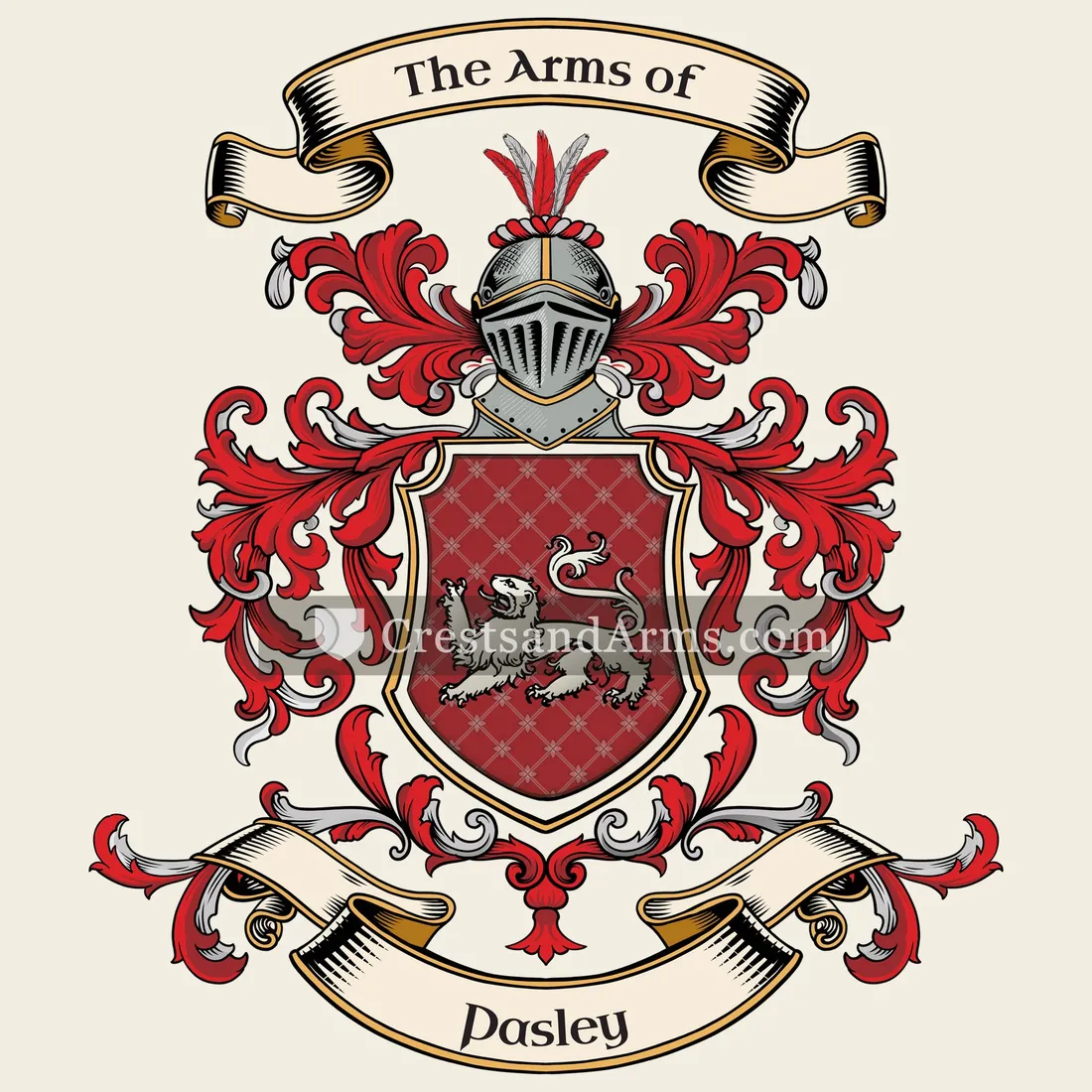
Symbols on this shield
chevronProtection, and faithful service completed
roseThe seventh son, and beauty with grace
anchorHope, and steadfastness in trouble
plant thistleDefiance, and the defence of Scotland
Colours
Blue (Azure)Means: Loyalty and truth
Silver (Argent)Means: Peace and sincerity
Gold (Or)Means: Generosity
Historical info
Source
Sir Bernard Burke, The General Armory of England, Scotland, Ireland and Wales, London: Harrison & Sons, 1884
Blazon (the actual original written record)
“Az. on a chev. ar. betw. three roses in chief of the last, and in base an anchor or, three thistles slipped ppr”
DumfriesCraig · Dumfries, c. 1748
Digital archive packCoat of arms PNG, gold border print PDF, vector SVG and the certificate of authenticity. Sent to your email in minutes.
Map of Scotland showing where the Pasley arms are recorded
The Pasley arms were recorded in Dumfries, c. 1748.
Dumfriesshire was Scottish border country facing England across a disputed line. Families held their land in return for defending it, and a defending household carried a shield.
This is where the arms were entered in the register. Families often moved to other parts of the country, so the same name can turn up in more than one region.
The body that granted and recorded arms in Scotland in this period.
George II of Great Britain
Sovereign of the period
George II of Great Britain
1727–1760
Reigning in France when the Pasley arms are first recorded.
How Arms Worked in Scotland
Scottish heraldry is unique because it treats a coat of arms as a piece of personal property protected by law. Only one person can own a specific design at any given time. When a family grows, the head keeps the original shield while other relatives must apply for their own distinct version with slight changes to prove their specific identity.
Granting authority
The Court of the Lord Lyon acts as the official body that regulates and controls all heraldic matters throughout Scotland.
How they got arms
Individuals obtain a legal right to their arms through a formal petition process that confirms their identity and family connection.
Where arms were recorded
All valid coats of arms are officially entered into the Public Register of All Arms and Bearings starting from 1672.
The family's standing
Recorded among the armigerous families of Dumfries.
Origin & History of the Pasley Family in Scotland
The Pasley family name has deep roots in the rugged landscape of southwestern Scotland, particularly within the region of Dumfries. By the mid-18th century, the family was well-established in this area, where they lived as part of the local community during a time of significant social and economic change. The name itself is thought to be a variation of the French place name Paisley, which eventually became a prominent town in the Scottish Lowlands. While the family was present in Dumfries by 1748, their ancestors likely moved through these border lands for generations, adapting to the shifting political climate of the Scottish borders. These early Pasleys were often involved in the agricultural and merchant life of the region, helping to build the local identity that defined the area during the 1700s. Their history reflects the broader movement of families across Scotland as they settled into specific parishes and contributed to the growth of their local towns.
Pasley Meaning & Related Branches
Root word
Pascualis
Derived from the Latin word for Easter or Passover.
This name
PasleyA locational surname originating from the French town of Paslières, referring to a meadow or pasture.
also spelled
Pasly
Paslee
Paslie
Pasleigh
Related arms
Gordonrecorded with Pasley, same area
Keithrecorded with Pasley, same area
Woodrecorded with Pasley, same area
Documented Sources
J. B. Rietstap, Armorial Général, Gouda: G. B. van Goor Zonen, 1884–87
Archives départementales du Finistère, Série B (Courts and Jurisdictions)
Archives départementales d'Ille-et-Vilaine, Série E (Family and Parish Records)
Galllouédec, Louis, La Bretagne, 1917
Le Moyne de La Borderie, Arthur, Histoire de Bretagne, 1896
Digital archive packCoat of arms PNG, gold border print PDF, vector SVG and the certificate of authenticity. Sent to your email in minutes.


 branchPeace, and new growth
 towerGrandeur and solidity, and a stronghold defended
 mulletThe third son, and a divine quality from above
 branchPeace, and new growth
 towerGrandeur and solidity, and a stronghold defended
 mulletThe third son, and a divine quality from above


 lionCourage, strength and royalty


 chevronProtection, and faithful service completed
 roseThe seventh son, and beauty with grace
 anchorHope, and steadfastness in trouble
 plant thistleDefiance, and the defence of Scotland