Map of England showing where the Pastorello arms are recorded
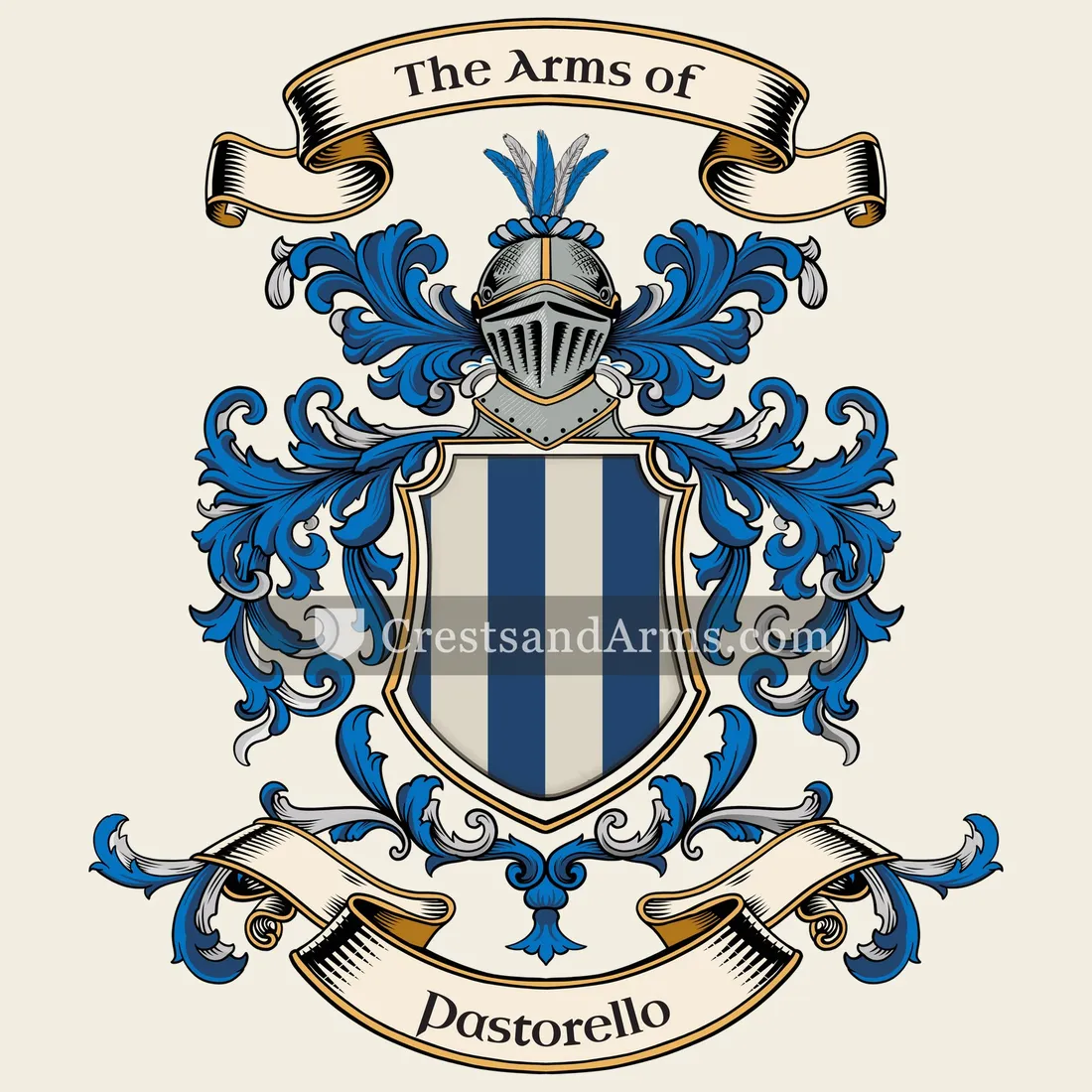
The Pastorello arms were recorded in Nottingham, c. 1620.
Nottinghamshire had coal under it and forest across it, and both were worth money. Families who profited bought manors, and a manor was the ordinary reason for a family to take a coat of arms.
This is where the arms were entered in the register. Families often moved to other parts of the country, so the same name can turn up in more than one region.
The body that granted and recorded arms in England in this period.
James VI and I
Sovereign of the period
James VI and I
1603–1625
Reigning in England when the Pastorello arms are first recorded.
How Arms Worked in England
English heraldry allowed arms to be shared by all legitimate descendants of the original owner. These symbols were treated as personal property that moved through the generations to all children. While the eldest son kept the original design, other family members could use the same shield without needing to change it or register their own unique versions.
Granting authority
The College of Arms in London has regulated the use of coats of arms throughout England and Wales since 1484.
How they got arms
Families typically obtained their coats of arms through a formal grant from the Crown or by proving their ancient right to them.
Where arms were recorded
All official coats of arms are recorded in the registers kept at the College of Arms, which date back to the fifteenth century.
The family's standing
Recorded among the armigerous families of Nottingham.
Origin & History of the Pastorello Family in England
The surname Pastorello finds its linguistic roots in the Italian word for a young shepherd, suggesting that the earliest ancestors likely worked in the pastoral traditions of the countryside. While the name is distinctly Mediterranean in origin, historical records confirm that members of the family had established a presence in Nottingham, England, by 1620. This migration suggests that the family may have been part of the small but significant movement of European artisans or merchants who traveled to England during the early seventeenth century for trade or religious freedom. Once settled in the Midlands, the family integrated into the local community, transitioning from their traditional rural background to the growing urban life of a bustling English market town. Over time, the name persisted as a unique identifier, marking the family as a distinct lineage that successfully blended its continental heritage with the evolving social landscape of seventeenth-century Britain.
Pastorello Meaning & Related Branches
Root word
pastor
Latin term meaning shepherd or one who tends to livestock.
This name
PastorelloA diminutive form indicating a little shepherd or a person who worked as a herdsman.
also spelled
Pstrellie
Documented Sources
Sir Bernard Burke, The General Armory of England, Scotland, Ireland and Wales, London: Harrison & Sons, 1884
National Archives (UK), State Papers Domestic: James I, 1620