Map of Netherlands showing where the Pasztor arms are recorded
The Pasztor arms were recorded in Amsterdam, c. 1815.
This is where the arms were entered in the register. Families often moved to other parts of the country, so the same name can turn up in more than one region.
Region
Amsterdam
Town
Amsterdam
First recorded
1815
Granting Authority for the Pasztor Arms
Hoge Raad van Adel
Photograph made by me · CC BY-SA 3.0
The body that granted and recorded arms in Netherlands in this period.
William I of the Netherlands
Sovereign of the period
William I of the Netherlands
1815–1840
Reigning in Netherlands when the Pasztor arms are first recorded.
How Arms Worked in Netherlands
In the Netherlands, coats of arms were often used by noble families and those who held specific public offices. These arms were passed down through the generations to legitimate descendants. Younger branches of a family usually kept the original design without needing to add special marks. This system ensured that the family identity remained clear and consistent over many years.
Granting authority
The Hoge Raad van Adel is the official body that regulates and manages noble titles and coats of arms in the Netherlands.
How they got arms
Families typically obtained their coats of arms through official royal grants or by proving their long-standing historical use of the symbols.
Where arms were recorded
Coats of arms are officially recorded in the registers held by the Hoge Raad van Adel, which began its work in 1814.
The family's standing
Recorded among the armigerous families of Netherlands.
Origin & History of the Pasztor Family in Netherlands
The surname Pásztor originates from the Hungarian word for a shepherd, reflecting a long history of rural life and livestock management in Central Europe. By the time members of the family appeared in the official records of Amsterdam in 1815, they were part of a growing movement of people traveling across the continent during the post-Napoleonic era. These early arrivals in the Netherlands likely navigated the bustling port city as merchants or skilled laborers, adapting their traditional name to a new linguistic environment. Because the name identifies a specific profession, it suggests that the family’s ancestors were deeply connected to the land and the seasonal rhythms of pastoral work before transitioning into the urban landscape of the Dutch capital. This migration highlights how families carried their cultural identity and occupational heritage with them as they integrated into the diverse society of nineteenth-century Amsterdam.
Meaning of the Pasztor family crest colors & symbols
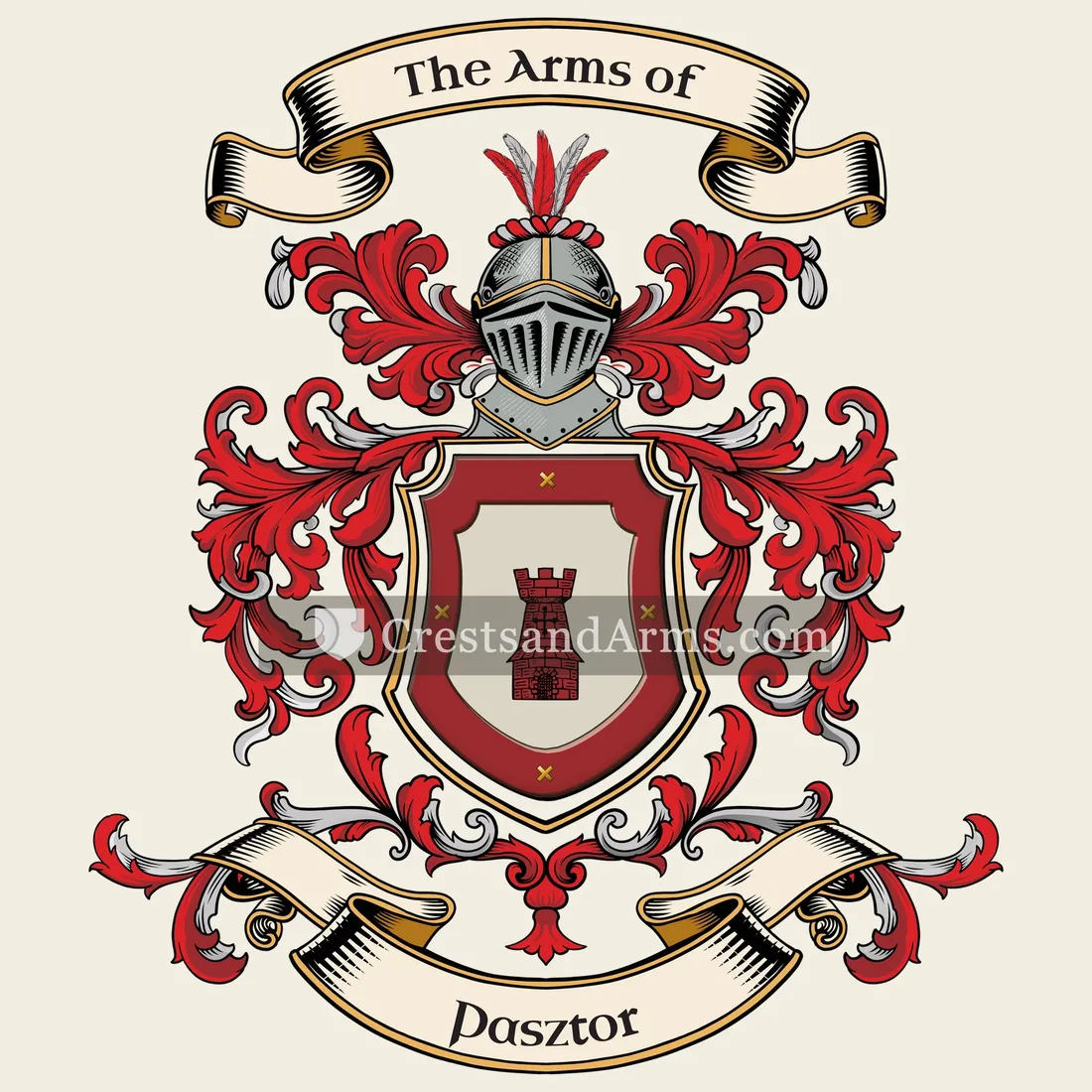
Symbols on this shield
towerGrandeur and solidity, and a stronghold defended
saltire coupedResolution, and the cross of St Andrew
Colours
Silver (Argent)Means: Peace and sincerity
Red (Gules)Means: Military strength
Gold (Or)Means: Generosity
Historical info
Source
J. B. Rietstap, Armorial Général, Gouda: G. B. van Goor Zonen, 1884–87
Blazon (the actual original written record)
“D'arg. à une tour de gu., sommée d'une aigle de sa., le vol étendu; à la bord. de gu., ch. de quatre flanchis d'or, posés dans les cantons.)”
AragonAragon, c. 1722
Digital archive packCoat of arms PNG, gold border print PDF, vector SVG and the certificate of authenticity. Sent to your email in minutes.
Map of Spain showing where the Pasztor arms are recorded
The Pasztor arms were recorded in Aragon, c. 1722.
Aragon was mountain and river country in north-eastern Spain, with a strong tradition of small independent landholders. A great many families counted as gentry there, and each one needed a shield to be told apart.
This is where the arms were entered in the register. Families often moved to other parts of the country, so the same name can turn up in more than one region.
The body that granted and recorded arms in Spain in this period.
Philip V of Spain
Sovereign of the period
Philip V of Spain
1714–1724
Reigning in Netherlands when the Pasztor arms are first recorded.
How Arms Worked in Spain
In Spain, a coat of arms was considered a form of property that belonged to the entire family line. These arms were passed down from a father to all his children equally. Younger branches of the family usually kept the original design without needing to add any special marks to distinguish their specific line.
Granting authority
The Cronista Rey de Armas was the official body that regulated and granted coats of arms throughout Spain.
How they got arms
Families often obtained their arms through royal grants or by proving their noble status to the official heraldic authority.
Where arms were recorded
Coats of arms were officially recorded in the registers of the Cronista Rey de Armas starting in 1496.
The family's standing
Recorded among the armigerous families of Aragon.
Origin & History of the Pasztor Family in Spain
The surname Pasztor carries a distinct history that reflects the movement of people across European borders. While the name is widely recognized today as having Hungarian roots, meaning shepherd, its presence in the Kingdom of Aragon by 1722 suggests a fascinating story of migration and integration. During the early 18th century, Aragon was a region defined by its complex social structures and agricultural traditions. Families arriving from Central Europe often integrated into these rural communities by continuing their traditional work in livestock management. By settling in the Spanish highlands, these early ancestors likely adapted their professional skills to the unique climate and terrain of the Iberian Peninsula. This transition shows how a family name can travel across continents while maintaining its original meaning and connection to the land. Over time, the name became a marker of this specific migration, linking the family to the historical exchange of labor and expertise that defined the era.
Pasztor Meaning & Related Branches
Root word
Pastor
Latin term meaning shepherd or one who tends to a flock.
This name
PasztorAn occupational surname for a shepherd, derived from the Hungarian word for the profession.
also spelled
Pastore
Documented Sources
J. B. Rietstap, Armorial Général, Gouda: G. B. van Goor Zonen, 1884–87


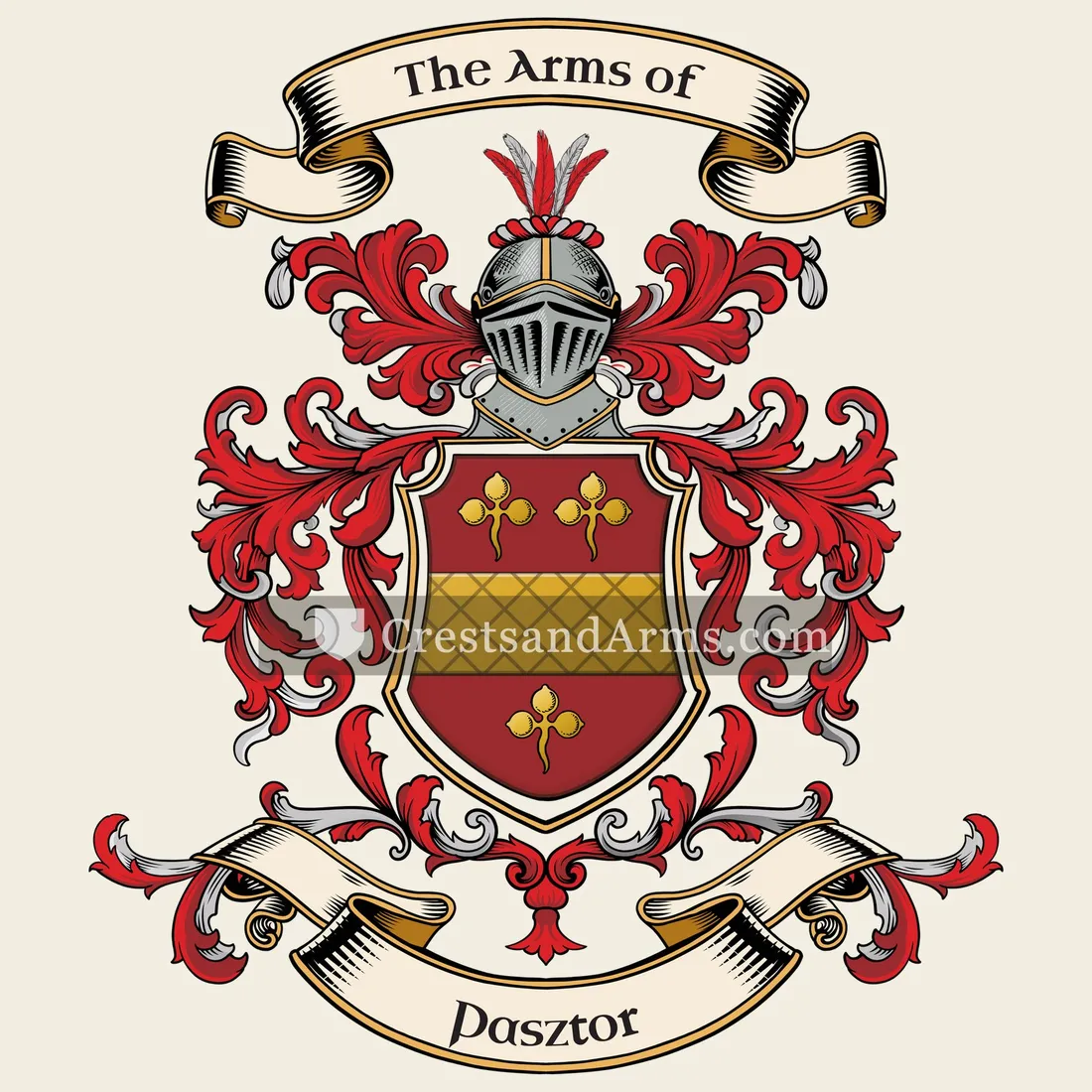
 fessThe military belt, and readiness to serve
 trefoilPerpetuity, and the Trinity
 fessThe military belt, and readiness to serve
 trefoilPerpetuity, and the Trinity


 towerGrandeur and solidity, and a stronghold defended
 saltire coupedResolution, and the cross of St Andrew