A record of documented arms, meaning and origin, researched for the Patricia family lines. Documented in 3 countries.
Reg. 8397 · Britain, P–S
Coat of Arms & Family Crest Details
Symbols on this shield
saltireResolution, and St Andrew's cross
chiefAuthority, wisdom and dominion
cinquefoilHope and joy
crescentHonour by the sovereign, and the second son
griffinValour and vigilance, guarding great treasure
roseThe seventh son, and beauty with grace
Colours
Silver (Argent)Means: Peace and sincerity
Black (Sable)Means: Constancy
Red (Gules)Means: Military strength
Historical info
Source
J. B. Rietstap, Armorial Général, Gouda: G. B. van Goor Zonen, 1884–87
Blazon (the actual original written record)
“D'arg. au saut. de sa., acc. en chef d'une quintefeuille, en p. d'un croiss. et à dextre et à sen. d'une tête de griffon arr., le tout de gu.; au chef dentelé de sa., ch. de trois roses d'arg. C.: une main de carn., tenant un saut. de sa. D.: ORA ET LABORA.”
BritainNew-York, c. 1700
Digital archive packCoat of arms PNG, gold border print PDF, vector SVG and the certificate of authenticity. Sent to your email in minutes.
Map of Britain showing where the Patricia arms are recorded
The Patricia arms were recorded in New-York, c. 1700.
Arms such as these were typically recorded in Kent.
Kent sits between London and the short crossing to Europe, and the trade passing through made it wealthy. Merchant families bought land with that money, and it was landowners who took coats of arms.
This is where the arms were entered in the register. Families often moved to other parts of the country, so the same name can turn up in more than one region.
The body that granted and recorded arms in Britain in this period.
William III of England
Sovereign of the period
William III of England
1694–1702
Reigning in Britain when the Patricia arms are first recorded.
How Arms Worked in Britain
English heraldry allowed arms to be shared by all legitimate descendants of the original owner. These symbols were treated as personal property that moved through the generations to all children. While the eldest son kept the original design, other family members could use the same shield without needing to change it or register their own unique versions.
Granting authority
The College of Arms in London has regulated the use of coats of arms throughout England and Wales since 1484.
How they got arms
Families typically obtained their coats of arms through a formal grant from the Crown or by proving their ancient right to them.
Where arms were recorded
All official coats of arms are recorded in the registers kept at the College of Arms, which date back to the fifteenth century.
The family's standing
Recorded among the armigerous families of Britain.
Origin & History of the Patricia Family in Britain
The name Patricia originates from the Latin word *patricius*, which historically referred to a member of the noble class in ancient Rome. While the name was traditionally used as a title of status, it eventually evolved into a given name that gained popularity across Europe. By the year 1700, records confirm that families bearing this name were established in the county of Kent in England. During this period, Kent was a vital region for trade and agriculture, placing these early families at the center of a changing British society. As the name moved from a formal title to a personal identifier, it became deeply rooted in the local communities of southeastern England. These early settlers in Kent helped transition the name from its classical origins into a common fixture of British family history.
Coat of Arms & Family Crest Details
Symbols on this shield
mulletThe third son, and a divine quality from above
arms pheon arrowheadReadiness for battle, and the broad arrow of the sovereign
Colours
Red (Gules)Means: Military strength
Silver (Argent)Means: Peace and sincerity
Historical info
Source
Sir Bernard Burke, The General Armory of England, Scotland, Ireland and Wales, London: Harrison & Sons, 1884
Blazon (the actual original written record)
“Gu. three mullets of six points ar. (ERDISWICK). On the seal of WILLIAM PATRICK, father of WILLIAM PATRICK, who m. BEATRIX DE MALPAS, three pheons”
ChesterMalpas · Chester, c. 1620
Digital archive packCoat of arms PNG, gold border print PDF, vector SVG and the certificate of authenticity. Sent to your email in minutes.
Map of England showing where the Patricia arms are recorded
The Patricia arms were recorded in Chester, c. 1620.
Cheshire was governed apart from the rest of England for much of its history, with its own courts and its own gentry. That separateness bred a strong local landed class, and landed families carried arms.
This is where the arms were entered in the register. Families often moved to other parts of the country, so the same name can turn up in more than one region.
The body that granted and recorded arms in England in this period.
James VI and I
Sovereign of the period
James VI and I
1603–1625
Reigning in Britain when the Patricia arms are first recorded.
How Arms Worked in England
English heraldry allowed arms to be shared by all legitimate descendants of the original owner. These symbols were treated as personal property that moved through the generations to all children. While the eldest son kept the original design, other family members could use the same shield without needing to change it or register their own unique versions.
Granting authority
The College of Arms in London has regulated the use of coats of arms throughout England and Wales since 1484.
How they got arms
Families typically obtained their coats of arms through a formal grant from the Crown or by proving their ancient right to them.
Where arms were recorded
All official coats of arms are recorded in the registers kept at the College of Arms, which date back to the fifteenth century.
The family's standing
Recorded among the armigerous families of Chester.
Origin & History of the Patricia Family in England
The name Patricia originates from the Latin word *patricius*, which historically referred to the noble class of ancient Rome. While the name was primarily used as a title of status in the early medieval period, it eventually evolved into a given name that became popular across Europe. By the year 1620, records confirm that members of the family were established in the city of Chester, England. During this time, Chester was a bustling center of trade and a vital gateway to Ireland, which likely influenced the movement and settlement of families in the region. The presence of the family in this historic walled city suggests they were part of the local merchant or professional class that helped define the social fabric of seventeenth-century Cheshire. As the name transitioned from a formal title to a common family identifier, it became deeply rooted in the local records of the English northwest.
Coat of Arms & Family Crest Details
Symbols on this shield
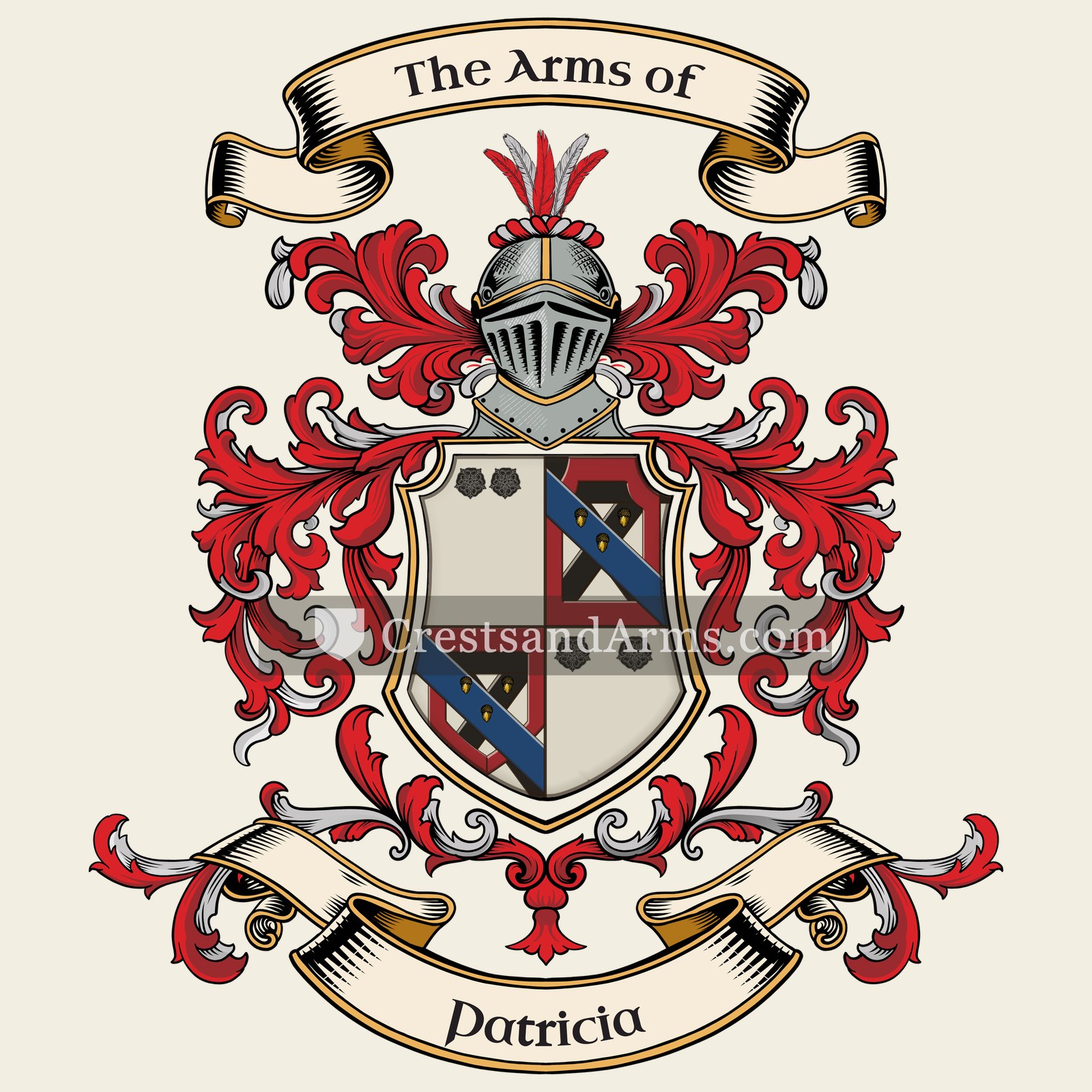
saltireResolution, and St Andrew's cross
chiefAuthority, wisdom and dominion
bordureA difference between branches of one family
bendDefence, and the scarf of a commander
roseThe seventh son, and beauty with grace
acornAntiquity and strength from small beginnings
Colours
Silver (Argent)Means: Peace and sincerity
Black (Sable)Means: Constancy
Red (Gules)Means: Military strength
Blue (Azure)Means: Loyalty and truth
Gold (Or)Means: Generosity
Historical info
Source
Sir Bernard Burke, The General Armory of England, Scotland, Ireland and Wales, London: Harrison & Sons, 1884
Blazon (the actual original written record)
“Quarterly, 1st and 4th, ar. a saltire sa. on a chief of the second two roses of the first, all within a bordure gu., for PATRICK; 2nd and 3rd, ar. on a bend az. three acorns or, for RALSTON”
AyrAyr, c. 1861
Digital archive packCoat of arms PNG, gold border print PDF, vector SVG and the certificate of authenticity. Sent to your email in minutes.
Map of Scotland showing where the Patricia arms are recorded
The Patricia arms were recorded in Ayr, c. 1861.
Ayrshire was farming country along Scotland's south-west coast, held in a great many small estates. Its lairds were numerous rather than rich, and each holding brought its own claim to arms.
This is where the arms were entered in the register. Families often moved to other parts of the country, so the same name can turn up in more than one region.
The body that granted and recorded arms in Scotland in this period.
Victoria
Sovereign of the period
Victoria
1837–1901
Reigning in Britain when the Patricia arms are first recorded.
How Arms Worked in Scotland
Scottish heraldry is unique because it treats a coat of arms as a piece of personal property protected by law. Only one person can own a specific design at any given time. When a family grows, the head keeps the original shield while other relatives must apply for their own distinct version with slight changes to prove their specific identity.
Granting authority
The Court of the Lord Lyon acts as the official body that regulates and controls all heraldic matters throughout Scotland.
How they got arms
Individuals obtain a legal right to their arms through a formal petition process that confirms their identity and family connection.
Where arms were recorded
All valid coats of arms are officially entered into the Public Register of All Arms and Bearings starting from 1672.
The family's standing
Recorded among the armigerous families of Ayr.
Origin & History of the Patricia Family in Scotland
The name Patricia originates from the Latin word patricius, which refers to the noble class of ancient Rome. While the name was historically used as a title of rank, it eventually evolved into a given name that gained popularity across Europe. By the mid-19th century, the name and its associated family lines were well-established in the coastal town of Ayr, Scotland. Records from the 1861 census confirm that families bearing this name were living in the region during a time when Ayr was a bustling center for trade and maritime activity. These early residents were part of the local community during a period of significant industrial growth in the Scottish Lowlands. Their presence in Ayr highlights how families often settled in established port towns to participate in the local economy and contribute to the social fabric of the region.
Related Branches & Arms
Root word
Patricius
Derived from the Latin word for a nobleman or aristocrat.
This name
PatriciaRefers to a person of noble birth or high social standing.
also spelled
Patrik
Patryck
Patryk
Documented Sources
J. B. Rietstap, Armorial Général, Gouda: G. B. van Goor Zonen, 1884–87
Reaney, P.H., A Dictionary of English Surnames, 1958
Hanks, Patrick and Hodges, Flavia, A Dictionary of First Names, 1990
The National Archives, Parish registers of Kent, 1700
Kent History and Library Centre, Quarter Sessions Records, 1700
Digital archive packCoat of arms PNG, gold border print PDF, vector SVG and the certificate of authenticity. Sent to your email in minutes.


 saltireResolution, and St Andrew's cross
 chiefAuthority, wisdom and dominion
 cinquefoilHope and joy
 crescentHonour by the sovereign, and the second son
 griffinValour and vigilance, guarding great treasure
 roseThe seventh son, and beauty with grace
 saltireResolution, and St Andrew's cross
 chiefAuthority, wisdom and dominion
 cinquefoilHope and joy
 crescentHonour by the sovereign, and the second son
 griffinValour and vigilance, guarding great treasure
 roseThe seventh son, and beauty with grace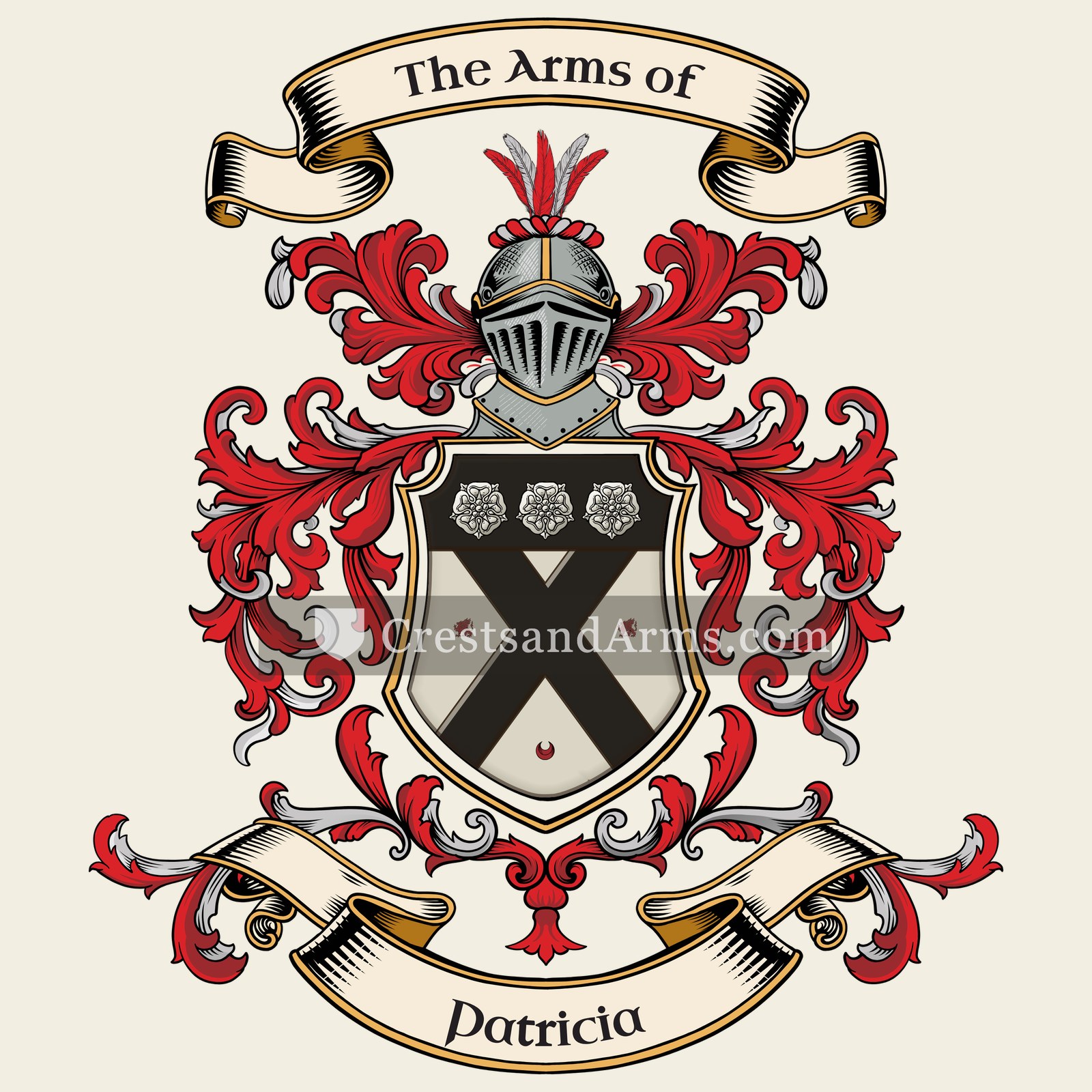


 mulletThe third son, and a divine quality from above
 arms pheon arrowheadReadiness for battle, and the broad arrow of the sovereign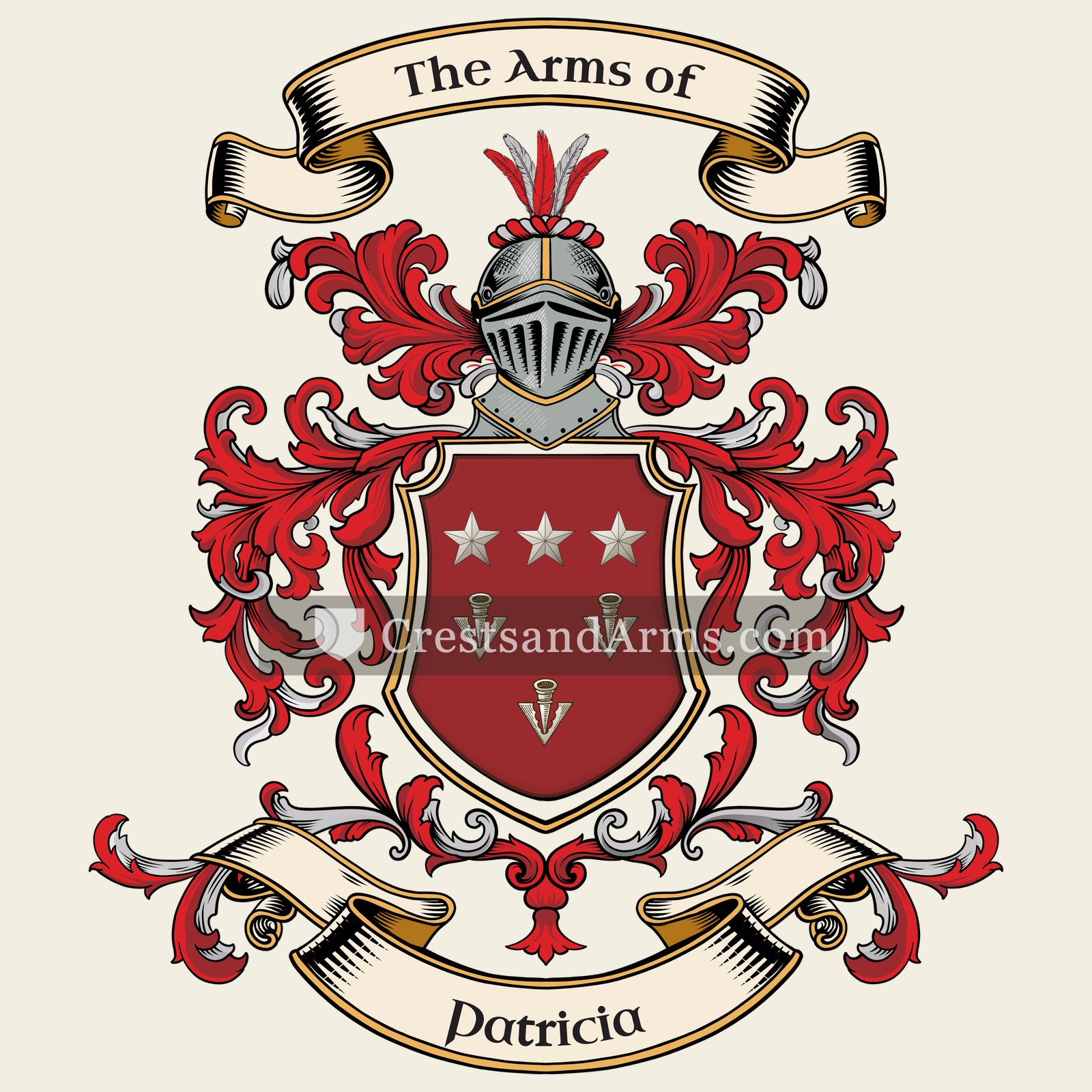

 bordureA difference between branches of one family
 bendDefence, and the scarf of a commander
 acornAntiquity and strength from small beginnings