A record of documented arms, meaning and origin, researched for the Peasley family lines. Documented in 3 countries.
Reg. 8112 · French, P–S
Meaning of the Peasley family crest colors & symbols
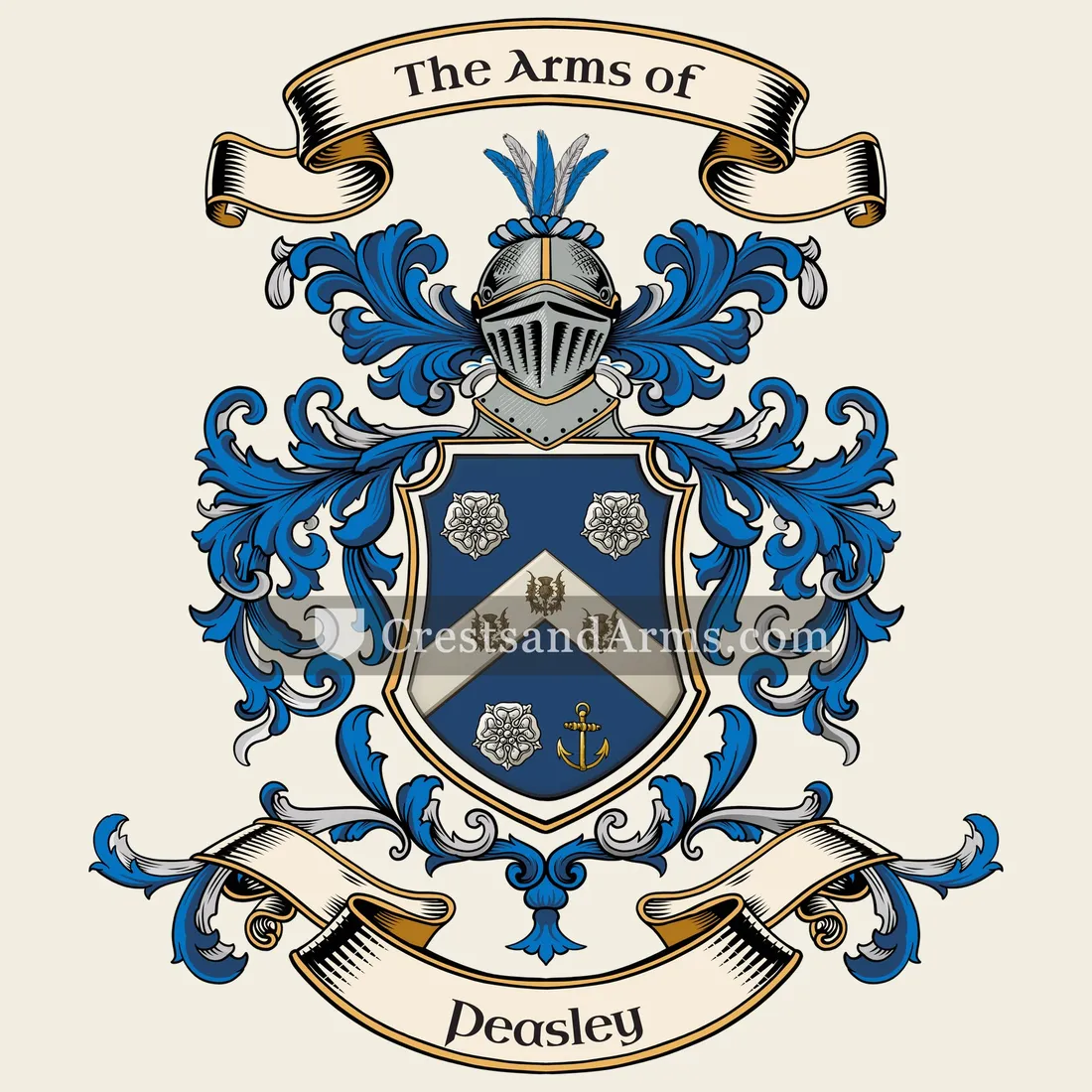
Symbols on this shield
branchPeace, and new growth
towerGrandeur and solidity, and a stronghold defended
mulletThe third son, and a divine quality from above
Colours
Gold (Or)Means: Generosity
Black (Sable)Means: Constancy
Historical info
Source
J. B. Rietstap, Armorial Général, Gouda: G. B. van Goor Zonen, 1884–87
Blazon (the actual original written record)
“d'or, ch. des mots: SUB CUJUS PEDE FONS VIVUS EMANAT, en lettres de sa. [Une branche porte aux 2 et 3 une seule tour, surm. de l'étoile, et pour devise: SUB EJUS PEDE, etc.]”
Francec. 1725
Digital archive packCoat of arms PNG, gold border print PDF, vector SVG and the certificate of authenticity. Sent to your email in minutes.
Map of France showing where the Peasley arms are recorded
The Peasley arms were recorded in France, c. 1725.
Arms such as these were typically recorded in Bretagne.
More families held coats of arms in Bretagne than anywhere else in France. The land was divided into many small estates rather than a few large ones, so far more households counted as gentry, and each needed a shield of its own to be told apart.
This is where the arms were entered in the register. Families often moved to other parts of the country, so the same name can turn up in more than one region.
The body that granted and recorded arms in France in this period.
Louis XV of France
Sovereign of the period
Louis XV of France
1715–1774
Reigning in France when the Peasley arms are first recorded.
How Arms Worked in France
In France, a coat of arms was a mark of honor that passed down through the male line to all legitimate descendants. Families often used the same shield without changes to show their shared heritage. If a branch wanted to stand out, they could add a small mark to their shield to show their specific place in the family tree.
Granting authority
The Juge d'armes de France acted as the official authority that regulated and verified coats of arms across the country.
How they got arms
Families typically inherited their arms from ancestors, though they could also receive them through royal grants or by proving their noble status.
Where arms were recorded
Coats of arms were officially recorded in the Armorial Général de France, which began its main collection in the year 1696.
The family's standing
Recorded among the armigerous families of France.
Origin & History of the Peasley Family in France
The name Peasley traces its roots to the northwestern region of France known as Bretagne. By the early 18th century, families bearing this name were well-established within the local communities of this rugged coastal province. During this period, Bretagne was a distinct territory with its own unique cultural identity and traditions that differed from the rest of the French kingdom. Families in this region often lived in small rural parishes where they worked the land or engaged in maritime trades. The presence of the Peasley name in official records from 1725 suggests that the family was integrated into the social and economic fabric of the province during a time of significant transition. While the exact origins of the name are tied to the linguistic evolution of the Breton language, it remains a testament to the family’s long-standing connection to this historic landscape.
Meaning of the Peasley family crest colors & symbols
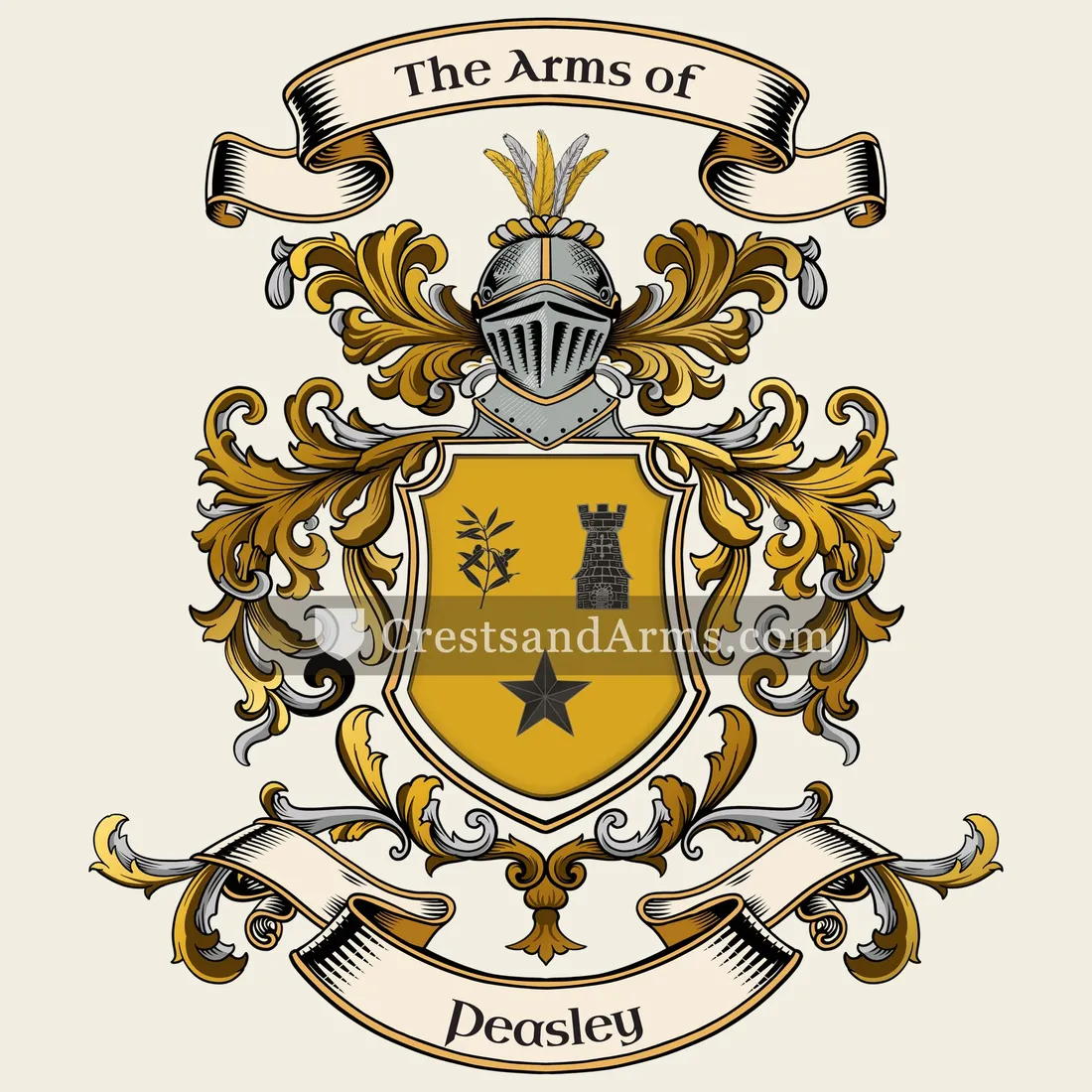
Symbols on this shield
lionCourage, strength and royalty
Colours
Red (Gules)Means: Military strength
Silver (Argent)Means: Peace and sincerity
Historical info
Source
Sir Bernard Burke, The General Armory of England, Scotland, Ireland and Wales, London: Harrison & Sons, 1884
Blazon (the actual original written record)
“Gu. a lion ramp. tail double queued ar”
KentKent, c. 1620
Digital archive packCoat of arms PNG, gold border print PDF, vector SVG and the certificate of authenticity. Sent to your email in minutes.
Map of England showing where the Peasley arms are recorded
The Peasley arms were recorded in Kent, c. 1620.
Kent sits between London and the short crossing to Europe, and the trade passing through made it wealthy. Merchant families bought land with that money, and it was landowners who took coats of arms.
This is where the arms were entered in the register. Families often moved to other parts of the country, so the same name can turn up in more than one region.
The body that granted and recorded arms in England in this period.
James VI and I
Sovereign of the period
James VI and I
1603–1625
Reigning in France when the Peasley arms are first recorded.
How Arms Worked in England
English heraldry allowed arms to be shared by all legitimate descendants of the original owner. These symbols were treated as personal property that moved through the generations to all children. While the eldest son kept the original design, other family members could use the same shield without needing to change it or register their own unique versions.
Granting authority
The College of Arms in London has regulated the use of coats of arms throughout England and Wales since 1484.
How they got arms
Families typically obtained their coats of arms through a formal grant from the Crown or by proving their ancient right to them.
Where arms were recorded
All official coats of arms are recorded in the registers kept at the College of Arms, which date back to the fifteenth century.
The family's standing
Recorded among the armigerous families of Kent.
Origin & History of the Peasley Family in England
The surname Peasley is rooted in the landscape of medieval England, where it likely originated as a descriptive name for people living near a field of peas. By the early 17th century, the family had established a notable presence in the county of Kent. Records from 1620 confirm that members of the Peasley family were active in this region, which was a hub for agriculture and trade at the time. During this period, families often took their names from the specific crops they harvested or the local geography of their home villages. As the family grew, they became part of the local social fabric of Kent, contributing to the rural economy before many families of that era began looking toward the Americas for new opportunities. This transition from local landholders to potential emigrants reflects the broader movement of English families during the early colonial period.
Meaning of the Peasley family crest colors & symbols
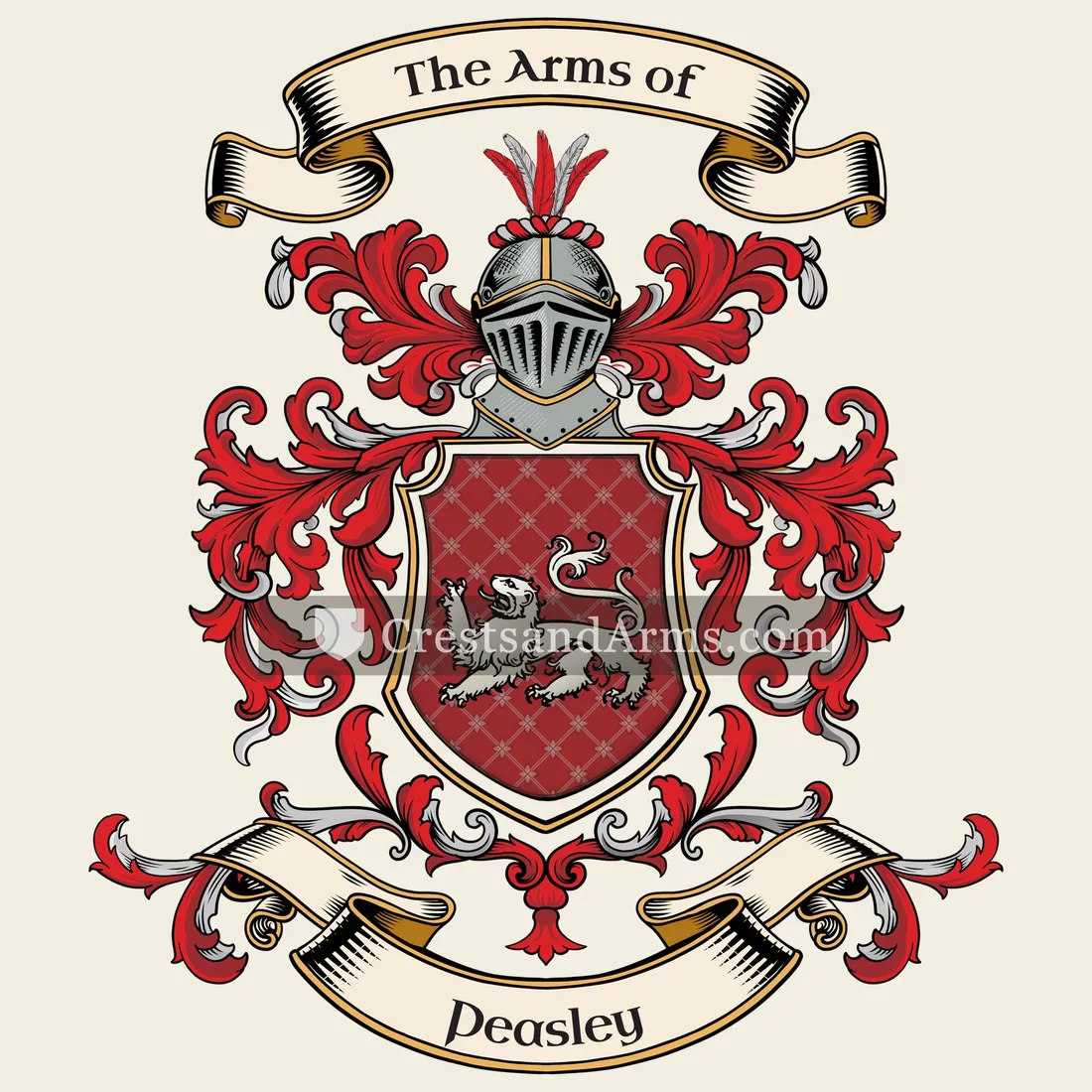
Symbols on this shield
chevronProtection, and faithful service completed
roseThe seventh son, and beauty with grace
anchorHope, and steadfastness in trouble
plant thistleDefiance, and the defence of Scotland
Colours
Blue (Azure)Means: Loyalty and truth
Silver (Argent)Means: Peace and sincerity
Gold (Or)Means: Generosity
Historical info
Source
Sir Bernard Burke, The General Armory of England, Scotland, Ireland and Wales, London: Harrison & Sons, 1884
Blazon (the actual original written record)
“Az. on a chev. ar. betw. three roses in chief of the last, and in base an anchor or, three thistles slipped ppr”
DumfriesCraig · Dumfries, c. 1748
Digital archive packCoat of arms PNG, gold border print PDF, vector SVG and the certificate of authenticity. Sent to your email in minutes.
Map of Scotland showing where the Peasley arms are recorded
The Peasley arms were recorded in Dumfries, c. 1748.
Dumfriesshire was Scottish border country facing England across a disputed line. Families held their land in return for defending it, and a defending household carried a shield.
This is where the arms were entered in the register. Families often moved to other parts of the country, so the same name can turn up in more than one region.
The body that granted and recorded arms in Scotland in this period.
George II of Great Britain
Sovereign of the period
George II of Great Britain
1727–1760
Reigning in France when the Peasley arms are first recorded.
How Arms Worked in Scotland
Scottish heraldry is unique because it treats a coat of arms as a piece of personal property protected by law. Only one person can own a specific design at any given time. When a family grows, the head keeps the original shield while other relatives must apply for their own distinct version with slight changes to prove their specific identity.
Granting authority
The Court of the Lord Lyon acts as the official body that regulates and controls all heraldic matters throughout Scotland.
How they got arms
Individuals obtain a legal right to their arms through a formal petition process that confirms their identity and family connection.
Where arms were recorded
All valid coats of arms are officially entered into the Public Register of All Arms and Bearings starting from 1672.
The family's standing
Recorded among the armigerous families of Dumfries.
Origin & History of the Peasley Family in Scotland
The family name Peasley traces its roots in Scotland to the rugged landscape of the southern borders, with documented evidence placing members of the family in the town of Dumfries by 1748. During this period, Dumfries served as a vital center for trade and agriculture, placing the Peasley family within a region defined by its proximity to the English border and a long history of local commerce. The name itself likely evolved from older linguistic patterns common to the Lowlands, where surnames were often adapted from local geography or the specific trades practiced by early ancestors. As residents of a bustling market town, these early Peasleys were part of a community that navigated the social and economic shifts of eighteenth-century Scotland. Their presence in the official records of Dumfries suggests they were integrated into the civic life of the region, contributing to the development of a town that acted as a gateway between the Scottish Highlands and the wider world.
Peasley Meaning & Related Branches
Root word
Pois
A French term referring to the legume known as a pea.
This name
PeasleyA topographic name for someone who lived near a field of peas.
also spelled
Pasly
Paslee
Paslie
Pasleigh
Related arms
Peisley, or Peasleyvariant spelling
Documented Sources
J. B. Rietstap, Armorial Général, Gouda: G. B. van Goor Zonen, 1884–87
Archives départementales du Finistère, Registres paroissiaux et d'état civil, 1725
Le Moyne de La Borderie, Arthur, Histoire de Bretagne, 1896
Poterie, Jean, La vie quotidienne en Bretagne au XVIIIe siècle, 1974
Digital archive packCoat of arms PNG, gold border print PDF, vector SVG and the certificate of authenticity. Sent to your email in minutes.


 branchPeace, and new growth
 towerGrandeur and solidity, and a stronghold defended
 mulletThe third son, and a divine quality from above
 branchPeace, and new growth
 towerGrandeur and solidity, and a stronghold defended
 mulletThe third son, and a divine quality from above


 lionCourage, strength and royalty


 chevronProtection, and faithful service completed
 roseThe seventh son, and beauty with grace
 anchorHope, and steadfastness in trouble
 plant thistleDefiance, and the defence of Scotland