Map of Belgium showing where the Pech arms are recorded
The Pech arms were recorded in Tournaisis, c. 1737.
This is where the arms were entered in the register. Families often moved to other parts of the country, so the same name can turn up in more than one region.
The body that granted and recorded arms in Belgium in this period.
Charles VI, Holy Roman Emperor
Sovereign of the period
Charles VI, Holy Roman Emperor
1711–1740
Reigning in Belgium when the Pech arms are first recorded.
How Arms Worked in Belgium
In Belgium, a coat of arms is considered personal property that is passed down through the male line to legitimate descendants. Families often use the same shield design across generations to show their shared heritage. If a branch of the family wants to change the design, they must apply for an official update to their specific version of the arms.
Granting authority
The Conseil héraldique is the official body that regulates and approves all coats of arms in Belgium.
How they got arms
Families obtain their coats of arms through formal royal grants or by confirming their historical right to use existing designs.
Where arms were recorded
All approved coats of arms are officially recorded in the public registers of the Conseil héraldique since 1844.
The family's standing
Recorded among the armigerous families of Belgium.
Origin & History of the Pech Family in Belgium
The history of the Pech family in Belgium is deeply rooted in the region of Tournaisis, where records confirm their presence as early as 1737. During the eighteenth century, this area was a vibrant crossroads of agricultural and trade activity located near the border of modern-day France. Families with this name often lived as skilled laborers or farmers who contributed to the local economy of the surrounding villages. Because the name Pech is linked to regional dialects, it likely served as a way to identify individuals based on their specific work or the physical features of the land they occupied. Over generations, these early ancestors helped establish the family identity within the local community by participating in parish life and maintaining strong ties to the rural landscape of the Tournai area. This steady presence allowed the family to become a lasting part of the social fabric in this historically significant corner of Belgium.
Meaning of the Pech family crest colors & symbols
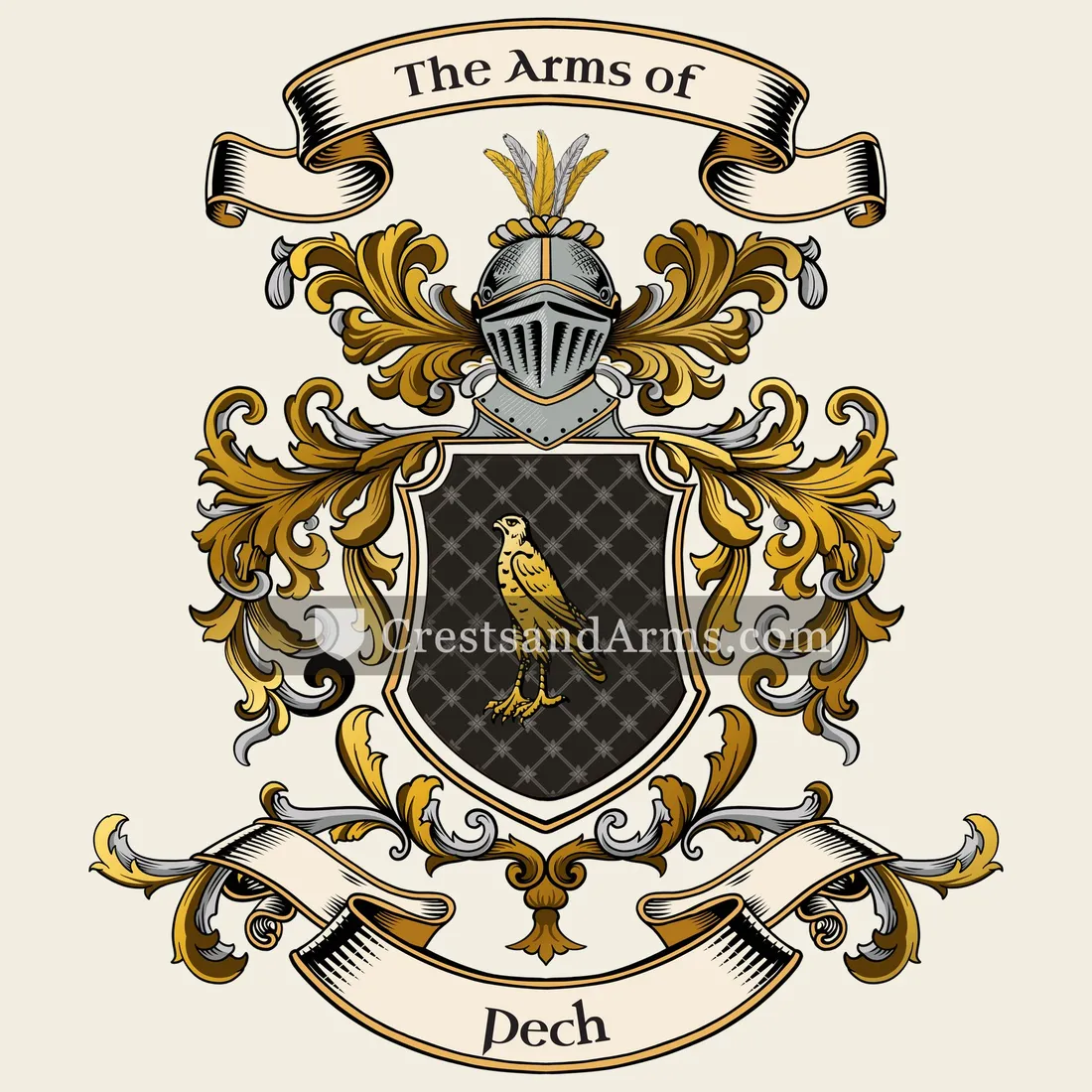
Symbols on this shield
falconOne eager and quick in pursuit
Colours
Black (Sable)Means: Constancy
Gold (Or)Means: Generosity
Historical info
Source
Sir Bernard Burke, The General Armory of England, Scotland, Ireland and Wales, London: Harrison & Sons, 1884
Blazon (the actual original written record)
“Sa. a falcon rising or”
Englandc. 1620
Digital archive packCoat of arms PNG, gold border print PDF, vector SVG and the certificate of authenticity. Sent to your email in minutes.
Map of England showing where the Pech arms are recorded
The Pech arms were recorded in England, c. 1620.
Arms such as these were typically recorded in York.
Yorkshire is the largest of the English counties, and it held more gentry families than any other. Land there was split among a great many households rather than a few, so a great many of them carried arms.
This is where the arms were entered in the register. Families often moved to other parts of the country, so the same name can turn up in more than one region.
The body that granted and recorded arms in England in this period.
James VI and I
Sovereign of the period
James VI and I
1603–1625
Reigning in Belgium when the Pech arms are first recorded.
How Arms Worked in England
English heraldry allowed arms to be shared by all legitimate descendants of the original owner. These symbols were treated as personal property that moved through the generations to all children. While the eldest son kept the original design, other family members could use the same shield without needing to change it or register their own unique versions.
Granting authority
The College of Arms in London has regulated the use of coats of arms throughout England and Wales since 1484.
How they got arms
Families typically obtained their coats of arms through a formal grant from the Crown or by proving their ancient right to them.
Where arms were recorded
All official coats of arms are recorded in the registers kept at the College of Arms, which date back to the fifteenth century.
The family's standing
Recorded among the armigerous families of England.
Origin & History of the Pech Family in England
The history of the Pech family in England is deeply rooted in the northern city of York, where records confirm their presence as early as 1620. During the seventeenth century, York was a bustling center of trade and religious transition, providing a backdrop for families to establish themselves within the local community. The name itself likely originated as a descriptive term or a nickname, which was a common practice for identifying individuals before the widespread use of formal surnames. As these early family members settled into life in York, they participated in the daily rhythms of a city defined by its medieval architecture and its role as a regional hub for northern England. By embedding themselves in the social and economic fabric of the city, the Pech family contributed to the long-standing history of the region. Their presence in the historical record during this era offers a glimpse into the lives of ordinary families who helped shape the identity of their local neighborhoods through their work and community ties.
Pech Meaning & Related Branches
Root word
Pecus
Latin term referring to cattle, livestock, or personal wealth.
This name
PechA topographic or occupational name for someone who herded cattle or lived near a pasture.
also spelled
Peche
Pesh
Pek
Pechy
Documented Sources
J. B. Rietstap, Armorial Général, Gouda: G. B. van Goor Zonen, 1884–87
State Archives in Tournai (Archives de l'État à Tournai), Parish Registers of the Tournaisis region, 1737
Debrabandere, Frans, Woordenboek van de familienamen in België en Noord-Frankrijk, 2003
Janssens, Paul, Familienamen in België: Geschiedenis en verspreiding, 2010
Digital archive packCoat of arms PNG, gold border print PDF, vector SVG and the certificate of authenticity. Sent to your email in minutes.


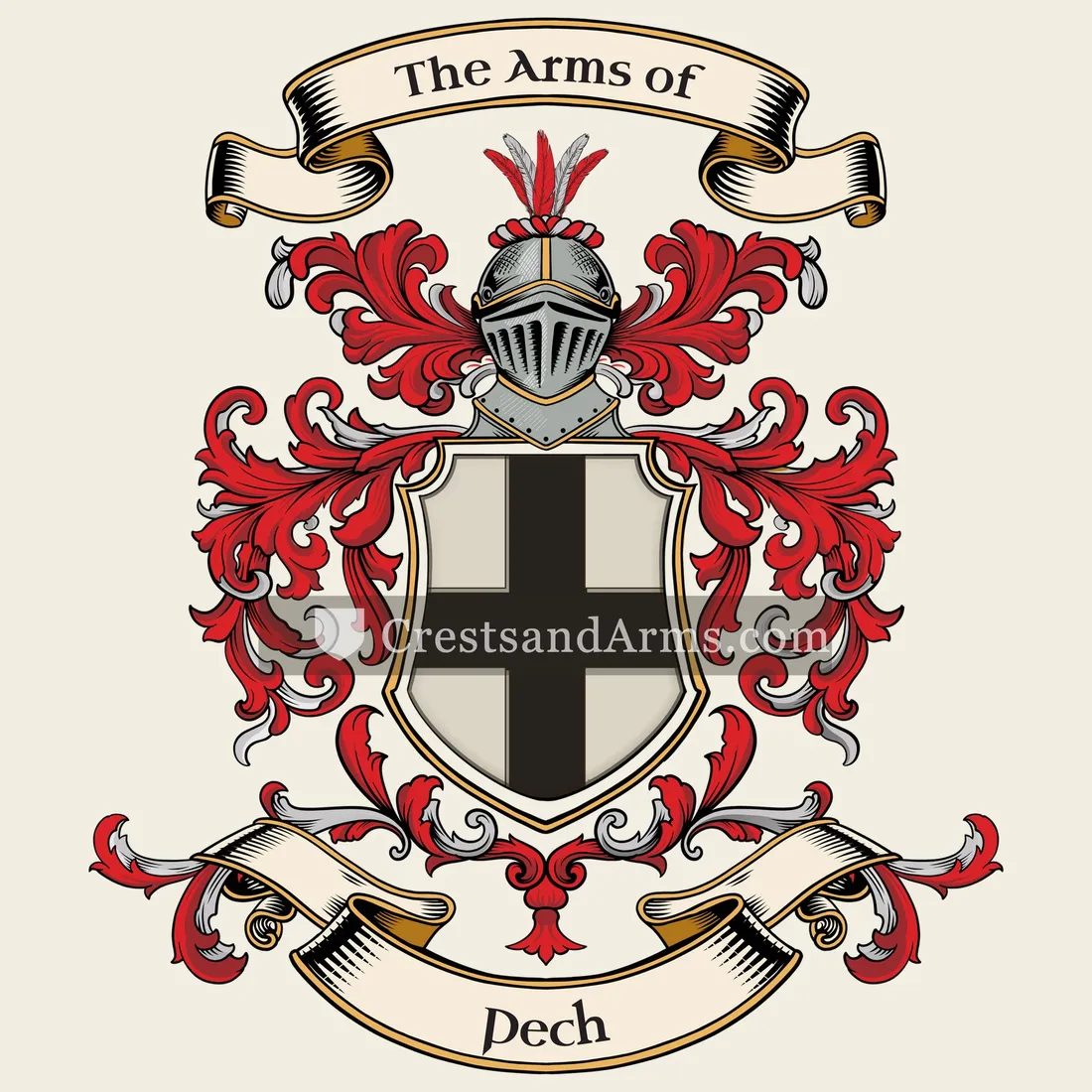
 cross symbolChristian faith and service
 cross symbolChristian faith and service


 falconOne eager and quick in pursuit