Map of Netherlands showing where the Pello arms are recorded
The Pello arms were recorded in Netherlands, c. 1815.
Arms such as these were typically recorded in Friesland.
Friesland was low, wet country on the northern coast of the Netherlands, farmed by families who had held the same land for centuries. Free landholders were unusually common there, and a free landholder could carry arms.
This is where the arms were entered in the register. Families often moved to other parts of the country, so the same name can turn up in more than one region.
Region
Friesland
First recorded
1815
Granting Authority for the Pello Arms
Hoge Raad van Adel
Photograph made by me · CC BY-SA 3.0
The body that granted and recorded arms in Netherlands in this period.
William I of the Netherlands
Sovereign of the period
William I of the Netherlands
1815–1840
Reigning in Netherlands when the Pello arms are first recorded.
How Arms Worked in Netherlands
In the Netherlands, coats of arms were often used by noble families and those who held specific public offices. These arms were passed down through the generations to legitimate descendants. Younger branches of a family usually kept the original design without needing to add special marks. This system ensured that the family identity remained clear and consistent over many years.
Granting authority
The Hoge Raad van Adel is the official body that regulates and manages noble titles and coats of arms in the Netherlands.
How they got arms
Families typically obtained their coats of arms through official royal grants or by proving their long-standing historical use of the symbols.
Where arms were recorded
Coats of arms are officially recorded in the registers held by the Hoge Raad van Adel, which began its work in 1814.
The family's standing
Recorded among the armigerous families of Netherlands.
Origin & History of the Pello Family in Netherlands
The history of the Pello name in the Netherlands is deeply connected to the northern province of Friesland. By the early 19th century, records confirm that family members were established in this region, which was a time of significant transition for Dutch surnames. During the Napoleonic era, specifically in 1811, the French administration required all citizens to register permanent family names to improve tax collection and military conscription. Before this mandate, many people in rural areas like Friesland used patronymics, which meant a person’s last name changed based on their father’s first name. The Pello name likely emerged or became fixed during this period of formal registration. Because Friesland has a distinct linguistic and cultural history compared to the rest of the Netherlands, the name may have roots in local Frisian naming customs or reflect the movement of people across the North Sea region. These early ancestors were part of a society that was shifting from traditional village life toward a more structured national identity.
Meaning of the Pello family crest colors & symbols
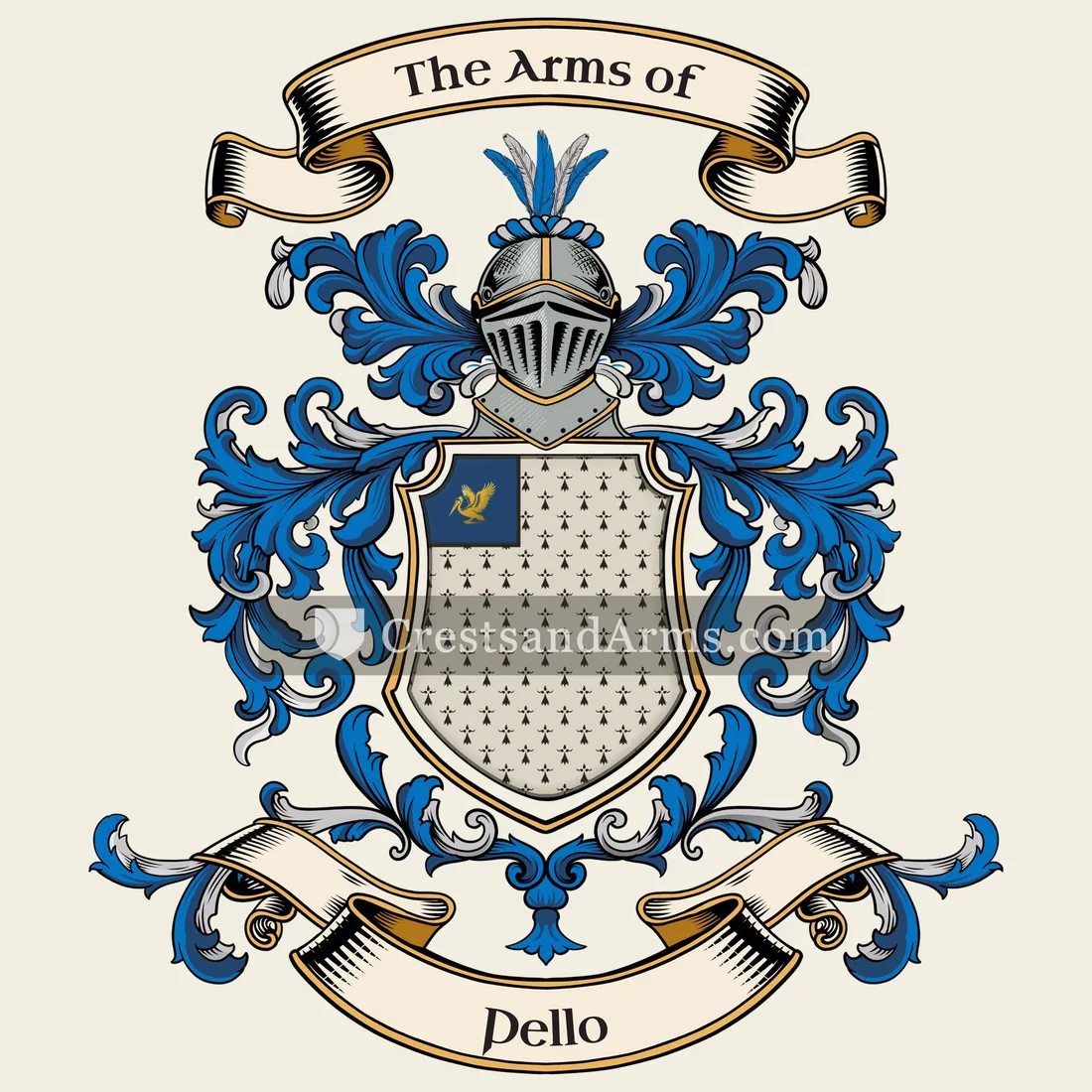
Symbols on this shield
cantonA mark of honour granted by the sovereign
pelicanSelf-sacrifice and devotion to one's children
Colours
ErmineMeans: Dignity
Blue (Azure)Means: Loyalty and truth
Gold (Or)Means: Generosity
Historical info
Source
Sir Bernard Burke, The General Armory of England, Scotland, Ireland and Wales, London: Harrison & Sons, 1884
Blazon (the actual original written record)
“Erm. on a canton az. a pelican or, vulning herself gu”
LincolnDimblesby · Lincoln, c. 1594
Digital archive packCoat of arms PNG, gold border print PDF, vector SVG and the certificate of authenticity. Sent to your email in minutes.
Map of England showing where the Pello arms are recorded
The Pello arms were recorded in Lincoln, c. 1594.
Lincolnshire was rich farming country, and its wealth was spread across many middling families. Households of that size bought land and took arms, and the county holds a large share of English names.
This is where the arms were entered in the register. Families often moved to other parts of the country, so the same name can turn up in more than one region.
The body that granted and recorded arms in England in this period.
Elizabeth I of England
Sovereign of the period
Elizabeth I of England
1558–1603
Reigning in Netherlands when the Pello arms are first recorded.
How Arms Worked in England
English heraldry allowed arms to be shared by all legitimate descendants of the original owner. These symbols were treated as personal property that moved through the generations to all children. While the eldest son kept the original design, other family members could use the same shield without needing to change it or register their own unique versions.
Granting authority
The College of Arms in London has regulated the use of coats of arms throughout England and Wales since 1484.
How they got arms
Families typically obtained their coats of arms through a formal grant from the Crown or by proving their ancient right to them.
Where arms were recorded
All official coats of arms are recorded in the registers kept at the College of Arms, which date back to the fifteenth century.
The family's standing
Recorded among the armigerous families of Lincoln.
Origin & History of the Pello Family in England
The history of the Pello family in England is rooted in the historic city of Lincoln, where records confirm members of the family were living as early as 1594. During the late sixteenth century, Lincoln was a bustling regional hub that relied heavily on trade, agriculture, and the influence of its great cathedral. Families like the Pello line were often part of the local merchant or artisan classes who helped maintain the city’s economy. Life in Elizabethan England was defined by strict social structures and local loyalties, and settling in a city like Lincoln suggests that the early Pello family was likely integrated into the urban community of the East Midlands. While the name may have evolved from older linguistic roots, its presence in the parish registers of Lincoln provides a clear starting point for tracing the family’s long-standing connection to English soil.
Pello Meaning & Related Branches
Root word
Petrus
Latin for stone or rock.
This name
PelloA patronymic or diminutive form derived from the name Peter, signifying a descendant of Peter.
also spelled
Pelle
Pellee
Pellie
Pel
Documented Sources
J. B. Rietstap, Armorial Général, Gouda: G. B. van Goor Zonen, 1884–87
Meertens, P.J., De betekenis van de Nederlandse familienamen, 1959
Tresoar (Fries Historisch en Letterkundig Centrum), Burgerlijke Stand Friesland 1811-1950
Van Berkel, G. and Samplonius, K., Nederlandse familienamenbank, 2007
Digital archive packCoat of arms PNG, gold border print PDF, vector SVG and the certificate of authenticity. Sent to your email in minutes.


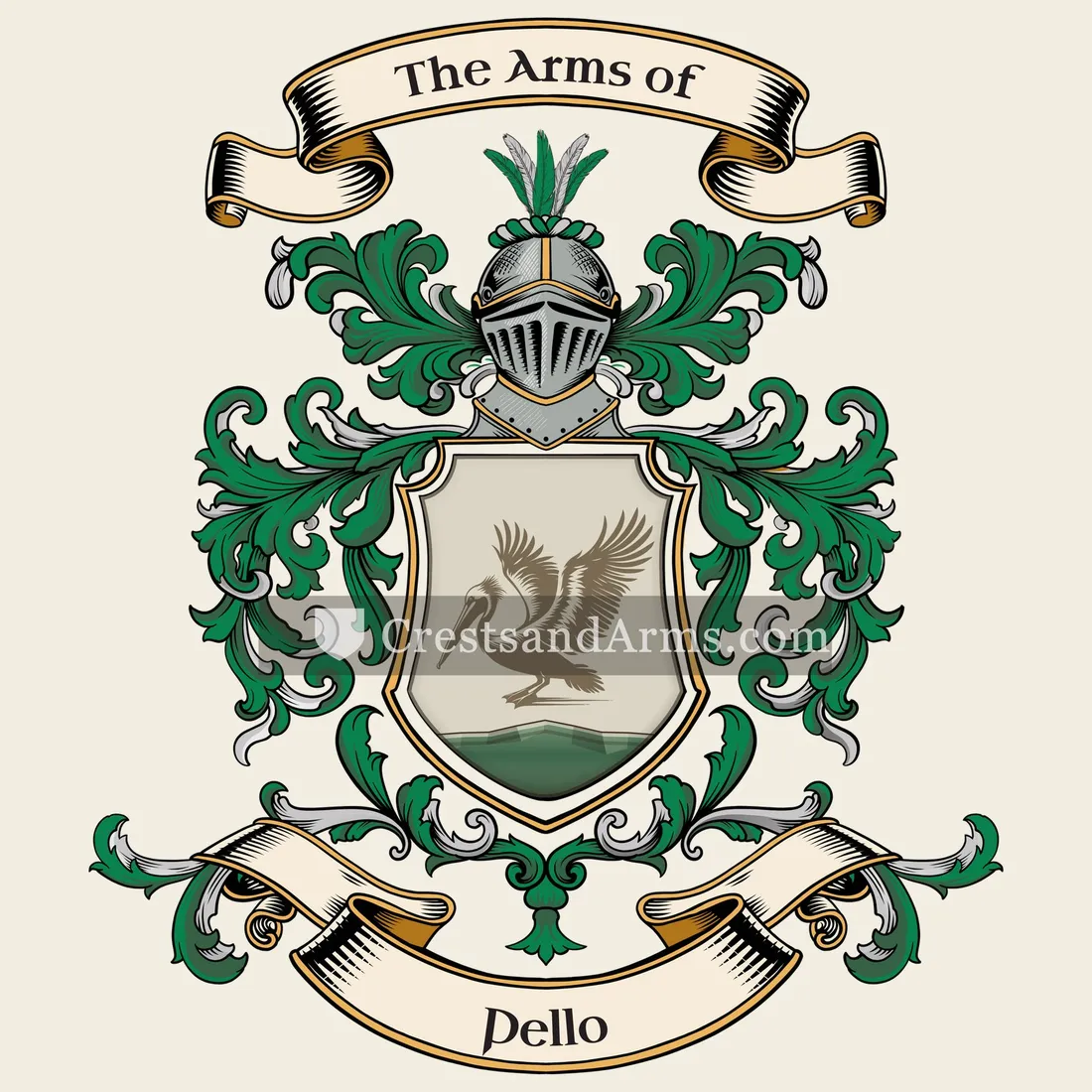
 mountThe ground held, and steadfastness upon it
 pelicanSelf-sacrifice and devotion to one's children
 mountThe ground held, and steadfastness upon it
 pelicanSelf-sacrifice and devotion to one's children


 cantonA mark of honour granted by the sovereign