Map of Austria showing where the Pellum arms are recorded
The Pellum arms were recorded in Vienne, c. 1466.
This is where the arms were entered in the register. Families often moved to other parts of the country, so the same name can turn up in more than one region.
Region
Vienne
Town
Vienne
First recorded
1466
Granting Authority for the Pellum Arms
Imperial and Royal chancery
Sodacan · CC BY-SA 3.0
The body that granted and recorded arms in Austria in this period.
Eleanor of Portugal, Holy Roman Empress
Sovereign of the period
Eleanor of Portugal, Holy Roman Empress
1452–1467
Reigning in Austria when the Pellum arms are first recorded.
How Arms Worked in Austria
Austrian coats of arms were often linked directly to noble titles granted by the Emperor. These symbols belonged to the entire family line rather than just one individual. When a family grew, new branches kept the original design without needing to change it. This system allowed all members of a noble house to share the same identity across many generations.
Granting authority
The Imperial and Royal chancery managed all heraldic matters and controlled the official granting of arms throughout the Austrian lands.
How they got arms
Families typically received their arms through a formal imperial decree that often accompanied the elevation of a person to noble status.
Where arms were recorded
Official records of these grants were kept in the Imperial Register of Nobility which began its formal documentation process in 1453.
The family's standing
Recorded among the armigerous families of Austria.
Origin & History of the Pellum Family in Austria
The history of the Pellum family in Austria traces back to the mid-fifteenth century, specifically appearing in the records of Vienna by the year 1466. During this period, Vienna was a growing center of trade and administration under the Habsburg dynasty. Families like the Pellums often settled in such cities to participate in the expanding merchant class or to serve in local government roles. Because the name appears in city archives during this era, it suggests that the family was established enough to be documented in official tax rolls or property registers. Life in fifteenth-century Vienna was defined by the city's role as a gateway between Western Europe and the East, which likely influenced the family's daily activities and social connections. Over time, the family name became part of the local fabric of the city, reflecting the broader movement of people who helped build the urban identity of Austria during the late Middle Ages.
Meaning of the Pellum family crest colors & symbols
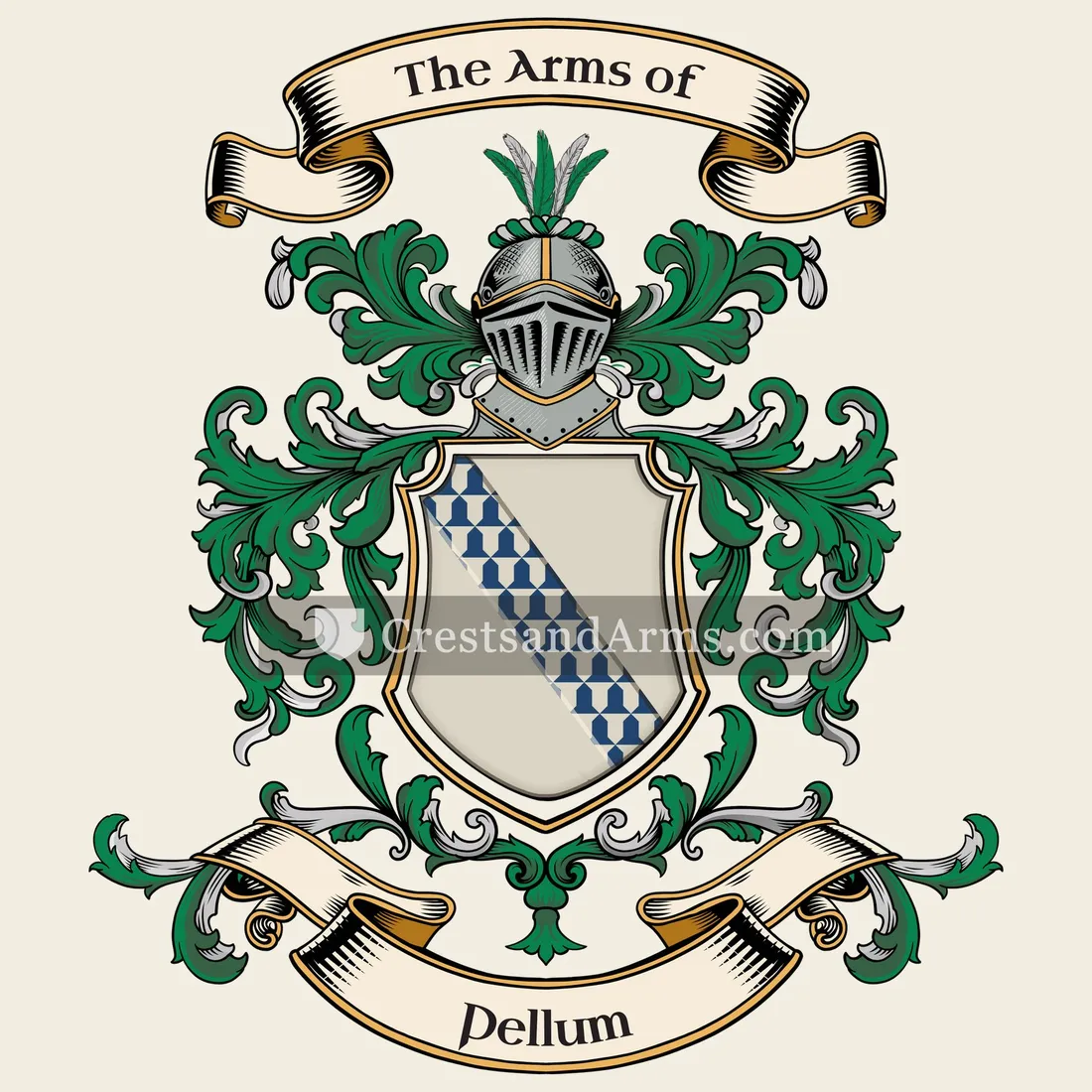
Symbols on this shield
bendDefence, and the scarf of a commander
Colours
Silver (Argent)Means: Peace and sincerity
Green (Vert)Means: Hope
Historical info
Source
Sir Bernard Burke, The General Armory of England, Scotland, Ireland and Wales, London: Harrison & Sons, 1884
Blazon (the actual original written record)
“Ar. a bend vairé or and gu. betw. two bendlets vert”
EssexMaldon · Essex, c. 1620
Digital archive packCoat of arms PNG, gold border print PDF, vector SVG and the certificate of authenticity. Sent to your email in minutes.
Map of England showing where the Pellum arms are recorded
The Pellum arms were recorded in Essex, c. 1620.
Essex lay close enough to London for City money to buy land there. Merchants who prospered moved out to estates within a day's ride, and a new landowner almost always wanted arms to go with the ground.
This is where the arms were entered in the register. Families often moved to other parts of the country, so the same name can turn up in more than one region.
The body that granted and recorded arms in England in this period.
James VI and I
Sovereign of the period
James VI and I
1603–1625
Reigning in Austria when the Pellum arms are first recorded.
How Arms Worked in England
English heraldry allowed arms to be shared by all legitimate descendants of the original owner. These symbols were treated as personal property that moved through the generations to all children. While the eldest son kept the original design, other family members could use the same shield without needing to change it or register their own unique versions.
Granting authority
The College of Arms in London has regulated the use of coats of arms throughout England and Wales since 1484.
How they got arms
Families typically obtained their coats of arms through a formal grant from the Crown or by proving their ancient right to them.
Where arms were recorded
All official coats of arms are recorded in the registers kept at the College of Arms, which date back to the fifteenth century.
The family's standing
Recorded among the armigerous families of Essex.
Origin & History of the Pellum Family in England
The family name Pellum has deep roots in the English county of Essex, where historical records confirm the presence of family members as early as 1620. During the seventeenth century, Essex was a region defined by its bustling market towns and its proximity to the growing influence of London. Families in this area often lived in agrarian communities, working the fertile soil or engaging in the local wool trade that powered the regional economy. The name likely evolved as a localized variation of surnames common to East Anglia, reflecting the way names were spoken and recorded by parish clerks at the time. By settling in Essex, the early Pellums became part of a society transitioning through significant religious and political changes, which eventually encouraged many families to seek new opportunities across the Atlantic. These early ancestors were part of the foundational fabric of English village life, contributing to the local labor and community structures that defined the rural landscape of the era.
Pellum Meaning & Related Branches
Root word
Pellis
Latin term referring to skin, hide, or a pelt.
This name
PellumAn occupational surname for a skinner, furrier, or someone who worked with animal hides.
also spelled
Plumb
Plumbe
Documented Sources
J. B. Rietstap, Armorial Général, Gouda: G. B. van Goor Zonen, 1884–87
Wiener Stadt- und Landesarchiv, Bürger- und Gewerbeprotokolle der Stadt Wien (1466)


 treeLife, endurance and deep roots
 treeLife, endurance and deep roots
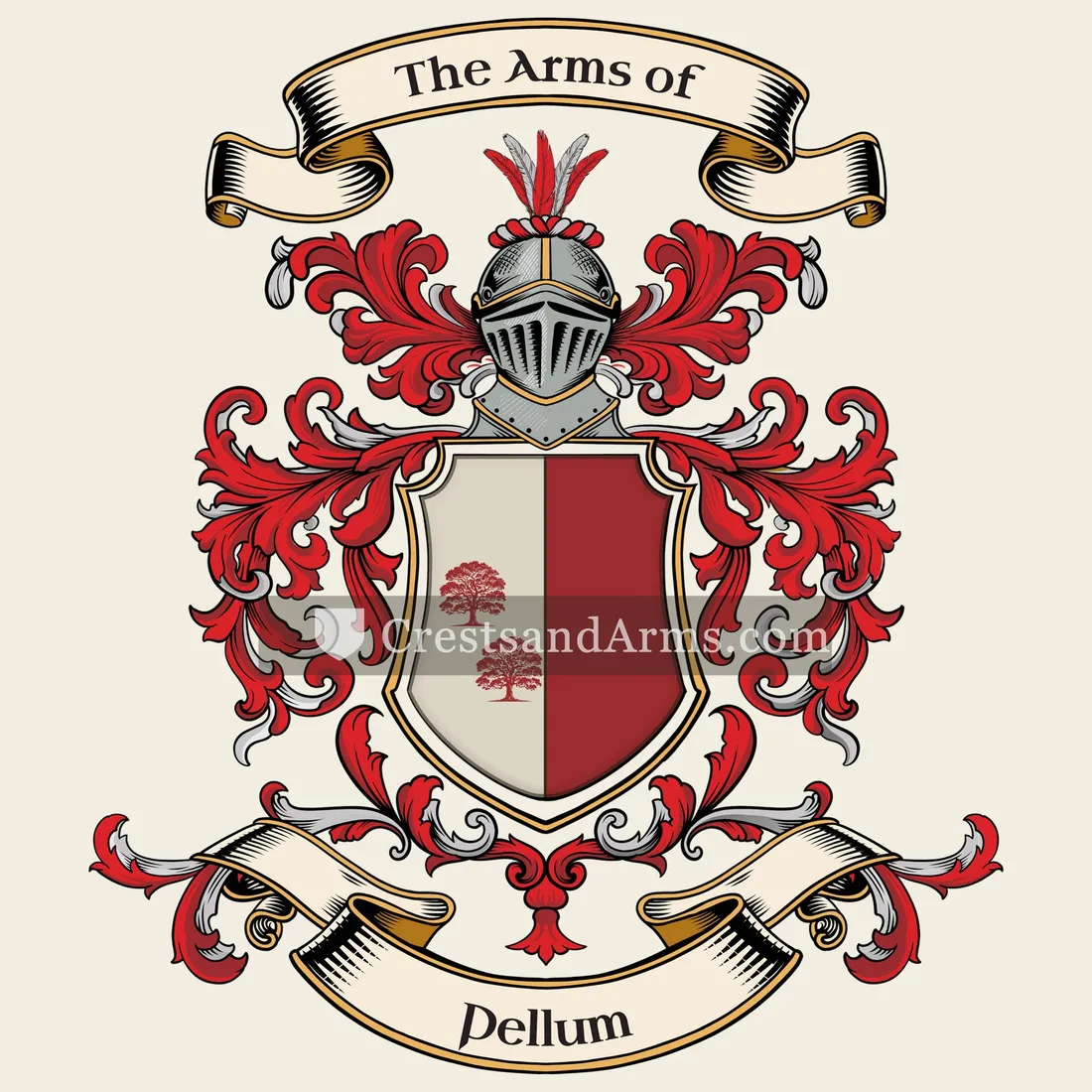


 bendDefence, and the scarf of a commander