Map of France showing where the Penna arms are recorded
The Penna arms were recorded in Provence, c. 1663.
Provence was old country, with towns dating to the Romans and families who traced their land back nearly as far. Its gentry were many and long-settled, and long settlement is what fills a register.
This is where the arms were entered in the register. Families often moved to other parts of the country, so the same name can turn up in more than one region.
The body that granted and recorded arms in France in this period.
Louis XIV of France
Sovereign of the period
Louis XIV of France
1643–1715
Reigning in France when the Penna arms are first recorded.
How Arms Worked in France
In France, a coat of arms was a mark of honor that passed down through the male line to all legitimate descendants. Families often used the same shield without changes to show their shared heritage. If a branch wanted to stand out, they could add a small mark to their shield to show their specific place in the family tree.
Granting authority
The Juge d'armes de France acted as the official authority that regulated and verified coats of arms across the country.
How they got arms
Families typically inherited their arms from ancestors, though they could also receive them through royal grants or by proving their noble status.
Where arms were recorded
Coats of arms were officially recorded in the Armorial Général de France, which began its main collection in the year 1696.
The family's standing
Recorded among the armigerous families of Provence.
Origin & History of the Penna Family in France
The family name Penna has deep roots in the sun-drenched region of Provence, where records confirm members of the family were established by 1663. The name itself is thought to be derived from the Latin word penna, which refers to a feather or a wing, and it likely functioned as a descriptive nickname for an ancestor who was notably light on their feet or perhaps a skilled writer. During the seventeenth century, Provence was a vibrant crossroads of trade and culture, and families like the Pennas were often integrated into the local agricultural or artisan communities that defined the Mediterranean landscape. Life in this region during the mid-1600s was shaped by the influence of the French monarchy and the distinct traditions of the Provençal people. As the family grew, they became part of the social fabric of the area, leaving behind traces in local parish registers and legal documents that highlight their steady presence in the towns and villages of southern France.
Meaning of the Penna family crest colors & symbols
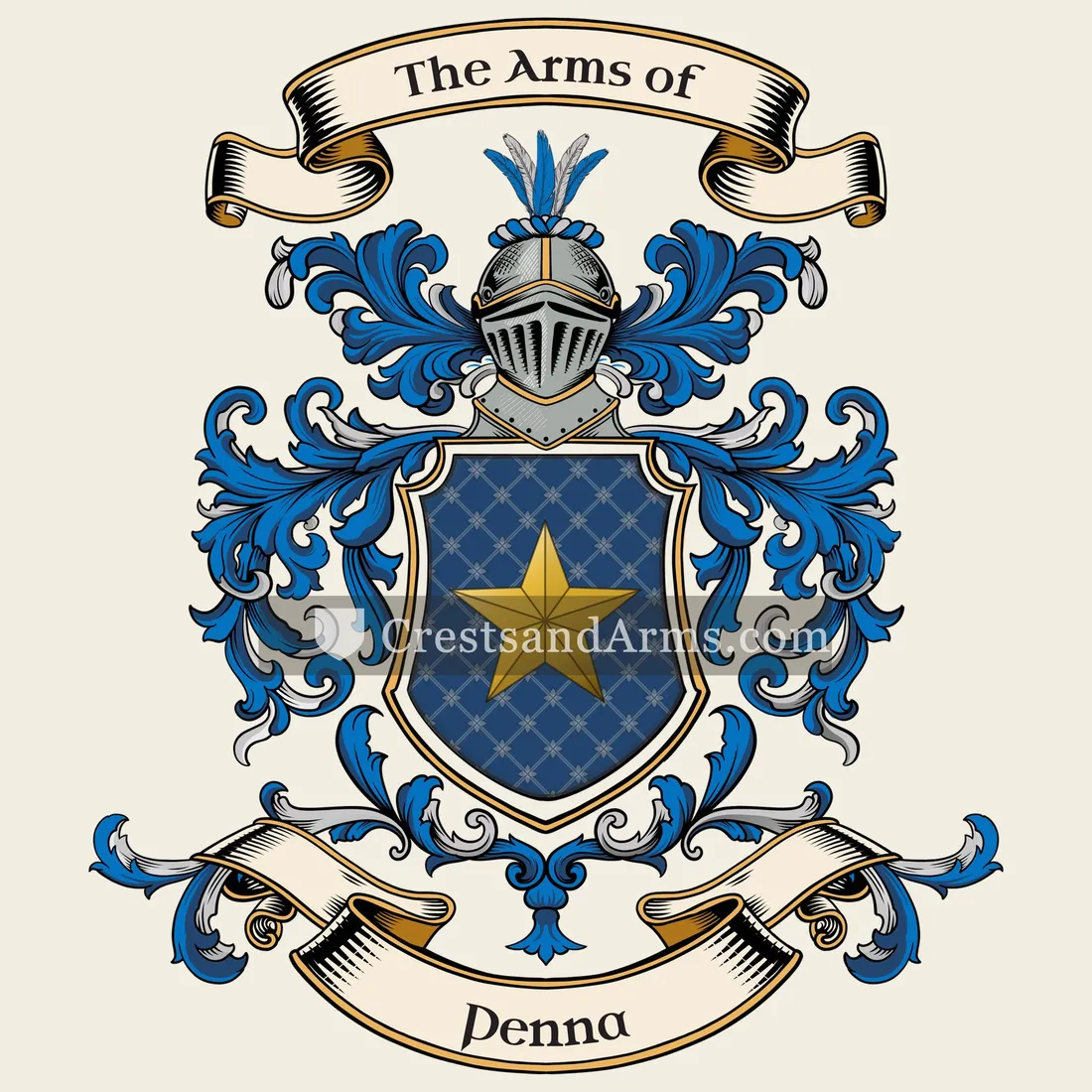
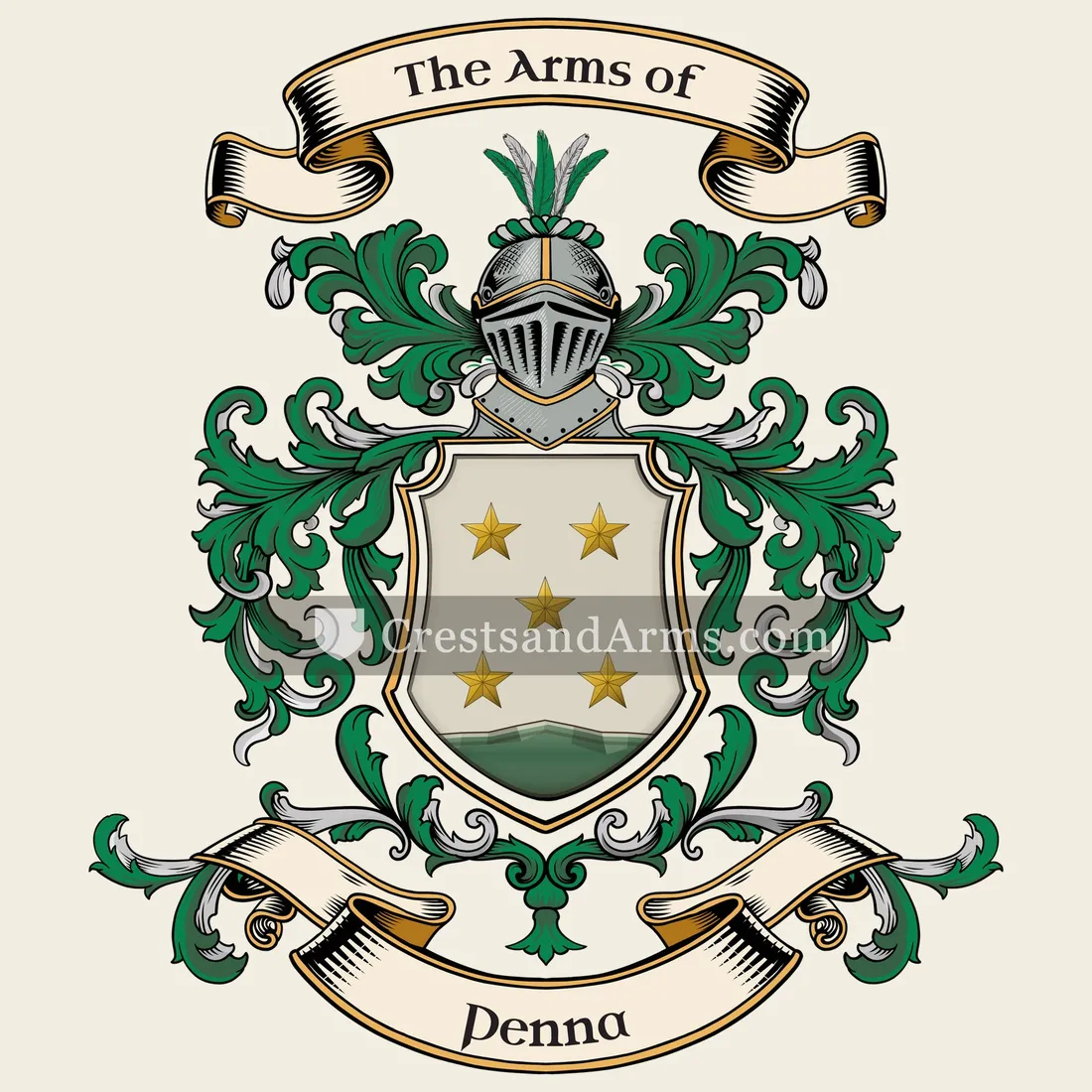
Symbols on this shield
mountThe ground held, and steadfastness upon it
mulletThe third son, and a divine quality from above
Colours
Silver (Argent)Means: Peace and sincerity
Green (Vert)Means: Hope
Gold (Or)Means: Generosity
Historical info
Source
J. B. Rietstap, Armorial Général, Gouda: G. B. van Goor Zonen, 1884–87
Blazon (the actual original written record)
“D'arg. à un mont de cinq coupeaux de sin., chaque coupeau surm. d'une étoile (8) d'or, lesdites étoiles rangées en demi-cercle.”
AragonBiscaye · Aragon, c. 1722
Digital archive packCoat of arms PNG, gold border print PDF, vector SVG and the certificate of authenticity. Sent to your email in minutes.
Map of Spain showing where the Penna arms are recorded
The Penna arms were recorded in Aragon, c. 1722.
Aragon was mountain and river country in north-eastern Spain, with a strong tradition of small independent landholders. A great many families counted as gentry there, and each one needed a shield to be told apart.
This is where the arms were entered in the register. Families often moved to other parts of the country, so the same name can turn up in more than one region.
The body that granted and recorded arms in Spain in this period.
Philip V of Spain
Sovereign of the period
Philip V of Spain
1714–1724
Reigning in France when the Penna arms are first recorded.
How Arms Worked in Spain
In Spain, a coat of arms was considered a form of property that belonged to the entire family line. These arms were passed down from a father to all his children equally. Younger branches of the family usually kept the original design without needing to add any special marks to distinguish their specific line.
Granting authority
The Cronista Rey de Armas was the official body that regulated and granted coats of arms throughout Spain.
How they got arms
Families often obtained their arms through royal grants or by proving their noble status to the official heraldic authority.
Where arms were recorded
Coats of arms were officially recorded in the registers of the Cronista Rey de Armas starting in 1496.
The family's standing
Recorded among the armigerous families of Aragon.
Origin & History of the Penna Family in Spain
The surname Penna carries a deep history rooted in the rugged landscapes of the Iberian Peninsula. While the name is often associated with various regions, historical records confirm that members of the Penna family were well-established in the Kingdom of Aragon by 1722. During this era, Aragon was a center of significant social and administrative activity, and families like the Pennas were often tied to the local agricultural economy or the complex bureaucracy of the Spanish crown. The name itself is thought to derive from terms describing rocky outcrops or high peaks, which suggests that the family’s earliest ancestors likely lived near the mountainous terrain that defines much of the Aragonese countryside. As these families moved through the region, they contributed to the local culture and the development of the communities that thrived under the influence of the Aragonese monarchy.
Meaning of the Penna family crest colors & symbols
Symbols on this shield
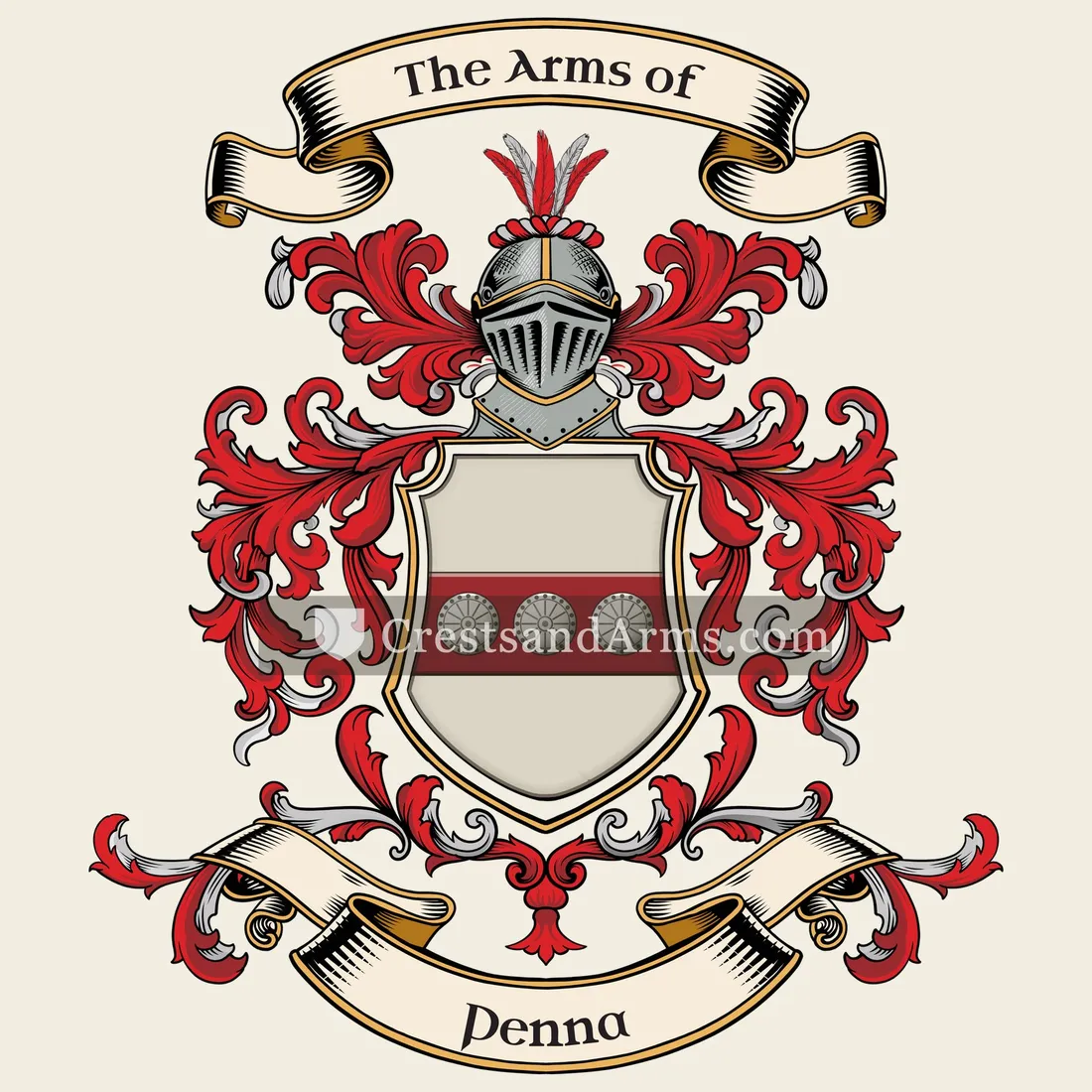
fessThe military belt, and readiness to serve
roundelA coin, and one who has been to the crusades
Colours
Silver (Argent)Means: Peace and sincerity
Red (Gules)Means: Military strength
Historical info
Source
Sir Bernard Burke, The General Armory of England, Scotland, Ireland and Wales, London: Harrison & Sons, 1884
Blazon (the actual original written record)
“Ar. on a fesse gu. three plates”
OxfordOxford, c. 1620
Digital archive packCoat of arms PNG, gold border print PDF, vector SVG and the certificate of authenticity. Sent to your email in minutes.
Map of England showing where the Penna arms are recorded
The Penna arms were recorded in Oxford, c. 1620.
Oxfordshire was farming country with the university at its centre, and both produced families of standing. Scholars and lawyers who did well bought manors nearby, and holding a manor was the ordinary route to a coat of arms.
This is where the arms were entered in the register. Families often moved to other parts of the country, so the same name can turn up in more than one region.
The body that granted and recorded arms in England in this period.
James VI and I
Sovereign of the period
James VI and I
1603–1625
Reigning in France when the Penna arms are first recorded.
How Arms Worked in England
English heraldry allowed arms to be shared by all legitimate descendants of the original owner. These symbols were treated as personal property that moved through the generations to all children. While the eldest son kept the original design, other family members could use the same shield without needing to change it or register their own unique versions.
Granting authority
The College of Arms in London has regulated the use of coats of arms throughout England and Wales since 1484.
How they got arms
Families typically obtained their coats of arms through a formal grant from the Crown or by proving their ancient right to them.
Where arms were recorded
All official coats of arms are recorded in the registers kept at the College of Arms, which date back to the fifteenth century.
The family's standing
Recorded among the armigerous families of Oxford.
Origin & History of the Penna Family in England
The surname Penna has deep roots that connect to the academic and social landscape of seventeenth-century England. By the year 1620, records confirm that members of the family were already established in Oxford, a city defined by its prestigious university and its role as a center for scholarly life. During this era, the name was often associated with individuals who navigated the complex religious and political shifts of the time. While the name itself may have origins linked to geographical features or descriptive traits, its presence in Oxford suggests that these early family members were likely integrated into the professional or merchant classes that supported the city. Living in such a prominent location allowed the family to participate in the intellectual growth of England during the early modern period, leaving a mark on the local history of the region long before the name spread to other parts of the country.
Penna Meaning & Related Branches
Root word
penna
Latin word meaning feather, wing, or quill.
This name
PennaA topographic name for someone living near a pointed hill or a rocky peak.
also spelled
Penna
Penae
Penah
Documented Sources
J. B. Rietstap, Armorial Général, Gouda: G. B. van Goor Zonen, 1884–87
Archives départementales des Bouches-du-Rhône, Registres paroissiaux et d'état civil de Provence, 1663
Boyer, Ferdinand, La vie quotidienne en Provence au XVIIe siècle, 1972
Poupé, Edmond, Inventaire sommaire des archives départementales antérieures à 1790, 1905
Digital archive packCoat of arms PNG, gold border print PDF, vector SVG and the certificate of authenticity. Sent to your email in minutes.


 mulletThe third son, and a divine quality from above
 mulletThe third son, and a divine quality from above


 mountThe ground held, and steadfastness upon it


 fessThe military belt, and readiness to serve
 roundelA coin, and one who has been to the crusades