Map of France showing where the Penning arms are recorded
The Penning arms were recorded in France, c. 1725.
Arms such as these were typically recorded in Bretagne.
More families held coats of arms in Bretagne than anywhere else in France. The land was divided into many small estates rather than a few large ones, so far more households counted as gentry, and each needed a shield of its own to be told apart.
This is where the arms were entered in the register. Families often moved to other parts of the country, so the same name can turn up in more than one region.
The body that granted and recorded arms in France in this period.
Louis XV of France
Sovereign of the period
Louis XV of France
1715–1774
Reigning in France when the Penning arms are first recorded.
How Arms Worked in France
In France, a coat of arms was a mark of honor that passed down through the male line to all legitimate descendants. Families often used the same shield without changes to show their shared heritage. If a branch wanted to stand out, they could add a small mark to their shield to show their specific place in the family tree.
Granting authority
The Juge d'armes de France acted as the official authority that regulated and verified coats of arms across the country.
How they got arms
Families typically inherited their arms from ancestors, though they could also receive them through royal grants or by proving their noble status.
Where arms were recorded
Coats of arms were officially recorded in the Armorial Général de France, which began its main collection in the year 1696.
The family's standing
Recorded among the armigerous families of France.
Origin & History of the Penning Family in France
The family name Penning traces its roots in France to the historic region of Bretagne, where records confirm the presence of family members by the year 1725. During this period, the name was likely associated with the local linguistic traditions of the area, which blended Celtic influences with evolving French dialects. Families in rural Bretagne often lived in close-knit agricultural communities where names were passed down through generations to maintain a connection to their ancestral land. As the eighteenth century progressed, the Penning family would have navigated the complex social structures of the Ancien Régime, likely working as skilled laborers or farmers who contributed to the regional economy. Their presence in the historical record of Bretagne suggests a deep integration into the local culture, reflecting the broader patterns of migration and settlement that defined the lives of common families in pre-revolutionary France.
Meaning of the Penning family crest colors & symbols
Symbols on this shield
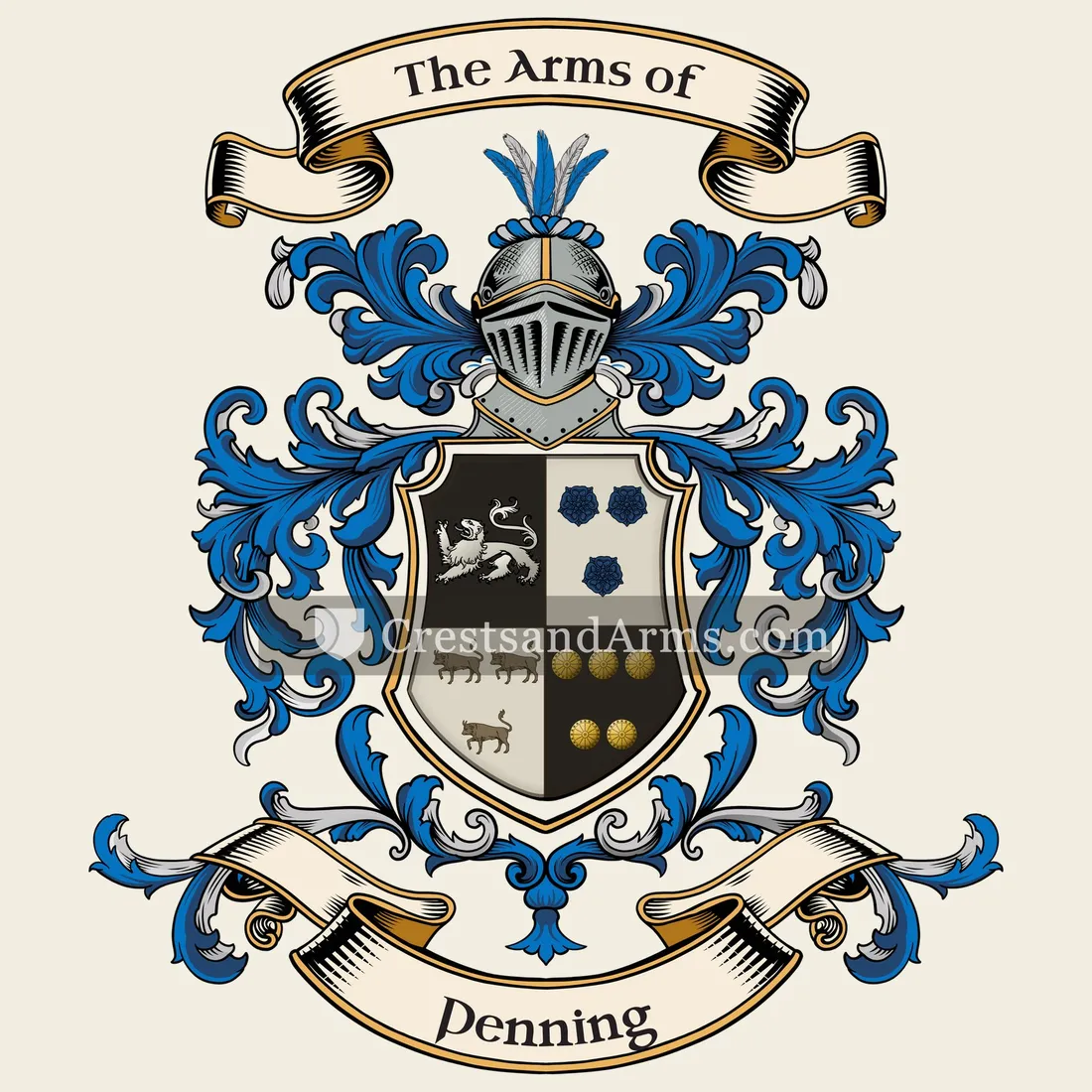
lionCourage, strength and royalty
roseThe seventh son, and beauty with grace
bullValour and generosity
roundelA coin, and one who has been to the crusades
Colours
Black (Sable)Means: Constancy
Silver (Argent)Means: Peace and sincerity
Blue (Azure)Means: Loyalty and truth
Gold (Or)Means: Generosity
Historical info
Source
J. B. Rietstap, Armorial Général, Gouda: G. B. van Goor Zonen, 1884–87
Blazon (the actual original written record)
“Ec.: au 1 de sa. au lion d'arg.; au 2 d'arg. à trois pensées d'azur, tigées du mème; au 3 d'azur à trois rencontres de boeuf au nat.; au 4 de gu. à cinq bes. d'or, 3 et 2. C.: un lion ramp. d'arg.”
NetherlandsSchiedam, c. 1725
Digital archive packCoat of arms PNG, gold border print PDF, vector SVG and the certificate of authenticity. Sent to your email in minutes.
Map of Netherlands showing where the Penning arms are recorded
The Penning arms were recorded in Schiedam, c. 1725.
This is where the arms were entered in the register. Families often moved to other parts of the country, so the same name can turn up in more than one region.
Region
Schiedam
Town
Schiedam
First recorded
1725
Granting Authority for the Penning Arms
Hoge Raad van Adel
Photograph made by me · CC BY-SA 3.0
The body that granted and recorded arms in Netherlands in this period.
How Arms Worked in Netherlands
In the Netherlands, coats of arms were often used by noble families and those who held specific public offices. These arms were passed down through the generations to legitimate descendants. Younger branches of a family usually kept the original design without needing to add special marks. This system ensured that the family identity remained clear and consistent over many years.
Granting authority
The Hoge Raad van Adel is the official body that regulates and manages noble titles and coats of arms in the Netherlands.
How they got arms
Families typically obtained their coats of arms through official royal grants or by proving their long-standing historical use of the symbols.
Where arms were recorded
Coats of arms are officially recorded in the registers held by the Hoge Raad van Adel, which began its work in 1814.
The family's standing
Recorded among the armigerous families of Netherlands.
Origin & History of the Penning Family in Netherlands
The family name Penning has deep roots in the Dutch province of South Holland, where early records place the family in the city of Schiedam by 1725. During this period, Schiedam was a booming center for the gin distilling industry, which attracted many laborers and tradespeople to the area. The name itself likely originated as a descriptive occupational or personal nickname, as the word "penning" refers to a small coin or a monetary unit in the Dutch language. Families with this name were often part of the growing urban middle class that helped define the social fabric of Dutch port cities during the eighteenth century. By settling in a bustling trade hub like Schiedam, the early members of the Penning family were positioned to participate in the maritime and industrial growth that characterized the Netherlands at that time. These ancestors lived through a transformative era of Dutch history, contributing to the local economy while establishing a lasting presence in the region.
Meaning of the Penning family crest colors & symbols
Symbols on this shield
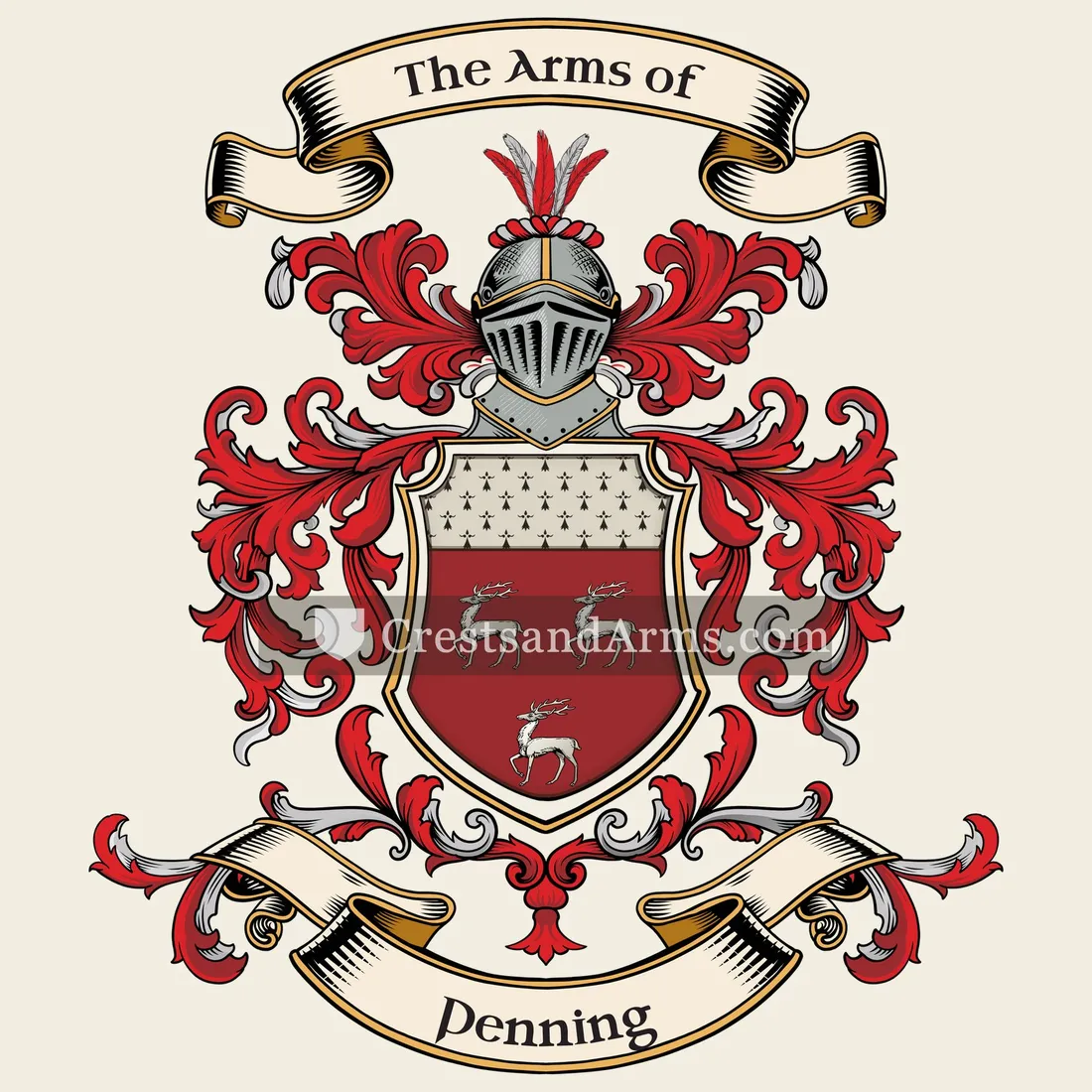
chiefAuthority, wisdom and dominion
stagPeace and harmony, and one who will not fight unprovoked
Colours
Red (Gules)Means: Military strength
ErmineMeans: Dignity
Silver (Argent)Means: Peace and sincerity
Historical info
Source
Sir Bernard Burke, The General Armory of England, Scotland, Ireland and Wales, London: Harrison & Sons, 1884
Blazon (the actual original written record)
“Gu. three bucks' heads cabossed ar., a chief indented erm”
SuffolkIpswich · Suffolk, c. 1594
Digital archive packCoat of arms PNG, gold border print PDF, vector SVG and the certificate of authenticity. Sent to your email in minutes.
Map of England showing where the Penning arms are recorded
The Penning arms were recorded in Suffolk, c. 1594.
Suffolk was wool country, and its cloth towns were among the wealthiest in England. Clothier families bought manors with their profits, and holding a manor was the ordinary route to a coat of arms.
This is where the arms were entered in the register. Families often moved to other parts of the country, so the same name can turn up in more than one region.
The body that granted and recorded arms in England in this period.
Elizabeth I of England
Sovereign of the period
Elizabeth I of England
1558–1603
Reigning in France when the Penning arms are first recorded.
How Arms Worked in England
English heraldry allowed arms to be shared by all legitimate descendants of the original owner. These symbols were treated as personal property that moved through the generations to all children. While the eldest son kept the original design, other family members could use the same shield without needing to change it or register their own unique versions.
Granting authority
The College of Arms in London has regulated the use of coats of arms throughout England and Wales since 1484.
How they got arms
Families typically obtained their coats of arms through a formal grant from the Crown or by proving their ancient right to them.
Where arms were recorded
All official coats of arms are recorded in the registers kept at the College of Arms, which date back to the fifteenth century.
The family's standing
Recorded among the armigerous families of Suffolk.
Origin & History of the Penning Family in England
The family name Penning has deep roots in the English county of Suffolk, where records confirm members of the family were well-established by the late sixteenth century. The name is generally classified as a topographical or occupational surname, likely originating from the Old English word "penning," which referred to a small enclosure for livestock or a specific type of coin. In the rural landscape of Suffolk during the 1590s, families often took names that described their work or the land they occupied. As the family grew, they became integrated into the local community life, often appearing in parish registers and legal documents that tracked land ownership and agricultural activities. These early ancestors were part of the backbone of English village society, living through a period of significant social and economic change as the country moved toward the modern era. By remaining in the same region for generations, the Penning family helped shape the local history of Suffolk through their daily labor and community involvement.
Penning Meaning & Related Branches
Root word
Pannus
Latin term referring to a piece of cloth or garment.
This name
PenningAn occupational name for a cloth merchant or someone who made garments.
also spelled
Pening
Pynning
Penyng
Related arms
Penyngsame arms
Documented Sources
J. B. Rietstap, Armorial Général, Gouda: G. B. van Goor Zonen, 1884–87
Archives départementales du Morbihan, Registres paroissiaux et d'état civil, 1725
Poter, Jean, Histoire de la Bretagne et des Bretons, 2005
Le Gall, Erwan, La vie quotidienne en Bretagne au XVIIIe siècle, 2012
Digital archive packCoat of arms PNG, gold border print PDF, vector SVG and the certificate of authenticity. Sent to your email in minutes.


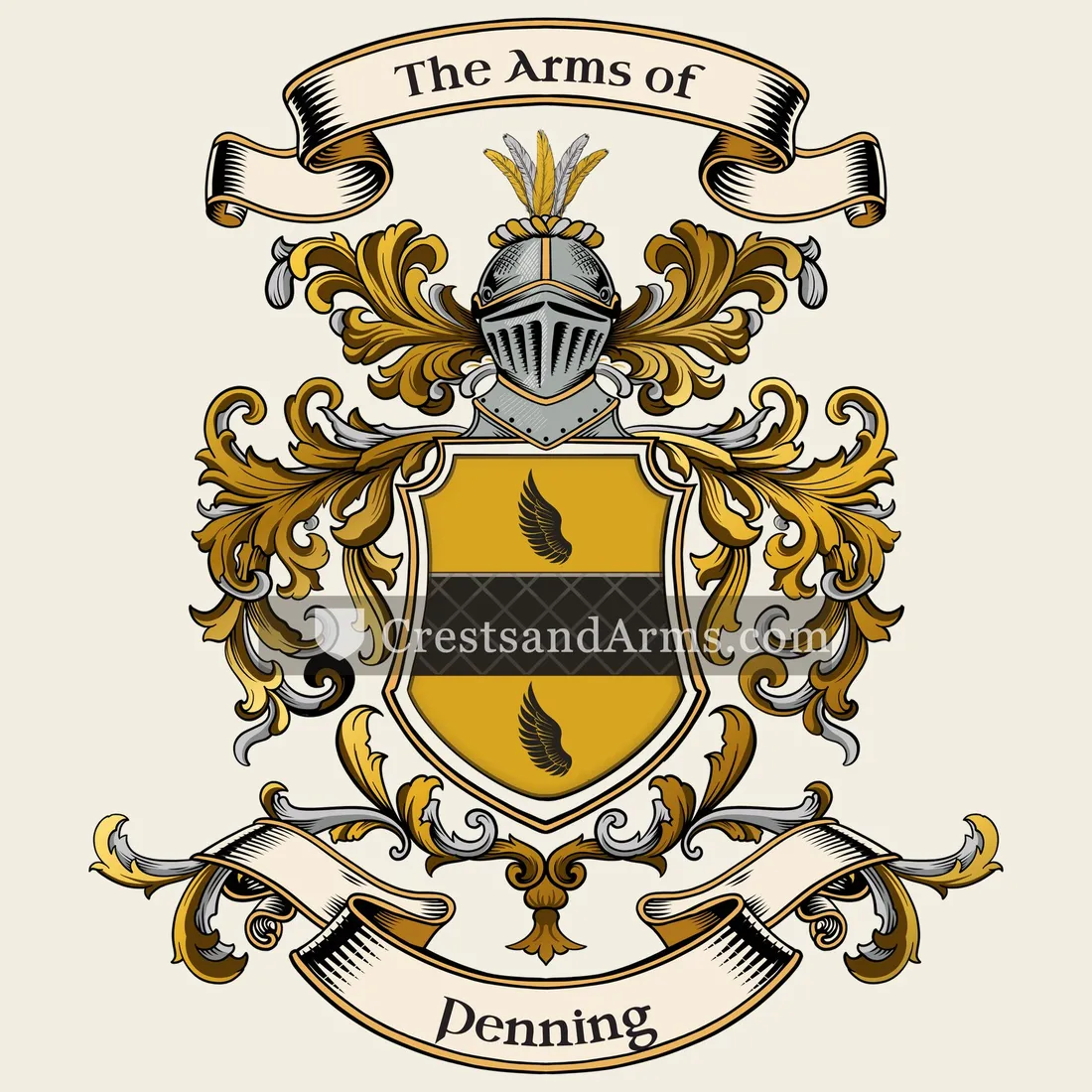
 fessThe military belt, and readiness to serve
 wingSwiftness, and protection under a raised wing
 fessThe military belt, and readiness to serve
 wingSwiftness, and protection under a raised wing


 lionCourage, strength and royalty
 roseThe seventh son, and beauty with grace
 bullValour and generosity
 roundelA coin, and one who has been to the crusades

 chiefAuthority, wisdom and dominion
 stagPeace and harmony, and one who will not fight unprovoked