Map of Germany showing where the Pergram arms are recorded
The Pergram arms were recorded in Bavaria, c. 1506.
Bavaria was a country of old landed families and walled market towns. Estates passed down the same line for centuries, and both the landowners and the leading townsmen kept arms, which is why so many Bavarian names sit in the registers.
This is where the arms were entered in the register. Families often moved to other parts of the country, so the same name can turn up in more than one region.
The body that granted and recorded arms in Germany in this period.
Maximilian I
Sovereign of the period
Maximilian I
1486–1519
Reigning in Germany when the Pergram arms are first recorded.
How Arms Worked in Germany
In the Holy Roman Empire, coats of arms were often granted to individuals by the Emperor or his representatives. These arms were then passed down through the generations to all legitimate descendants of the original holder. Younger branches of a family usually kept the same shield design without needing to change it, as the arms belonged to the entire lineage.
Granting authority
The Holy Roman Emperor held the sole power to grant new coats of arms throughout his vast imperial territories.
How they got arms
Families typically obtained their coats of arms through a formal imperial grant or by proving their noble status to the authorities.
Where arms were recorded
These grants were officially recorded in the Imperial Chancery registers, which began keeping formal records of such honors during the Middle Ages.
The family's standing
Recorded among the armigerous families of Bavaria.
Origin & History of the Pergram Family in Germany
The history of the Pergram family name is deeply rooted in the cultural landscape of southern Germany, with documented evidence placing family members in the region of Bavaria as early as 1506. During this period, the name likely emerged as a descriptive identifier linked to the geographical surroundings or the specific trade of early ancestors living within the Holy Roman Empire. Life in early sixteenth-century Bavaria was defined by a transition from medieval feudal structures to the early modern era, a time when families often settled in rural villages or growing market towns to establish their livelihoods. As the family navigated the social shifts of the Reformation and the economic changes of the Renaissance, they became part of the fabric of local Bavarian society. This early presence suggests that the family was well-integrated into the regional community, contributing to the agricultural and artisanal development that characterized the German lands during the dawn of the sixteenth century.
Meaning of the Pergram family crest colors & symbols
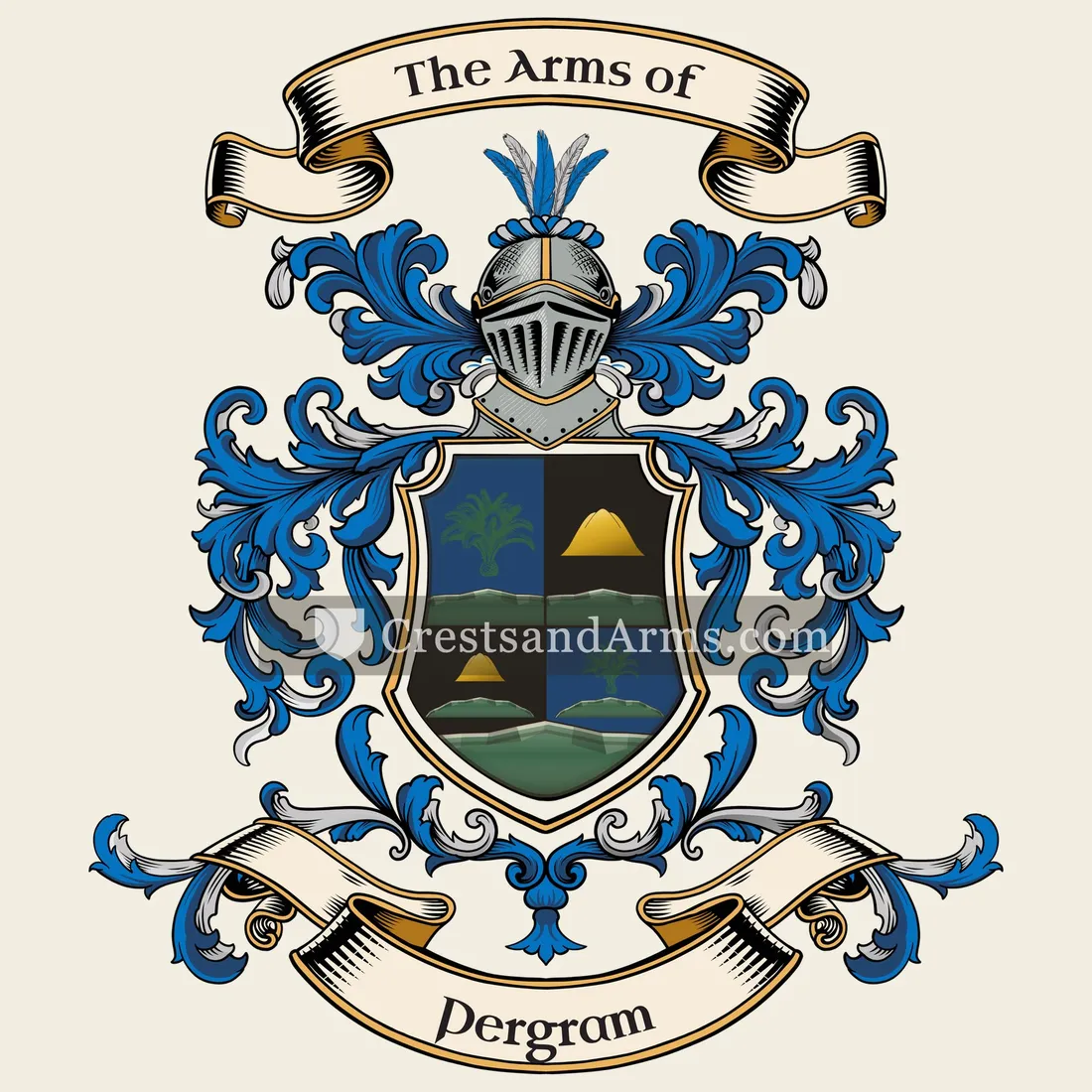
Symbols on this shield
mountThe ground held, and steadfastness upon it
palm treeVictory, and righteousness that flourishes
Colours
Blue (Azure)Means: Loyalty and truth
Black (Sable)Means: Constancy
Green (Vert)Means: Hope
Gold (Or)Means: Generosity
Historical info
Source
J. B. Rietstap, Armorial Général, Gouda: G. B. van Goor Zonen, 1884–87
Blazon (the actual original written record)
“Ec.: aux 1 et 4 d'azur à un palmier de sin., terrassé du même; aux 2 et 3 de sa. à un mont escarpé d'or. C.: un palmier, entre un vol.”
Austriac. 1772
Digital archive packCoat of arms PNG, gold border print PDF, vector SVG and the certificate of authenticity. Sent to your email in minutes.
Map of Austria showing where the Pergram arms are recorded
The Pergram arms were recorded in Austria, c. 1772.
Arms such as these were typically recorded in Tyrol.
Tyrol was mountain country in western Austria, where the valleys were held by families who had been there a very long time. Old tenure counted for more than money, and old families carried arms.
This is where the arms were entered in the register. Families often moved to other parts of the country, so the same name can turn up in more than one region.
Region
Tyrol
First recorded
1772
Granting Authority for the Pergram Arms
Imperial and Royal chancery
Sodacan · CC BY-SA 3.0
The body that granted and recorded arms in Austria in this period.
Joseph II, Holy Roman Emperor
Sovereign of the period
Joseph II, Holy Roman Emperor
1765–1790
Reigning in Germany when the Pergram arms are first recorded.
How Arms Worked in Austria
Austrian coats of arms were often linked directly to noble titles granted by the Emperor. These symbols belonged to the entire family line rather than just one individual. When a family grew, new branches kept the original design without needing to change it. This system allowed all members of a noble house to share the same identity across many generations.
Granting authority
The Imperial and Royal chancery managed all heraldic matters and controlled the official granting of arms throughout the Austrian lands.
How they got arms
Families typically received their arms through a formal imperial decree that often accompanied the elevation of a person to noble status.
Where arms were recorded
Official records of these grants were kept in the Imperial Register of Nobility which began its formal documentation process in 1453.
The family's standing
Recorded among the armigerous families of Austria.
Origin & History of the Pergram Family in Austria
The family name Pergram is deeply rooted in the rugged landscape of the Austrian Tyrol, where records confirm the presence of family members as early as 1772. During this period, the region was characterized by small, isolated mountain communities that relied heavily on agriculture and local trade. Families in this area often lived in permanent settlements for generations, which helped solidify the name within the local administrative records of the time. The name likely evolved as a way to identify families based on their specific mountain homesteads or their roles within the village structure. Life in the 18th-century Tyrol was shaped by the harsh climate and the influence of the Habsburg monarchy, which required families to maintain careful documentation for tax and census purposes. By tracing these early residents, we see a lineage defined by resilience and a strong connection to the alpine terrain that defined their daily lives.
Pergram Meaning & Related Branches
Root word
Berg-heim
A settlement or home located near a mountain or hill.
This name
PergramA topographic surname referring to someone who lived at a dwelling situated on a hill.
also spelled
Pergere
Pergerr
Perge
Documented Sources
J. B. Rietstap, Armorial Général, Gouda: G. B. van Goor Zonen, 1884–87


 mountThe ground held, and steadfastness upon it
 unicornPurity, and extreme courage in defence of honour
 mountThe ground held, and steadfastness upon it
 unicornPurity, and extreme courage in defence of honour
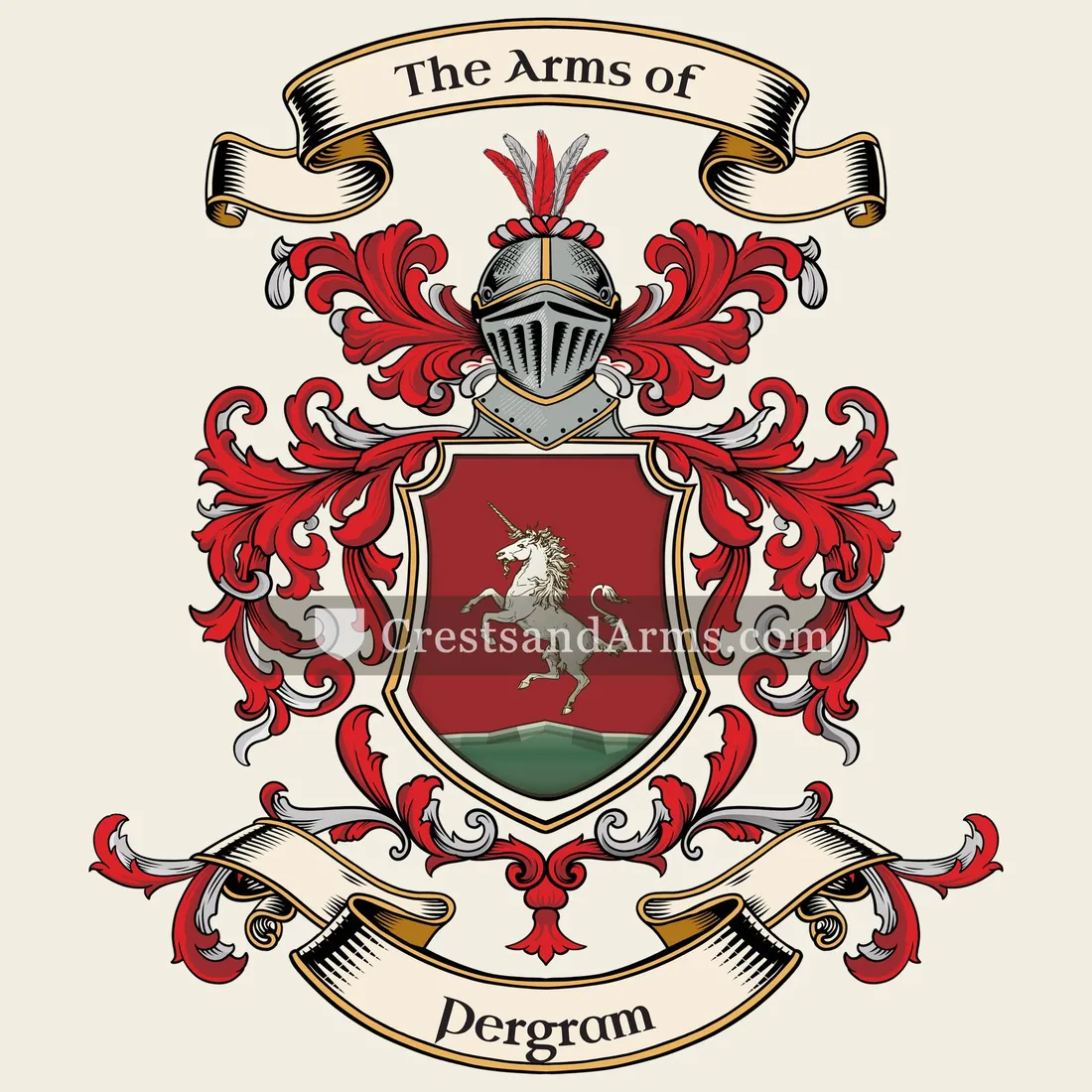


 palm treeVictory, and righteousness that flourishes