Map of Netherlands showing where the Peterka arms are recorded
The Peterka arms were recorded in Netherlands, c. 1815.
Arms such as these were typically recorded in Friesland.
Friesland was low, wet country on the northern coast of the Netherlands, farmed by families who had held the same land for centuries. Free landholders were unusually common there, and a free landholder could carry arms.
This is where the arms were entered in the register. Families often moved to other parts of the country, so the same name can turn up in more than one region.
Region
Friesland
First recorded
1815
Granting Authority for the Peterka Arms
Hoge Raad van Adel
Photograph made by me · CC BY-SA 3.0
The body that granted and recorded arms in Netherlands in this period.
William I of the Netherlands
Sovereign of the period
William I of the Netherlands
1815–1840
Reigning in Netherlands when the Peterka arms are first recorded.
How Arms Worked in Netherlands
In the Netherlands, coats of arms were often used by noble families and those who held specific public offices. These arms were passed down through the generations to legitimate descendants. Younger branches of a family usually kept the original design without needing to add special marks. This system ensured that the family identity remained clear and consistent over many years.
Granting authority
The Hoge Raad van Adel is the official body that regulates and manages noble titles and coats of arms in the Netherlands.
How they got arms
Families typically obtained their coats of arms through official royal grants or by proving their long-standing historical use of the symbols.
Where arms were recorded
Coats of arms are officially recorded in the registers held by the Hoge Raad van Adel, which began its work in 1814.
The family's standing
Recorded among the armigerous families of Netherlands.
Origin & History of the Peterka Family in Netherlands
The history of the Peterka name in the Netherlands is deeply connected to the unique social landscape of the Friesland region during the early nineteenth century. When family records first appear in official Dutch registries around 1815, they reflect a period of significant administrative change following the end of French rule. At this time, the Dutch government required families to formalize their surnames to improve tax collection and military conscription. The name Peterka suggests a linguistic bridge between Slavic roots and the Germanic naming traditions common in the northern provinces. During this era, families in Friesland were often deeply involved in local agriculture and maritime trade, which allowed them to integrate into the tight-knit communities of the Frisian countryside. By settling in this region, the early members of the family became part of a distinct cultural identity that valued independence and local tradition while adapting to the evolving laws of the newly formed Kingdom of the Netherlands.
Meaning of the Peterka family crest colors & symbols
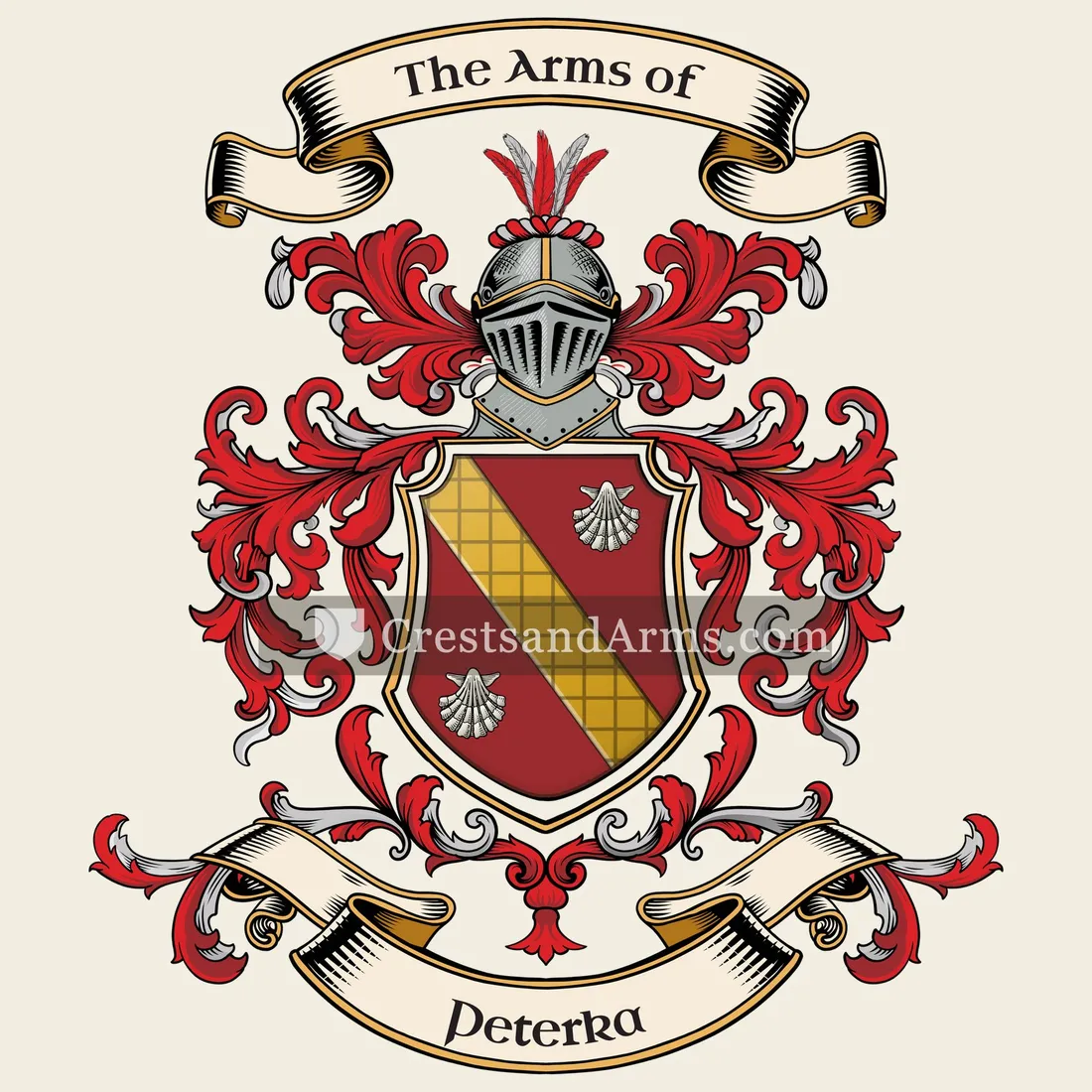
Symbols on this shield
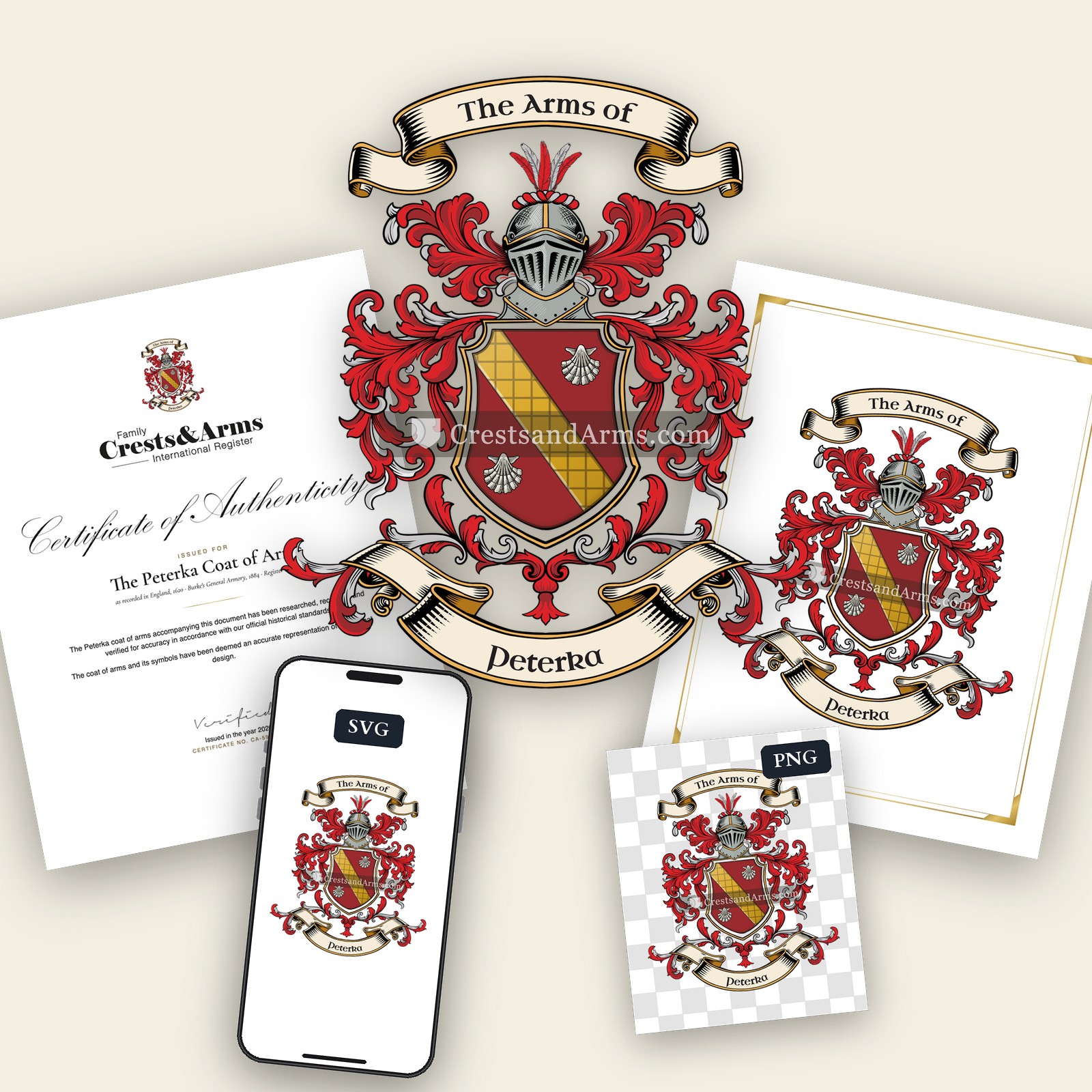
bendDefence, and the scarf of a commander
escallopThe pilgrim's shell, and a long journey made
Colours
Red (Gules)Means: Military strength
Gold (Or)Means: Generosity
Silver (Argent)Means: Peace and sincerity
Historical info
Source
Sir Bernard Burke, The General Armory of England, Scotland, Ireland and Wales, London: Harrison & Sons, 1884
Blazon (the actual original written record)
“Gu. a bend or, betw. two escallops ar”
LancasterPlatbridge · Lancaster, c. 1620
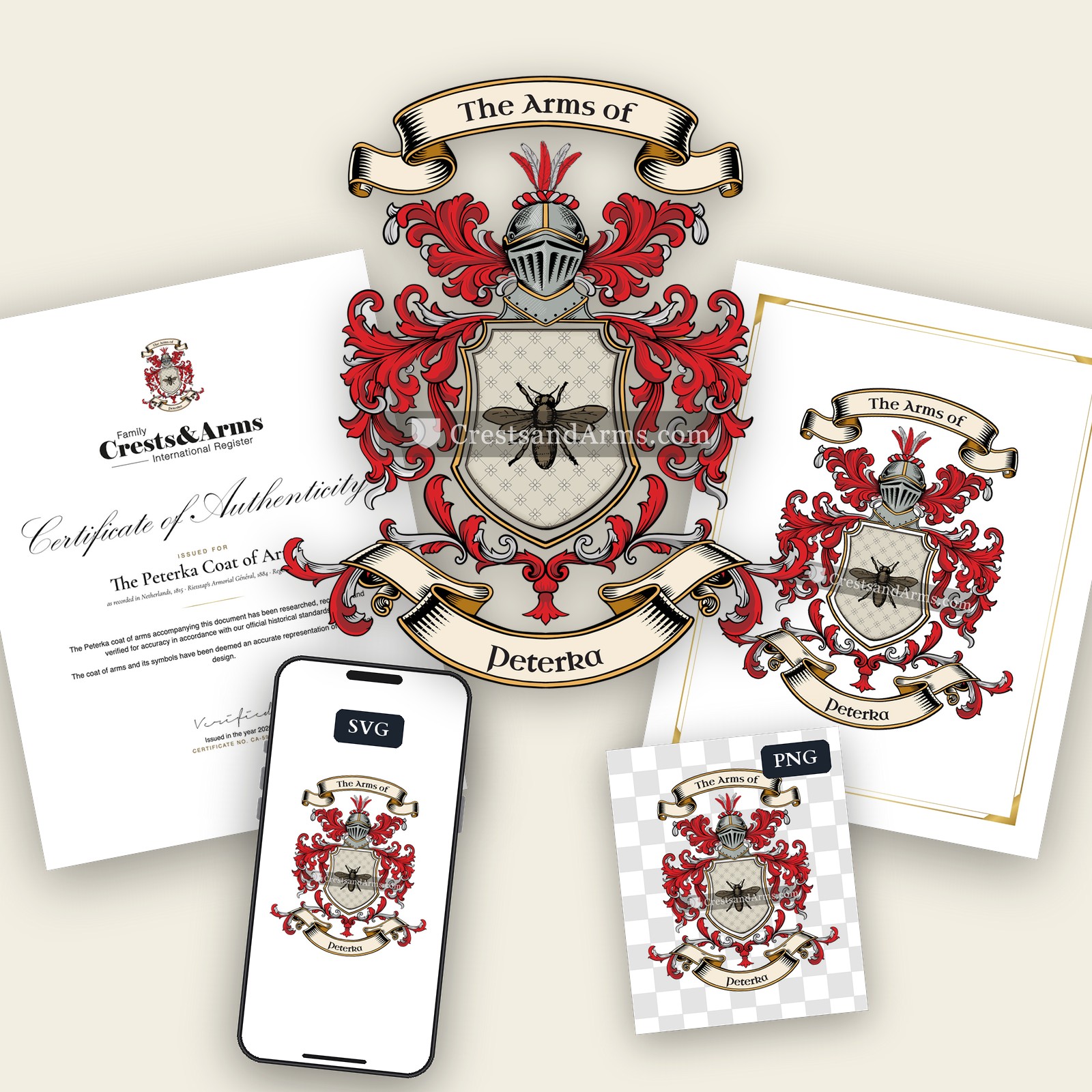
Digital archive packCoat of arms PNG, gold border print PDF, vector SVG and the certificate of authenticity. Sent to your email in minutes.
Map of England showing where the Peterka arms are recorded
The Peterka arms were recorded in Lancaster, c. 1620.
Lancashire was divided among a great many small landed families, more than most northern counties. Estates were passed down whole rather than split up, so the same names hold the same ground for centuries in the records.
This is where the arms were entered in the register. Families often moved to other parts of the country, so the same name can turn up in more than one region.
The body that granted and recorded arms in England in this period.
James VI and I
Sovereign of the period
James VI and I
1603–1625
Reigning in Netherlands when the Peterka arms are first recorded.
How Arms Worked in England
English heraldry allowed arms to be shared by all legitimate descendants of the original owner. These symbols were treated as personal property that moved through the generations to all children. While the eldest son kept the original design, other family members could use the same shield without needing to change it or register their own unique versions.
Granting authority
The College of Arms in London has regulated the use of coats of arms throughout England and Wales since 1484.
How they got arms
Families typically obtained their coats of arms through a formal grant from the Crown or by proving their ancient right to them.
Where arms were recorded
All official coats of arms are recorded in the registers kept at the College of Arms, which date back to the fifteenth century.
The family's standing
Recorded among the armigerous families of Lancaster.
Origin & History of the Peterka Family in England
The family name Peterka carries a distinct history that traces back to the vibrant landscape of seventeenth-century England. While the name itself is often associated with Central European roots, records confirm that members of the family were established in the town of Lancaster by 1620. During this period, Lancaster served as a significant center for trade and local governance, placing the family within a community shaped by the shifting religious and political tides of the Stuart era. Living in a bustling market town, these early ancestors were likely involved in the local economy, perhaps working as skilled craftsmen or merchants who contributed to the growth of the region. Their presence in the historical record during this time suggests a family that was well-integrated into the social fabric of Lancashire, navigating the challenges of daily life in a growing English town. By settling in such a prominent location, the early Peterkas became part of the long and complex narrative of English regional history.
Meaning of the Peterka family crest colors & symbols
Colours
Blue (Azure)Means: Loyalty and truth
Black (Sable)Means: Constancy
Historical info
Source
Sir Bernard Burke, The General Armory of England, Scotland, Ireland and Wales, London: Harrison & Sons, 1884
Blazon (the actual original written record)
“Quarterly, 1st and 4th, az. an eagle displ. with two heads or, for PETERS; 2nd and 3rd, sa. a bend ar. in sinister chief a tower triple-towered of the last, for PLUNKETT”
GermanyUlster's Office, c. 1704
Digital archive packCoat of arms PNG, gold border print PDF, vector SVG and the certificate of authenticity. Sent to your email in minutes.
Map of Germany showing where the Peterka arms are recorded
The Peterka arms were recorded in Ulster's Office, c. 1704.
Arms such as these were typically recorded in Bavaria.
Bavaria was a country of old landed families and walled market towns. Estates passed down the same line for centuries, and both the landowners and the leading townsmen kept arms, which is why so many Bavarian names sit in the registers.
This is where the arms were entered in the register. Families often moved to other parts of the country, so the same name can turn up in more than one region.
The body that granted and recorded arms in Germany in this period.
Leopold I, Holy Roman Emperor
Sovereign of the period
Leopold I, Holy Roman Emperor
1658–1705
Reigning in Netherlands when the Peterka arms are first recorded.
How Arms Worked in Germany
In the Holy Roman Empire, coats of arms were often granted to individuals by the Emperor or his representatives. These arms were then passed down through the generations to all legitimate descendants of the original holder. Younger branches of a family usually kept the same shield design without needing to change it, as the arms belonged to the entire lineage.
Granting authority
The Holy Roman Emperor held the sole power to grant new coats of arms throughout his vast imperial territories.
How they got arms
Families typically obtained their coats of arms through a formal imperial grant or by proving their noble status to the authorities.
Where arms were recorded
These grants were officially recorded in the Imperial Chancery registers, which began keeping formal records of such honors during the Middle Ages.
The family's standing
Recorded among the armigerous families of Germany.
Origin & History of the Peterka Family in Germany
The name Peterka is a diminutive form of the name Peter, which was a common way to identify individuals in German-speaking regions during the Middle Ages. By adding the suffix "ka," the name likely served as a way to distinguish a younger family member or a person of smaller stature from an elder Peter in the community. Records confirm that members of the Peterka family were established in the Bavarian region by 1704, a time when the area was deeply affected by the War of the Spanish Succession. During this period, families often lived in small agricultural villages where they were tied to the land and local parish churches. These early ancestors were likely craftsmen or farmers who played a vital role in the social and economic life of their rural Bavarian towns. As the name spread through the region, it became a fixed identifier that helped officials track families for tax and census purposes in the years following the conflicts of the early eighteenth century.
Peterka Meaning & Related Branches
Root word
Petrus
Latin for stone or rock derived from the Greek word petros.
This name
PeterkaA diminutive form indicating a descendant or a small version of Peter.
also spelled
Petters
Peterson
Petres
Documented Sources
J. B. Rietstap, Armorial Général, Gouda: G. B. van Goor Zonen, 1884–87
Tresoar (Fries Historisch en Letterkundig Centrum), Burgerlijke Stand van Friesland (Civil Registry of Friesland), 1811–1950
H.K. Schippers, De invoering van de burgerlijke stand in Nederland, 1999
J. van der Bijl, Friese familienamen: hun oorsprong en verspreiding, 1989
Digital archive packCoat of arms PNG, gold border print PDF, vector SVG and the certificate of authenticity. Sent to your email in minutes.


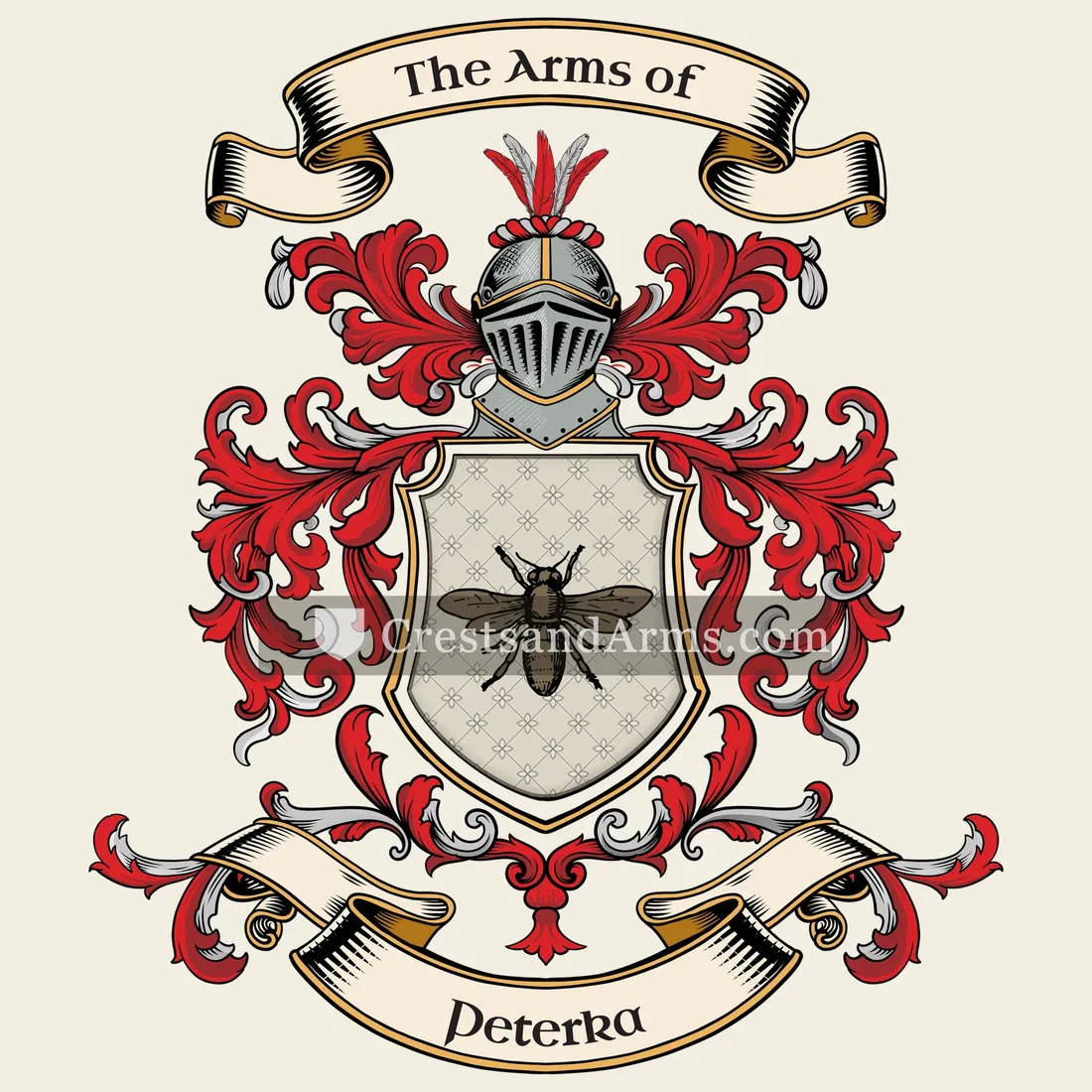
 beeIndustry, order and tireless work
 beeIndustry, order and tireless work


 bendDefence, and the scarf of a commander
 escallopThe pilgrim's shell, and a long journey made