Map of England showing where the Pettit arms are recorded
The Pettit arms were recorded in Kent, c. 1620.
Kent sits between London and the short crossing to Europe, and the trade passing through made it wealthy. Merchant families bought land with that money, and it was landowners who took coats of arms.
This is where the arms were entered in the register. Families often moved to other parts of the country, so the same name can turn up in more than one region.
The body that granted and recorded arms in England in this period.
James VI and I
Sovereign of the period
James VI and I
1603–1625
Reigning in England when the Pettit arms are first recorded.
How Arms Worked in England
English heraldry allowed arms to be shared by all legitimate descendants of the original owner. These symbols were treated as personal property that moved through the generations to all children. While the eldest son kept the original design, other family members could use the same shield without needing to change it or register their own unique versions.
Granting authority
The College of Arms in London has regulated the use of coats of arms throughout England and Wales since 1484.
How they got arms
Families typically obtained their coats of arms through a formal grant from the Crown or by proving their ancient right to them.
Where arms were recorded
All official coats of arms are recorded in the registers kept at the College of Arms, which date back to the fifteenth century.
The family's standing
Recorded among the armigerous families of Kent.
Origin & History of the Pettit Family in England
The surname Pettit is rooted in the Old French word "petit," which means small or little. It likely arrived in England following the Norman Conquest of 1066, serving as a descriptive nickname for a person of short stature or perhaps the younger member of a family. By the early 17th century, the name was firmly established in the county of Kent, a region known for its strong agricultural traditions and proximity to the English Channel. Families bearing this name in Kent during the 1620s were often involved in local commerce and land management, contributing to the social fabric of the rural landscape. As these individuals settled into their communities, the name evolved from a simple nickname into a formal hereditary surname passed down through generations. This transition reflects the broader historical trend of how medieval descriptors became fixed family identifiers as record-keeping became more common in English parish life.
Coat of Arms & Family Crest Details
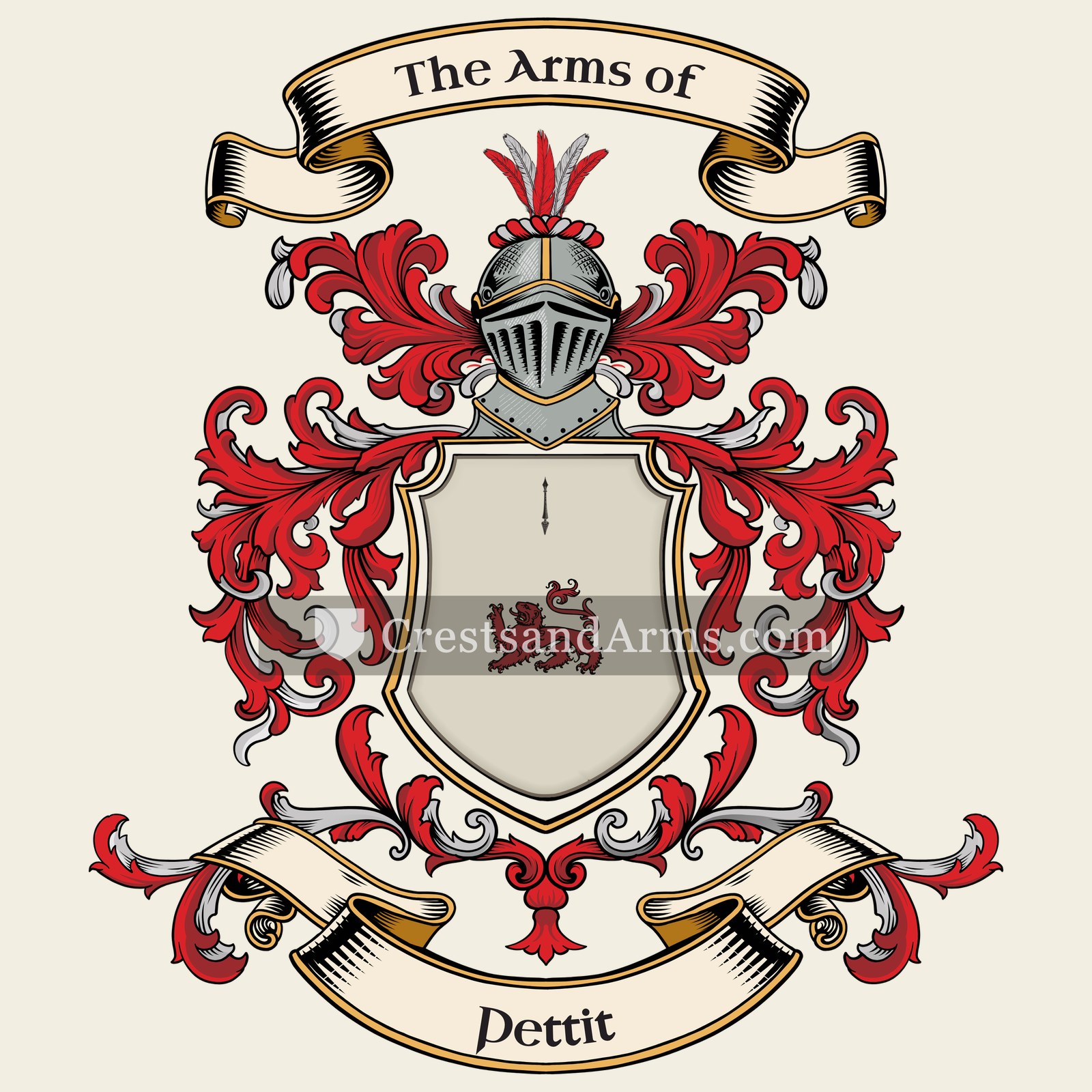
Symbols on this shield
lionCourage, strength and royalty
lanceKnightly service and the tilt
Colours
Silver (Argent)Means: Peace and sincerity
Red (Gules)Means: Military strength
Black (Sable)Means: Constancy
Historical info
Source
Sir Bernard Burke, The General Armory of England, Scotland, Ireland and Wales, London: Harrison & Sons, 1884
Blazon (the actual original written record)
“Ar. a lion ramp. gu. and in the dexter chief point a spear head sa”
SpainUlster's Office, c. 1722
Digital archive packCoat of arms PNG, gold border print PDF, vector SVG and the certificate of authenticity. Sent to your email in minutes.
Map of Spain showing where the Pettit arms are recorded
The Pettit arms were recorded in Ulster's Office, c. 1722.
Arms such as these were typically recorded in Castile.
Castile was the heart of Spain and the source of most of its noble families. Land won in the long wars against the Moors was granted out to fighting men, and a man granted land was granted arms along with it.
This is where the arms were entered in the register. Families often moved to other parts of the country, so the same name can turn up in more than one region.
The body that granted and recorded arms in Spain in this period.
Philip V of Spain
Sovereign of the period
Philip V of Spain
1714–1724
Reigning in England when the Pettit arms are first recorded.
How Arms Worked in Spain
In Spain, a coat of arms was considered a form of property that belonged to the entire family line. These arms were passed down from a father to all his children equally. Younger branches of the family usually kept the original design without needing to add any special marks to distinguish their specific line.
Granting authority
The Cronista Rey de Armas was the official body that regulated and granted coats of arms throughout Spain.
How they got arms
Families often obtained their arms through royal grants or by proving their noble status to the official heraldic authority.
Where arms were recorded
Coats of arms were officially recorded in the registers of the Cronista Rey de Armas starting in 1496.
The family's standing
Recorded among the armigerous families of Spain.
Origin & History of the Pettit Family in Spain
The history of the Pettit family in Spain is deeply connected to the social shifts occurring in the Castile region during the early eighteenth century. By 1722, records confirm that members of the family were established within the local administrative and social structures of the Spanish heartland. The name itself likely originated from the Old French term "petit," meaning small, which was frequently used as a descriptive nickname for a person of short stature or the younger member of a family. As these individuals moved into Spanish territories, the name was adapted to fit the local linguistic customs while maintaining its original meaning. During this era, families with such roots often integrated into the provincial bureaucracy or trade networks, allowing them to settle permanently in Castile. This transition reflects a broader pattern of migration where families moved across European borders to seek new opportunities in the expanding Spanish administration.
Pettit Meaning & Related Branches
Root word
petit
Old French word meaning small or little.
This name
PettitA descriptive nickname for a person of small stature or the younger of two.
also spelled
Petyt
Petytt
Petite
Related arms
Pettetsimilar arms
Petitevariant spelling
Petytvariant spelling
Petyttvariant spelling
Documented Sources
Sir Bernard Burke, The General Armory of England, Scotland, Ireland and Wales, London: Harrison & Sons, 1884
Reaney, P.H., A Dictionary of English Surnames, 1958
Lower, Mark Antony, Patronymica Britannica: A Dictionary of the Family Names of the United Kingdom, 1860
Kent Archives, Archdeaconry of Canterbury Wills and Administrations, 1620–1650
Digital archive packCoat of arms PNG, gold border print PDF, vector SVG and the certificate of authenticity. Sent to your email in minutes.


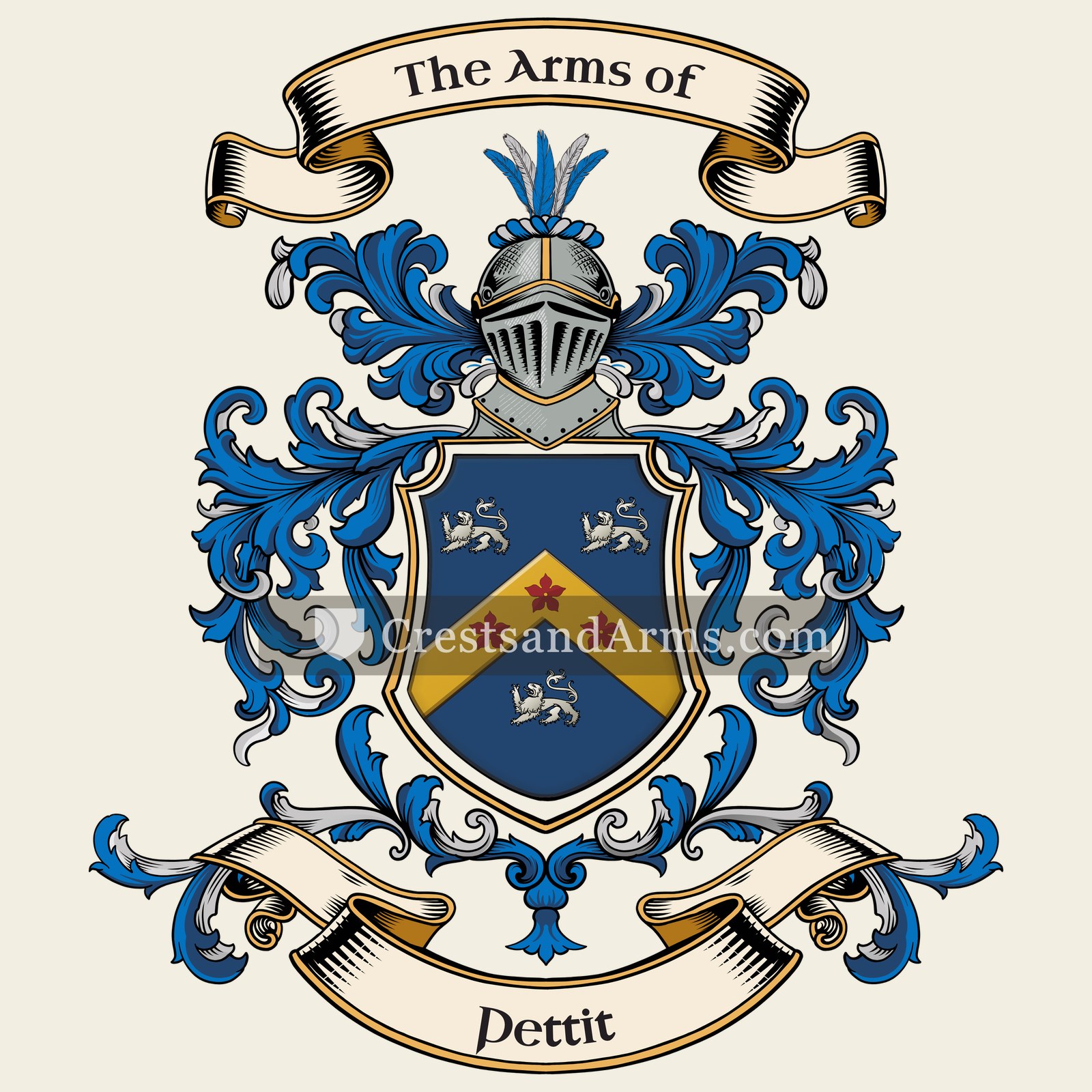
 chevronProtection, and faithful service completed
 lionCourage, strength and royalty
 cinquefoilHope and joy
 chevronProtection, and faithful service completed
 lionCourage, strength and royalty
 cinquefoilHope and joy


 lanceKnightly service and the tilt