A record of documented arms, meaning and origin, researched for the Pfeiffer family lines. Documented in 3 countries.
Reg. 2764 · Dutch, P–S
Coat of Arms & Family Crest Details
Symbols on this shield
bendDefence, and the scarf of a commander
stagPeace and harmony, and one who will not fight unprovoked
hunting horn stringedOne who delights in the chase
Colours
Green (Vert)Means: Hope
Gold (Or)Means: Generosity
Silver (Argent)Means: Peace and sincerity
Historical info
Source
J. B. Rietstap, Armorial Général, Gouda: G. B. van Goor Zonen, 1884–87
Blazon (the actual original written record)
“Tranché de sin. sur or, à la bande d'arg., br. sur le tranché; le sin. ch. d'une tête et col de cerf d'or, et l'or ch. d'une flûte au nat., posée en bande, l'embouchure en haut. C.: une tête et col de cerf d'or.”
Netherlandsc. 1815
Digital archive packCoat of arms PNG, gold border print PDF, vector SVG and the certificate of authenticity. Sent to your email in minutes.
Map of Netherlands showing where the Pfeiffer arms are recorded
The Pfeiffer arms were recorded in Netherlands, c. 1815.
Arms such as these were typically recorded in Friesland.
Friesland was low, wet country on the northern coast of the Netherlands, farmed by families who had held the same land for centuries. Free landholders were unusually common there, and a free landholder could carry arms.
This is where the arms were entered in the register. Families often moved to other parts of the country, so the same name can turn up in more than one region.
Region
Friesland
First recorded
1815
Granting Authority for the Pfeiffer Arms
Hoge Raad van Adel
Photograph made by me · CC BY-SA 3.0
The body that granted and recorded arms in Netherlands in this period.
William I of the Netherlands
Sovereign of the period
William I of the Netherlands
1815–1840
Reigning in Netherlands when the Pfeiffer arms are first recorded.
How Arms Worked in Netherlands
In the Netherlands, coats of arms were often used by noble families and those who held specific public offices. These arms were passed down through the generations to legitimate descendants. Younger branches of a family usually kept the original design without needing to add special marks. This system ensured that the family identity remained clear and consistent over many years.
Granting authority
The Hoge Raad van Adel is the official body that regulates and manages noble titles and coats of arms in the Netherlands.
How they got arms
Families typically obtained their coats of arms through official royal grants or by proving their long-standing historical use of the symbols.
Where arms were recorded
Coats of arms are officially recorded in the registers held by the Hoge Raad van Adel, which began its work in 1814.
The family's standing
Recorded among the armigerous families of Netherlands.
Origin & History of the Pfeiffer Family in Netherlands
The surname Pfeiffer is rooted in the German word for a flute player or piper, which suggests that the earliest ancestors likely held this profession in a medieval village setting. As the name moved into the Netherlands, it became associated with families who migrated across borders for trade or work. By 1815, records confirm that members of the Pfeiffer family were well-established in the northern province of Friesland. During this period, the Netherlands underwent significant administrative changes under the new Kingdom of the Netherlands, which required citizens to formalize their family names in official civil registers. The presence of the family in Friesland at this time indicates they were part of the local community during a time of great transition for the Dutch people. Their history in the region reflects the broader movement of families who settled in the northern provinces to pursue agricultural or artisanal livelihoods during the early nineteenth century.
Coat of Arms & Family Crest Details
Symbols on this shield
anchorHope, and steadfastness in trouble
Colours
Green (Vert)Means: Hope
Gold (Or)Means: Generosity
Historical info
Source
J. B. Rietstap, Armorial Général, Gouda: G. B. van Goor Zonen, 1884–87
Blazon (the actual original written record)
“De sin. à une ancre d'or, posée en bande. C.: une rose d'or, entre un vol de sin.”
GermanyCassel Hesse, c. 1765
Digital archive packCoat of arms PNG, gold border print PDF, vector SVG and the certificate of authenticity. Sent to your email in minutes.
Map of Germany showing where the Pfeiffer arms are recorded
The Pfeiffer arms were recorded in Cassel Hesse, c. 1765.
This is where the arms were entered in the register. Families often moved to other parts of the country, so the same name can turn up in more than one region.
The body that granted and recorded arms in Germany in this period.
Francis I, Holy Roman Emperor
Sovereign of the period
Francis I, Holy Roman Emperor
1745–1765
Reigning in Netherlands when the Pfeiffer arms are first recorded.
How Arms Worked in Germany
In the Holy Roman Empire, coats of arms were often granted to individuals by the Emperor or his representatives. These arms were then passed down through the generations to all legitimate descendants of the original holder. Younger branches of a family usually kept the same shield design without needing to change it, as the arms belonged to the entire lineage.
Granting authority
The Holy Roman Emperor held the sole power to grant new coats of arms throughout his vast imperial territories.
How they got arms
Families typically obtained their coats of arms through a formal imperial grant or by proving their noble status to the authorities.
Where arms were recorded
These grants were officially recorded in the Imperial Chancery registers, which began keeping formal records of such honors during the Middle Ages.
The family's standing
Recorded among the armigerous families of Germany.
Origin & History of the Pfeiffer Family in Germany
The surname Pfeiffer originated as a descriptive occupational name in medieval Germany, derived from the Middle High German word *pfeiffer*, which means flute player or piper. During the Middle Ages, names were often assigned based on a person’s trade, and those who provided music for village festivals, royal courts, or military units frequently carried this title. By the mid-18th century, the family had established a documented presence in the city of Cassel, which is located in the region of Hesse. Records from 1765 confirm that members of the family were active participants in the social and economic life of this urban center during a period of significant regional development. As the name spread across German-speaking lands, it evolved from a simple job description into a hereditary family name that connected generations to their musical and professional roots.
Coat of Arms & Family Crest Details
Symbols on this shield
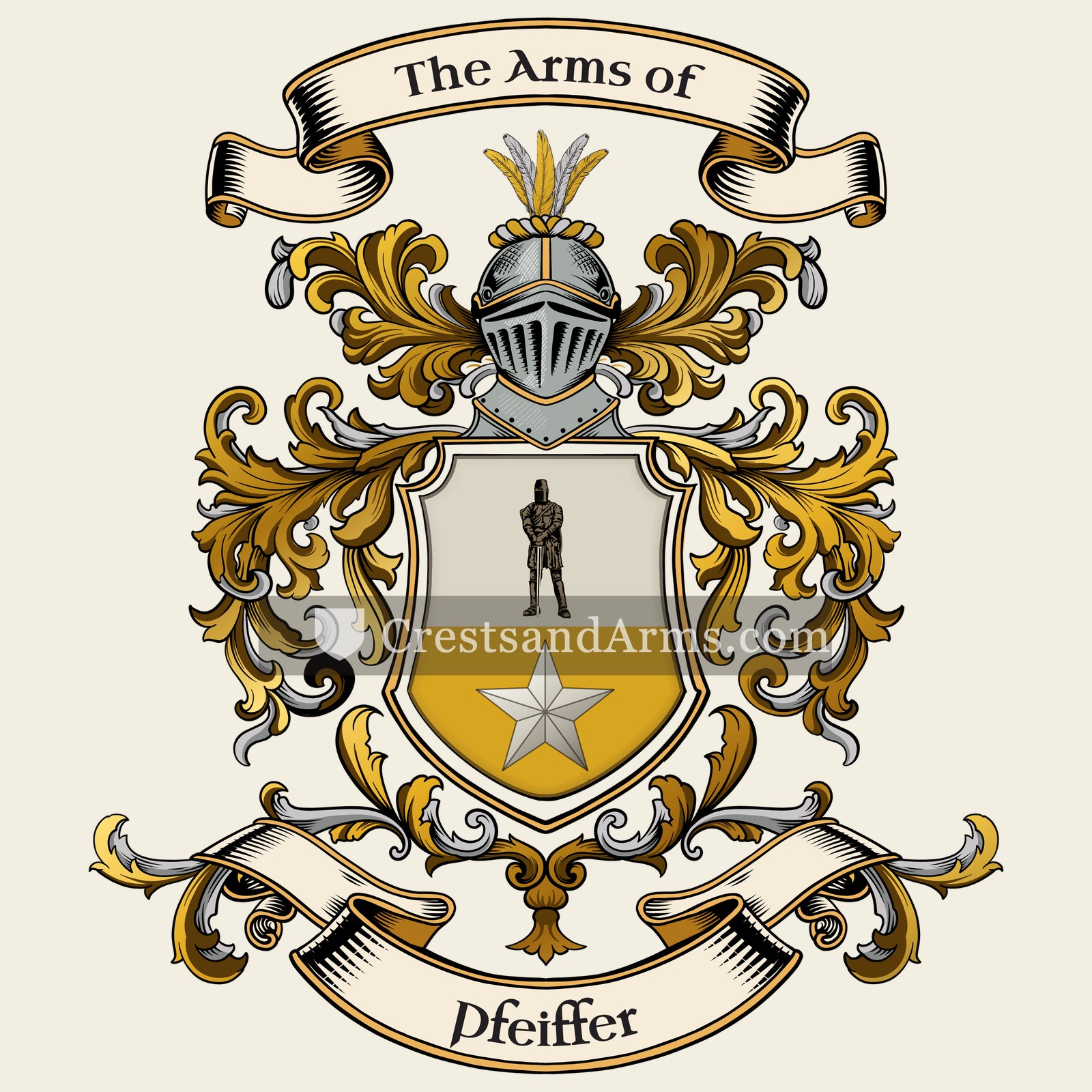
knightChivalry and service in arms
mulletThe third son, and a divine quality from above
Colours
Silver (Argent)Means: Peace and sincerity
Gold (Or)Means: Generosity
Historical info
Source
J. B. Rietstap, Armorial Général, Gouda: G. B. van Goor Zonen, 1884–87
Blazon (the actual original written record)
“Coupé: au 1 d'arg. à un homme iss., de profil, hab. de gu., coiffé d'un chapeau du même, et jouant du chalumeau; au 2 d'or à une étoile d'arg. C.: l'étoile; entre deux prob. coupées alt. d'or et de gu. L. d'arg. et de gu.”
TyrolRothenburg Bav · Tyrol, c. 1772
Digital archive packCoat of arms PNG, gold border print PDF, vector SVG and the certificate of authenticity. Sent to your email in minutes.
Map of Austria showing where the Pfeiffer arms are recorded
The Pfeiffer arms were recorded in Tyrol, c. 1772.
Tyrol was mountain country in western Austria, where the valleys were held by families who had been there a very long time. Old tenure counted for more than money, and old families carried arms.
This is where the arms were entered in the register. Families often moved to other parts of the country, so the same name can turn up in more than one region.
Region
Tyrol
Town
Rothenburg Bav
First recorded
1772
Granting Authority for the Pfeiffer Arms
Imperial and Royal chancery
Sodacan · CC BY-SA 3.0
The body that granted and recorded arms in Austria in this period.
Joseph II, Holy Roman Emperor
Sovereign of the period
Joseph II, Holy Roman Emperor
1765–1790
Reigning in Netherlands when the Pfeiffer arms are first recorded.
How Arms Worked in Austria
Austrian coats of arms were often linked directly to noble titles granted by the Emperor. These symbols belonged to the entire family line rather than just one individual. When a family grew, new branches kept the original design without needing to change it. This system allowed all members of a noble house to share the same identity across many generations.
Granting authority
The Imperial and Royal chancery managed all heraldic matters and controlled the official granting of arms throughout the Austrian lands.
How they got arms
Families typically received their arms through a formal imperial decree that often accompanied the elevation of a person to noble status.
Where arms were recorded
Official records of these grants were kept in the Imperial Register of Nobility which began its formal documentation process in 1453.
The family's standing
Recorded among the armigerous families of Tyrol.
Origin & History of the Pfeiffer Family in Austria
The surname Pfeiffer is a classic example of an occupational name that emerged from the medieval tradition of identifying people by their trade. Derived from the Middle High German word *pfeifer*, the name literally translates to "piper" or "flute player." In the mountainous regions of Tyrol, where the family was documented as early as 1772, this name likely identified individuals who performed music for local festivals, village dances, or religious processions. During this period in Austrian history, families were often deeply rooted in specific valleys, and the name became a permanent marker of their social role within the community. As the family grew, the name transitioned from a simple description of a musician into a hereditary surname that was passed down through generations. This evolution reflects the broader social patterns of the Alpine region, where surnames became essential for tracking tax records and parish registrations as populations began to expand.
Related Branches & Arms
Root word
Pfeifer
A person who plays a flute or pipe instrument.
This name
PfeifferAn occupational surname for a professional musician or piper.
also spelled
Pfeifer
Pfyfer
Fyfer
Related arms
Pauersimilar arms
Pfeifervariant spelling
Pfeufervariant spelling
Pfeuffervariant spelling
Documented Sources
J. B. Rietstap, Armorial Général, Gouda: G. B. van Goor Zonen, 1884–87
Tresoar (Fries Historisch en Letterkundig Centrum), Burgerlijke Stand van de provincie Friesland
Hardenberg, H., De archieven van de Nederlandse overheid, 1968
Meertens, P.J., De Nederlandse familienamen: ontstaan en betekenis, 1947
Digital archive packCoat of arms PNG, gold border print PDF, vector SVG and the certificate of authenticity. Sent to your email in minutes.


 bendDefence, and the scarf of a commander
 stagPeace and harmony, and one who will not fight unprovoked
 hunting horn stringedOne who delights in the chase
 bendDefence, and the scarf of a commander
 stagPeace and harmony, and one who will not fight unprovoked
 hunting horn stringedOne who delights in the chase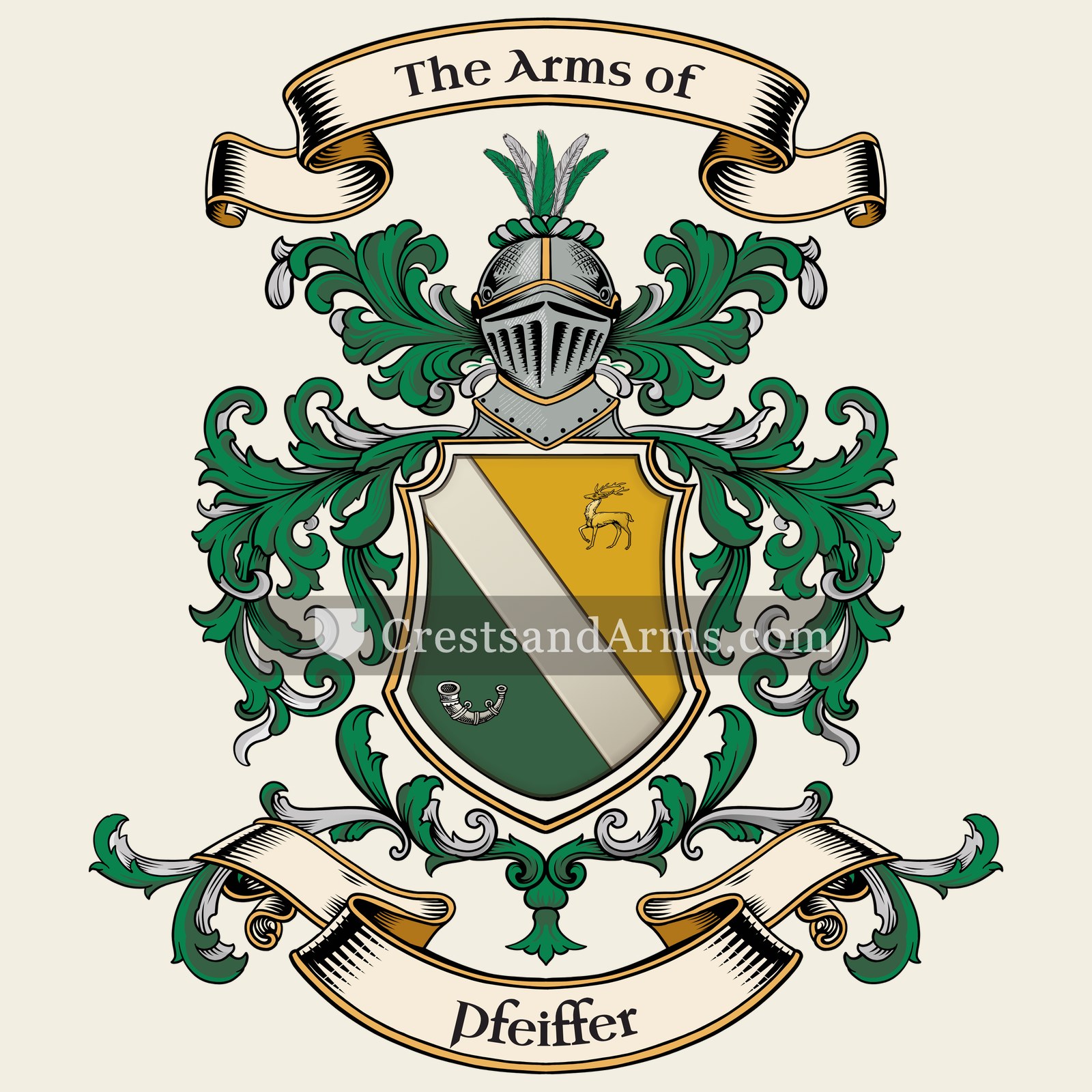


 anchorHope, and steadfastness in trouble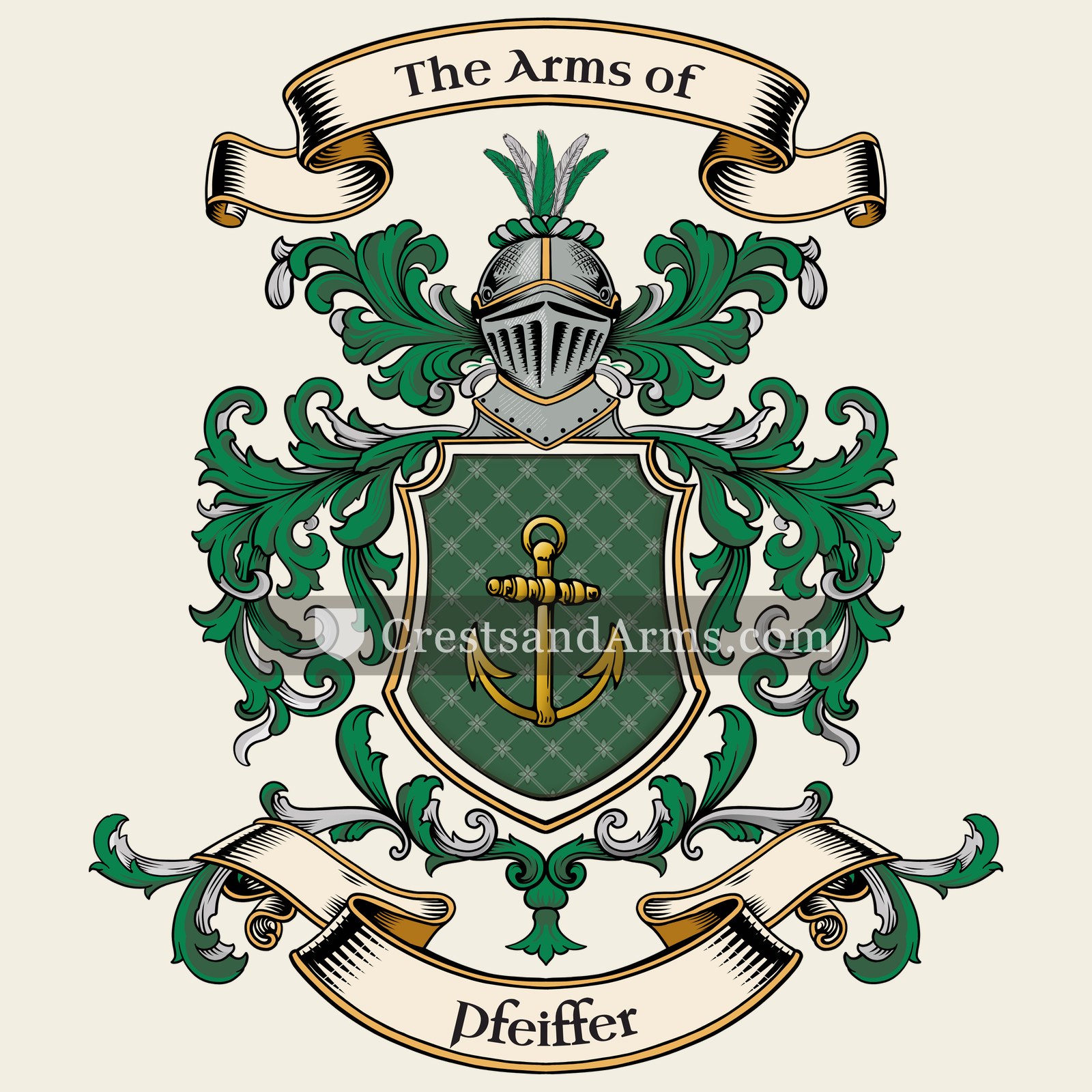


 knightChivalry and service in arms
 mulletThe third son, and a divine quality from above