Map of France showing where the Pharris arms are recorded
The Pharris arms were recorded in Artois, c. 1663.
Artois lay on the disputed ground between France and the Low Countries and was fought over for centuries. Families there held their land under arms, and a shield was how a fighting household was known.
This is where the arms were entered in the register. Families often moved to other parts of the country, so the same name can turn up in more than one region.
The body that granted and recorded arms in France in this period.
Louis XIV of France
Sovereign of the period
Louis XIV of France
1643–1715
Reigning in France when the Pharris arms are first recorded.
How Arms Worked in France
In France, a coat of arms was a mark of honor that passed down through the male line to all legitimate descendants. Families often used the same shield without changes to show their shared heritage. If a branch wanted to stand out, they could add a small mark to their shield to show their specific place in the family tree.
Granting authority
The Juge d'armes de France acted as the official authority that regulated and verified coats of arms across the country.
How they got arms
Families typically inherited their arms from ancestors, though they could also receive them through royal grants or by proving their noble status.
Where arms were recorded
Coats of arms were officially recorded in the Armorial Général de France, which began its main collection in the year 1696.
The family's standing
Recorded among the armigerous families of Artois.
Origin & History of the Pharris Family in France
The family name Pharris finds its early roots in the northern region of France known as Artois. By the year 1663, records confirm that family members were established in this area, which was a significant crossroads for trade and cultural exchange between France and the Low Countries. During the seventeenth century, Artois was a landscape defined by shifting political borders and the influence of both French and Flemish traditions. Families living in this region often worked in agriculture or local crafts, contributing to the economic stability of their rural communities. The presence of the family in Artois during this period suggests they were part of a resilient population that navigated the complex social changes of the time. Over the following decades, the name became part of the local fabric of the region before some members eventually sought opportunities in other parts of Europe and beyond.
Meaning of the Pharris family crest colors & symbols
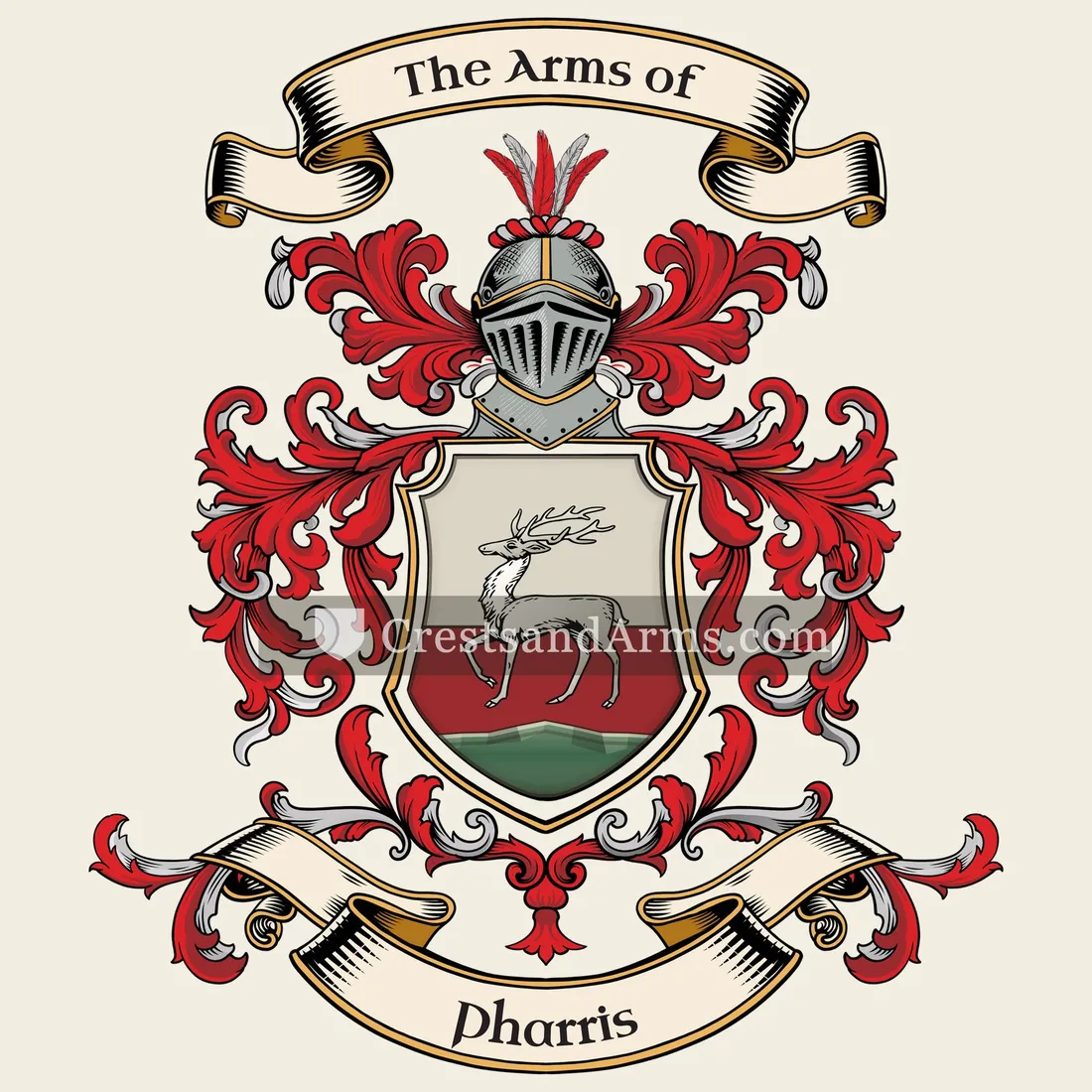
Symbols on this shield
mountThe ground held, and steadfastness upon it
stagPeace and harmony, and one who will not fight unprovoked
Colours
Silver (Argent)Means: Peace and sincerity
Red (Gules)Means: Military strength
Green (Vert)Means: Hope
Historical info
Source
J. B. Rietstap, Armorial Général, Gouda: G. B. van Goor Zonen, 1884–87
Blazon (the actual original written record)
“Coupé d'arg. sur gu.; à un chevreuil ramp. au nat., cour. d'or, tenant entre ses pattes une pierre couverte de mousse, et soutenu d'un tertre de sin. C.: le chevreuil, iss.”
BavariaBavaria, c. 1544
Digital archive packCoat of arms PNG, gold border print PDF, vector SVG and the certificate of authenticity. Sent to your email in minutes.
Map of Germany showing where the Pharris arms are recorded
The Pharris arms were recorded in Bavaria, c. 1544.
Bavaria was a country of old landed families and walled market towns. Estates passed down the same line for centuries, and both the landowners and the leading townsmen kept arms, which is why so many Bavarian names sit in the registers.
This is where the arms were entered in the register. Families often moved to other parts of the country, so the same name can turn up in more than one region.
The body that granted and recorded arms in Germany in this period.
Charles V
Sovereign of the period
Charles V
1519–1556
Reigning in France when the Pharris arms are first recorded.
How Arms Worked in Germany
In the Holy Roman Empire, coats of arms were often granted to individuals by the Emperor or his representatives. These arms were then passed down through the generations to all legitimate descendants of the original holder. Younger branches of a family usually kept the same shield design without needing to change it, as the arms belonged to the entire lineage.
Granting authority
The Holy Roman Emperor held the sole power to grant new coats of arms throughout his vast imperial territories.
How they got arms
Families typically obtained their coats of arms through a formal imperial grant or by proving their noble status to the authorities.
Where arms were recorded
These grants were officially recorded in the Imperial Chancery registers, which began keeping formal records of such honors during the Middle Ages.
The family's standing
Recorded among the armigerous families of Bavaria.
Origin & History of the Pharris Family in Germany
The history of the Pharris name in Germany is deeply rooted in the cultural landscape of Bavaria during the sixteenth century. By the year 1544, records indicate that members of the family were already established within this region. During this era, surnames in German-speaking lands were often derived from a person’s occupation, a specific physical trait, or the geographic location where they resided. The Pharris name likely evolved from these linguistic traditions as families began to adopt permanent identifiers to distinguish themselves in growing communities. Life in Bavaria at this time was heavily influenced by the transition from the Middle Ages to the early modern period, a time when families were often tied to the land and local trade guilds. As the family navigated the social and political shifts of the Holy Roman Empire, they contributed to the local history of their villages and towns. This early presence in Bavaria serves as a foundational chapter for the family, marking their transition into a recognized lineage within the German heartland.
Meaning of the Pharris family crest colors & symbols
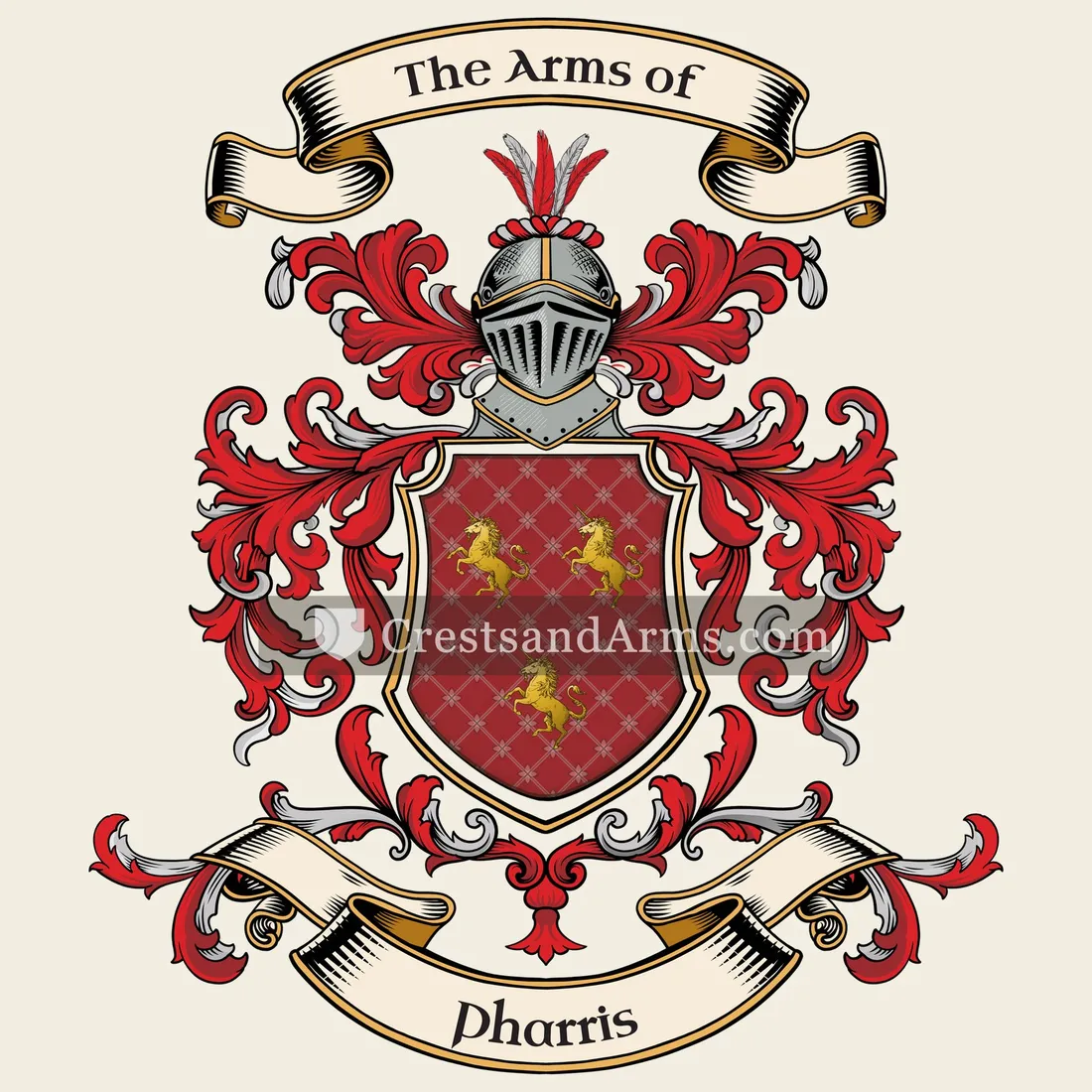
Symbols on this shield
unicornPurity, and extreme courage in defence of honour
Colours
Red (Gules)Means: Military strength
Gold (Or)Means: Generosity
Historical info
Source
Sir Bernard Burke, The General Armory of England, Scotland, Ireland and Wales, London: Harrison & Sons, 1884
Blazon (the actual original written record)
“Gu. three unicorns' heads couped or”
CambridgeLittle Linton · Cambridge, c. 1620
Digital archive packCoat of arms PNG, gold border print PDF, vector SVG and the certificate of authenticity. Sent to your email in minutes.
Map of England showing where the Pharris arms are recorded
The Pharris arms were recorded in Cambridge, c. 1620.
Cambridgeshire was flat, rich farming country with the university at its centre. Fen drainage made new land and new fortunes, and families who gained by it bought manors and took arms to match.
This is where the arms were entered in the register. Families often moved to other parts of the country, so the same name can turn up in more than one region.
The body that granted and recorded arms in England in this period.
James VI and I
Sovereign of the period
James VI and I
1603–1625
Reigning in France when the Pharris arms are first recorded.
How Arms Worked in England
English heraldry allowed arms to be shared by all legitimate descendants of the original owner. These symbols were treated as personal property that moved through the generations to all children. While the eldest son kept the original design, other family members could use the same shield without needing to change it or register their own unique versions.
Granting authority
The College of Arms in London has regulated the use of coats of arms throughout England and Wales since 1484.
How they got arms
Families typically obtained their coats of arms through a formal grant from the Crown or by proving their ancient right to them.
Where arms were recorded
All official coats of arms are recorded in the registers kept at the College of Arms, which date back to the fifteenth century.
The family's standing
Recorded among the armigerous families of Cambridge.
Origin & History of the Pharris Family in England
The family name Pharris is a variant of the name Ferris, which traces its roots back to the medieval period in England. It is primarily derived from the Old French word "ferre," meaning iron, and was often used as a nickname for a person who worked as an ironmonger or a blacksmith. By the early 17th century, the name had become well-established in various English counties. Historical records confirm that members of the family were living in Cambridge by 1620, a time when the city was a major center for education and trade. These early ancestors likely lived in a society defined by the growth of local guilds and the expansion of English influence. As the family settled into these communities, they contributed to the local economy and the social fabric of the region before some eventually sought new opportunities in the American colonies.
Pharris Meaning & Related Branches
Root word
Ferrarius
Latin term referring to a worker of iron or a blacksmith.
This name
PharrisAn occupational surname for a smith or someone who worked with iron.
also spelled
Parys
Parris
Paryss
Parry
Documented Sources
J. B. Rietstap, Armorial Général, Gouda: G. B. van Goor Zonen, 1884–87
Archives départementales du Pas-de-Calais, Série E, État civil et registres paroissiaux
Bruneel, Claude, Le duché de Brabant à l'époque moderne, 1996
Lottin, Alain, Histoire des provinces françaises du Nord, 1989
Digital archive packCoat of arms PNG, gold border print PDF, vector SVG and the certificate of authenticity. Sent to your email in minutes.


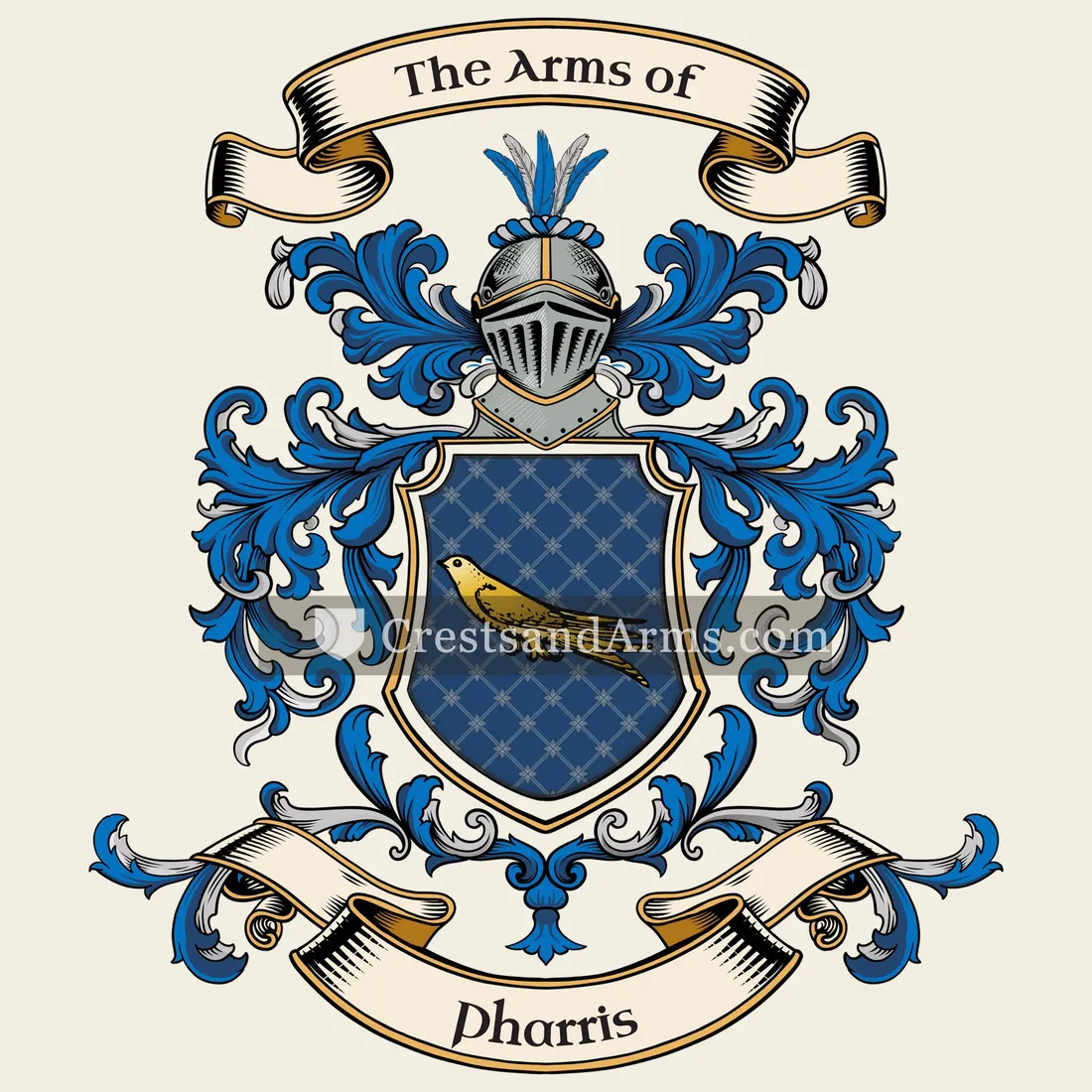
 martletA younger son, who must win his own land
 martletA younger son, who must win his own land


 mountThe ground held, and steadfastness upon it
 stagPeace and harmony, and one who will not fight unprovoked


 unicornPurity, and extreme courage in defence of honour