Map of Germany showing where the Pho arms are recorded
The Pho arms were recorded in Germany, c. 1765.
Arms such as these were typically recorded in Bavaria.
Bavaria was a country of old landed families and walled market towns. Estates passed down the same line for centuries, and both the landowners and the leading townsmen kept arms, which is why so many Bavarian names sit in the registers.
This is where the arms were entered in the register. Families often moved to other parts of the country, so the same name can turn up in more than one region.
The body that granted and recorded arms in Germany in this period.
Francis I, Holy Roman Emperor
Sovereign of the period
Francis I, Holy Roman Emperor
1745–1765
Reigning in Germany when the Pho arms are first recorded.
How Arms Worked in Germany
In the Holy Roman Empire, coats of arms were often granted to individuals by the Emperor or his representatives. These arms were then passed down through the generations to all legitimate descendants of the original holder. Younger branches of a family usually kept the same shield design without needing to change it, as the arms belonged to the entire lineage.
Granting authority
The Holy Roman Emperor held the sole power to grant new coats of arms throughout his vast imperial territories.
How they got arms
Families typically obtained their coats of arms through a formal imperial grant or by proving their noble status to the authorities.
Where arms were recorded
These grants were officially recorded in the Imperial Chancery registers, which began keeping formal records of such honors during the Middle Ages.
The family's standing
Recorded among the armigerous families of Germany.
Origin & History of the Pho Family in Germany
The history of the family name Pho in Germany is deeply rooted in the cultural landscape of Bavaria during the eighteenth century. By 1765, records confirm that members of the family were established within this region, which was then a collection of territories known for its strong agricultural traditions and distinct local customs. During this period, families often lived in small, tight-knit rural communities where their surname served as a primary identifier within the parish. Because Bavaria was a hub for trade and movement between central Europe and the Alps, the family likely participated in the local economy of the time, which relied heavily on skilled craftsmanship and land management. The presence of the name in official documents from this era suggests that the family was integrated into the social fabric of the Bavarian state, living through a time of significant change as the region transitioned toward the modern political structures of the nineteenth century.
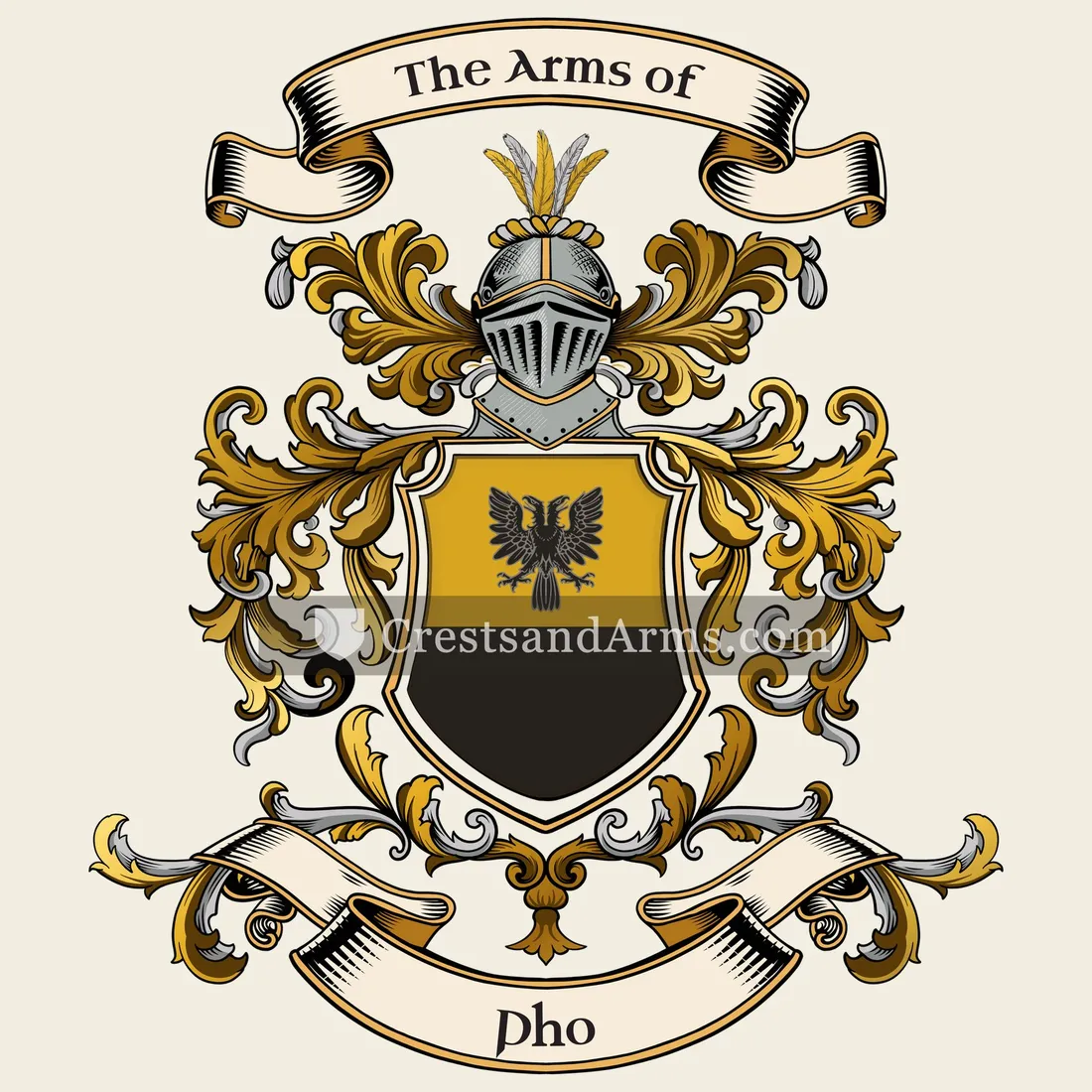
Meaning of the Pho family crest colors & symbols
Symbols on this shield
eagleNobility, strength and a keen mind
Colours
Gold (Or)Means: Generosity
Black (Sable)Means: Constancy
Historical info
Source
J. B. Rietstap, Armorial Général, Gouda: G. B. van Goor Zonen, 1884–87
Blazon (the actual original written record)
“Coupé: au 1 d'or à l'aigle de sa., cour. du champ; au 2 pafé de sa. et d'arg. C.: l'aigle, iss.”
ItalyMilan, c. 1775
Digital archive packCoat of arms PNG, gold border print PDF, vector SVG and the certificate of authenticity. Sent to your email in minutes.
Map of Italy showing where the Pho arms are recorded
The Pho arms were recorded in Milan, c. 1775.
This is where the arms were entered in the register. Families often moved to other parts of the country, so the same name can turn up in more than one region.
The body that granted and recorded arms in Italy in this period.
Alvise Giovanni Mocenigo
Sovereign of the period
Alvise Giovanni Mocenigo
1763–1778
Reigning in Germany when the Pho arms are first recorded.
How Arms Worked in Italy
In the Italian states, coats of arms were often used by noble families to show their status and history. These symbols were passed down through the generations to all legitimate male descendants. Younger branches of a family usually kept the original design but sometimes added small changes to distinguish their specific line from the main branch.
Granting authority
Various local rulers and city governments controlled the use of coats of arms across the different Italian states.
How they got arms
Families often assumed their own arms or received them as official grants from local lords, popes, or city councils.
Where arms were recorded
Arms were recorded in local city archives or private family books rather than in one single national register.
The family's standing
Recorded among the armigerous families of Italy.
Origin & History of the Pho Family in Italy
The history of the Pho family in Italy is deeply rooted in the vibrant urban landscape of Milan during the late eighteenth century. By 1775, records confirm that members of the family were established residents of the city, which was then a major center of trade and intellectual exchange under the influence of the Habsburg monarchy. During this period, Milan was undergoing significant social and economic shifts as it transitioned into a hub of Enlightenment thought. The presence of the Pho family in the city suggests they were likely integrated into the professional or merchant classes that kept the local economy moving. While the name itself remains rare in Italian records, its emergence in Milanese documentation points to a family that was well-positioned within the city’s dense social fabric. These early ancestors lived through a time of great transformation, witnessing the modernization of Milanese administration and the growth of the city as a cultural capital of Northern Italy.
Pho Meaning & Related Branches
Root word
Phocas
Derived from the Greek word for seal or a person from Phocis.
This name
PhoA German topographic or occupational surname likely originating as a shortened form of names like Bonifatius.
also spelled
Poe
Poh
Poo
Documented Sources
J. B. Rietstap, Armorial Général, Gouda: G. B. van Goor Zonen, 1884–87


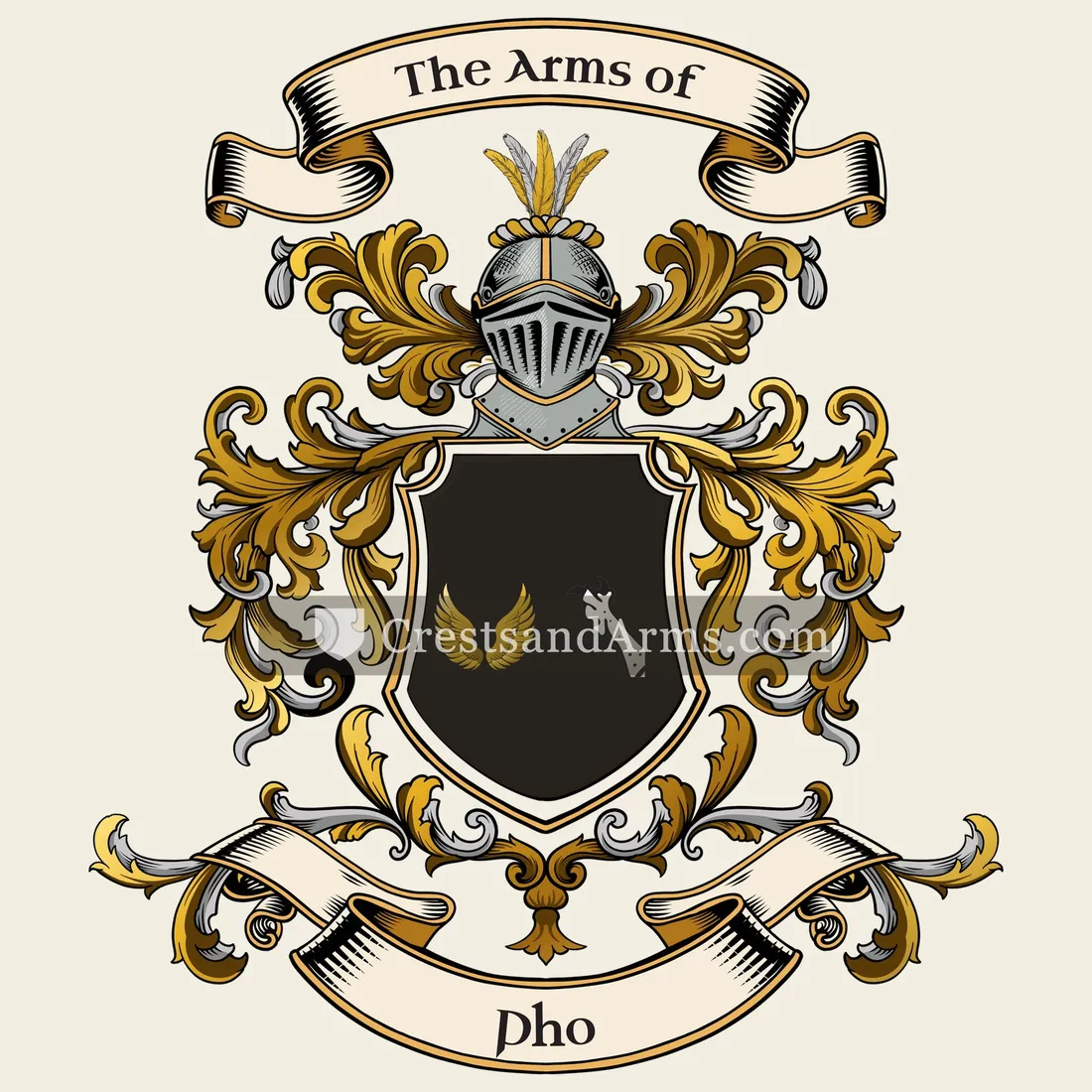
 vol / wingsSwiftness and protection
 pawStrength held ready, the beast's power in a single limb
 vol / wingsSwiftness and protection
 pawStrength held ready, the beast's power in a single limb


 eagleNobility, strength and a keen mind