Map of Netherlands showing where the Piehl arms are recorded
The Piehl arms were recorded in Netherlands, c. 1815.
Arms such as these were typically recorded in Friesland.
Friesland was low, wet country on the northern coast of the Netherlands, farmed by families who had held the same land for centuries. Free landholders were unusually common there, and a free landholder could carry arms.
This is where the arms were entered in the register. Families often moved to other parts of the country, so the same name can turn up in more than one region.
Region
Friesland
First recorded
1815
Granting Authority for the Piehl Arms
Hoge Raad van Adel
Photograph made by me · CC BY-SA 3.0
The body that granted and recorded arms in Netherlands in this period.
William I of the Netherlands
Sovereign of the period
William I of the Netherlands
1815–1840
Reigning in Netherlands when the Piehl arms are first recorded.
How Arms Worked in Netherlands
In the Netherlands, coats of arms were often used by noble families and those who held specific public offices. These arms were passed down through the generations to legitimate descendants. Younger branches of a family usually kept the original design without needing to add special marks. This system ensured that the family identity remained clear and consistent over many years.
Granting authority
The Hoge Raad van Adel is the official body that regulates and manages noble titles and coats of arms in the Netherlands.
How they got arms
Families typically obtained their coats of arms through official royal grants or by proving their long-standing historical use of the symbols.
Where arms were recorded
Coats of arms are officially recorded in the registers held by the Hoge Raad van Adel, which began its work in 1814.
The family's standing
Recorded among the armigerous families of Netherlands.
Origin & History of the Piehl Family in Netherlands
The surname Piehl carries a distinct history that reflects the movement of people across Northern Europe and into the Netherlands. While the name is often associated with Germanic roots, its presence in the province of Friesland by 1815 suggests that the family integrated into the unique cultural landscape of the northern Dutch coast. During the early 19th century, Friesland was a region defined by its strong maritime traditions and independent farming communities. Families living there often adapted their surnames to fit local linguistic patterns as they settled into new towns. The appearance of the Piehl name in official records during this period indicates that these ancestors were part of a mobile population that navigated the social and economic changes of the Napoleonic era. By establishing themselves in Friesland, the family became part of a long tradition of Frisian resilience and community building that defined the region during the transition into the modern Dutch state.
Meaning of the Piehl family crest colors & symbols
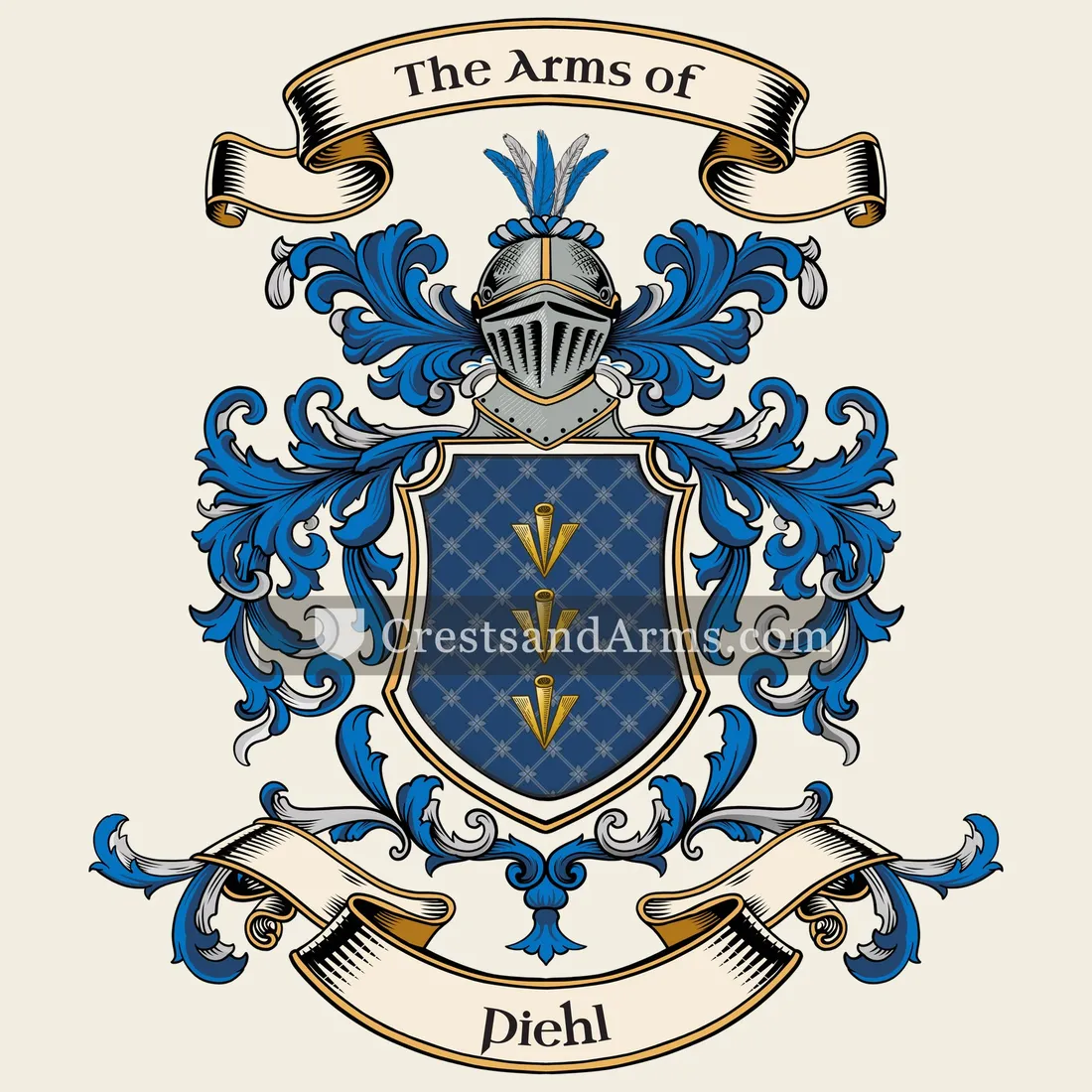
Symbols on this shield
arrowReadiness for battle, and affliction endured
Colours
Blue (Azure)Means: Loyalty and truth
Gold (Or)Means: Generosity
Historical info
Source
J. B. Rietstap, Armorial Général, Gouda: G. B. van Goor Zonen, 1884–87
Blazon (the actual original written record)
“D'azur à trois flèches d'or, posées en fasces, l'une sur l'autre. Cq. cour., le cercle de la couronne d'azur, ch. de deux pals d'or. C.: un vol de gu., l'aile dextre ch. d'une fasce d'or surch. de deux pals d'azur, l'aile sen. ch. d'une fasce d'azur surch. de deux pals d'or.”
WestphaliaWestphalia, c. 1765
Digital archive packCoat of arms PNG, gold border print PDF, vector SVG and the certificate of authenticity. Sent to your email in minutes.
Map of Germany showing where the Piehl arms are recorded
The Piehl arms were recorded in Westphalia, c. 1765.
Westphalia was a land of small estates and fortified farmhouses in western Germany. Its families were numerous and not especially rich, but each held its own ground, and holding ground was what brought arms.
This is where the arms were entered in the register. Families often moved to other parts of the country, so the same name can turn up in more than one region.
The body that granted and recorded arms in Germany in this period.
Francis I, Holy Roman Emperor
Sovereign of the period
Francis I, Holy Roman Emperor
1745–1765
Reigning in Netherlands when the Piehl arms are first recorded.
How Arms Worked in Germany
In the Holy Roman Empire, coats of arms were often granted to individuals by the Emperor or his representatives. These arms were then passed down through the generations to all legitimate descendants of the original holder. Younger branches of a family usually kept the same shield design without needing to change it, as the arms belonged to the entire lineage.
Granting authority
The Holy Roman Emperor held the sole power to grant new coats of arms throughout his vast imperial territories.
How they got arms
Families typically obtained their coats of arms through a formal imperial grant or by proving their noble status to the authorities.
Where arms were recorded
These grants were officially recorded in the Imperial Chancery registers, which began keeping formal records of such honors during the Middle Ages.
The family's standing
Recorded among the armigerous families of Westphalia.
Origin & History of the Piehl Family in Germany
The surname Piehl is deeply rooted in the historical landscape of Northern Germany, particularly within the region of Westphalia. Linguistic experts often trace the name to Middle Low German origins, where it likely served as a descriptive term or a nickname for a person with specific physical traits or a particular temperament. By the mid-18th century, records confirm that families bearing this name were well-established in Westphalian communities. During this era, life for the Piehl family was defined by the rhythms of rural society and the transition toward the Industrial Revolution. Most members of the family were likely engaged in agriculture or local trade, contributing to the steady growth of village life in the German heartland. As the 1765 records indicate, the family had already successfully integrated into the social and economic fabric of their local parishes, marking them as a stable and enduring part of the regional population.
Piehl Meaning & Related Branches
Root word
Piel
A Middle Low German term referring to a skin or hide.
This name
PiehlAn occupational name for a tanner, furrier, or dealer in animal skins.
also spelled
Pyel
Piele
Pielh
Peel
Documented Sources
J. B. Rietstap, Armorial Général, Gouda: G. B. van Goor Zonen, 1884–87
Tresoar (Fries Historisch en Letterkundig Centrum), Burgerlijke Stand van de provincie Friesland, 1811–1950
Hofstra, T., Noord-Nederland in de 19e eeuw, 1998
Spahr van der Hoek, J.J., Geschiedenis van Friesland, 1973
Digital archive packCoat of arms PNG, gold border print PDF, vector SVG and the certificate of authenticity. Sent to your email in minutes.


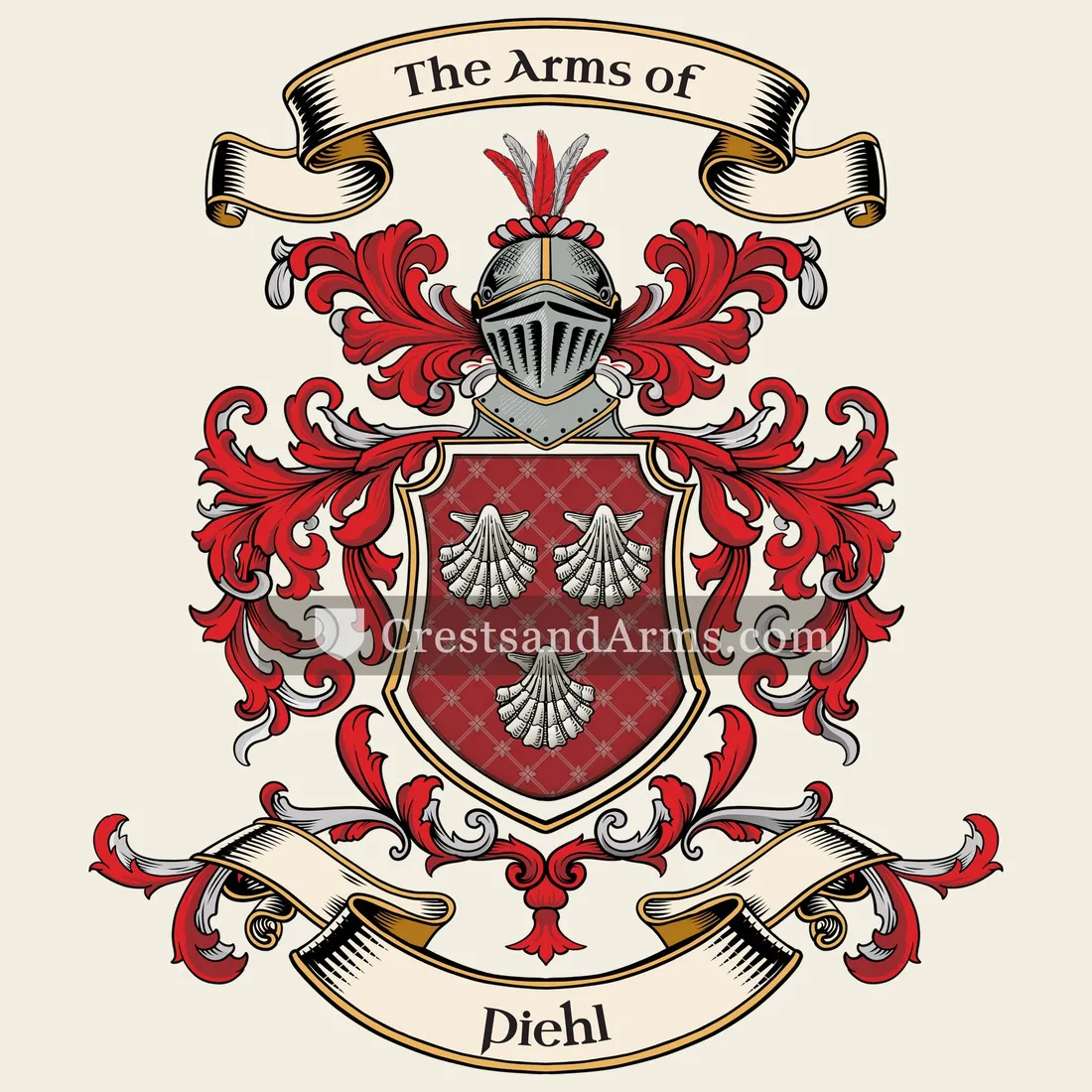
 escallopThe pilgrim's shell, and a long journey made
 escallopThe pilgrim's shell, and a long journey made


 arrowReadiness for battle, and affliction endured