Map of Netherlands showing where the Pieters arms are recorded
The Pieters arms were recorded in Amsterdam, c. 1815.
This is where the arms were entered in the register. Families often moved to other parts of the country, so the same name can turn up in more than one region.
Region
Amsterdam
Town
Amsterdam
First recorded
1815
Granting Authority for the Pieters Arms
Hoge Raad van Adel
Photograph made by me · CC BY-SA 3.0
The body that granted and recorded arms in Netherlands in this period.
William I of the Netherlands
Sovereign of the period
William I of the Netherlands
1815–1840
Reigning in Netherlands when the Pieters arms are first recorded.
How Arms Worked in Netherlands
In the Netherlands, coats of arms were often used by noble families and those who held specific public offices. These arms were passed down through the generations to legitimate descendants. Younger branches of a family usually kept the original design without needing to add special marks. This system ensured that the family identity remained clear and consistent over many years.
Granting authority
The Hoge Raad van Adel is the official body that regulates and manages noble titles and coats of arms in the Netherlands.
How they got arms
Families typically obtained their coats of arms through official royal grants or by proving their long-standing historical use of the symbols.
Where arms were recorded
Coats of arms are officially recorded in the registers held by the Hoge Raad van Adel, which began its work in 1814.
The family's standing
Recorded among the armigerous families of Netherlands.
Origin & History of the Pieters Family in Netherlands
The surname Pieters is a patronymic name, which means it originated as a way to identify a person as the son of someone named Pieter. In the Netherlands, this naming tradition became common as families sought to distinguish themselves within growing urban centers like Amsterdam. By the early 19th century, the name was well-established among the city's residents. In 1815, the Netherlands underwent a significant shift when the government mandated that all citizens formally register their surnames to create standardized civil records. This period was a turning point for families like the Pieters, as it transitioned their identity from a spoken tradition to a permanent legal status recorded in official government ledgers. This formalization helped the family integrate into the administrative and social fabric of Amsterdam during a time when the city was expanding as a major European hub.
Coat of Arms & Family Crest Details
Symbols on this shield
fishA true and generous mind, and Christian faith
martletA younger son, who must win his own land
Colours
Blue (Azure)Means: Loyalty and truth
Silver (Argent)Means: Peace and sincerity
Gold (Or)Means: Generosity
Black (Sable)Means: Constancy
Historical info
Source
J. B. Rietstap, Armorial Général, Gouda: G. B. van Goor Zonen, 1884–87
Blazon (the actual original written record)
“Ec.: aux 1 et 4 d'azur à un poisson d'or, posé en bande; aux 2 et 3 d'arg. à trois merlettes de sa.”
BelgiumGand, c. 1737
Digital archive packCoat of arms PNG, gold border print PDF, vector SVG and the certificate of authenticity. Sent to your email in minutes.
Map of Belgium showing where the Pieters arms are recorded
The Pieters arms were recorded in Gand, c. 1737.
This is where the arms were entered in the register. Families often moved to other parts of the country, so the same name can turn up in more than one region.
The body that granted and recorded arms in Belgium in this period.
Charles VI, Holy Roman Emperor
Sovereign of the period
Charles VI, Holy Roman Emperor
1711–1740
Reigning in Netherlands when the Pieters arms are first recorded.
How Arms Worked in Belgium
In Belgium, a coat of arms is considered personal property that is passed down through the male line to legitimate descendants. Families often use the same shield design across generations to show their shared heritage. If a branch of the family wants to change the design, they must apply for an official update to their specific version of the arms.
Granting authority
The Conseil héraldique is the official body that regulates and approves all coats of arms in Belgium.
How they got arms
Families obtain their coats of arms through formal royal grants or by confirming their historical right to use existing designs.
Where arms were recorded
All approved coats of arms are officially recorded in the public registers of the Conseil héraldique since 1844.
The family's standing
Recorded among the armigerous families of Belgium.
Origin & History of the Pieters Family in Belgium
The surname Pieters is a patronymic name, which means it originated as a way to identify a person as the son of someone named Pieter. In the region of Flanders, this name became common because Peter was a popular saint and a frequent choice for baptismal names. By the early eighteenth century, the family was well-established in the city of Ghent, which was then known as Gand. During this period, the city served as a major center for the textile industry and trade. Families like the Pieters were often part of the urban working class or the merchant guilds that kept the city economy moving. Living in Ghent during the 1730s meant the family experienced life under the rule of the Austrian Netherlands. They likely navigated the daily routines of a bustling medieval city while contributing to the local community through their specific trades and civic participation.
Coat of Arms & Family Crest Details
Symbols on this shield
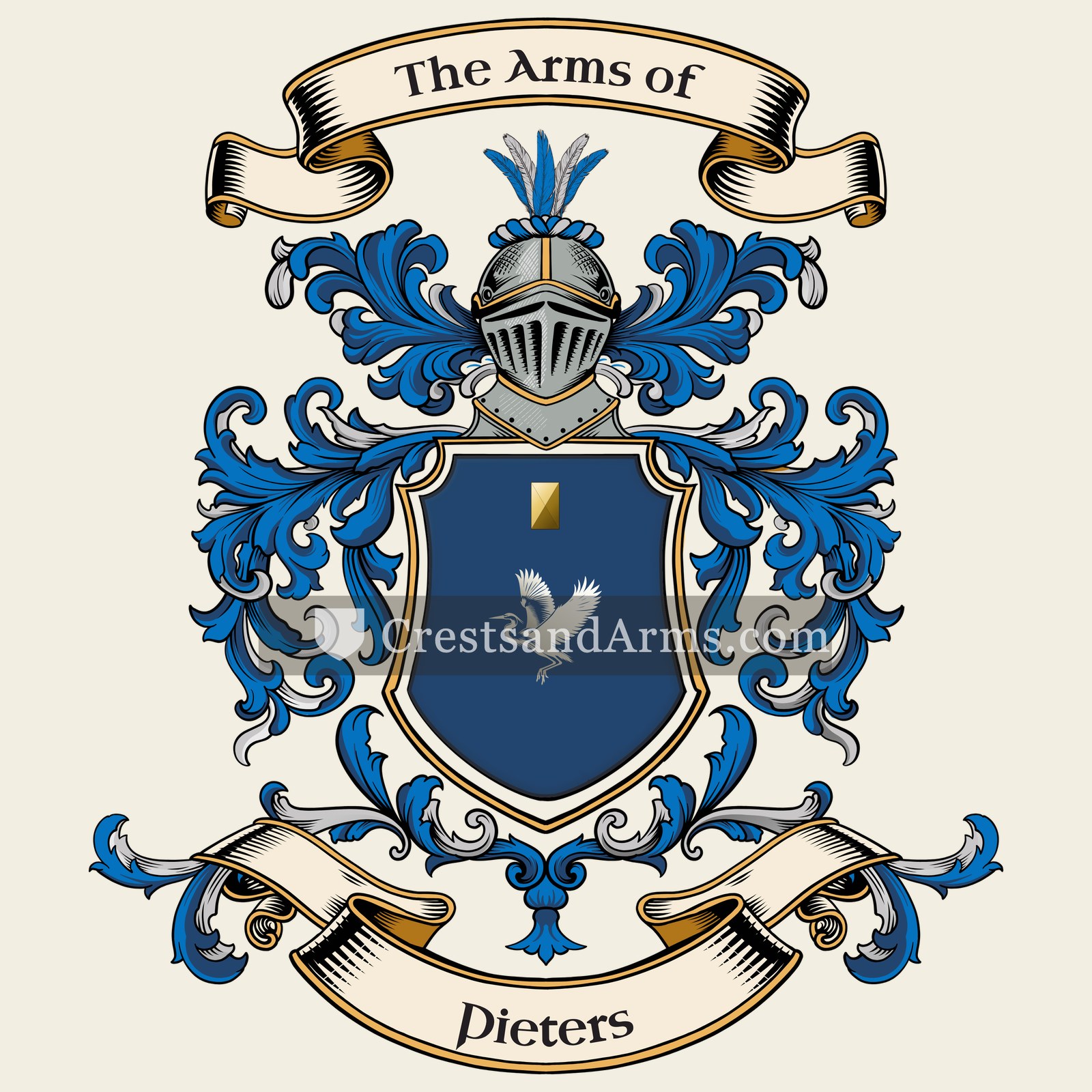
heronPatience and quiet watchfulness
billetThe sealed letter, and a message delivered
Colours
Blue (Azure)Means: Loyalty and truth
Silver (Argent)Means: Peace and sincerity
Gold (Or)Means: Generosity
Historical info
Source
J. B. Rietstap, Armorial Général, Gouda: G. B. van Goor Zonen, 1884–87
Blazon (the actual original written record)
“D'azur à une grue d'arg., avec sa vigilance d'or.”
FlandreFlandre, c. 1663
Digital archive packCoat of arms PNG, gold border print PDF, vector SVG and the certificate of authenticity. Sent to your email in minutes.
Map of France showing where the Pieters arms are recorded
The Pieters arms were recorded in Flandre, c. 1663.
Flandre grew rich on cloth, and its towns were among the busiest in Europe. Merchant families bought land with their profits and took arms to go with it, so trade put as many names in the registers here as land did.
This is where the arms were entered in the register. Families often moved to other parts of the country, so the same name can turn up in more than one region.
The body that granted and recorded arms in France in this period.
Louis XIV of France
Sovereign of the period
Louis XIV of France
1643–1715
Reigning in Netherlands when the Pieters arms are first recorded.
How Arms Worked in France
In France, a coat of arms was a mark of honor that passed down through the male line to all legitimate descendants. Families often used the same shield without changes to show their shared heritage. If a branch wanted to stand out, they could add a small mark to their shield to show their specific place in the family tree.
Granting authority
The Juge d'armes de France acted as the official authority that regulated and verified coats of arms across the country.
How they got arms
Families typically inherited their arms from ancestors, though they could also receive them through royal grants or by proving their noble status.
Where arms were recorded
Coats of arms were officially recorded in the Armorial Général de France, which began its main collection in the year 1696.
The family's standing
Recorded among the armigerous families of Flandre.
Origin & History of the Pieters Family in France
The surname Pieters is a patronymic name, which means it originated as a way to identify someone as the son of Peter. In the region of Flandre, which spans parts of modern-day France and Belgium, the name became established during a time when surnames were becoming necessary for tax and legal records. By 1663, families bearing this name were well-integrated into the local social fabric of the French-Flemish borderlands. Because this area was a crossroads for trade and migration, the Pieters family likely lived in a community where Dutch and French cultures blended together. Life for these early ancestors often revolved around agriculture or local crafts, as these were the primary ways to earn a living in the rural parishes of the seventeenth century. As the family grew, they helped shape the local history of the region by participating in the parish life and economic development of their towns.
Related Branches & Arms
Root word
Petrus
Latin word meaning stone or rock.
This name
PietersA patronymic surname meaning son of Peter.
also spelled
Pyeters
Peeters
Peters
Documented Sources
J. B. Rietstap, Armorial Général, Gouda: G. B. van Goor Zonen, 1884–87
Meertens, P.J., De betekenis van de Nederlandse familienamen, 1959


 chiefAuthority, wisdom and dominion
 crescentHonour by the sovereign, and the second son
 chiefAuthority, wisdom and dominion
 crescentHonour by the sovereign, and the second son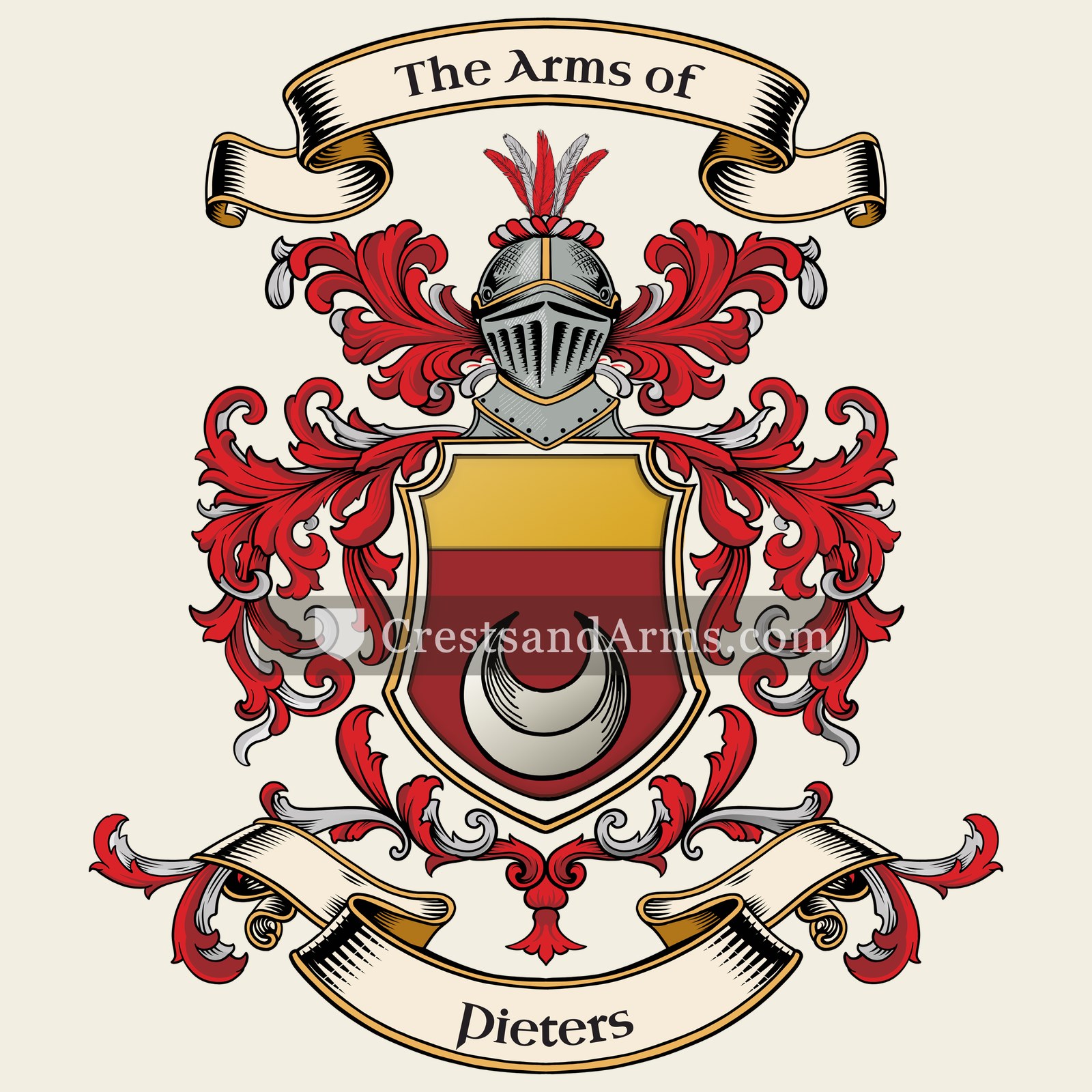


 fishA true and generous mind, and Christian faith
 martletA younger son, who must win his own land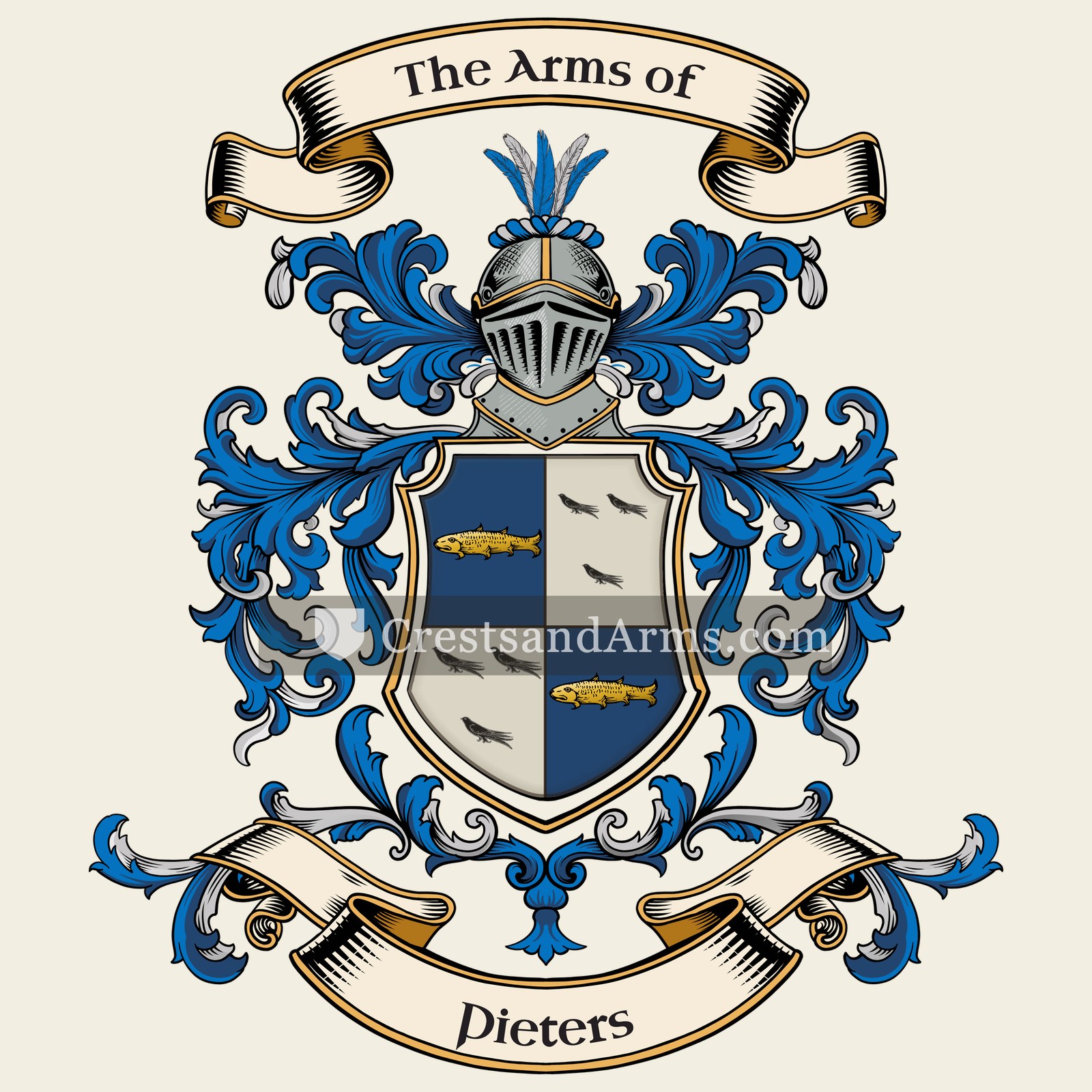


 heronPatience and quiet watchfulness
 billetThe sealed letter, and a message delivered