Map of Switzerland showing where the Pifer arms are recorded
The Pifer arms were recorded in Berne, c. 1745.
This is where the arms were entered in the register. Families often moved to other parts of the country, so the same name can turn up in more than one region.
The body that granted and recorded arms in Switzerland in this period.
How Arms Worked in Switzerland
In Switzerland, coats of arms were not restricted to the nobility and were often adopted by common citizens and families. These symbols were passed down through generations to show family identity. When branches of a family grew, they often changed small details of the design to distinguish their own line from the original group.
Granting authority
Cantonal and civic authorities managed the use of coats of arms within their specific regions and local jurisdictions.
How they got arms
Families typically assumed their own coats of arms based on local custom rather than receiving them from a central monarch.
Where arms were recorded
Arms were recorded in various cantonal and civic registers starting from the fourteenth century throughout the Swiss region.
The family's standing
Recorded among the armigerous families of Switzerland.
Origin & History of the Pifer Family in Switzerland
The family name Pifer is an anglicized version of the German surname Pfeiffer, which historically identified a person who played the flute or fife. In the German-speaking regions of Europe, names were often derived from a person’s trade, and the professional musician was a common figure in village life. By 1745, records confirm that members of the Pifer family were living in the region of Berne, Switzerland. During this period, many families from the Swiss cantons began migrating toward North America to seek new opportunities and escape political or religious instability. As these individuals settled in English-speaking colonies, the spelling of their name evolved to match the phonetic pronunciation of the original German word. This transition from Pfeiffer to Pifer reflects the broader history of European migration, where names were adapted to fit the linguistic patterns of a new homeland.
Pifer Meaning & Related Branches
Root word
Pfeiffer
A person who plays a flute or pipe instrument.
This name
PiferAn occupational surname for a professional musician or flute player.
also spelled
Pfeiffer
Pfyfer
Fyfer
Documented Sources
J. B. Rietstap, Armorial Général, Gouda: G. B. van Goor Zonen, 1884–87
Bahlow, Hans, Deutsches Namenlexikon: Familien- und Vornamen nach Ursprung und Sinn erklärt, 1967
Heintze, Albert, Die deutschen Familiennamen: geschichtlich, geographisch, sprachlich, 1903
Staatsarchiv des Kantons Bern, Kirchenbücher der evangelisch-reformierten Landeskirche des Kantons Bern
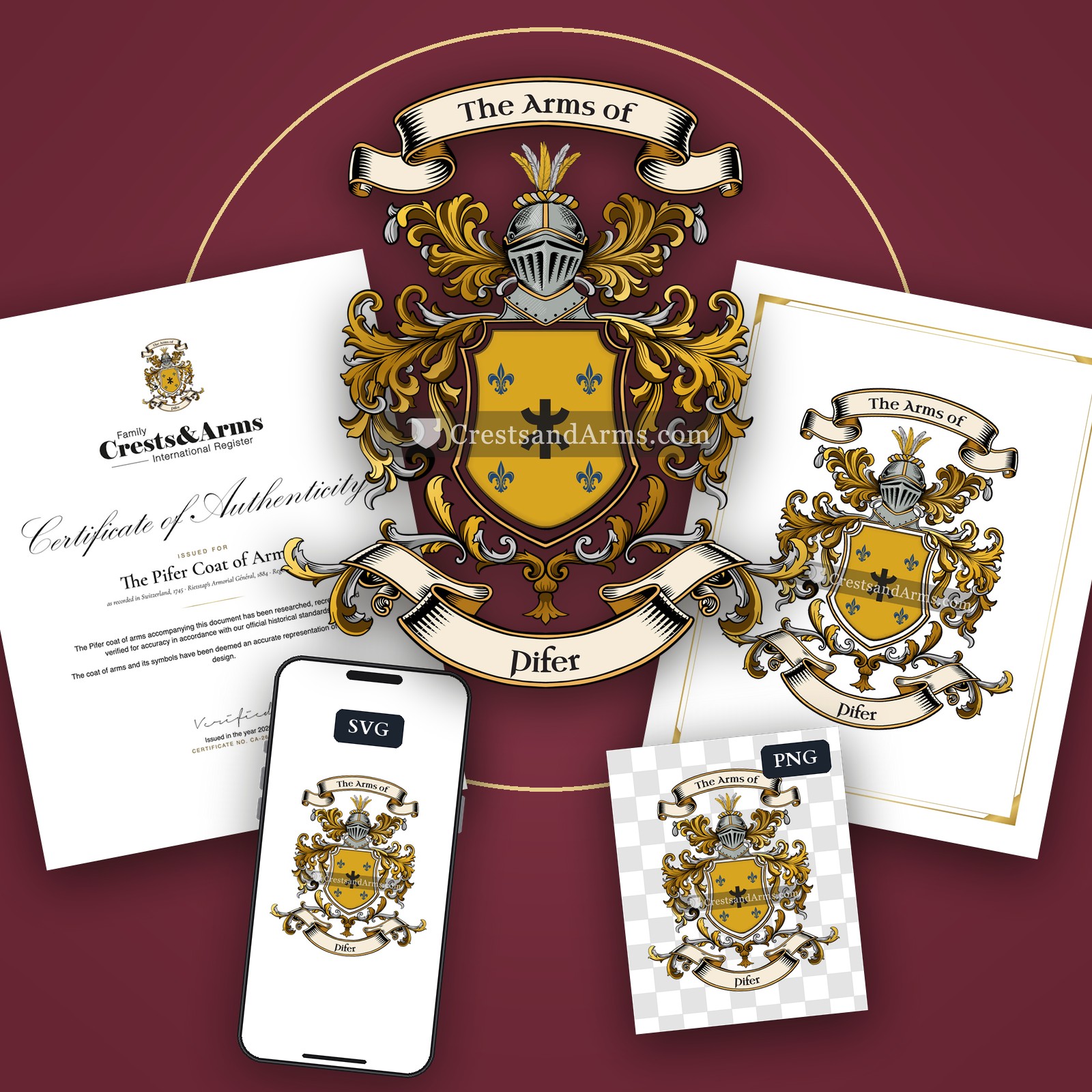
Digital archive packCoat of arms PNG, gold border print PDF, vector SVG and the certificate of authenticity. Sent to your email in minutes.


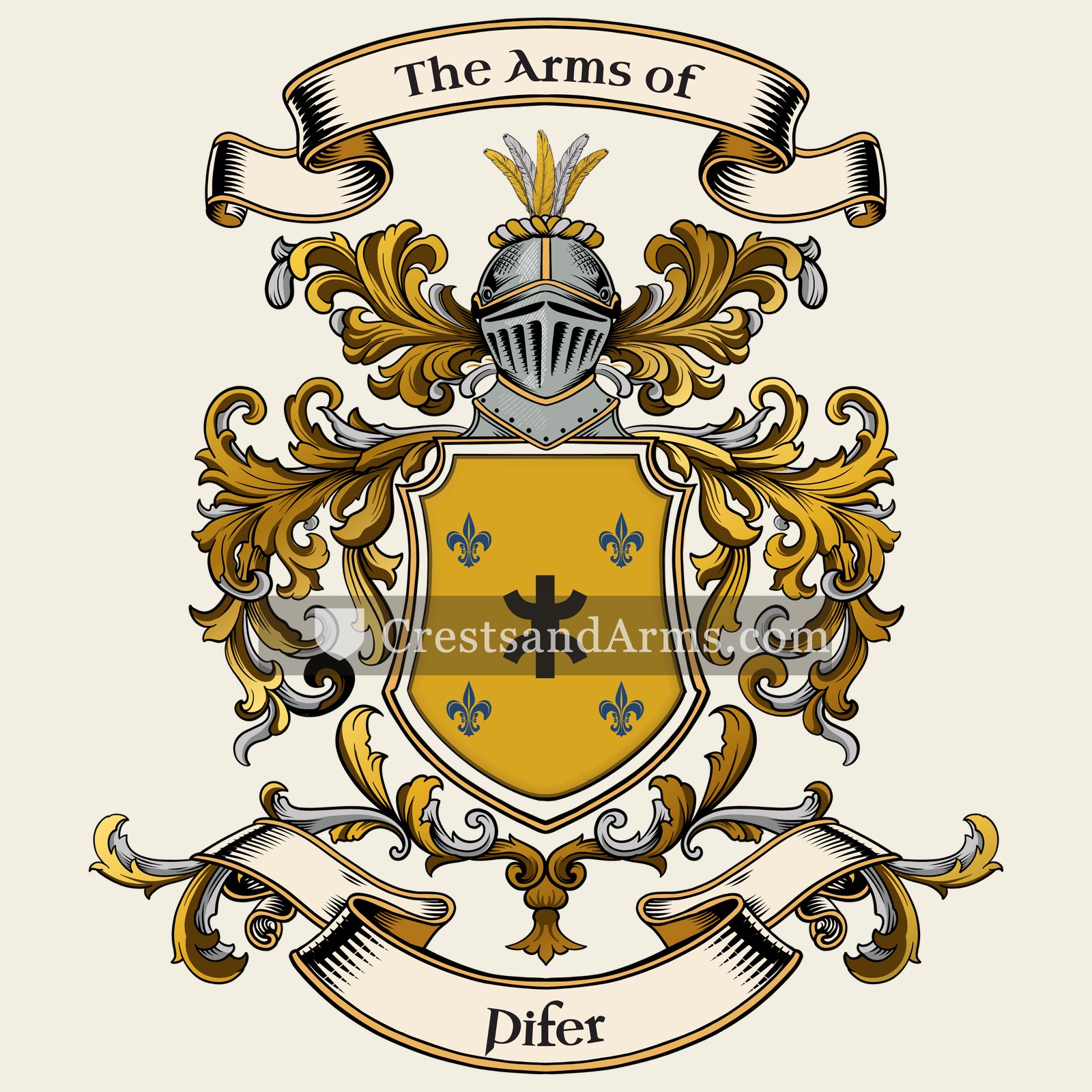
 millrind / fer de molineThe mill's iron, and the grinding of grain
 fleur de lisPurity, light, and the sixth son
 millrind / fer de molineThe mill's iron, and the grinding of grain
 fleur de lisPurity, light, and the sixth son