Map of Switzerland showing where the Pinela arms are recorded
The Pinela arms were recorded in Genève, c. 1745.
This is where the arms were entered in the register. Families often moved to other parts of the country, so the same name can turn up in more than one region.
The body that granted and recorded arms in Switzerland in this period.
How Arms Worked in Switzerland
In Switzerland, coats of arms were not restricted to the nobility and were often adopted by common citizens and families. These symbols were passed down through generations to show family identity. When branches of a family grew, they often changed small details of the design to distinguish their own line from the original group.
Granting authority
Cantonal and civic authorities managed the use of coats of arms within their specific regions and local jurisdictions.
How they got arms
Families typically assumed their own coats of arms based on local custom rather than receiving them from a central monarch.
Where arms were recorded
Arms were recorded in various cantonal and civic registers starting from the fourteenth century throughout the Swiss region.
The family's standing
Recorded among the armigerous families of Switzerland.
Origin & History of the Pinela Family in Switzerland
The history of the Pinela family in Switzerland begins to emerge clearly in the mid-eighteenth century, particularly within the city of Genève. By 1745, records indicate that members of the family had established a presence in this influential center of trade and intellectual exchange. During this era, Genève was a hub for families moving across European borders, often drawn by the city’s reputation for religious tolerance and its growing banking sector. The name Pinela suggests a connection to the broader linguistic landscape of the region, potentially linked to the movement of people between the Swiss cantons and neighboring territories. As residents of a city known for its strict record-keeping and social organization, the early Pinela family members likely integrated into the professional life of the city, contributing to the local economy and the unique civic culture that defined Genève during the Enlightenment.
Coat of Arms & Family Crest Details
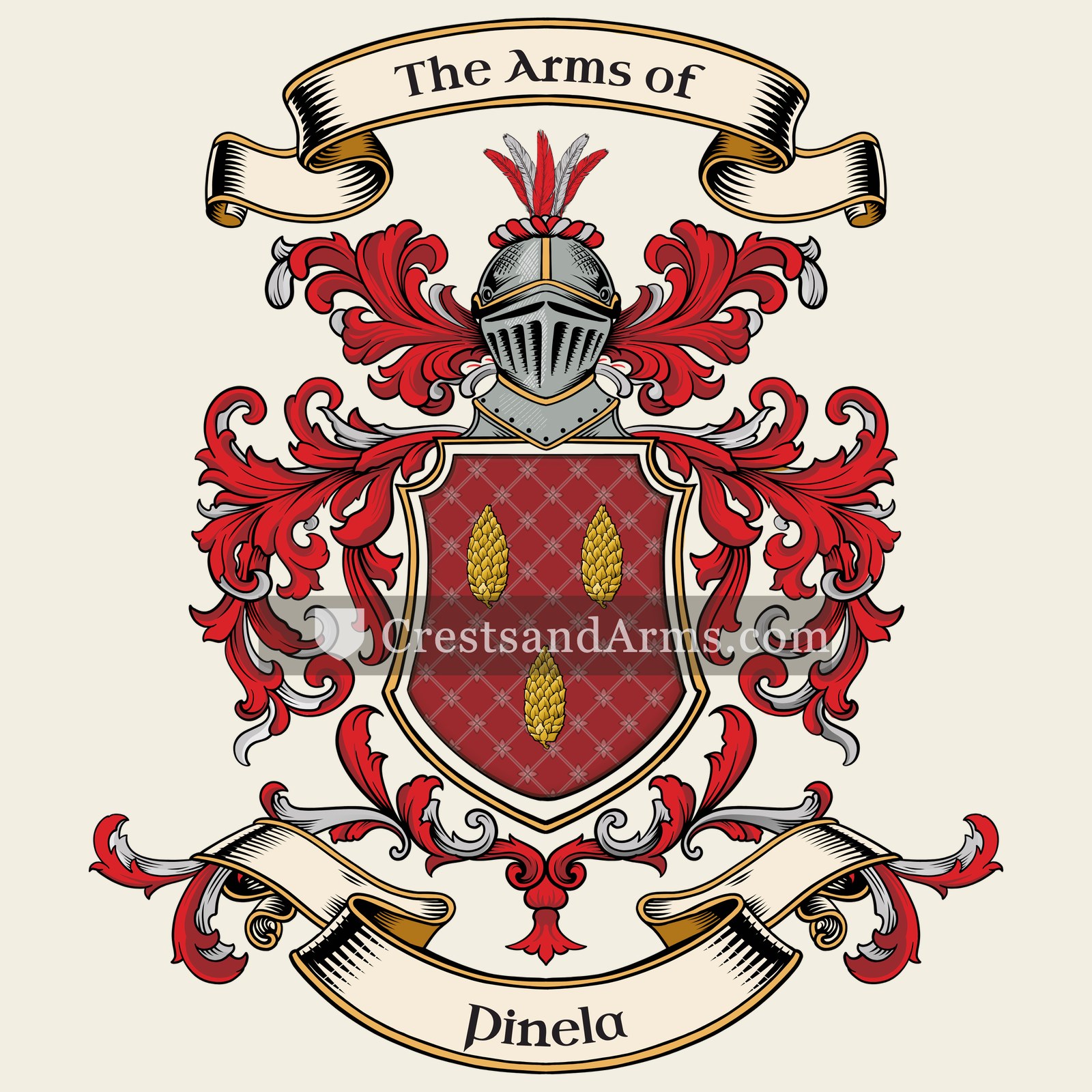
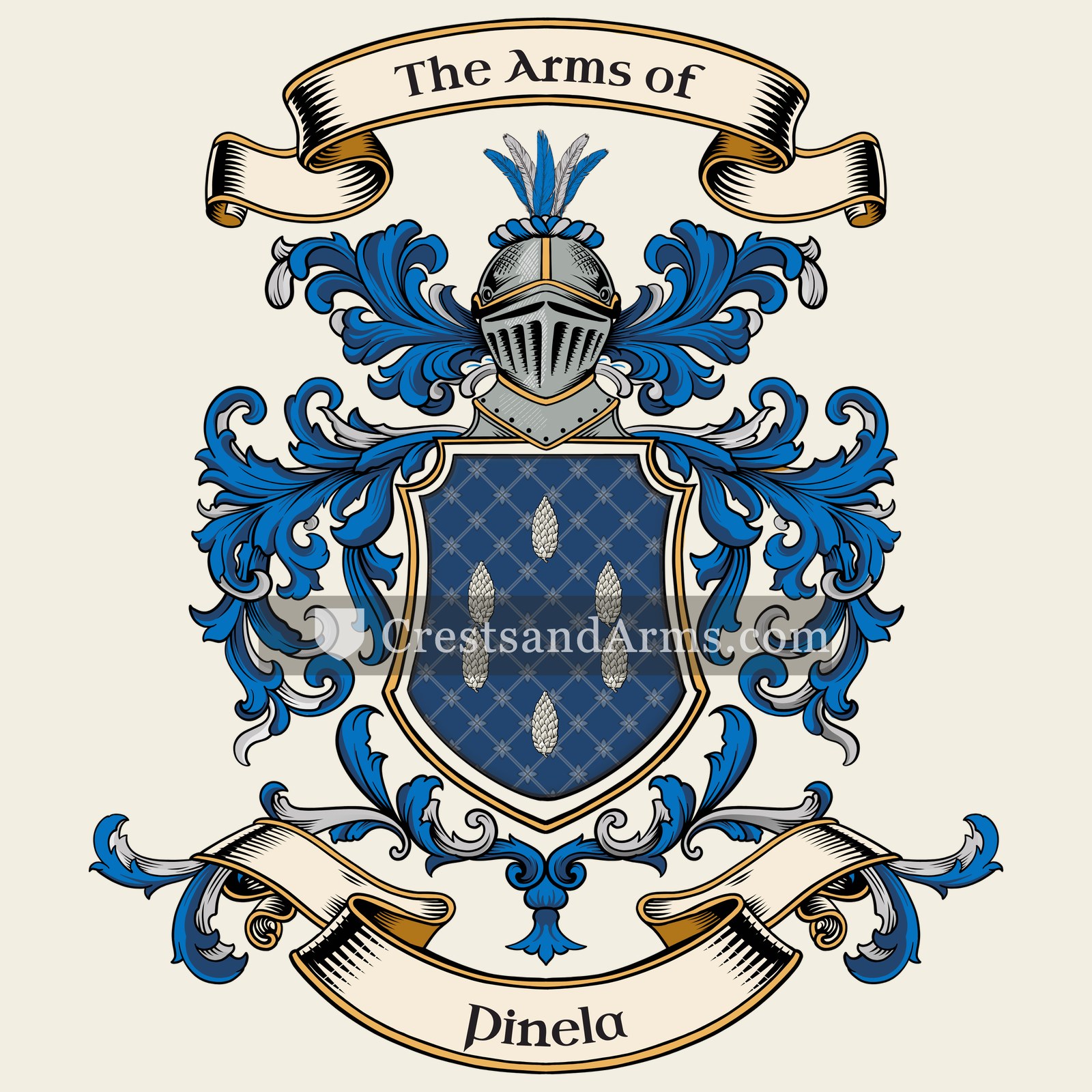
Symbols on this shield
pine coneLife and fertility
Colours
Blue (Azure)Means: Loyalty and truth
Silver (Argent)Means: Peace and sincerity
Historical info
Source
J. B. Rietstap, Armorial Général, Gouda: G. B. van Goor Zonen, 1884–87
Blazon (the actual original written record)
“D'azur à six pommes de pin d'arg., les queues en bas, rangées en cercle (ou 1, 2, 2 et 1).”
ItalyVérone, c. 1775
Digital archive packCoat of arms PNG, gold border print PDF, vector SVG and the certificate of authenticity. Sent to your email in minutes.
Map of Italy showing where the Pinela arms are recorded
The Pinela arms were recorded in Vérone, c. 1775.
This is where the arms were entered in the register. Families often moved to other parts of the country, so the same name can turn up in more than one region.
The body that granted and recorded arms in Italy in this period.
Alvise Giovanni Mocenigo
Sovereign of the period
Alvise Giovanni Mocenigo
1763–1778
Reigning in Switzerland when the Pinela arms are first recorded.
How Arms Worked in Italy
In the Italian states, coats of arms were often used by noble families to show their status and history. These symbols were passed down through the generations to all legitimate male descendants. Younger branches of a family usually kept the original design but sometimes added small changes to distinguish their specific line from the main branch.
Granting authority
Various local rulers and city governments controlled the use of coats of arms across the different Italian states.
How they got arms
Families often assumed their own arms or received them as official grants from local lords, popes, or city councils.
Where arms were recorded
Arms were recorded in local city archives or private family books rather than in one single national register.
The family's standing
Recorded among the armigerous families of Italy.
Origin & History of the Pinela Family in Italy
The Pinela family name holds a distinct historical presence in Northern Italy, with confirmed records placing members of the lineage in the city of Verona by the year 1775. During this period, Verona was a significant cultural and administrative hub under the influence of the Republic of Venice, which allowed families to integrate into the local social and economic fabric. The name itself is thought to be rooted in regional linguistic traditions, likely evolving as a descriptive identifier or a localized surname that distinguished the family within the crowded urban landscape of the Veneto region. As residents of Verona, the Pinela family would have navigated the complexities of late eighteenth-century Italian life, participating in the trade, civic duties, and social customs that defined the city before the major political upheavals of the Napoleonic era. Their presence in the city archives suggests that they were established members of the community who maintained a consistent identity during a time of great transition in Italian history.
Related Branches & Arms
Root word
Pinus
Latin term for the pine tree.
This name
PinelaDerived from a topographic name for someone living near a pine tree or pine forest.
also spelled
Pinela
Documented Sources
J. B. Rietstap, Armorial Général, Gouda: G. B. van Goor Zonen, 1884–87
Archives d'État de Genève, État civil et registres paroissiaux, 1745
Baud-Bovy, Daniel, Genève à travers les âges, 1933
Digital archive packCoat of arms PNG, gold border print PDF, vector SVG and the certificate of authenticity. Sent to your email in minutes.


 pine coneLife and fertility
 pine coneLife and fertility