Map of Belgium showing where the Pinnock arms are recorded
The Pinnock arms were recorded in Brabant, c. 1737.
Brabant lay at the heart of the Low Countries, where the trade routes met. Its towns were wealthy and its landowners many, and both kinds of family kept arms, which is why the region is so heavily represented.
This is where the arms were entered in the register. Families often moved to other parts of the country, so the same name can turn up in more than one region.
The body that granted and recorded arms in Belgium in this period.
Charles VI, Holy Roman Emperor
Sovereign of the period
Charles VI, Holy Roman Emperor
1711–1740
Reigning in Belgium when the Pinnock arms are first recorded.
How Arms Worked in Belgium
In Belgium, a coat of arms is considered personal property that is passed down through the male line to legitimate descendants. Families often use the same shield design across generations to show their shared heritage. If a branch of the family wants to change the design, they must apply for an official update to their specific version of the arms.
Granting authority
The Conseil héraldique is the official body that regulates and approves all coats of arms in Belgium.
How they got arms
Families obtain their coats of arms through formal royal grants or by confirming their historical right to use existing designs.
Where arms were recorded
All approved coats of arms are officially recorded in the public registers of the Conseil héraldique since 1844.
The family's standing
Recorded among the armigerous families of Brabant.
Origin & History of the Pinnock Family in Belgium
The history of the Pinnock family in Belgium is rooted in the historical region of Brabant, where records confirm their presence by at least 1737. During the eighteenth century, this area was part of the Austrian Netherlands, a period marked by significant agricultural development and shifting administrative borders. Families like the Pinnocks often lived in small, tight-knit communities where they contributed to the local economy through trade or skilled craftsmanship. Because Brabant served as a central hub for commerce between major European cities, the family likely navigated a society that valued both local traditions and the influence of neighboring cultures. Their presence in these official records suggests they were integrated members of the community who participated in the legal and social life of the region during a time of gradual modernization.
Meaning of the Pinnock family crest colors & symbols
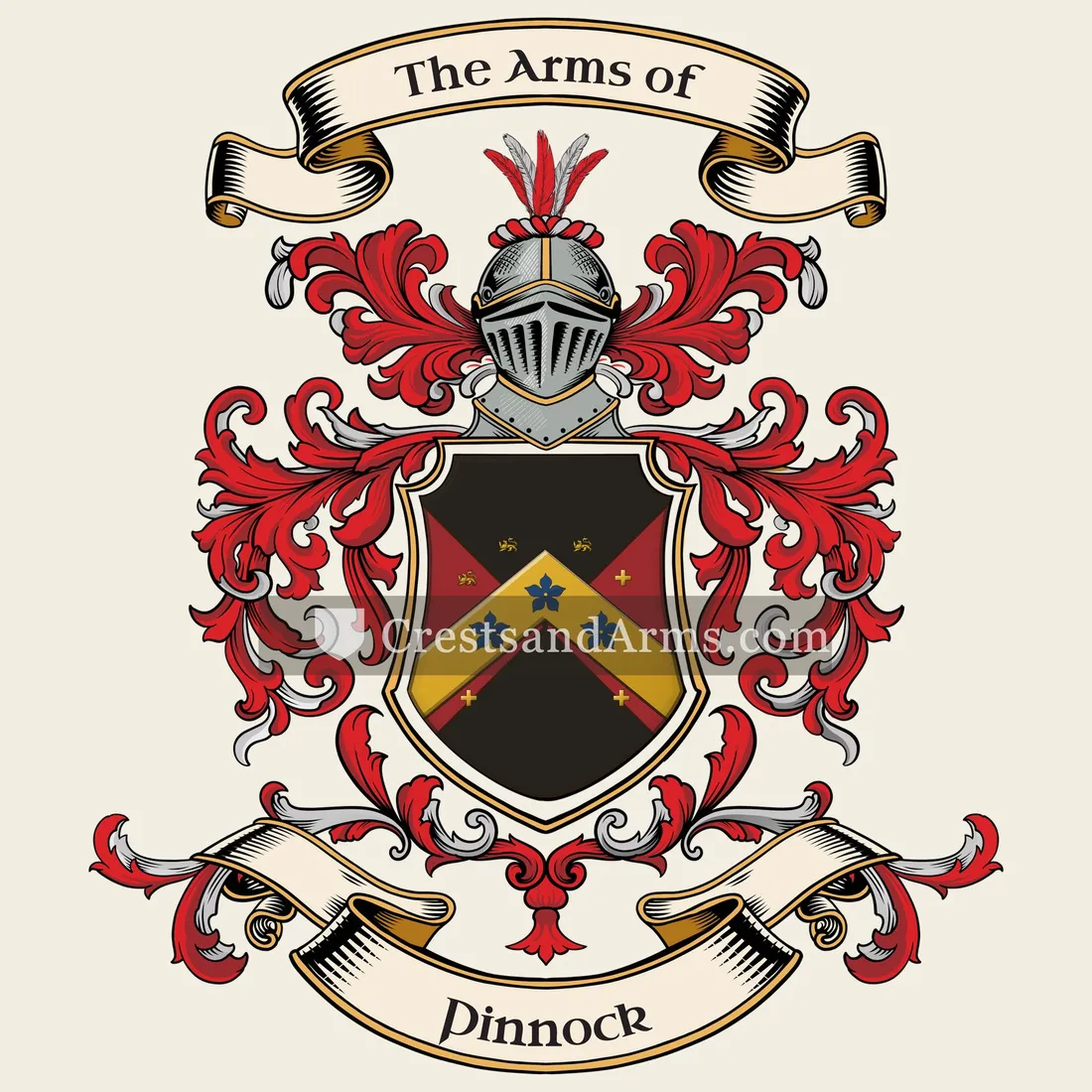
Symbols on this shield
chevronProtection, and faithful service completed
cross symbolChristian faith and service
lionCourage, strength and royalty
cinquefoilHope and joy
Colours
Red (Gules)Means: Military strength
Black (Sable)Means: Constancy
Gold (Or)Means: Generosity
Blue (Azure)Means: Loyalty and truth
Historical info
Source
Sir Bernard Burke, The General Armory of England, Scotland, Ireland and Wales, London: Harrison & Sons, 1884
Blazon (the actual original written record)
“Per saltire gu. and sa. on a chev. betw. three lions' heads erased, from the mouth of each issuant a cross crosslet fessways issuant all or, as many cinquefoils az”
Irelandc. 1668
Digital archive packCoat of arms PNG, gold border print PDF, vector SVG and the certificate of authenticity. Sent to your email in minutes.
Map of Ireland showing where the Pinnock arms are recorded
The Pinnock arms were recorded in Ireland, c. 1668.
Arms such as these were typically recorded in Dublin.
Dublin was the seat of government in Ireland and the place where grants were sought and recorded. Families with business at the castle or the courts settled nearby, and settling there put their arms on record.
This is where the arms were entered in the register. Families often moved to other parts of the country, so the same name can turn up in more than one region.
The body that granted and recorded arms in Ireland in this period.
Charles II of England
Sovereign of the period
Charles II of England
1660–1685
Reigning in Belgium when the Pinnock arms are first recorded.
How Arms Worked in Ireland
The Ulster King of Arms granted coats of arms to individuals who proved their social standing and good character. These symbols were typically inherited by all legitimate descendants of the original holder. If a family branch wanted a unique look, they could apply for a specific change to their design through the office to ensure their identity remained distinct.
Granting authority
The Ulster King of Arms acted as the official body that regulated and issued all coats of arms throughout Ireland.
How they got arms
Families obtained their arms through formal grants issued by the office after proving their eligibility and paying the required fees.
Where arms were recorded
All official grants were recorded in the registers held by the Ulster King of Arms starting from the year 1552.
The family's standing
Recorded among the armigerous families of Ireland.
Origin & History of the Pinnock Family in Ireland
The history of the Pinnock family in Ireland is rooted in the social shifts of the seventeenth century, with documented evidence confirming their presence in Dublin by 1668. During this period, Dublin was a bustling center of trade and administration, attracting individuals from across the British Isles who sought new opportunities in the wake of significant political upheaval. The name itself is believed to have English origins, likely evolving from a topographic term or a nickname that described a person living near a small bridge or a peak. As these early family members settled into the urban landscape of Dublin, they integrated into the local economy and civic life of the city. Their presence in the capital during the late 1600s suggests that the family was part of the growing merchant or professional class that helped shape the development of modern Dublin. By establishing themselves in such a prominent location, the early Pinnocks became part of the complex tapestry of migration and settlement that defined Irish history during the Restoration era.
Pinnock Meaning & Related Branches
Root word
Pinnock
Derived from the Old English word pinn meaning a peg or pin.
This name
PinnockA topographical name for someone who lived near a sharp hill or a pointed peak.
also spelled
Pinnocke
Pinnok
Pynock
Pinnick
Related arms
Pinoke, or Pinnockvariant spelling
Pynnokevariant spelling
Pynockvariant spelling
Pynokevariant spelling
Documented Sources
J. B. Rietstap, Armorial Général, Gouda: G. B. van Goor Zonen, 1884–87
State Archives in Belgium (Rijksarchief te België), Parochieregisters van de provincie Brabant
State Archives in Belgium (Rijksarchief te België), Registers van de Burgerlijke Stand
Wauters, Alphonse, Histoire des environs de Bruxelles, 1855
Verhulst, Adriaan, Précis d'histoire rurale de la Belgique, 1990
Digital archive packCoat of arms PNG, gold border print PDF, vector SVG and the certificate of authenticity. Sent to your email in minutes.


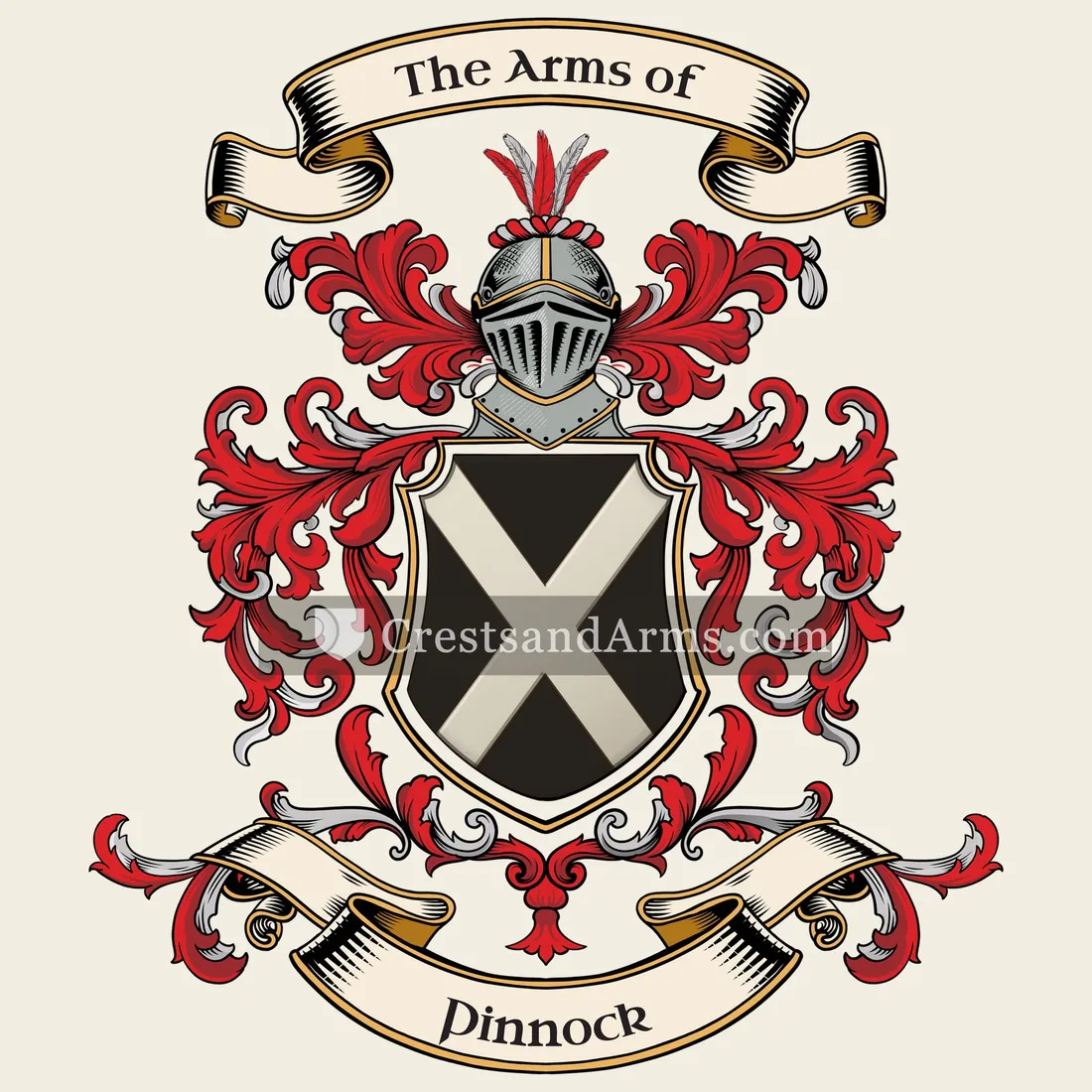
 saltireResolution, and St Andrew's cross
 saltireResolution, and St Andrew's cross


 chevronProtection, and faithful service completed
 cross symbolChristian faith and service
 lionCourage, strength and royalty
 cinquefoilHope and joy