Map of Germany showing where the Pistorius arms are recorded
The Pistorius arms were recorded in Germany, c. 1710.
Arms such as these were typically recorded in Bavaria.
Bavaria was a country of old landed families and walled market towns. Estates passed down the same line for centuries, and both the landowners and the leading townsmen kept arms, which is why so many Bavarian names sit in the registers.
This is where the arms were entered in the register. Families often moved to other parts of the country, so the same name can turn up in more than one region.
The body that granted and recorded arms in Germany in this period.
Joseph I, Holy Roman Emperor
Sovereign of the period
Joseph I, Holy Roman Emperor
1705–1711
Reigning in Germany when the Pistorius arms are first recorded.
How Arms Worked in Germany
In the Holy Roman Empire, coats of arms were often granted to individuals by the Emperor or his representatives. These arms were then passed down through the generations to all legitimate descendants of the original holder. Younger branches of a family usually kept the same shield design without needing to change it, as the arms belonged to the entire lineage.
Granting authority
The Holy Roman Emperor held the sole power to grant new coats of arms throughout his vast imperial territories.
How they got arms
Families typically obtained their coats of arms through a formal imperial grant or by proving their noble status to the authorities.
Where arms were recorded
These grants were officially recorded in the Imperial Chancery registers, which began keeping formal records of such honors during the Middle Ages.
The family's standing
Recorded among the armigerous families of Germany.
Origin & History of the Pistorius Family in Germany
The family name Pistorius is a Latinized surname that emerged during the period of the Protestant Reformation in Germany. It was common for scholars, theologians, and educated professionals of the time to translate their German family names into Latin to reflect their academic status. The name itself is derived from the Latin word for a miller or a baker. By the early eighteenth century, the family established a notable presence in the region of Bavaria. Historical records confirm that members of the family were living in this area by 1710, often serving as influential figures within local church administrations and academic circles. This tradition of intellectual service helped the family integrate into the social fabric of southern Germany, where they remained active in professional life for generations.
Meaning of the Pistorius family crest colors & symbols
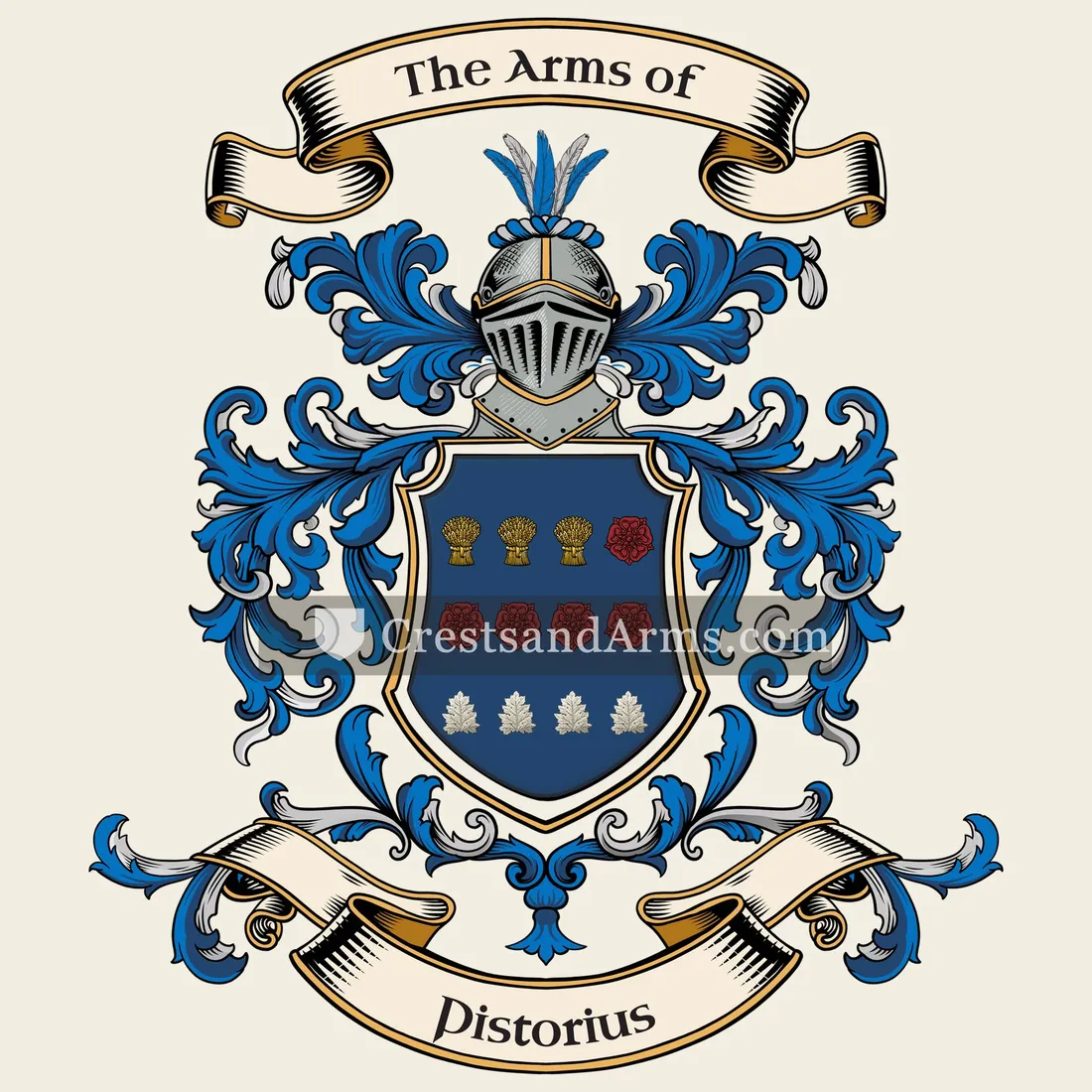
Symbols on this shield
wheatsheafPlenty, and the harvest of one's own labour
roseThe seventh son, and beauty with grace
leafHappiness and abundance
Colours
Blue (Azure)Means: Loyalty and truth
Gold (Or)Means: Generosity
Red (Gules)Means: Military strength
Silver (Argent)Means: Peace and sincerity
Historical info
Source
J. B. Rietstap, Armorial Général, Gouda: G. B. van Goor Zonen, 1884–87
Blazon (the actual original written record)
“D'azur à trois épis d'or, enclos dans une couronne de cinq roses de gu., mêlées à cinq feuilles d'arg. C.: un homme iss., hab. d'azur, rebr. d'or, coiffé d'un bonnet albanais d'azur, retr. d'or, tenant de sa main dextre les épis de l'écu. L. d'or et d'azur.”
AustriaLinz Aut, c. 1772
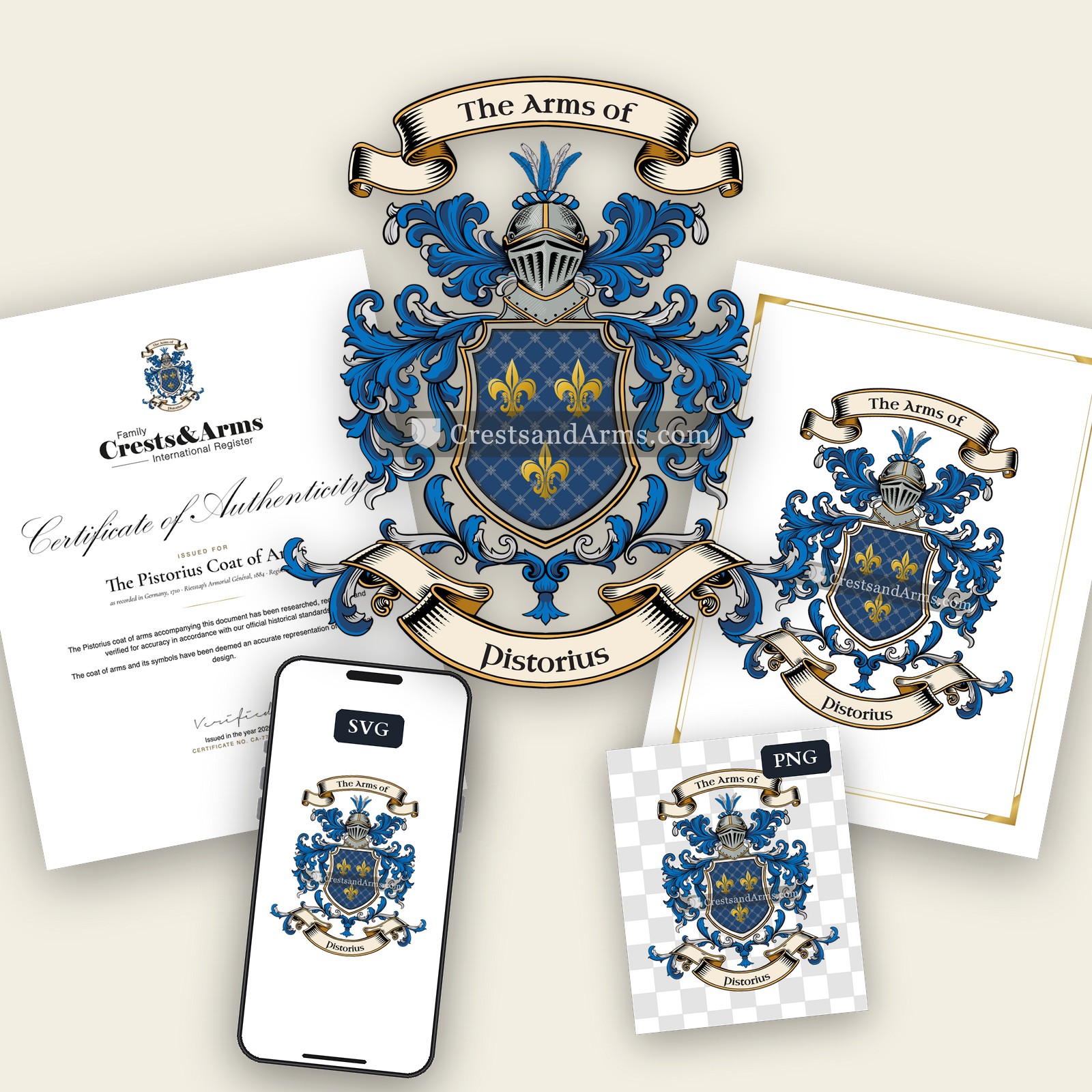
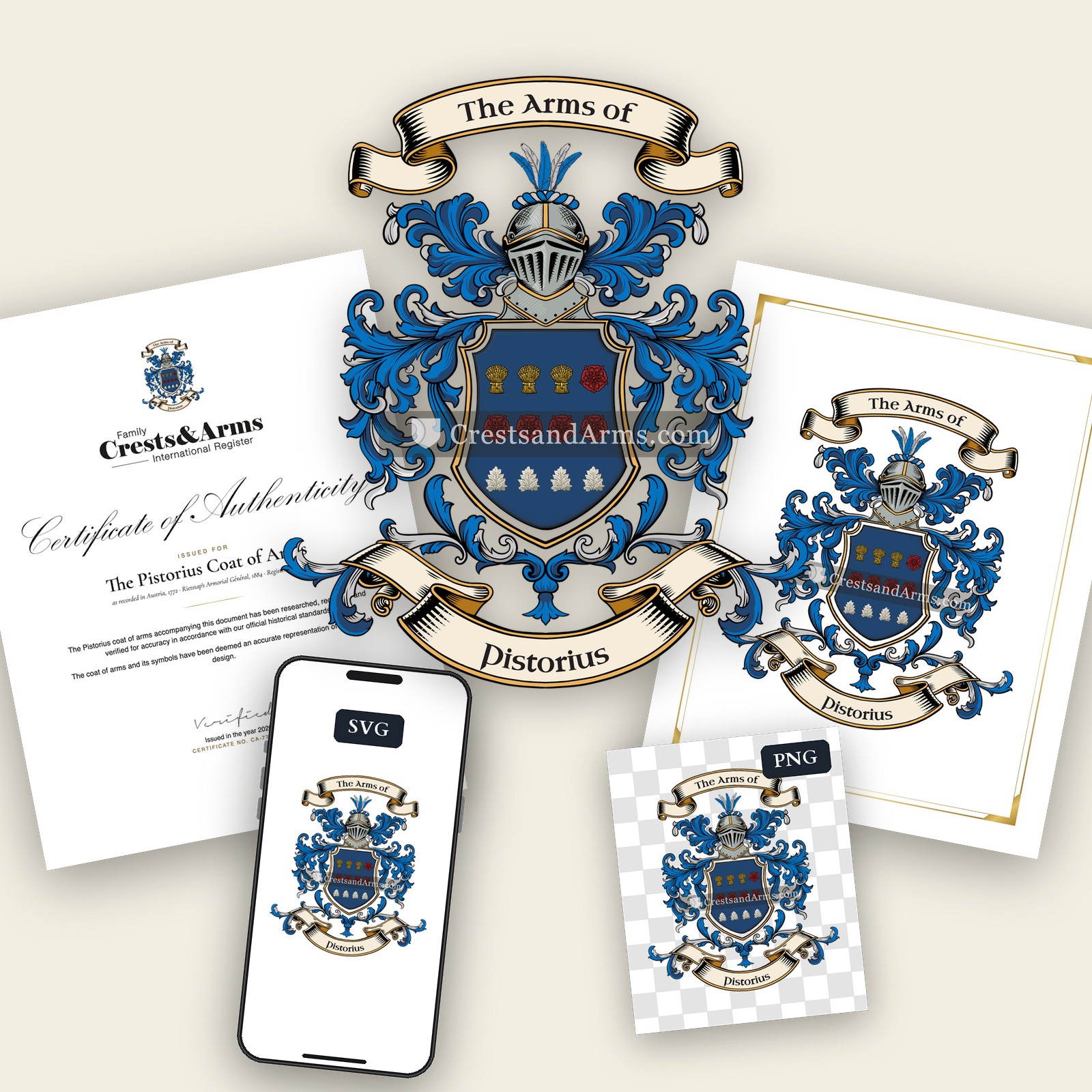
Digital archive packCoat of arms PNG, gold border print PDF, vector SVG and the certificate of authenticity. Sent to your email in minutes.
Map of Austria showing where the Pistorius arms are recorded
The Pistorius arms were recorded in Linz Aut, c. 1772.
This is where the arms were entered in the register. Families often moved to other parts of the country, so the same name can turn up in more than one region.
Region
Linz
Town
Linz Aut
First recorded
1772
Granting Authority for the Pistorius Arms
Imperial and Royal chancery
Sodacan · CC BY-SA 3.0
The body that granted and recorded arms in Austria in this period.
Joseph II, Holy Roman Emperor
Sovereign of the period
Joseph II, Holy Roman Emperor
1765–1790
Reigning in Germany when the Pistorius arms are first recorded.
How Arms Worked in Austria
Austrian coats of arms were often linked directly to noble titles granted by the Emperor. These symbols belonged to the entire family line rather than just one individual. When a family grew, new branches kept the original design without needing to change it. This system allowed all members of a noble house to share the same identity across many generations.
Granting authority
The Imperial and Royal chancery managed all heraldic matters and controlled the official granting of arms throughout the Austrian lands.
How they got arms
Families typically received their arms through a formal imperial decree that often accompanied the elevation of a person to noble status.
Where arms were recorded
Official records of these grants were kept in the Imperial Register of Nobility which began its formal documentation process in 1453.
The family's standing
Recorded among the armigerous families of Austria.
Origin & History of the Pistorius Family in Austria
The surname Pistorius is a Latinized version of the German name Becker or Baker, which was a common practice among educated families and clergy during the Renaissance and Enlightenment periods. By adopting this classical form, the family signaled a connection to the scholarly traditions of the time. Records confirm that members of the Pistorius family were established in the city of Linz by 1772, where they likely integrated into the professional or administrative classes of the Austrian Empire. During this era, Linz served as a vital hub for trade and government along the Danube River, providing a stable environment for families to grow and contribute to local society. The presence of the name in official documents from this period suggests that the family held a respected position within the urban community, maintaining their status through generations of civic involvement and professional work.
Pistorius Meaning & Related Branches
Root word
pistor
Latin word meaning a miller or a baker.
This name
PistoriusA Latinized occupational surname referring to a person who worked as a baker.
also spelled
Pistoriuse
Pistoreeus
Related arms
Kaiserrecorded with Pistorius, same area
Schönslederrecorded with Pistorius, same area
Strasserrecorded with Pistorius, same area
Zellerrecorded with Pistorius, same area
Documented Sources
J. B. Rietstap, Armorial Général, Gouda: G. B. van Goor Zonen, 1884–87
Heintze, Albert. Die deutschen Familiennamen: geschichtlich, geographisch, sprachlich. 1903
Digital archive packCoat of arms PNG, gold border print PDF, vector SVG and the certificate of authenticity. Sent to your email in minutes.


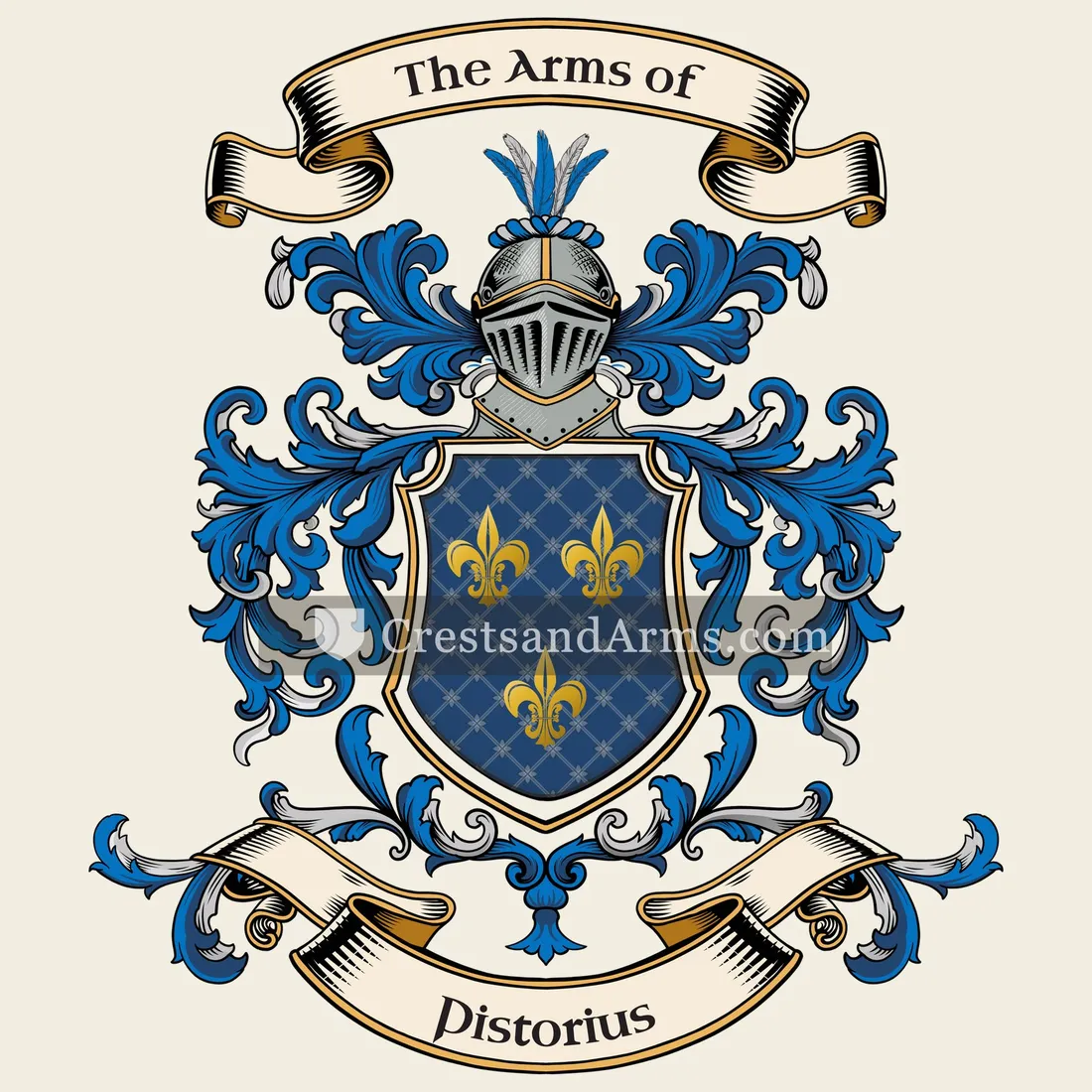
 fleur de lisPurity, light, and the sixth son
 fleur de lisPurity, light, and the sixth son


 wheatsheafPlenty, and the harvest of one's own labour
 roseThe seventh son, and beauty with grace
 leafHappiness and abundance