A record of documented arms, meaning and origin, researched for the Piunno family lines. Documented in 2 countries.
Reg. 0089 · Italian, P–S
Coat of Arms & Family Crest Details
Symbols on this shield
mountThe ground held, and steadfastness upon it
treeLife, endurance and deep roots
Colours
Gold (Or)Means: Generosity
Green (Vert)Means: Hope
Historical info
Source
J. B. Rietstap, Armorial Général, Gouda: G. B. van Goor Zonen, 1884–87
Blazon (the actual original written record)
“D'or à un tronc de chêne au nat., terrassé de sin., poussant une branche du même à dextre, sur laquelle est perchée une merle de sa., le vol levé. Cq. cour. C.: un vol coupé alt. de sa. et d'or. L. d'or et de sa.”
Italyc. 1726
Digital archive packCoat of arms PNG, gold border print PDF, vector SVG and the certificate of authenticity. Sent to your email in minutes.
Map of Italy showing where the Piunno arms are recorded
The Piunno arms were recorded in Italy, c. 1726.
Arms such as these were typically recorded in Venice.
Venice ran on trade, and its great families were merchants before they were anything else. The city kept a formal list of its noble houses, and a name on that list carried arms as a matter of record.
This is where the arms were entered in the register. Families often moved to other parts of the country, so the same name can turn up in more than one region.
The body that granted and recorded arms in Italy in this period.
Victor Amadeus II of Savoy
Sovereign of the period
Victor Amadeus II of Savoy
1675–1730
Reigning in Italy when the Piunno arms are first recorded.
How Arms Worked in Italy
In the Italian states, coats of arms were often used by noble families to show their status and history. These symbols were passed down through the generations to all legitimate male descendants. Younger branches of a family usually kept the original design but sometimes added small changes to distinguish their specific line from the main branch.
Granting authority
Various local rulers and city governments controlled the use of coats of arms across the different Italian states.
How they got arms
Families often assumed their own arms or received them as official grants from local lords, popes, or city councils.
Where arms were recorded
Arms were recorded in local city archives or private family books rather than in one single national register.
The family's standing
Recorded among the armigerous families of Italy.
Origin & History of the Piunno Family in Italy
The family name Piunno carries a distinct history rooted in the social and economic landscape of eighteenth-century Italy. By 1726, records confirm that members of the family were established in Venice, a city that served as a major crossroads for trade and cultural exchange during the late Republic. At this time, Venice was a hub for skilled artisans and merchants who navigated the complex guild systems and maritime networks of the Adriatic region. Living in such a vibrant urban center suggests that early members of the family were likely integrated into the professional life of the city, potentially working in specialized crafts or administrative roles that supported the Venetian economy. As the family navigated this period of history, their presence in the city reflects the broader movement of people who helped maintain the stability and influence of Venice before the political shifts of the late 1700s.
Coat of Arms & Family Crest Details
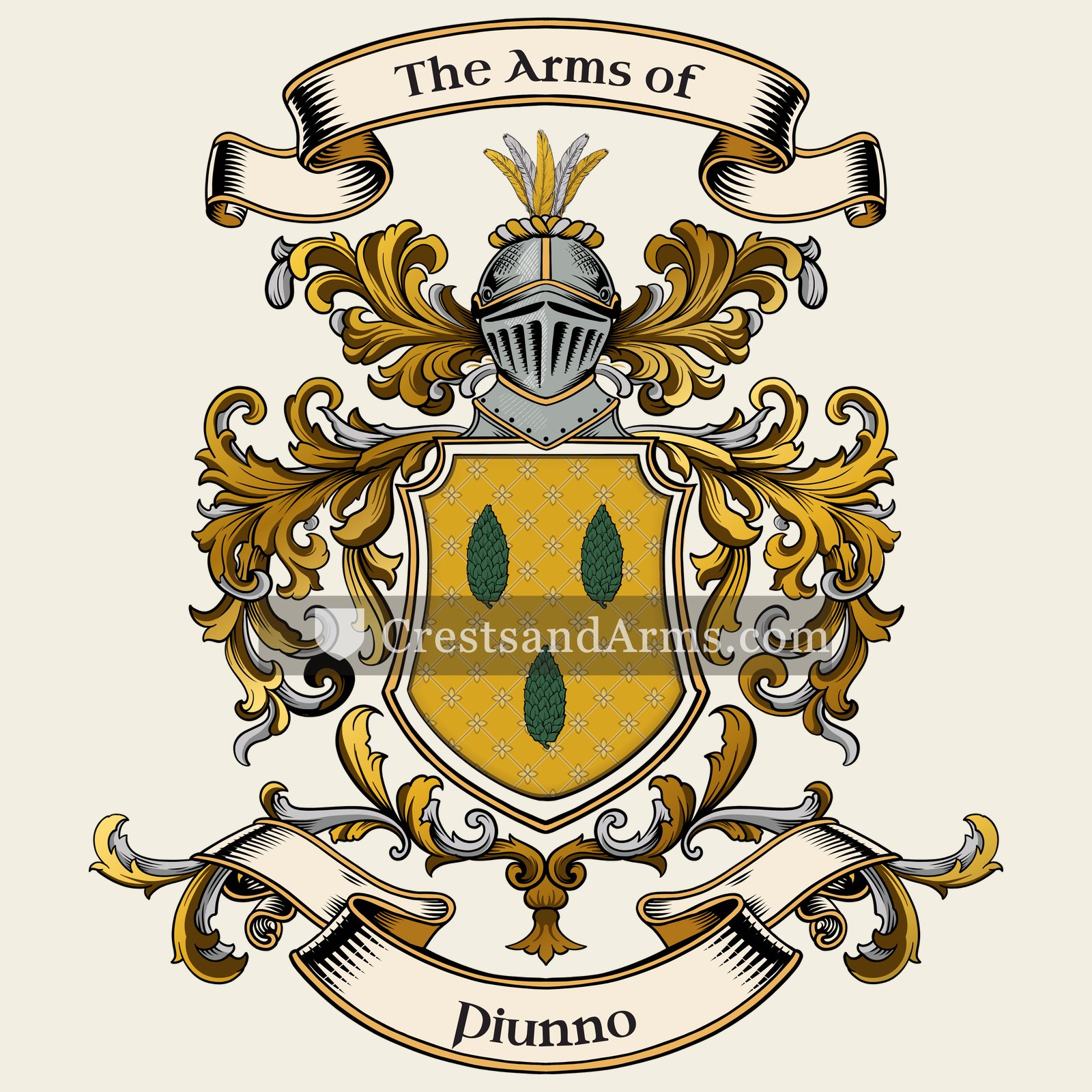
Symbols on this shield
pine coneLife and fertility
Colours
Gold (Or)Means: Generosity
Green (Vert)Means: Hope
Historical info
Source
J. B. Rietstap, Armorial Général, Gouda: G. B. van Goor Zonen, 1884–87
Blazon (the actual original written record)
“D'or à trois pommes de pin de sin., les queues en haut.”
AragonAragon, c. 1722
Digital archive packCoat of arms PNG, gold border print PDF, vector SVG and the certificate of authenticity. Sent to your email in minutes.
Map of Spain showing where the Piunno arms are recorded
The Piunno arms were recorded in Aragon, c. 1722.
Aragon was mountain and river country in north-eastern Spain, with a strong tradition of small independent landholders. A great many families counted as gentry there, and each one needed a shield to be told apart.
This is where the arms were entered in the register. Families often moved to other parts of the country, so the same name can turn up in more than one region.
The body that granted and recorded arms in Spain in this period.
Philip V of Spain
Sovereign of the period
Philip V of Spain
1714–1724
Reigning in Italy when the Piunno arms are first recorded.
How Arms Worked in Spain
In Spain, a coat of arms was considered a form of property that belonged to the entire family line. These arms were passed down from a father to all his children equally. Younger branches of the family usually kept the original design without needing to add any special marks to distinguish their specific line.
Granting authority
The Cronista Rey de Armas was the official body that regulated and granted coats of arms throughout Spain.
How they got arms
Families often obtained their arms through royal grants or by proving their noble status to the official heraldic authority.
Where arms were recorded
Coats of arms were officially recorded in the registers of the Cronista Rey de Armas starting in 1496.
The family's standing
Recorded among the armigerous families of Aragon.
Origin & History of the Piunno Family in Spain
The history of the Piunno family in Spain is deeply rooted in the cultural landscape of the Aragon region during the early eighteenth century. By 1722, records confirm that members of the family were established residents within this territory, which was known for its distinct legal traditions and strong local identity. During this era, families like the Piunnos often lived in agricultural communities where they contributed to the local economy and social structure. Because the name appears in regional documentation during this period, it suggests that the family was integrated into the administrative life of the kingdom. These early ancestors likely navigated the complex social changes occurring in Spain following the War of the Spanish Succession, which had recently reshaped the political landscape of Aragon. Their presence in the historical record serves as a testament to their long-standing connection to the Iberian Peninsula and the persistence of their family line through generations of Spanish history.
Related Branches & Arms
Root word
Pio
Derived from the Latin word pius meaning dutiful, devout, or pious.
This name
PiunnoA diminutive form indicating a descendant or follower of a pious person.
also spelled
Pinoe
Pynno
Pinyo
Documented Sources
J. B. Rietstap, Armorial Général, Gouda: G. B. van Goor Zonen, 1884–87
Archivio di Stato di Venezia, Anagrafi di popolazione
Archivio di Stato di Venezia, Registri dei battesimi delle parrocchie veneziane
Digital archive packCoat of arms PNG, gold border print PDF, vector SVG and the certificate of authenticity. Sent to your email in minutes.


 mountThe ground held, and steadfastness upon it
 treeLife, endurance and deep roots
 mountThe ground held, and steadfastness upon it
 treeLife, endurance and deep roots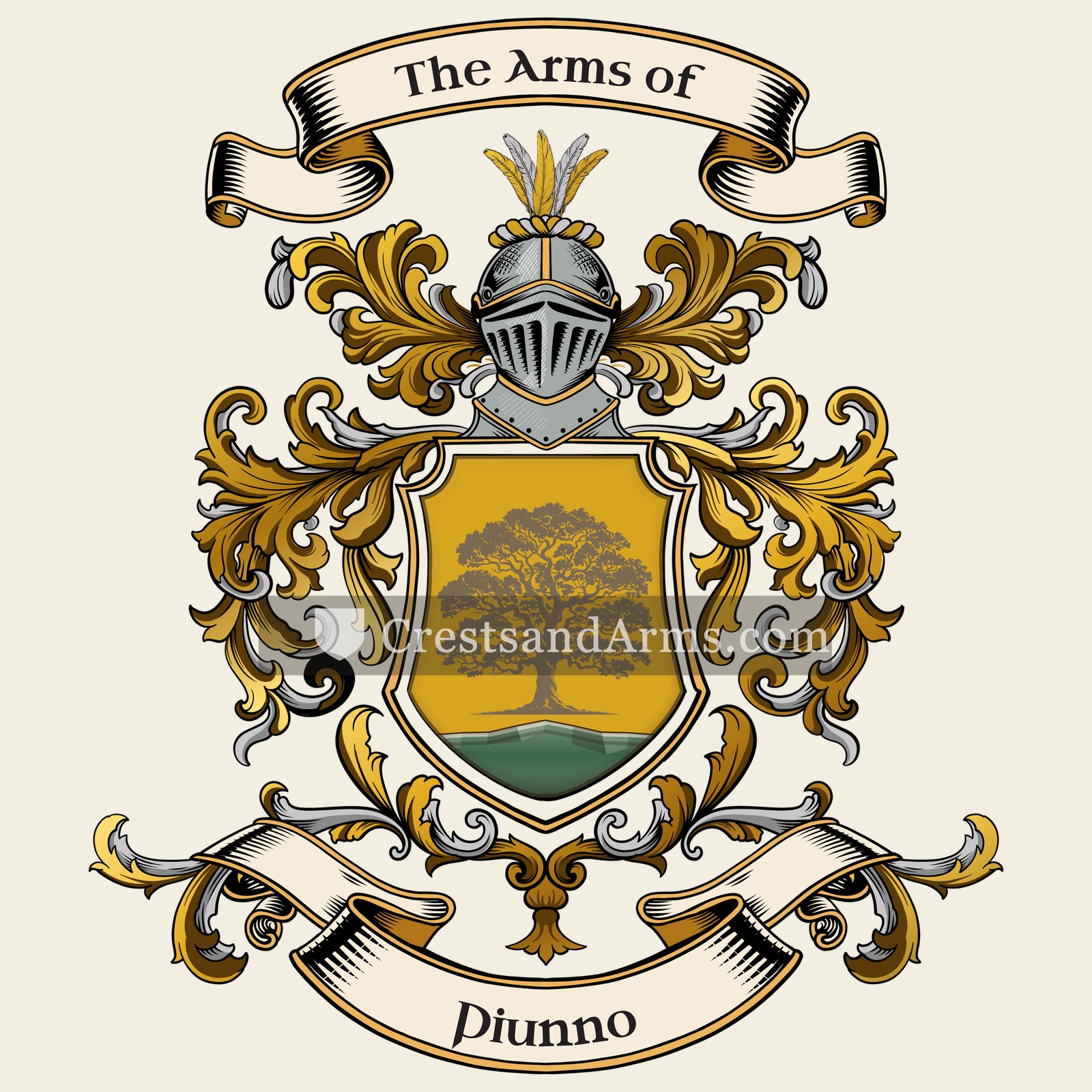


 pine coneLife and fertility