Map of Netherlands showing where the Pla arms are recorded
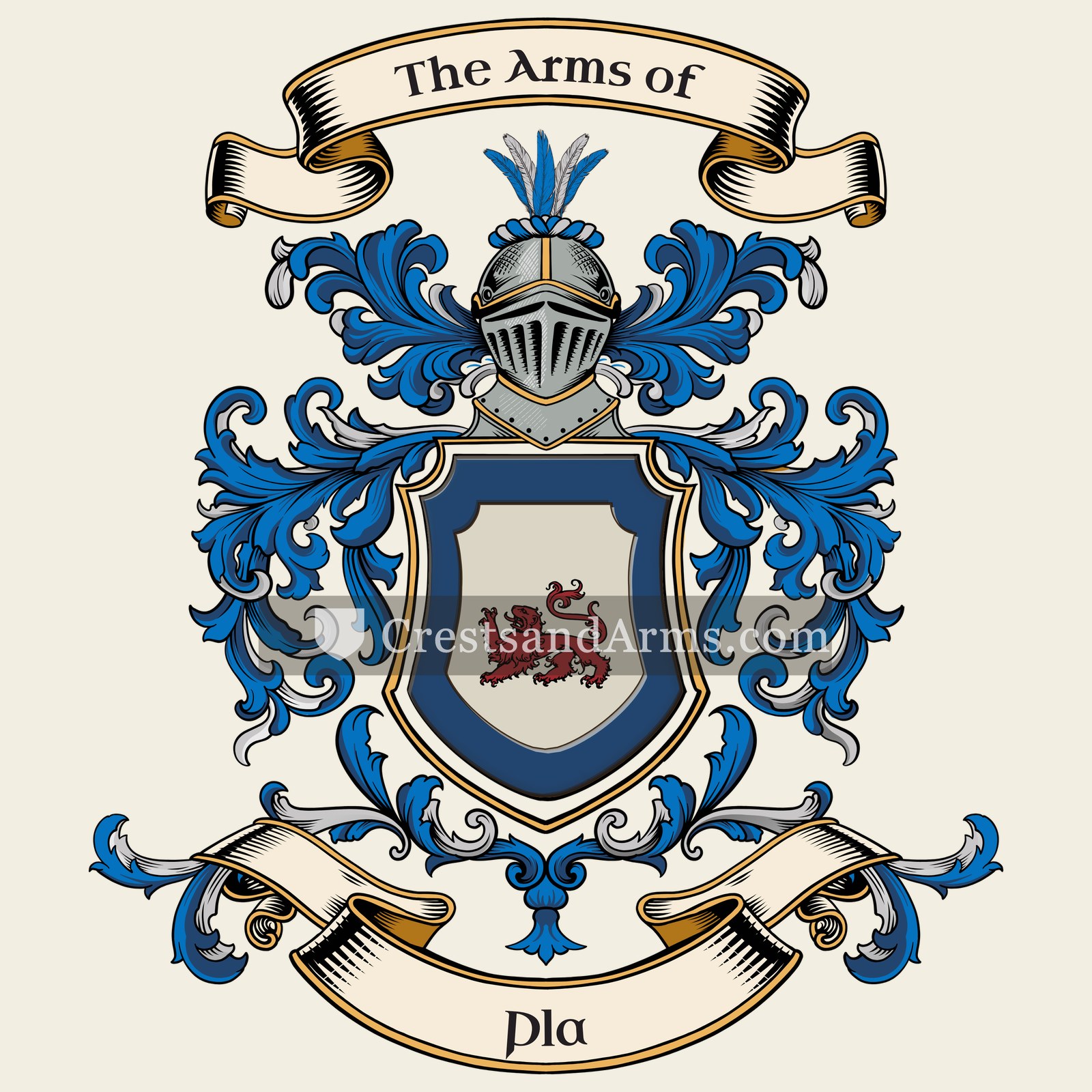
The Pla arms were recorded in Leyde, c. 1815.
This is where the arms were entered in the register. Families often moved to other parts of the country, so the same name can turn up in more than one region.
Region
Leyde
Town
Leyde
First recorded
1815
Granting Authority for the Pla Arms
Hoge Raad van Adel
Photograph made by me · CC BY-SA 3.0
The body that granted and recorded arms in Netherlands in this period.
William I of the Netherlands
Sovereign of the period
William I of the Netherlands
1815–1840
Reigning in Netherlands when the Pla arms are first recorded.
How Arms Worked in Netherlands
In the Netherlands, coats of arms were often used by noble families and those who held specific public offices. These arms were passed down through the generations to legitimate descendants. Younger branches of a family usually kept the original design without needing to add special marks. This system ensured that the family identity remained clear and consistent over many years.
Granting authority
The Hoge Raad van Adel is the official body that regulates and manages noble titles and coats of arms in the Netherlands.
How they got arms
Families typically obtained their coats of arms through official royal grants or by proving their long-standing historical use of the symbols.
Where arms were recorded
Coats of arms are officially recorded in the registers held by the Hoge Raad van Adel, which began its work in 1814.
The family's standing
Recorded among the armigerous families of Netherlands.
Origin & History of the Pla Family in Netherlands
The family name Pla carries a rich history that likely finds its roots in the Catalan-speaking regions of Europe, where the word itself refers to a flat plain or an open field. This geographical connection suggests that the earliest ancestors were individuals who lived on or worked upon the flatlands of the countryside. By the early nineteenth century, members of the family had established a presence in the Dutch city of Leiden, known historically as Leyde. During this period, the city served as a vibrant center for trade and industry, attracting people from across the continent who sought new opportunities in its weaving and printing sectors. The migration of the Pla family to this region highlights a broader pattern of movement during the Napoleonic era, as families relocated to urban hubs to participate in the changing economic landscape of the Netherlands.
Related Branches & Arms
Root word
Platea
Latin term referring to an open space, square, or broad street.
This name
PlaA topographic name for someone who lived near a town square or open marketplace.
also spelled
Plat
Plah
Plaa
le Plah
Pla
Documented Sources
J. B. Rietstap, Armorial Général, Gouda: G. B. van Goor Zonen, 1884–87
Fokker, G. A., Geschiedenis der Lakenindustrie te Leiden, 1866
Mollat, Michel, Histoire de l'Europe, 1989
Nationaal Archief, Burgerlijke Stand van de gemeente Leiden
Erfgoed Leiden en Omstreken, Bevolkingsregister Leiden
Digital archive packCoat of arms PNG, gold border print PDF, vector SVG and the certificate of authenticity. Sent to your email in minutes.


 lionCourage, strength and royalty
 lionCourage, strength and royalty