Map of Italy showing where the Plane arms are recorded
The Plane arms were recorded in Piedmont, c. 1775.
Piedmont was Alpine and river country in north-western Italy, ruled from Turin. Its noble houses were listed formally by the state, and a name on that list carried arms as a matter of record.
This is where the arms were entered in the register. Families often moved to other parts of the country, so the same name can turn up in more than one region.
The body that granted and recorded arms in Italy in this period.
Alvise Giovanni Mocenigo
Sovereign of the period
Alvise Giovanni Mocenigo
1763–1778
Reigning in Italy when the Plane arms are first recorded.
How Arms Worked in Italy
In the Italian states, coats of arms were often used by noble families to show their status and history. These symbols were passed down through the generations to all legitimate male descendants. Younger branches of a family usually kept the original design but sometimes added small changes to distinguish their specific line from the main branch.
Granting authority
Various local rulers and city governments controlled the use of coats of arms across the different Italian states.
How they got arms
Families often assumed their own arms or received them as official grants from local lords, popes, or city councils.
Where arms were recorded
Arms were recorded in local city archives or private family books rather than in one single national register.
The family's standing
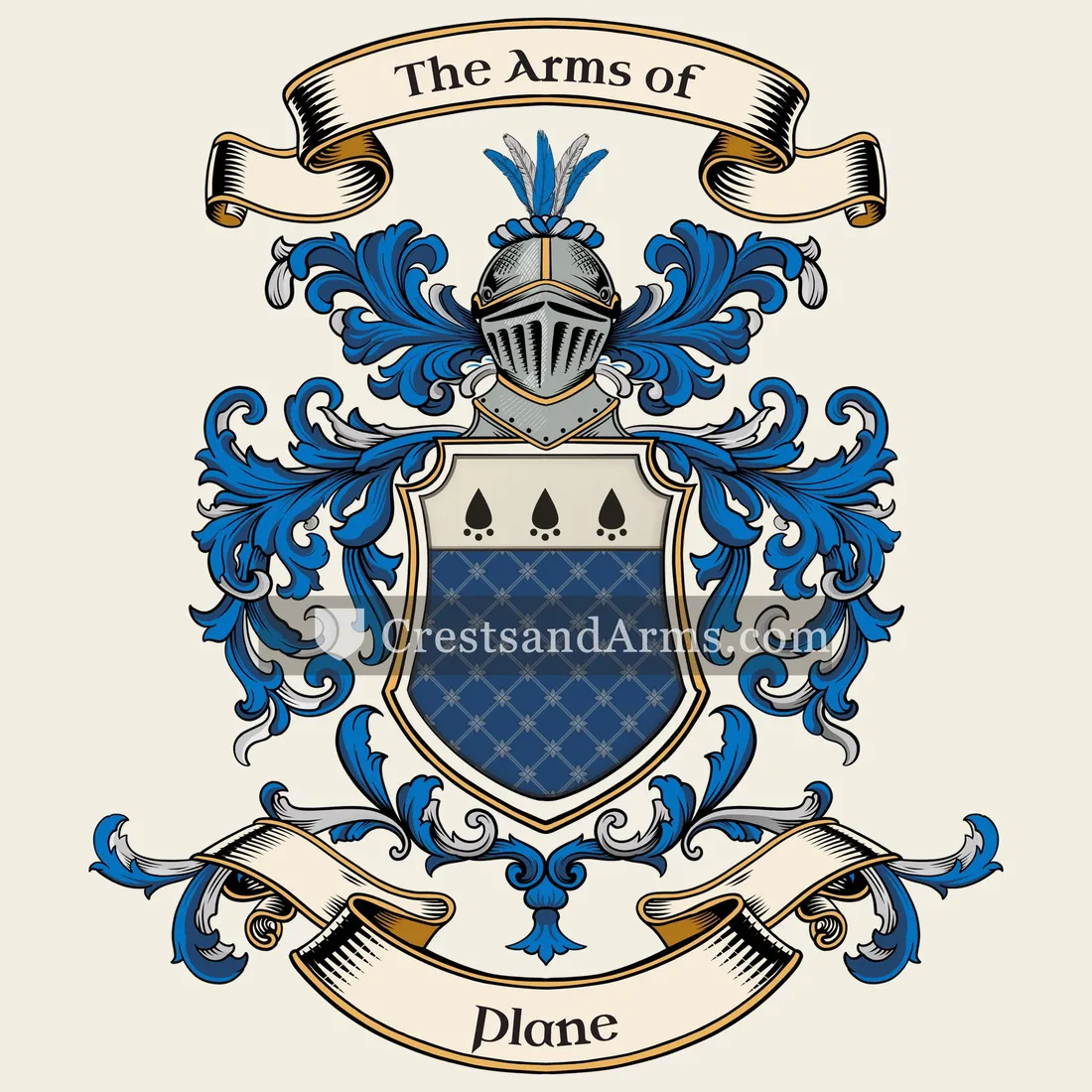
Recorded among the armigerous families of Piedmont.
Origin & History of the Plane Family in Italy
The family name Plane carries a rich history that likely stems from the geographical and social landscape of the Piedmont region in Italy. By the year 1775, records confirm that members of the family were established residents in this area, which was then part of the Kingdom of Sardinia. The name itself may have originated as a descriptive term, potentially referring to individuals who lived on a flat plain or worked in trades associated with woodworking tools, as the word often relates to a smoothing instrument. During the eighteenth century, families in Piedmont were deeply integrated into a society defined by agricultural traditions and the complex political shifts of the Alpine foothills. As the family grew, they became part of the local fabric of the region, contributing to the community through their labor and daily lives long before the modern era. This historical presence highlights a deep connection to the land and the evolving culture of northern Italy during a time of significant transition.
Plane Meaning & Related Branches
Root word
planus
Latin term meaning flat, level, or even.
This name
PlaneRefers to a person who lived on flat or level ground.
also spelled
Planne
Plaine
Plany
Planes
Plan
Documented Sources
J. B. Rietstap, Armorial Général, Gouda: G. B. van Goor Zonen, 1884–87
Gribaudi, Maurizio, Mondanità e vita quotidiana a Torino nel XVIII secolo, 1998
Quazza, Guido, Le riforme in Piemonte nella prima metà del Settecento, 1957
Archivio di Stato di Torino, Stato Civile della Restaurazione
Archivio Storico della Città di Torino, Registri delle parrocchie
Digital archive packCoat of arms PNG, gold border print PDF, vector SVG and the certificate of authenticity. Sent to your email in minutes.


 chiefAuthority, wisdom and dominion
 ermineDignity and rank
 chiefAuthority, wisdom and dominion
 ermineDignity and rank