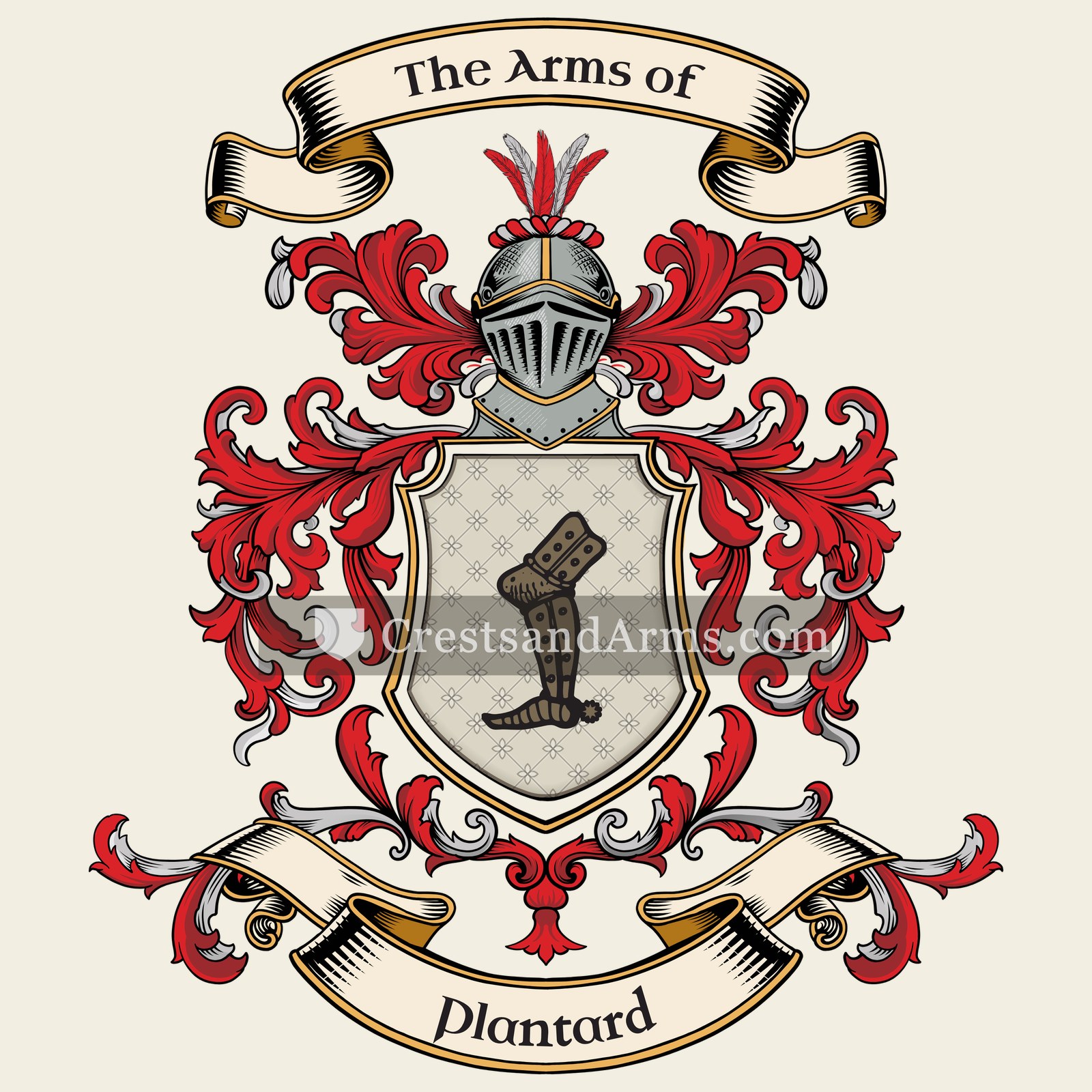
A record of documented arms, meaning and origin, researched for the Plantard family lines. Documented in 2 countries.
Reg. 7444 · Britain, P–S
Coat of Arms & Family Crest Details
Symbols on this shield
pawStrength held ready, the beast's power in a single limb
Colours
Silver (Argent)Means: Peace and sincerity
Black (Sable)Means: Constancy
Historical info
Source
J. B. Rietstap, Armorial Général, Gouda: G. B. van Goor Zonen, 1884–87
Blazon (the actual original written record)
“D'arg. à une patte d'ours de sa., posée en pal, coupée de gu., montrant la plante du pied de carn., les ongles en haut. Cq. cour. C.: la patte d'ours.”
BritainCoire, c. 1700
Digital archive packCoat of arms PNG, gold border print PDF, vector SVG and the certificate of authenticity. Sent to your email in minutes.
Map of Britain showing where the Plantard arms are recorded
The Plantard arms were recorded in Coire, c. 1700.
Arms such as these were typically recorded in Kent.
Kent sits between London and the short crossing to Europe, and the trade passing through made it wealthy. Merchant families bought land with that money, and it was landowners who took coats of arms.
This is where the arms were entered in the register. Families often moved to other parts of the country, so the same name can turn up in more than one region.
The body that granted and recorded arms in Britain in this period.
William III of England
Sovereign of the period
William III of England
1694–1702
Reigning in Britain when the Plantard arms are first recorded.
How Arms Worked in Britain
English heraldry allowed arms to be shared by all legitimate descendants of the original owner. These symbols were treated as personal property that moved through the generations to all children. While the eldest son kept the original design, other family members could use the same shield without needing to change it or register their own unique versions.
Granting authority
The College of Arms in London has regulated the use of coats of arms throughout England and Wales since 1484.
How they got arms
Families typically obtained their coats of arms through a formal grant from the Crown or by proving their ancient right to them.
Where arms were recorded
All official coats of arms are recorded in the registers kept at the College of Arms, which date back to the fifteenth century.
The family's standing
Recorded among the armigerous families of Britain.
Origin & History of the Plantard Family in Britain
The surname Plantard is rooted in the French language, where it historically referred to someone who worked with young plants or saplings. While the name originated in France, records confirm that members of the family were established in the county of Kent by the early 1700s. During this period, Kent served as a vital gateway for trade and migration between England and the European continent. Families moving into this region often integrated into the local agricultural or artisanal sectors, which aligned with the traditional meaning of their name. By settling in the southeast of England, these early ancestors became part of a long tradition of families who moved across the English Channel to build new lives. Their presence in local parish registers from the eighteenth century provides the earliest concrete evidence of the name taking root in British soil.
Coat of Arms & Family Crest Details
Symbols on this shield
legStrength and swiftness
Colours
Silver (Argent)Means: Peace and sincerity
Historical info
Source
Sir Bernard Burke, The General Armory of England, Scotland, Ireland and Wales, London: Harrison & Sons, 1884
Blazon (the actual original written record)
“Ar. a black bear's dexter hind leg erect, couped at the thigh, showing the bottom of the foot all ppr”
SussexSussex, c. 1745
Digital archive packCoat of arms PNG, gold border print PDF, vector SVG and the certificate of authenticity. Sent to your email in minutes.
Map of Switzerland showing where the Plantard arms are recorded
The Plantard arms were recorded in Sussex, c. 1745.
Sussex had ironworks in its woods and good farmland on its downs. Both made money, and families who made it bought manors, which is what put their names in the heraldic records.
This is where the arms were entered in the register. Families often moved to other parts of the country, so the same name can turn up in more than one region.
The body that granted and recorded arms in Switzerland in this period.
How Arms Worked in Switzerland
In Switzerland, coats of arms were not restricted to the nobility and were often adopted by common citizens and families. These symbols were passed down through generations to show family identity. When branches of a family grew, they often changed small details of the design to distinguish their own line from the original group.
Granting authority
Cantonal and civic authorities managed the use of coats of arms within their specific regions and local jurisdictions.
How they got arms
Families typically assumed their own coats of arms based on local custom rather than receiving them from a central monarch.
Where arms were recorded
Arms were recorded in various cantonal and civic registers starting from the fourteenth century throughout the Swiss region.
The family's standing
Recorded among the armigerous families of Sussex.
Origin & History of the Plantard Family in Switzerland
The surname Plantard is deeply rooted in the French-speaking regions of Switzerland, particularly within the cantons of Vaud and Geneva. The name is derived from the Old French word *plantard*, which historically referred to a nursery or a plot of land where young trees or vines were cultivated. This suggests that the earliest members of the family were likely agricultural workers or viticulturists who maintained the steep vineyards along the shores of Lake Geneva. While the family established a notable presence in Sussex, England, by 1745, their Swiss origins point to a long history of craftsmanship tied to the land. Families with this name were often integrated into the local parish structures of the Swiss countryside, where they contributed to the regional economy through their expertise in horticulture. Over several generations, the family transitioned from these rural roots into various professional roles, maintaining a consistent presence in the records of the Swiss cantonal archives.
Related Branches & Arms
Root word
Planta
Latin term referring to a sprout, shoot, or the sole of foot.
This name
PlantardAn occupational surname for a gardener, nurseryman, or someone who planted crops.
also spelled
Plantae
Plantah
Plantar
Plante
Plantay
Documented Sources
J. B. Rietstap, Armorial Général, Gouda: G. B. van Goor Zonen, 1884–87
Reaney, P.H. and Wilson, R.M., A Dictionary of English Surnames, 1991
Kent Archives, Canterbury Cathedral Archives: Parish Registers of Kent, 1700–1750
Digital archive packCoat of arms PNG, gold border print PDF, vector SVG and the certificate of authenticity. Sent to your email in minutes.


 pawStrength held ready, the beast's power in a single limb
 pawStrength held ready, the beast's power in a single limb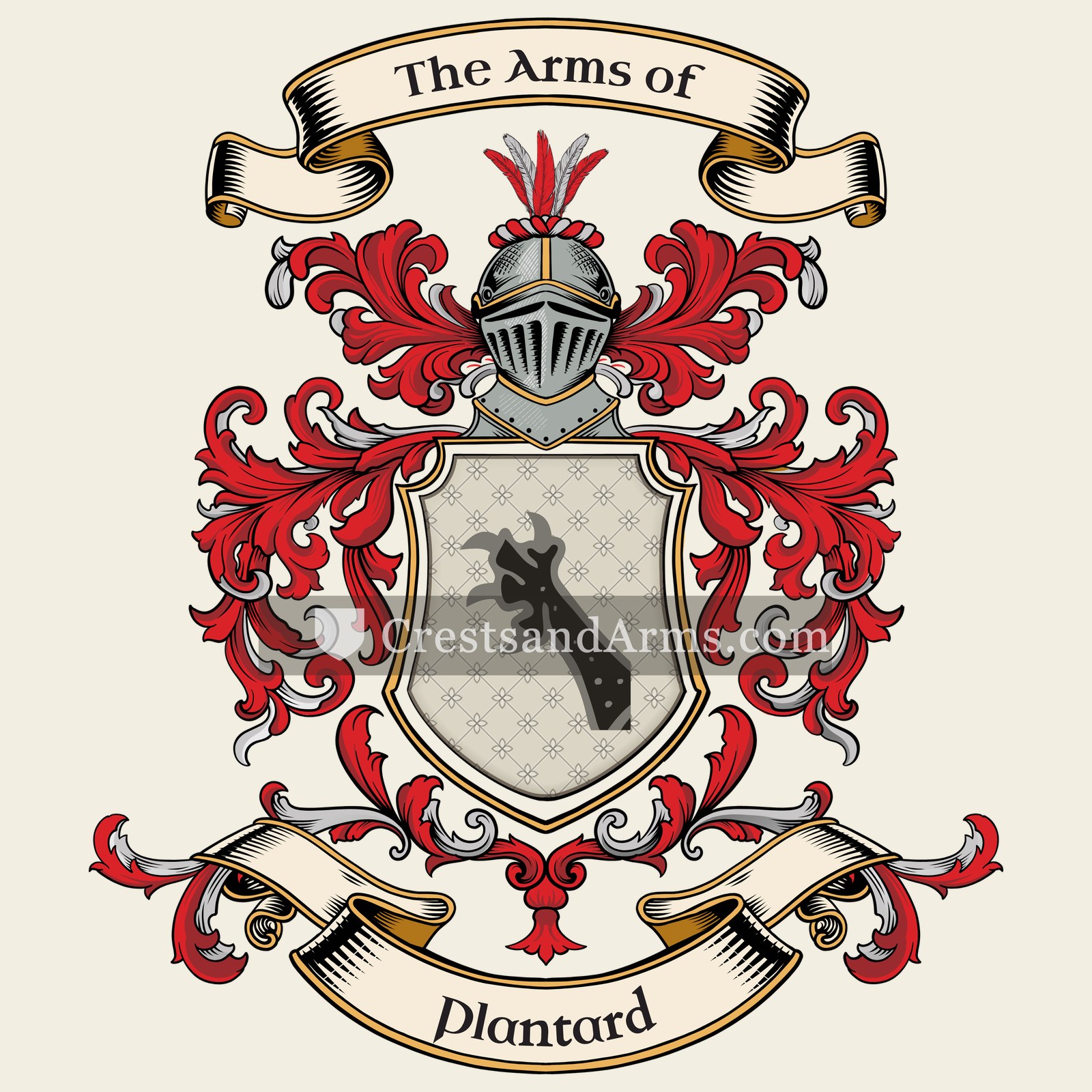


 legStrength and swiftness