Map of France showing where the Platt arms are recorded
The Platt arms were recorded in New-York, c. 1725.
Arms such as these were typically recorded in Bretagne.
More families held coats of arms in Bretagne than anywhere else in France. The land was divided into many small estates rather than a few large ones, so far more households counted as gentry, and each needed a shield of its own to be told apart.
This is where the arms were entered in the register. Families often moved to other parts of the country, so the same name can turn up in more than one region.
The body that granted and recorded arms in France in this period.
Louis XV of France
Sovereign of the period
Louis XV of France
1715–1774
Reigning in France when the Platt arms are first recorded.
How Arms Worked in France
In France, a coat of arms was a mark of honor that passed down through the male line to all legitimate descendants. Families often used the same shield without changes to show their shared heritage. If a branch wanted to stand out, they could add a small mark to their shield to show their specific place in the family tree.
Granting authority
The Juge d'armes de France acted as the official authority that regulated and verified coats of arms across the country.
How they got arms
Families typically inherited their arms from ancestors, though they could also receive them through royal grants or by proving their noble status.
Where arms were recorded
Coats of arms were officially recorded in the Armorial Général de France, which began its main collection in the year 1696.
The family's standing
Recorded among the armigerous families of France.
Origin & History of the Platt Family in France
The name Platt finds its roots in the linguistic landscape of medieval France, where it originated as a descriptive term for someone who lived on flat or level ground. By the early eighteenth century, the family had established a notable presence in the region of Bretagne. During this period, life in Brittany was defined by a strong sense of local identity and a deep connection to the land. Families like the Platts often integrated into the rural economy, working as farmers or tradespeople within their local parishes. Records from 1725 confirm that members of the family were active participants in the social and administrative life of the region, navigating the complex legal and religious structures of the French kingdom. Their history reflects the broader patterns of migration and settlement that shaped the Breton countryside, as families built their lives around the specific geography and traditions of their home province.
Coat of Arms & Family Crest Details
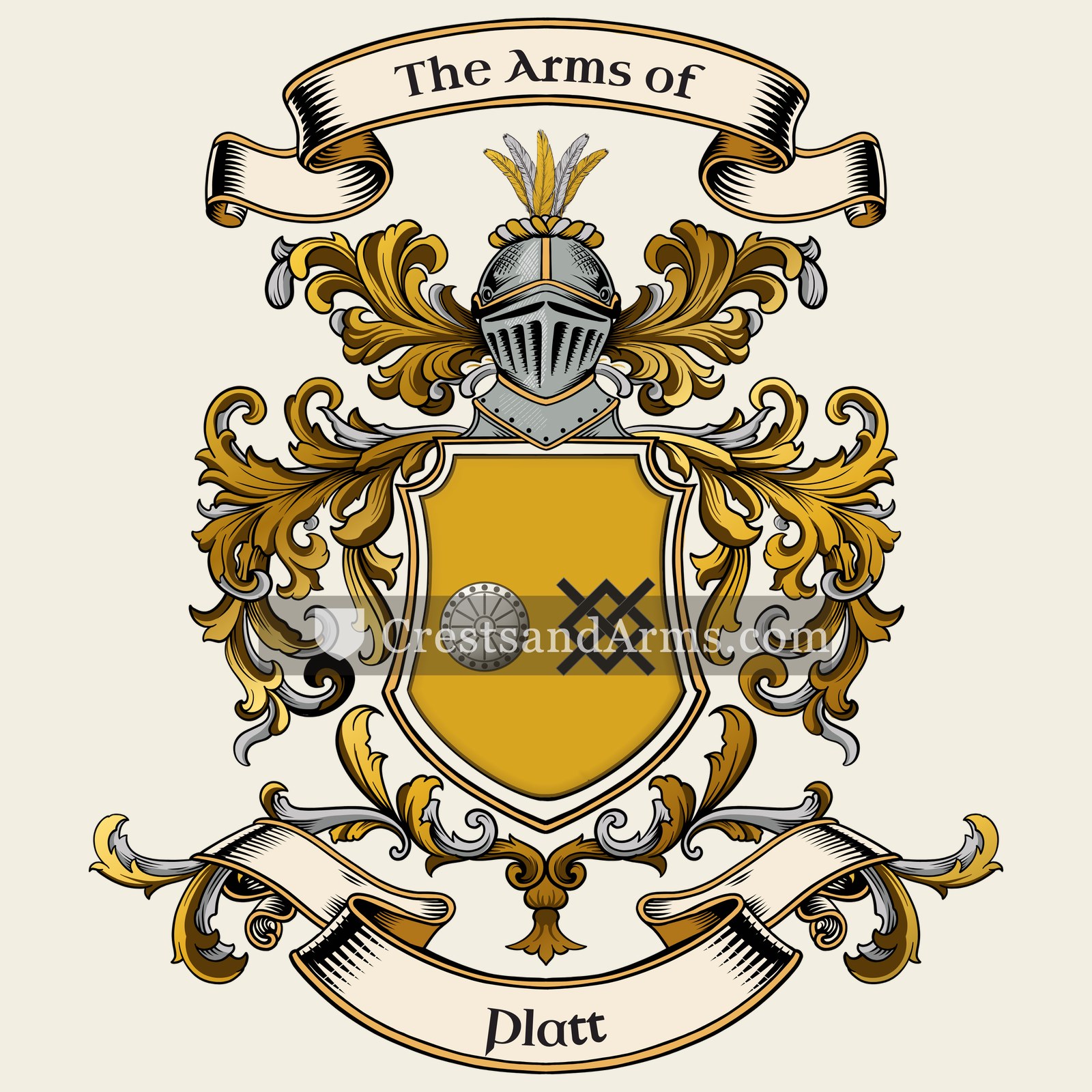
Symbols on this shield
roundelA coin, and one who has been to the crusades
fretPersuasion, and the net that holds
Colours
Gold (Or)Means: Generosity
Silver (Argent)Means: Peace and sincerity
Black (Sable)Means: Constancy
Historical info
Source
Sir Bernard Burke, The General Armory of England, Scotland, Ireland and Wales, London: Harrison & Sons, 1884
Blazon (the actual original written record)
“Or, fretty sa. on each joint a plate”
MiddlesexLondon · Middlesex, c. 1620
Digital archive packCoat of arms PNG, gold border print PDF, vector SVG and the certificate of authenticity. Sent to your email in minutes.
Map of England showing where the Platt arms are recorded
The Platt arms were recorded in Middlesex, c. 1620.
Middlesex was the county around London, and City money flowed straight into it. Merchants and officials bought estates within reach of the capital, and a new estate brought a coat of arms with it.
This is where the arms were entered in the register. Families often moved to other parts of the country, so the same name can turn up in more than one region.
The body that granted and recorded arms in England in this period.
James VI and I
Sovereign of the period
James VI and I
1603–1625
Reigning in France when the Platt arms are first recorded.
How Arms Worked in England
English heraldry allowed arms to be shared by all legitimate descendants of the original owner. These symbols were treated as personal property that moved through the generations to all children. While the eldest son kept the original design, other family members could use the same shield without needing to change it or register their own unique versions.
Granting authority
The College of Arms in London has regulated the use of coats of arms throughout England and Wales since 1484.
How they got arms
Families typically obtained their coats of arms through a formal grant from the Crown or by proving their ancient right to them.
Where arms were recorded
All official coats of arms are recorded in the registers kept at the College of Arms, which date back to the fifteenth century.
The family's standing
Recorded among the armigerous families of Middlesex.
Origin & History of the Platt Family in England
The surname Platt is a topographic name that originated in medieval England, specifically referring to someone who lived near a small plot of land or a bridge. The word itself comes from the Old French term "plat," which described a flat piece of ground. Families bearing this name were often associated with rural communities where they worked as farmers or landowners. By the early 17th century, the name was well-established in the region of Middlesex. Records from 1620 confirm that members of the Platt family were active in this area during a time of significant social and political change. These early settlers were part of the growing population in the English countryside, contributing to the local economy and community life long before the name spread further across the globe.
Related Branches & Arms
Root word
Plat
Old French term for flat or level ground.
This name
PlattA topographic name for someone who lived on a flat or level piece of land.
also spelled
Plat
Plattee
Related arms
Plottsame arms
Watkinssimilar arms
Platvariant spelling
Daniellrecorded with Platt, same area
Documented Sources
J. B. Rietstap, Armorial Général, Gouda: G. B. van Goor Zonen, 1884–87
Archives départementales d'Ille-et-Vilaine, Série B: Cours et juridictions
Archives départementales du Finistère, Série E: Familles et seigneuries
Galliou, Patrick, Histoire de la Bretagne, 2005
Le Page, Dominique, Pour en finir avec le Moyen Âge: La Bretagne au XVIe siècle, 2011
Digital archive packCoat of arms PNG, gold border print PDF, vector SVG and the certificate of authenticity. Sent to your email in minutes.


 chevronProtection, and faithful service completed
 masclePersuasion and the mail of a knight's coat
 roundelA coin, and one who has been to the crusades
 escallopThe pilgrim's shell, and a long journey made
 chevronProtection, and faithful service completed
 masclePersuasion and the mail of a knight's coat
 roundelA coin, and one who has been to the crusades
 escallopThe pilgrim's shell, and a long journey made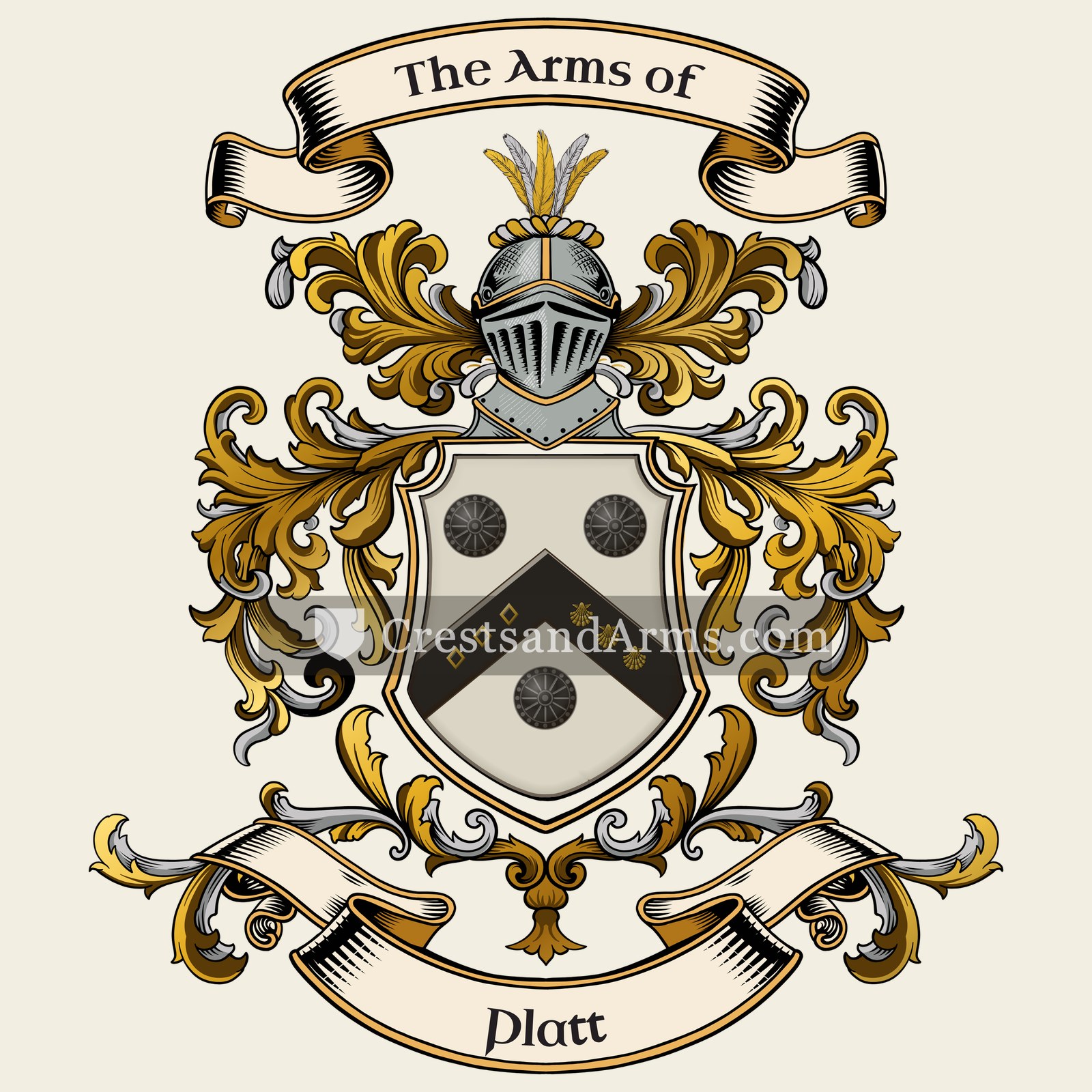


 fretPersuasion, and the net that holds