Map of Spain showing where the Poleo arms are recorded
The Poleo arms were recorded in Spain, c. 1722.
Arms such as these were typically recorded in Castile.
Castile was the heart of Spain and the source of most of its noble families. Land won in the long wars against the Moors was granted out to fighting men, and a man granted land was granted arms along with it.
This is where the arms were entered in the register. Families often moved to other parts of the country, so the same name can turn up in more than one region.
The body that granted and recorded arms in Spain in this period.
Philip V of Spain
Sovereign of the period
Philip V of Spain
1714–1724
Reigning in Spain when the Poleo arms are first recorded.
How Arms Worked in Spain
In Spain, a coat of arms was considered a form of property that belonged to the entire family line. These arms were passed down from a father to all his children equally. Younger branches of the family usually kept the original design without needing to add any special marks to distinguish their specific line.
Granting authority
The Cronista Rey de Armas was the official body that regulated and granted coats of arms throughout Spain.
How they got arms
Families often obtained their arms through royal grants or by proving their noble status to the official heraldic authority.
Where arms were recorded
Coats of arms were officially recorded in the registers of the Cronista Rey de Armas starting in 1496.
The family's standing
Recorded among the armigerous families of Spain.
Origin & History of the Poleo Family in Spain
The Poleo family name has deep roots within the historical landscape of Castile, where members of the lineage were documented as early as 1722. During this period, Castile served as the political and cultural heart of Spain, acting as a central hub for families involved in local administration, agriculture, and the shifting social structures of the eighteenth century. The name likely emerged from the linguistic traditions of the region, reflecting the way families were identified by their geographic origins or specific local landmarks. As the family established itself in Castilian society, they became part of the broader movement of people who helped shape the development of Spanish towns and rural communities. By settling in this region, the early Poleo family members participated in the daily life and economic growth of a kingdom that was undergoing significant transition during the Enlightenment era.
Coat of Arms & Family Crest Details
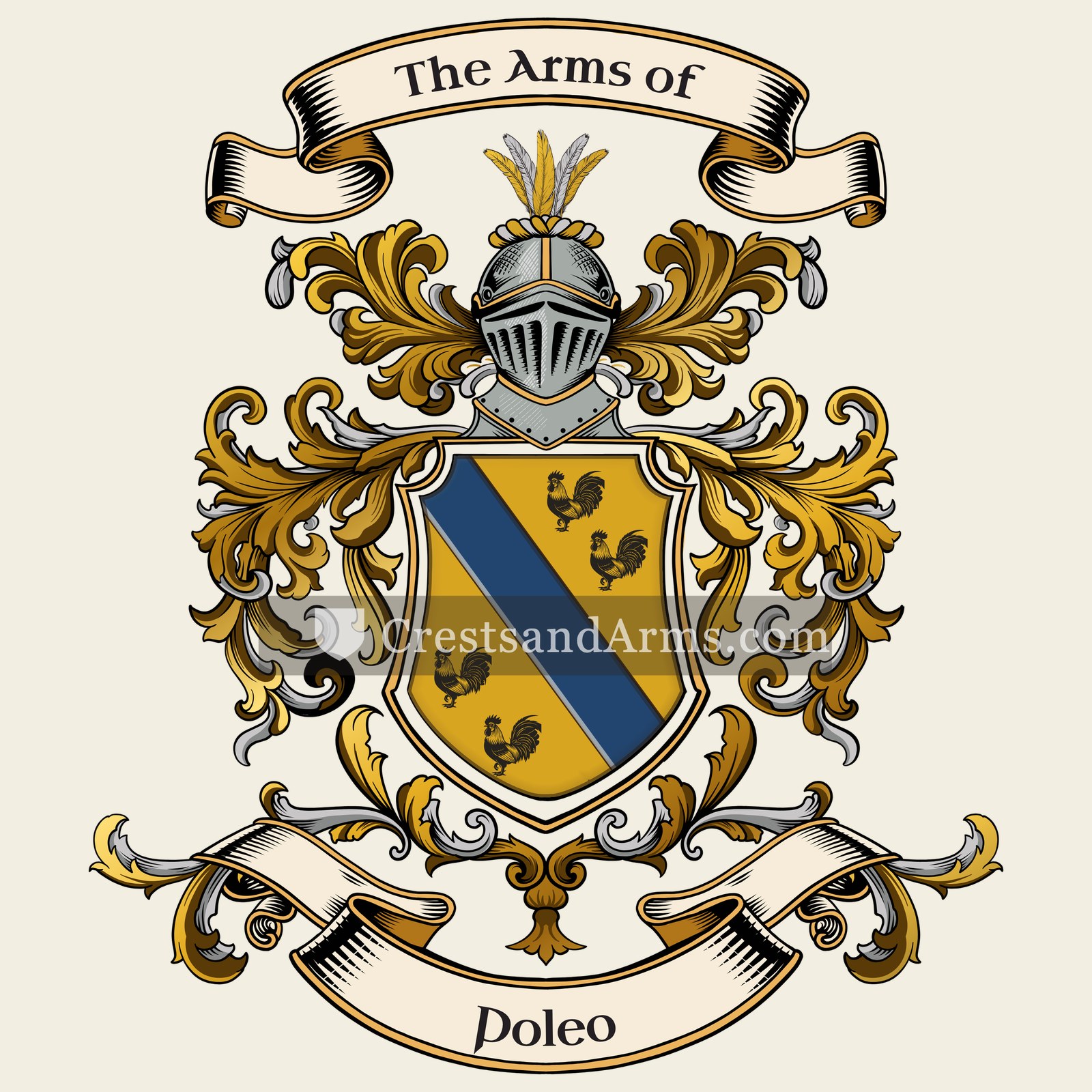
Symbols on this shield
bendDefence, and the scarf of a commander
cockCourage, vigilance and readiness for battle
Colours
Gold (Or)Means: Generosity
Blue (Azure)Means: Loyalty and truth
Black (Sable)Means: Constancy
Historical info
Source
J. B. Rietstap, Armorial Général, Gouda: G. B. van Goor Zonen, 1884–87
Blazon (the actual original written record)
“D'or à la bande d'azur, côtoyée de quatre coqs de sa., bq., m., crêtés et barbés de gu.”
VeniceVenice, c. 1775
Digital archive packCoat of arms PNG, gold border print PDF, vector SVG and the certificate of authenticity. Sent to your email in minutes.
Map of Italy showing where the Poleo arms are recorded
The Poleo arms were recorded in Venice, c. 1775.
Venice ran on trade, and its great families were merchants before they were anything else. The city kept a formal list of its noble houses, and a name on that list carried arms as a matter of record.
This is where the arms were entered in the register. Families often moved to other parts of the country, so the same name can turn up in more than one region.
The body that granted and recorded arms in Italy in this period.
Alvise Giovanni Mocenigo
Sovereign of the period
Alvise Giovanni Mocenigo
1763–1778
Reigning in Spain when the Poleo arms are first recorded.
How Arms Worked in Italy
In the Italian states, coats of arms were often used by noble families to show their status and history. These symbols were passed down through the generations to all legitimate male descendants. Younger branches of a family usually kept the original design but sometimes added small changes to distinguish their specific line from the main branch.
Granting authority
Various local rulers and city governments controlled the use of coats of arms across the different Italian states.
How they got arms
Families often assumed their own arms or received them as official grants from local lords, popes, or city councils.
Where arms were recorded
Arms were recorded in local city archives or private family books rather than in one single national register.
The family's standing
Recorded among the armigerous families of Venice.
Origin & History of the Poleo Family in Italy
The history of the Poleo family in Italy is deeply tied to the vibrant maritime culture of Venice during the late eighteenth century. By 1775, the family was well-established within the Venetian Republic, a powerful city-state that served as a major bridge between Western Europe and the East. During this period, the name was associated with families who participated in the complex social and economic life of the lagoon city. Because Venice was a hub for international trade and diplomacy, the Poleo family likely benefited from the city’s focus on commerce and navigation. While the exact origins of the name remain a subject of historical study, its presence in Venetian records suggests that the family lived through the final decades of the Republic before the arrival of Napoleon. This era was defined by a unique blend of artistic achievement and political transition, providing a distinct backdrop for the family’s early documented history.
Related Branches & Arms
Root word
Pulegium
A Latin term referring to the pennyroyal plant.
This name
PoleoDerived from a topographic or habitational name associated with the pennyroyal herb.
also spelled
Pollo
Documented Sources
J. B. Rietstap, Armorial Général, Gouda: G. B. van Goor Zonen, 1884–87
Archivo de la Real Chancillería de Valladolid, Registro de Ejecutorias, 1722
Moll, Francesc de Borja, Els llinatges catalans: Catalunya, País Valencià i les Illes, 1959
Pescador del Hoyo, María del Carmen, La población de Castilla en el siglo XVIII, 1964
Digital archive packCoat of arms PNG, gold border print PDF, vector SVG and the certificate of authenticity. Sent to your email in minutes.


 bendDefence, and the scarf of a commander
 mulletThe third son, and a divine quality from above
 bendDefence, and the scarf of a commander
 mulletThe third son, and a divine quality from above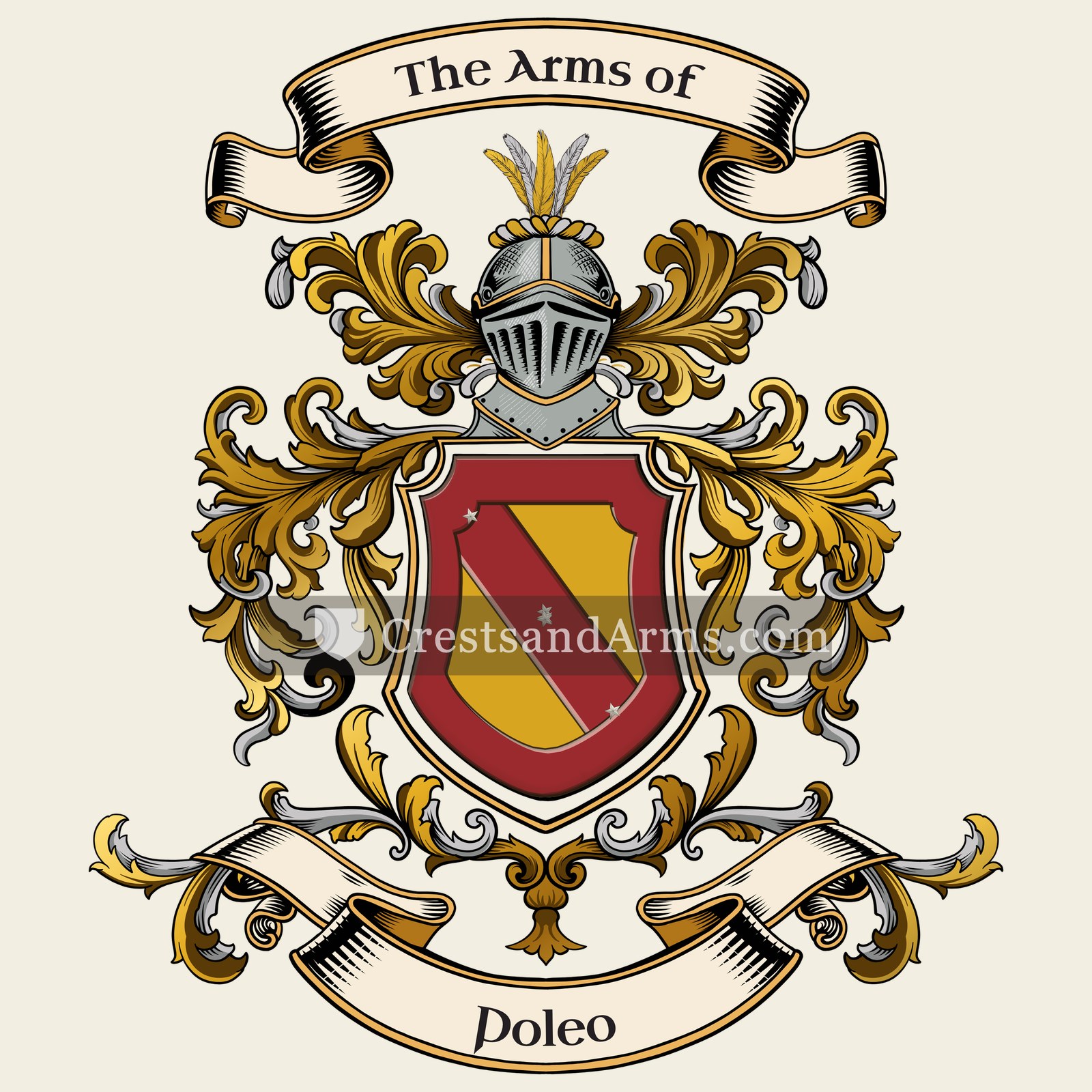


 cockCourage, vigilance and readiness for battle