Map of Netherlands showing where the Pollnow arms are recorded
The Pollnow arms were recorded in Netherlands, c. 1815.
Arms such as these were typically recorded in Friesland.
Friesland was low, wet country on the northern coast of the Netherlands, farmed by families who had held the same land for centuries. Free landholders were unusually common there, and a free landholder could carry arms.
This is where the arms were entered in the register. Families often moved to other parts of the country, so the same name can turn up in more than one region.
Region
Friesland
First recorded
1815
Granting Authority for the Pollnow Arms
Hoge Raad van Adel
Photograph made by me · CC BY-SA 3.0
The body that granted and recorded arms in Netherlands in this period.
William I of the Netherlands
Sovereign of the period
William I of the Netherlands
1815–1840
Reigning in Netherlands when the Pollnow arms are first recorded.
How Arms Worked in Netherlands
In the Netherlands, coats of arms were often used by noble families and those who held specific public offices. These arms were passed down through the generations to legitimate descendants. Younger branches of a family usually kept the original design without needing to add special marks. This system ensured that the family identity remained clear and consistent over many years.
Granting authority
The Hoge Raad van Adel is the official body that regulates and manages noble titles and coats of arms in the Netherlands.
How they got arms
Families typically obtained their coats of arms through official royal grants or by proving their long-standing historical use of the symbols.
Where arms were recorded
Coats of arms are officially recorded in the registers held by the Hoge Raad van Adel, which began its work in 1814.
The family's standing
Recorded among the armigerous families of Netherlands.
Origin & History of the Pollnow Family in Netherlands
The family name Pollnow traces its roots to the northern regions of Europe, with documented evidence placing members of the family in the province of Friesland by 1815. During this period, the Netherlands underwent significant administrative changes following the end of the Napoleonic Wars. As the country transitioned into the United Kingdom of the Netherlands, officials began to standardize civil records and census data to better track the population. The presence of the Pollnow name in Frisian records suggests that the family was part of the mobile workforce or merchant class that moved across the North Sea regions during the early nineteenth century. Because Friesland served as a vital hub for trade and agriculture, families often settled there to take advantage of the local economy and the stability provided by the new Dutch government. These early records serve as the primary link to the family's integration into Dutch society, marking the beginning of their documented history in the region.
Meaning of the Pollnow family crest colors & symbols
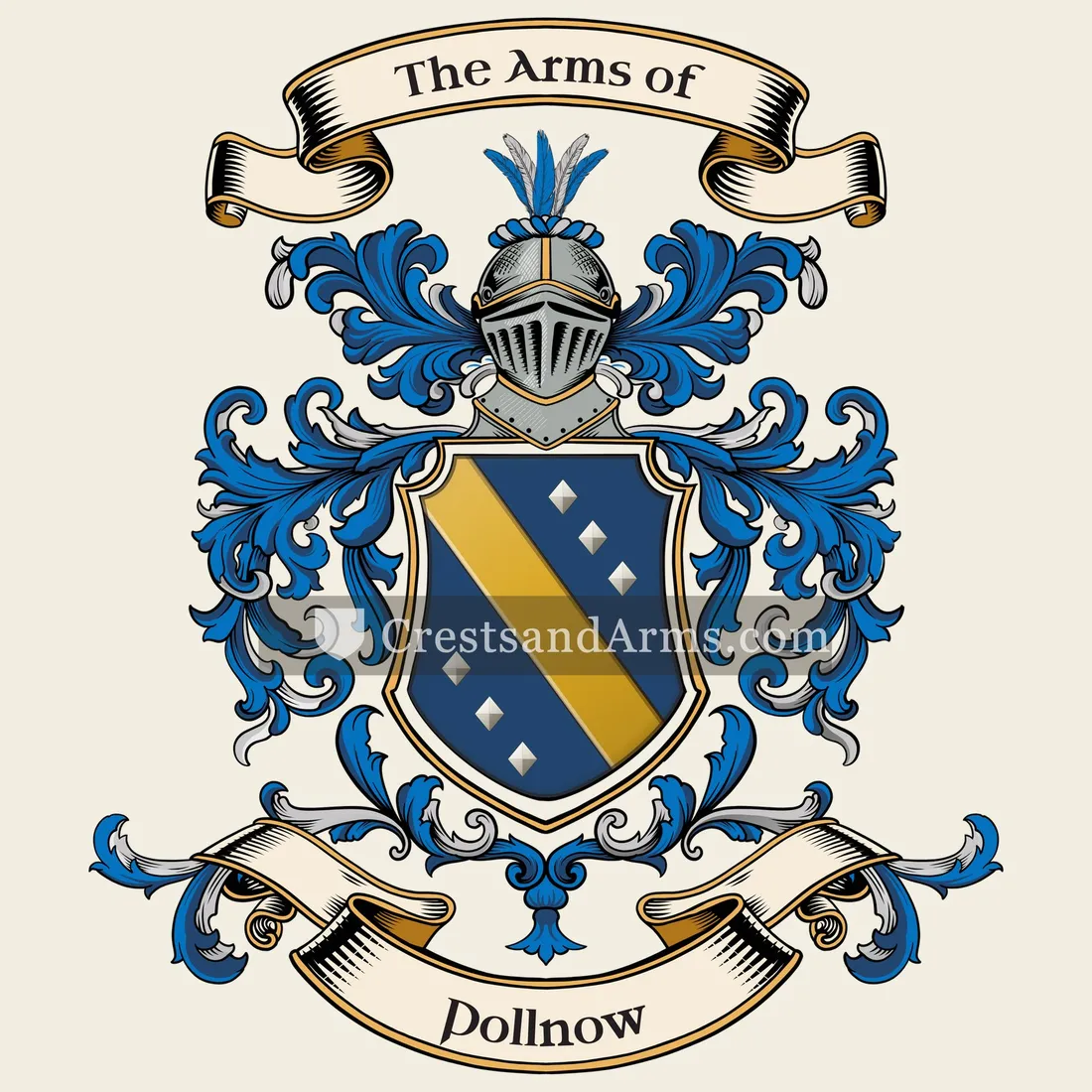
Symbols on this shield
bendDefence, and the scarf of a commander
lozengeHonour and nobility, and the arms of a woman
Colours
Blue (Azure)Means: Loyalty and truth
Gold (Or)Means: Generosity
Silver (Argent)Means: Peace and sincerity
Historical info
Source
Sir Bernard Burke, The General Armory of England, Scotland, Ireland and Wales, London: Harrison & Sons, 1884
Blazon (the actual original written record)
“Az. on a bend cotised or, betw. six lozenges ar. each charged with an escallop sa. five escallops of the field”
HantsRedenham · Hants, c. 1620
Digital archive packCoat of arms PNG, gold border print PDF, vector SVG and the certificate of authenticity. Sent to your email in minutes.
Map of England showing where the Pollnow arms are recorded
The Pollnow arms were recorded in Hants, c. 1620.
Hampshire had the naval dockyards at Portsmouth on one side and good farmland on the other. Sea money and land money both bought estates, and an estate was what brought a family its coat of arms.
This is where the arms were entered in the register. Families often moved to other parts of the country, so the same name can turn up in more than one region.
The body that granted and recorded arms in England in this period.
James VI and I
Sovereign of the period
James VI and I
1603–1625
Reigning in Netherlands when the Pollnow arms are first recorded.
How Arms Worked in England
English heraldry allowed arms to be shared by all legitimate descendants of the original owner. These symbols were treated as personal property that moved through the generations to all children. While the eldest son kept the original design, other family members could use the same shield without needing to change it or register their own unique versions.
Granting authority
The College of Arms in London has regulated the use of coats of arms throughout England and Wales since 1484.
How they got arms
Families typically obtained their coats of arms through a formal grant from the Crown or by proving their ancient right to them.
Where arms were recorded
All official coats of arms are recorded in the registers kept at the College of Arms, which date back to the fifteenth century.
The family's standing
Recorded among the armigerous families of Hants.
Origin & History of the Pollnow Family in England
The family name Pollnow is rooted in a history that connects the movement of people across Northern Europe to the coastal regions of England. While the name is of Germanic and Slavic origin, historical records confirm that members of the family were established in the county of Hampshire by 1620. During the early seventeenth century, Hampshire served as a vital maritime hub, and the presence of the family there suggests they were likely involved in the trade or agricultural activities that defined the southern English coast at that time. Settling in a region known for its busy ports and proximity to London, these early ancestors integrated into the local community during a period of significant social and economic change. By maintaining a presence in Hampshire, the family became part of the long tradition of migration that shaped the diverse demographic landscape of early modern England.
Pollnow Meaning & Related Branches
Root word
Polnów
A place name derived from the Slavic word for field.
This name
PollnowA topographic surname referring to someone who originated from the town of Polnów.
also spelled
Polen
Polene
Documented Sources
J. B. Rietstap, Armorial Général, Gouda: G. B. van Goor Zonen, 1884–87
Tresoar (Fries Historisch en Letterkundig Centrum), Burgerlijke Stand van Friesland
Nationaal Archief, Registers van de Burgerlijke Stand
Digital archive packCoat of arms PNG, gold border print PDF, vector SVG and the certificate of authenticity. Sent to your email in minutes.


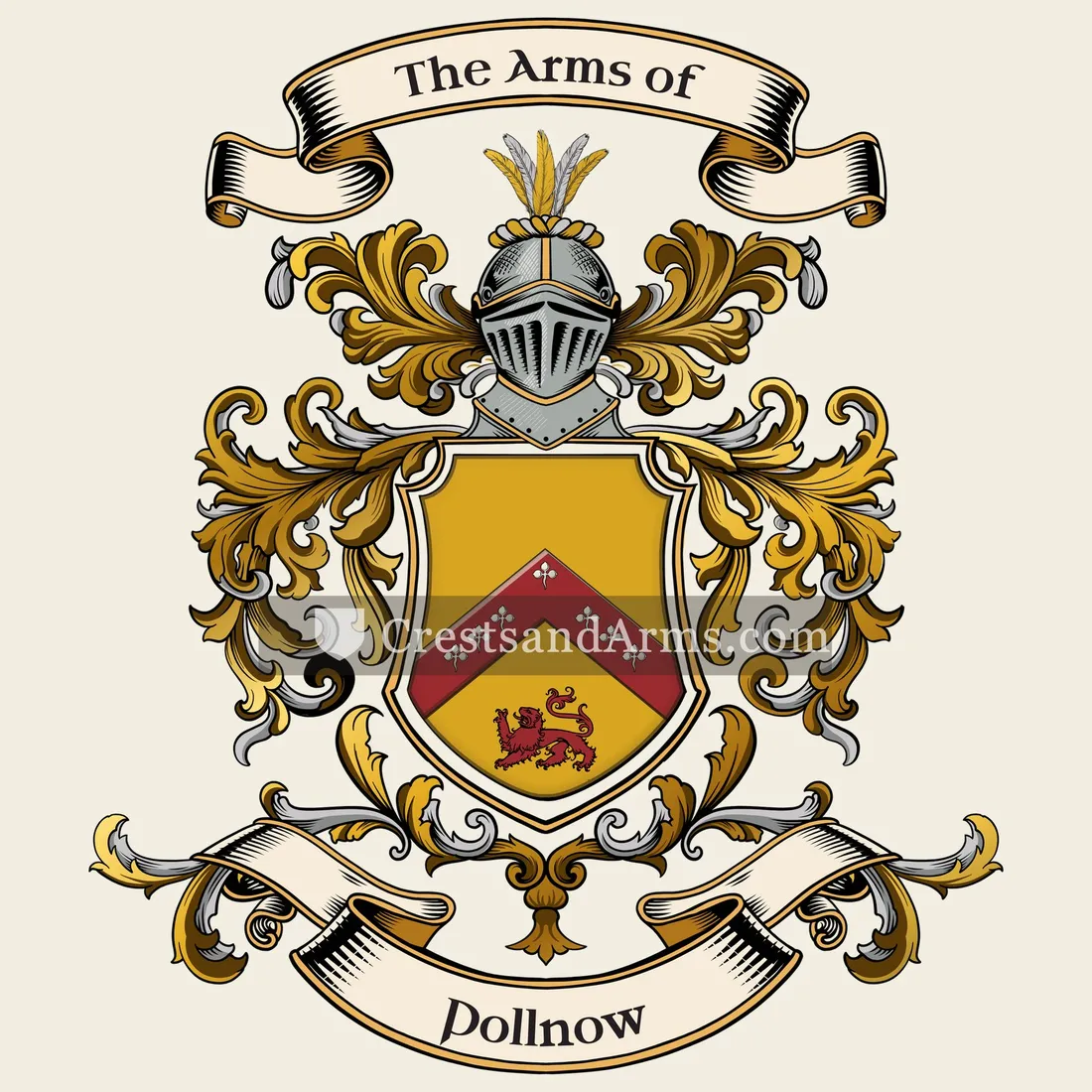
 chevronProtection, and faithful service completed
 lionCourage, strength and royalty
 trefoilPerpetuity, and the Trinity
 chevronProtection, and faithful service completed
 lionCourage, strength and royalty
 trefoilPerpetuity, and the Trinity


 bendDefence, and the scarf of a commander
 lozengeHonour and nobility, and the arms of a woman