A record of documented arms, meaning and origin, researched for the Poncet family lines. Documented in 3 countries.
Reg. 0446 · Austrian, P–S
Coat of Arms & Family Crest Details
Symbols on this shield
bridgeOne who joins what was divided
mulletThe third son, and a divine quality from above
roseThe seventh son, and beauty with grace
Colours
Blue (Azure)Means: Loyalty and truth
Red (Gules)Means: Military strength
Silver (Argent)Means: Peace and sincerity
Gold (Or)Means: Generosity
Historical info
Source
J. B. Rietstap, Armorial Général, Gouda: G. B. van Goor Zonen, 1884–87
Blazon (the actual original written record)
“Coupé d'azur sur gu., à un pont de deux arches d'arg., br. sur le coupé, acc. en chef de trois étoiles rangées d'or et en p. de deux roses d'arg., tigées et feuillées du même, les tiges appointées.”
AustriaVienne Dauphiné, c. 1772
Digital archive packCoat of arms PNG, gold border print PDF, vector SVG and the certificate of authenticity. Sent to your email in minutes.
Map of Austria showing where the Poncet arms are recorded
The Poncet arms were recorded in Vienne Dauphiné, c. 1772.
This is where the arms were entered in the register. Families often moved to other parts of the country, so the same name can turn up in more than one region.
Region
Vienne Dauphiné
Town
Vienne Dauphiné
First recorded
1772
Granting Authority for the Poncet Arms
Imperial and Royal chancery
Sodacan · CC BY-SA 3.0
The body that granted and recorded arms in Austria in this period.
Joseph II, Holy Roman Emperor
Sovereign of the period
Joseph II, Holy Roman Emperor
1765–1790
Reigning in Austria when the Poncet arms are first recorded.
How Arms Worked in Austria
Austrian coats of arms were often linked directly to noble titles granted by the Emperor. These symbols belonged to the entire family line rather than just one individual. When a family grew, new branches kept the original design without needing to change it. This system allowed all members of a noble house to share the same identity across many generations.
Granting authority
The Imperial and Royal chancery managed all heraldic matters and controlled the official granting of arms throughout the Austrian lands.
How they got arms
Families typically received their arms through a formal imperial decree that often accompanied the elevation of a person to noble status.
Where arms were recorded
Official records of these grants were kept in the Imperial Register of Nobility which began its formal documentation process in 1453.
The family's standing
Recorded among the armigerous families of Austria.
Origin & History of the Poncet Family in Austria
The Poncet family name traces its roots to the historical region of Dauphiné in southeastern France, where records confirm members of the family were well-established in the city of Vienne by 1772. While the name is deeply rooted in French soil, the family history eventually intersected with the broader movements of people across Europe, including the borders of the Austrian Empire. During the late 18th and 19th centuries, the expansion of trade networks and military service often drew families from the French provinces toward the administrative centers of Central Europe. In the Austrian context, individuals bearing the Poncet name were frequently integrated into the professional and merchant classes of the time. They navigated the complex social structures of the Habsburg territories by utilizing their established skills in commerce and civil administration. This migration reflected a wider trend of French-speaking families seeking new opportunities in the multi-ethnic landscape of Austria, where they maintained their distinct surname while adapting to the cultural and linguistic requirements of their new home.
Coat of Arms & Family Crest Details
Symbols on this shield
chiefAuthority, wisdom and dominion
lionCourage, strength and royalty
Colours
Blue (Azure)Means: Loyalty and truth
Silver (Argent)Means: Peace and sincerity
Gold (Or)Means: Generosity
Historical info
Source
J. B. Rietstap, Armorial Général, Gouda: G. B. van Goor Zonen, 1884–87
Blazon (the actual original written record)
“D'azur au lion d'or, arm. et lamp. de gu.; au chef d'arg.”
ForezForez, c. 1663
Digital archive packCoat of arms PNG, gold border print PDF, vector SVG and the certificate of authenticity. Sent to your email in minutes.
Map of France showing where the Poncet arms are recorded
The Poncet arms were recorded in Forez, c. 1663.
Forez was a small upland county in central France, thick with minor gentry holding modest estates. Its families were more numerous than wealthy, and even a small holding was enough for a shield of one's own.
This is where the arms were entered in the register. Families often moved to other parts of the country, so the same name can turn up in more than one region.
The body that granted and recorded arms in France in this period.
Louis XIV of France
Sovereign of the period
Louis XIV of France
1643–1715
Reigning in Austria when the Poncet arms are first recorded.
How Arms Worked in France
In France, a coat of arms was a mark of honor that passed down through the male line to all legitimate descendants. Families often used the same shield without changes to show their shared heritage. If a branch wanted to stand out, they could add a small mark to their shield to show their specific place in the family tree.
Granting authority
The Juge d'armes de France acted as the official authority that regulated and verified coats of arms across the country.
How they got arms
Families typically inherited their arms from ancestors, though they could also receive them through royal grants or by proving their noble status.
Where arms were recorded
Coats of arms were officially recorded in the Armorial Général de France, which began its main collection in the year 1696.
The family's standing
Recorded among the armigerous families of Forez.
Origin & History of the Poncet Family in France
The family name Poncet has deep roots in the historical province of Forez, located in the central-eastern part of France. By the mid-seventeenth century, the family was already well-established in this region, with records confirming their presence in the area by 1663. The name itself is a diminutive form of the name Ponce, which originated from the Latin name Pontius. During the medieval and early modern periods, such names often evolved from personal nicknames into permanent surnames as families became more settled in specific rural communities. In the context of Forez, the Poncet family likely lived as part of the local agrarian society, where they contributed to the social and economic life of the region for generations. Their long history in this specific landscape reflects the broader patterns of family development in provincial France, where names were closely tied to the geography and local customs of the people.
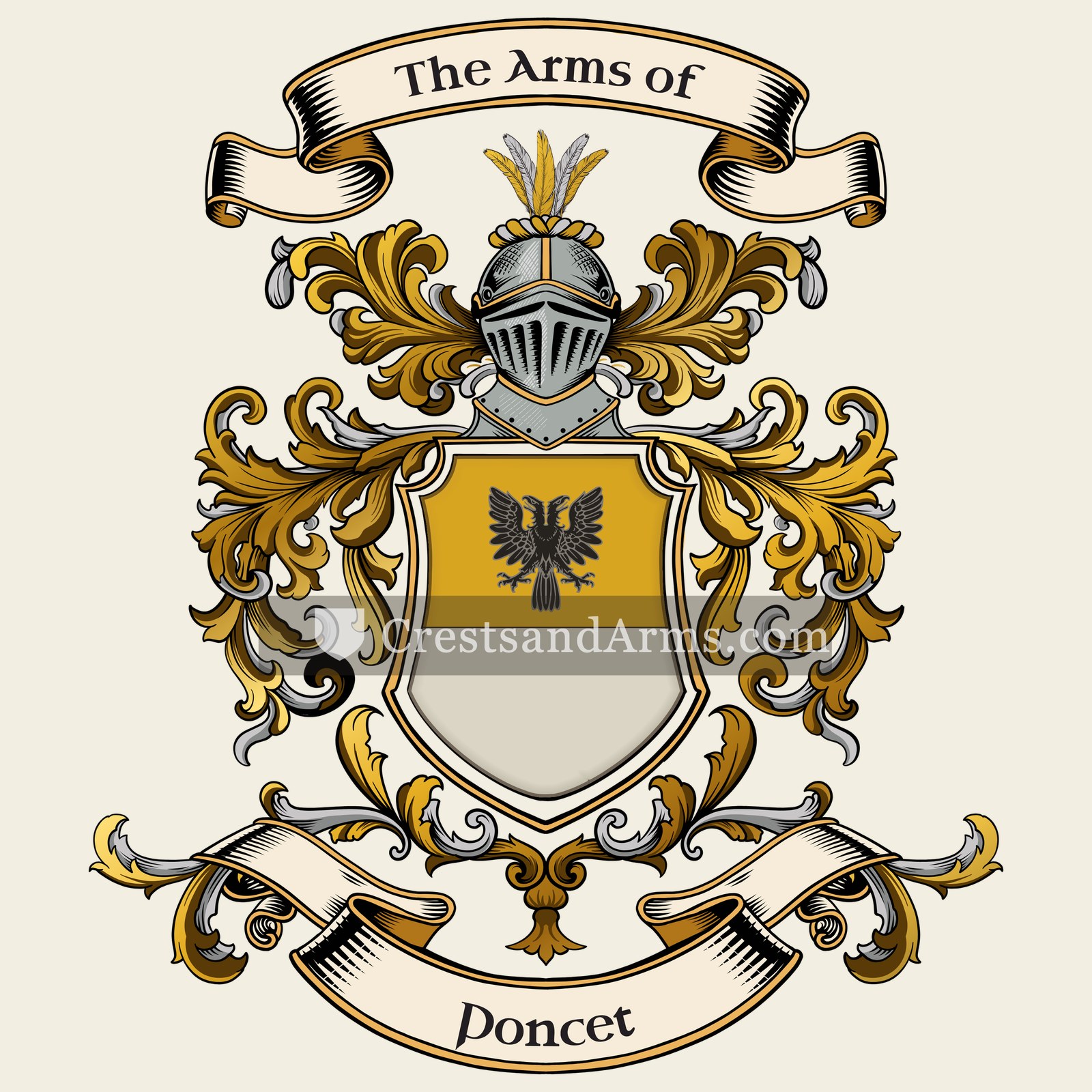
Coat of Arms & Family Crest Details
Symbols on this shield
fessThe military belt, and readiness to serve
eagleNobility, strength and a keen mind
Colours
Gold (Or)Means: Generosity
Silver (Argent)Means: Peace and sincerity
Black (Sable)Means: Constancy
Red (Gules)Means: Military strength
Historical info
Source
J. B. Rietstap, Armorial Général, Gouda: G. B. van Goor Zonen, 1884–87
Blazon (the actual original written record)
“Coupé: au 1 d'or à l'aigle naiss. de sa., cour. du champ, mouv. du coupé; au 2 fascé d'arg. et de gu. Cq. cour. C.: trois pl. d'aut., une d'or entre deux de sa. L.: à dextre d'or et de sa., à sen. d'arg. et de gu.”
SilesiaSilesia, c. 1782
Digital archive packCoat of arms PNG, gold border print PDF, vector SVG and the certificate of authenticity. Sent to your email in minutes.
Map of Germany showing where the Poncet arms are recorded
The Poncet arms were recorded in Silesia, c. 1782.
Silesia was farming country in the east of the German lands, held in large estates by families who stayed put for generations. Owning land was what entitled a family to arms, so the region fills a good deal of the register.
This is where the arms were entered in the register. Families often moved to other parts of the country, so the same name can turn up in more than one region.
The body that granted and recorded arms in Germany in this period.
Joseph II, Holy Roman Emperor
Sovereign of the period
Joseph II, Holy Roman Emperor
1765–1790
Reigning in Austria when the Poncet arms are first recorded.
How Arms Worked in Germany
In the Holy Roman Empire, coats of arms were often granted to individuals by the Emperor or his representatives. These arms were then passed down through the generations to all legitimate descendants of the original holder. Younger branches of a family usually kept the same shield design without needing to change it, as the arms belonged to the entire lineage.
Granting authority
The Holy Roman Emperor held the sole power to grant new coats of arms throughout his vast imperial territories.
How they got arms
Families typically obtained their coats of arms through a formal imperial grant or by proving their noble status to the authorities.
Where arms were recorded
These grants were officially recorded in the Imperial Chancery registers, which began keeping formal records of such honors during the Middle Ages.
The family's standing
Recorded among the armigerous families of Silesia.
Origin & History of the Poncet Family in Germany
The family name Poncet has roots that trace back to French origins, but the family established a significant presence in the German-speaking lands by the late eighteenth century. By 1782, records confirm that members of the Poncet family were living in the region of Silesia, which was then part of the Kingdom of Prussia. During this era, families often moved across European borders due to shifting political boundaries and the search for new professional opportunities in administration or trade. The Poncets in Silesia became integrated into the local social fabric, eventually becoming recognized as part of the established provincial society. Their transition into this region highlights the broader movement of families who relocated during the Enlightenment period to serve in various capacities within the Prussian state. This migration pattern suggests that the family was mobile and adaptable, allowing them to maintain their identity while becoming influential figures in their new German home.
Related Branches & Arms
Root word
Pons
Latin term meaning bridge or a person who lived near one.
This name
PoncetA diminutive form indicating a descendant of someone associated with a bridge.
also spelled
Ponsett
Ponsey
Related arms
Mastianisimilar arms
Balletrecorded with Poncet, same area
Carlinrecorded with Poncet, same area
Carronrecorded with Poncet, same area
Documented Sources
J. B. Rietstap, Armorial Général, Gouda: G. B. van Goor Zonen, 1884–87
Archives: Archives départementales de l'Isère, Registres paroissiaux et d'état civil de Vienne, 1772
Boutier, Jean, Les sociétés et leurs réseaux en Europe, 2005
Mayer, Anton, Geschichte der Wiener Handelskammer, 1898
Digital archive packCoat of arms PNG, gold border print PDF, vector SVG and the certificate of authenticity. Sent to your email in minutes.


 bridgeOne who joins what was divided
 mulletThe third son, and a divine quality from above
 roseThe seventh son, and beauty with grace
 bridgeOne who joins what was divided
 mulletThe third son, and a divine quality from above
 roseThe seventh son, and beauty with grace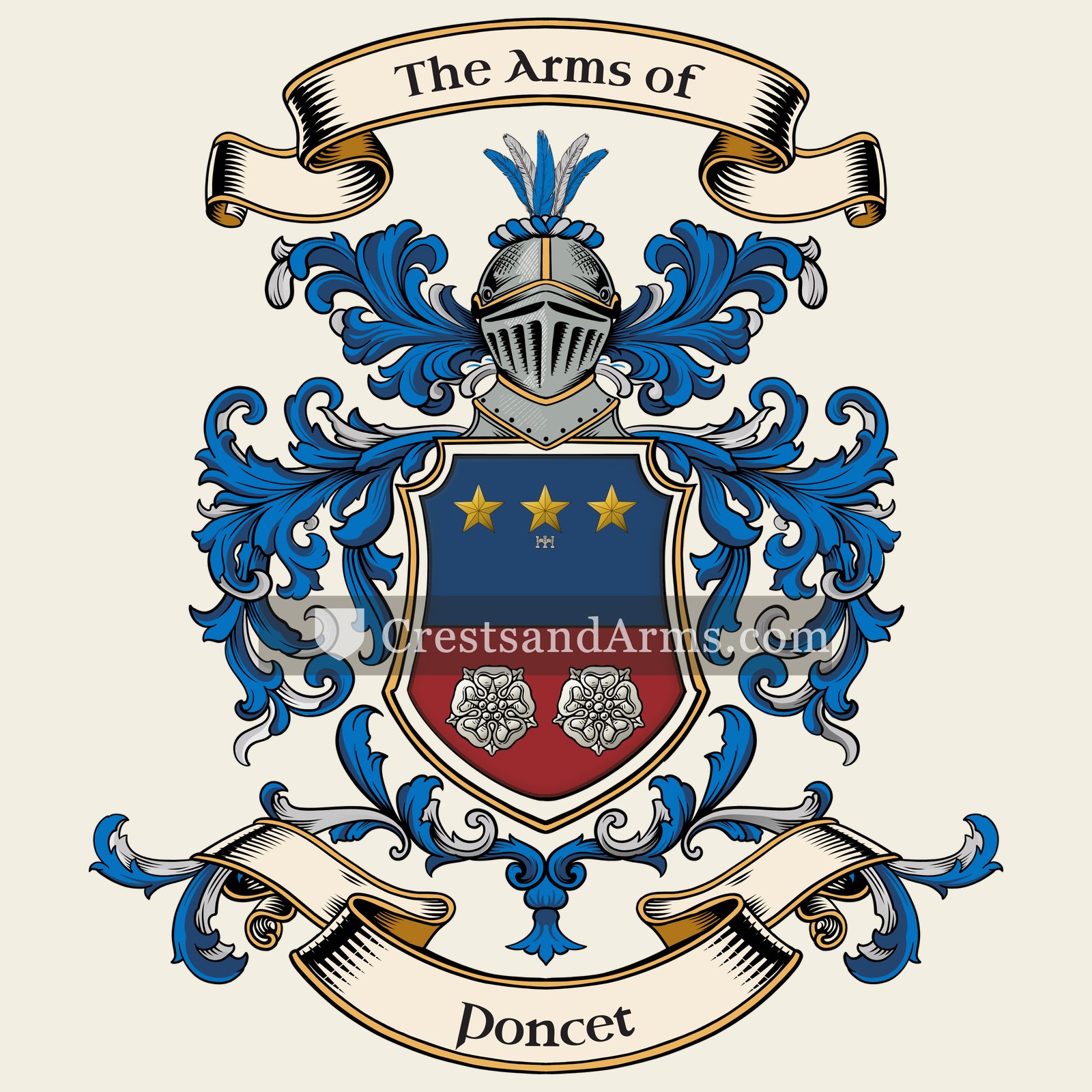


 chiefAuthority, wisdom and dominion
 lionCourage, strength and royalty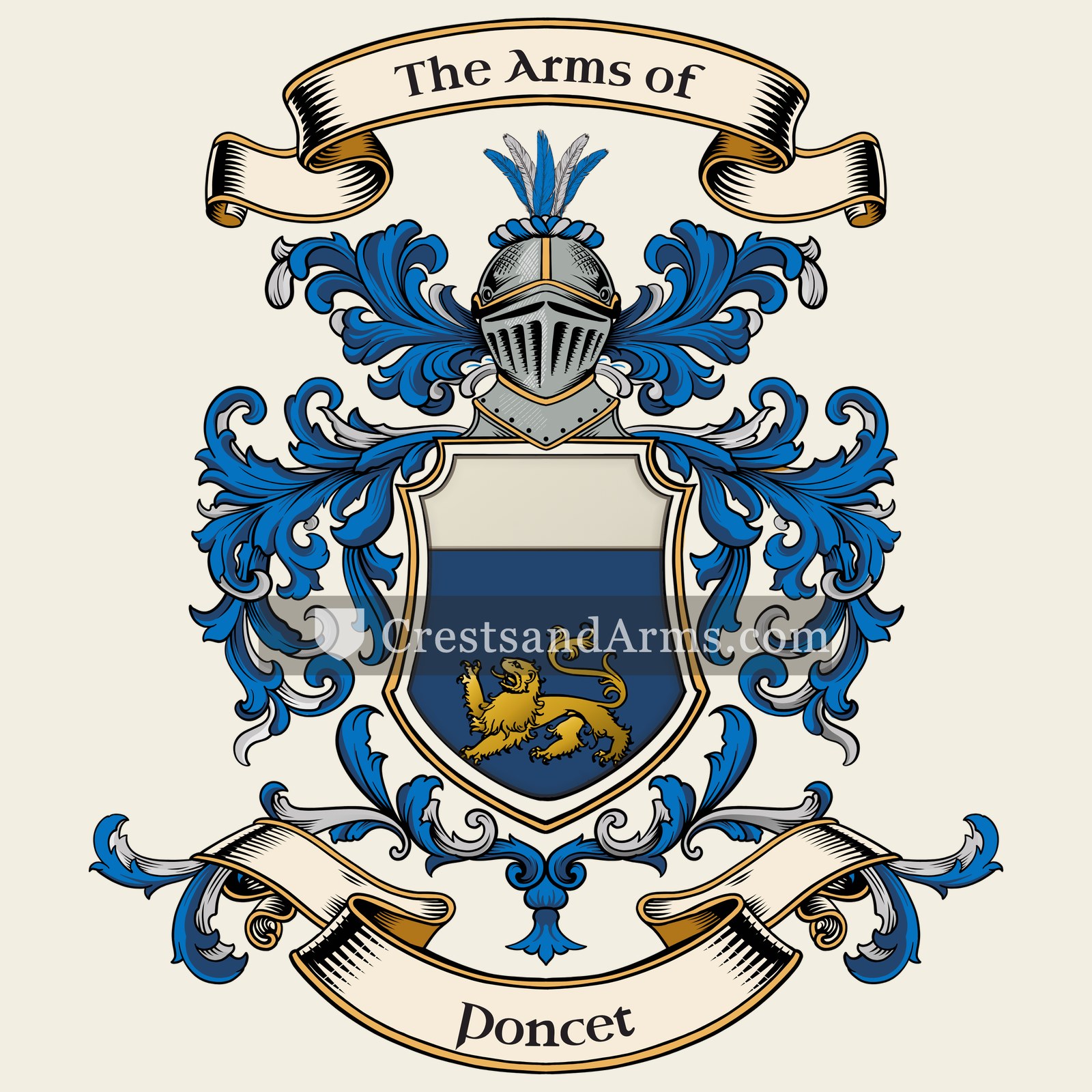


 fessThe military belt, and readiness to serve
 eagleNobility, strength and a keen mind