Map of Austria showing where the Popiel arms are recorded
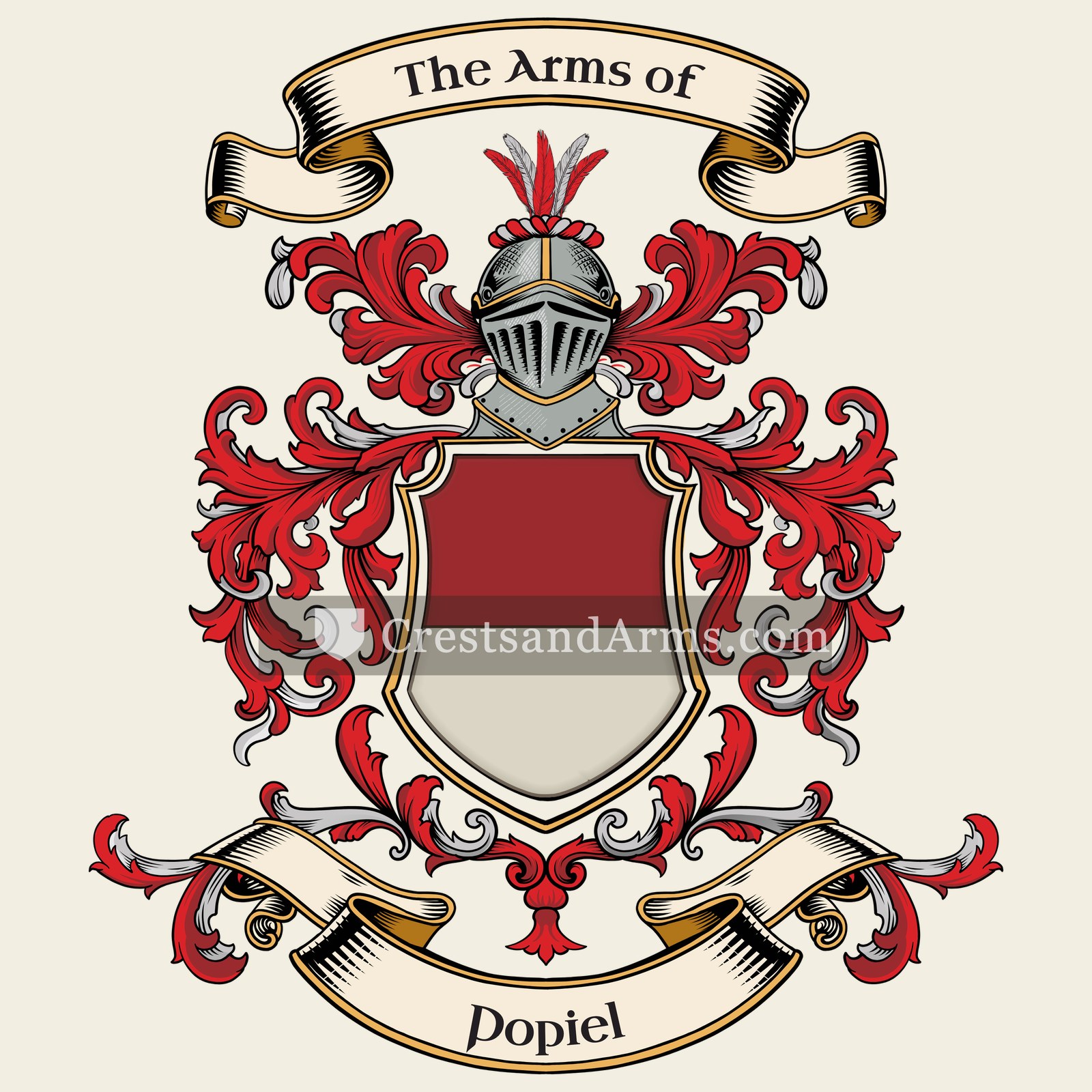
The Popiel arms were recorded in Austria, c. 1772.
Arms such as these were typically recorded in Tyrol.
Tyrol was mountain country in western Austria, where the valleys were held by families who had been there a very long time. Old tenure counted for more than money, and old families carried arms.
This is where the arms were entered in the register. Families often moved to other parts of the country, so the same name can turn up in more than one region.
Region
Tyrol
First recorded
1772
Granting Authority for the Popiel Arms
Imperial and Royal chancery
Sodacan · CC BY-SA 3.0
The body that granted and recorded arms in Austria in this period.
Joseph II, Holy Roman Emperor
Sovereign of the period
Joseph II, Holy Roman Emperor
1765–1790
Reigning in Austria when the Popiel arms are first recorded.
How Arms Worked in Austria
Austrian coats of arms were often linked directly to noble titles granted by the Emperor. These symbols belonged to the entire family line rather than just one individual. When a family grew, new branches kept the original design without needing to change it. This system allowed all members of a noble house to share the same identity across many generations.
Granting authority
The Imperial and Royal chancery managed all heraldic matters and controlled the official granting of arms throughout the Austrian lands.
How they got arms
Families typically received their arms through a formal imperial decree that often accompanied the elevation of a person to noble status.
Where arms were recorded
Official records of these grants were kept in the Imperial Register of Nobility which began its formal documentation process in 1453.
The family's standing
Recorded among the armigerous families of Austria.
Origin & History of the Popiel Family in Austria
The family name Popiel has deep roots in Central Europe, with documented evidence placing members of the family in the Tyrol region as early as 1772. The name itself is derived from the Slavic word for ash, which suggests that the earliest ancestors may have lived near areas where wood was burned for charcoal production or land clearing. During the eighteenth century, families in the Tyrol area often moved between small mountain villages to work in agriculture or local trade. The presence of the Popiel name in these records indicates that the family was well established in the region by the time the first modern census records were being organized. As the family grew, they integrated into the local culture of the Alps while maintaining their distinct ancestral name. This history reflects the broader movement of people across the borders of the former Austrian Empire during a time of significant social and economic change.
Related Branches & Arms
Root word
popiół
The Polish word for ash or cinders from a fire.
This name
PopielA topographic or occupational name for someone who lived near or worked with ash.
also spelled
Poppel
Documented Sources
J. B. Rietstap, Armorial Général, Gouda: G. B. van Goor Zonen, 1884–87