Map of Denmark showing where the Portman arms are recorded
The Portman arms were recorded in Denmark, c. 1722.
Arms such as these were typically recorded in Sjaælland.
Zealand held the Danish court, the crown's offices and Copenhagen itself. Families who served the king kept estates within reach of it, and royal service was the ordinary route to a coat of arms.
This is where the arms were entered in the register. Families often moved to other parts of the country, so the same name can turn up in more than one region.
The body that granted and recorded arms in Denmark in this period.
Frederik IV of Denmark
Sovereign of the period
Frederik IV of Denmark
1699–1730
Reigning in Denmark when the Portman arms are first recorded.
How Arms Worked in Denmark
Danish heraldry during this period was closely tied to noble status and royal favor rather than being open to all citizens. Arms were typically granted by the monarch to individuals, and these symbols were then shared by all members of the noble house. If a family line died out, the right to use those specific arms ended with them.
Granting authority
The Danish royal chancery held the power to issue and regulate official coats of arms for the kingdom.
How they got arms
Families usually received their arms through a formal royal grant that confirmed their noble status and rights.
Where arms were recorded
These grants were officially recorded in the Danish Royal Chancery records starting in the sixteenth century.
The family's standing
Recorded among the armigerous families of Denmark.
Origin & History of the Portman Family in Denmark
The history of the Portman name in Denmark begins with the arrival of early family members in the region of Sjælland by 1722. During this period, the name was closely associated with individuals who moved through the bustling trade networks of the Baltic Sea. Many people with this surname were recognized as skilled craftsmen and merchants who integrated into the local urban economies of Danish towns. Because Sjælland served as the administrative and commercial heart of the kingdom, these early settlers often found work in roles that required literacy and organization. Over time, the family became part of the social fabric of the island, transitioning from newcomers into established residents who contributed to the local community through their trades and daily labor. Their presence in the early eighteenth century reflects a broader pattern of migration where families moved across Northern Europe to seek new opportunities in the growing Danish capital and its surrounding districts.
Coat of Arms & Family Crest Details
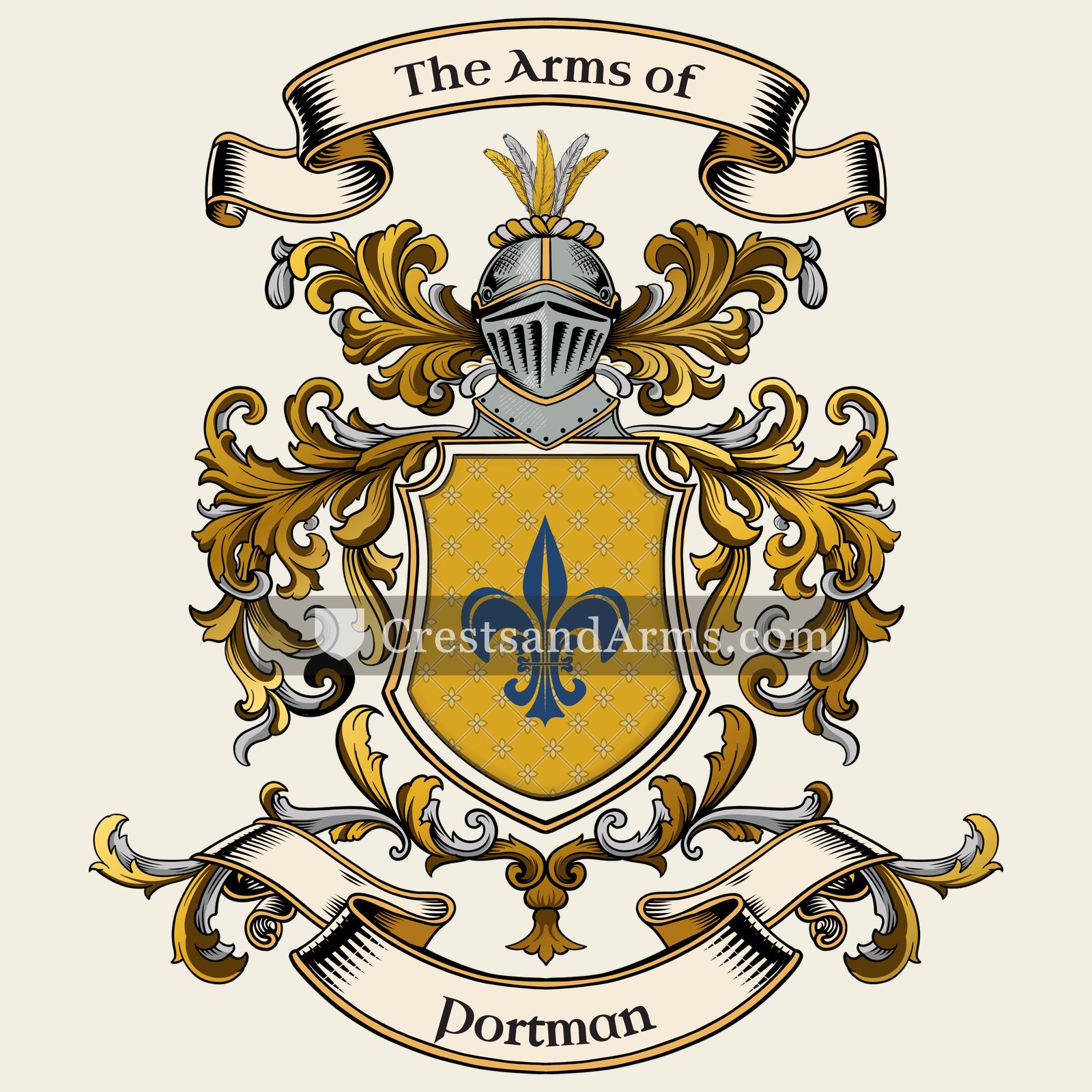
Symbols on this shield
fleur de lisPurity, light, and the sixth son
Colours
Gold (Or)Means: Generosity
Blue (Azure)Means: Loyalty and truth
Historical info
Source
Sir Bernard Burke, The General Armory of England, Scotland, Ireland and Wales, London: Harrison & Sons, 1884
Blazon (the actual original written record)
“Or, a fleur-de-lis az”
DorsetBryanston · Dorset, c. 1695
Digital archive packCoat of arms PNG, gold border print PDF, vector SVG and the certificate of authenticity. Sent to your email in minutes.
Map of England showing where the Portman arms are recorded
The Portman arms were recorded in Dorset, c. 1695.
Dorset was quiet farming and grazing country along the south coast. Its gentry were middling rather than grand, but they held their manors for a very long time, and long holding is what puts a name in the records.
This is where the arms were entered in the register. Families often moved to other parts of the country, so the same name can turn up in more than one region.
The body that granted and recorded arms in England in this period.
William III of England
Sovereign of the period
William III of England
1694–1702
Reigning in Denmark when the Portman arms are first recorded.
How Arms Worked in England
English heraldry allowed arms to be shared by all legitimate descendants of the original owner. These symbols were treated as personal property that moved through the generations to all children. While the eldest son kept the original design, other family members could use the same shield without needing to change it or register their own unique versions.
Granting authority
The College of Arms in London has regulated the use of coats of arms throughout England and Wales since 1484.
How they got arms
Families typically obtained their coats of arms through a formal grant from the Crown or by proving their ancient right to them.
Where arms were recorded
All official coats of arms are recorded in the registers kept at the College of Arms, which date back to the fifteenth century.
The family's standing
Recorded among the armigerous families of Dorset.
Origin & History of the Portman Family in England
The surname Portman is an occupational name that emerged in medieval England to describe someone who lived within the walls of a town or city. The word comes from the Old English term port, meaning a town or market, combined with the word man. While the name appeared in various parts of the country during the Middle Ages, the family established a significant and lasting presence in the county of Dorset by the late 17th century. By 1695, members of the Portman family were well-established landowners in this region, particularly around the area of Bryanston. Their influence grew as they managed large estates and participated in the local governance of the county. Over time, the family became deeply connected to the landscape of Dorset, moving from their origins as town-dwellers to becoming prominent figures in the rural history of the English countryside.
Related Branches & Arms
Root word
Porta
Latin term referring to a gate, door, or harbor entrance.
This name
PortmanAn occupational surname for someone who lived near a town gate or worked as a gatekeeper.
also spelled
Portmon
Documented Sources
J. B. Rietstap, Armorial Général, Gouda: G. B. van Goor Zonen, 1884–87
Rigsarkivet (The Danish National Archives), Kirkebøger for Sjællands Stift (Parish registers for the Diocese of Sjælland), 1722
Jørgensen, Harald, Dansk Personalhistorisk Bibliografi, 1953
Digital archive packCoat of arms PNG, gold border print PDF, vector SVG and the certificate of authenticity. Sent to your email in minutes.


 legStrength and swiftness
 legStrength and swiftness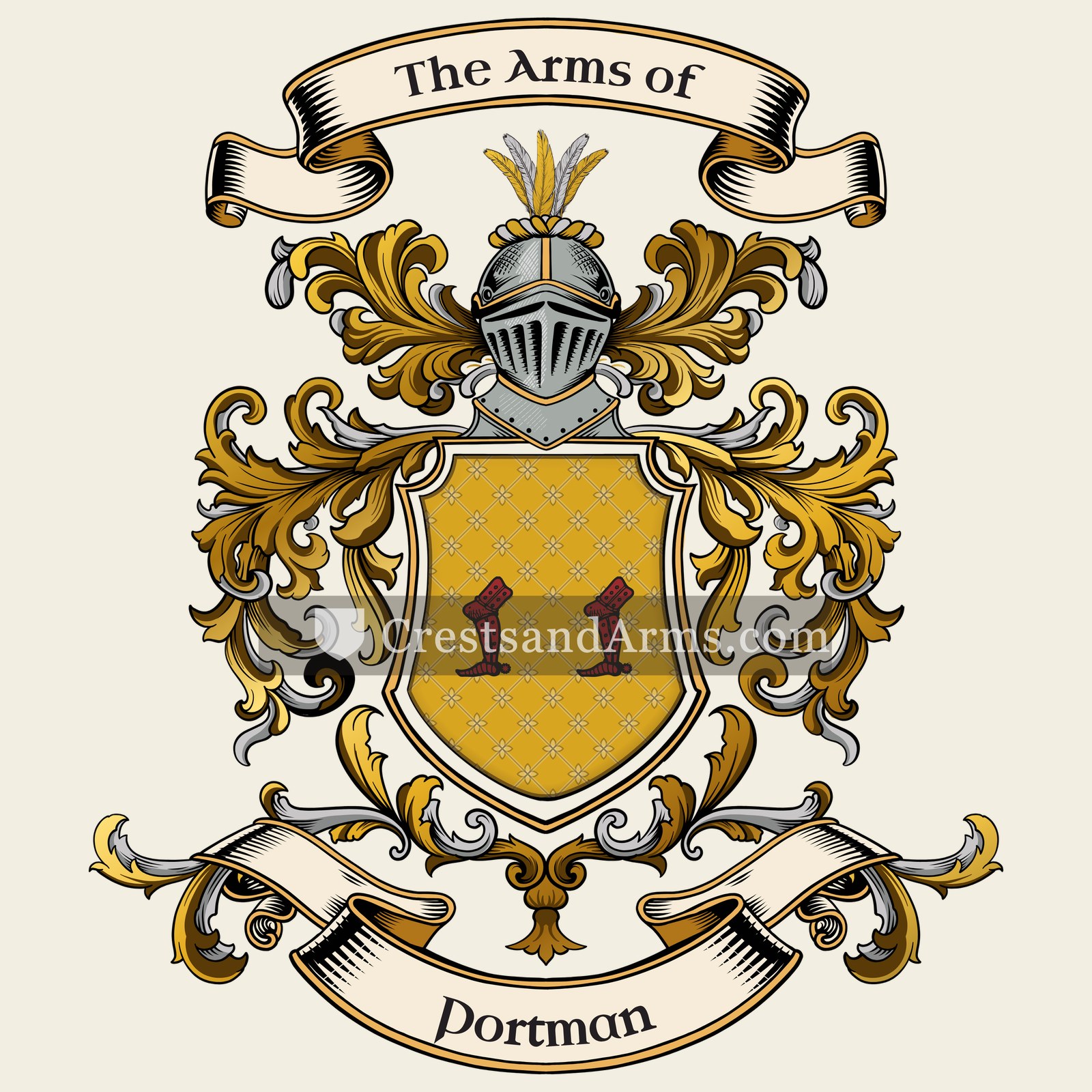


 fleur de lisPurity, light, and the sixth son