Map of Netherlands showing where the Pot arms are recorded
The Pot arms were recorded in Netherlands, c. 1815.
Arms such as these were typically recorded in Friesland.
Friesland was low, wet country on the northern coast of the Netherlands, farmed by families who had held the same land for centuries. Free landholders were unusually common there, and a free landholder could carry arms.
This is where the arms were entered in the register. Families often moved to other parts of the country, so the same name can turn up in more than one region.
Region
Friesland
First recorded
1815
Granting Authority for the Pot Arms
Hoge Raad van Adel
Photograph made by me · CC BY-SA 3.0
The body that granted and recorded arms in Netherlands in this period.
William I of the Netherlands
Sovereign of the period
William I of the Netherlands
1815–1840
Reigning in Netherlands when the Pot arms are first recorded.
How Arms Worked in Netherlands
In the Netherlands, coats of arms were often used by noble families and those who held specific public offices. These arms were passed down through the generations to legitimate descendants. Younger branches of a family usually kept the original design without needing to add special marks. This system ensured that the family identity remained clear and consistent over many years.
Granting authority
The Hoge Raad van Adel is the official body that regulates and manages noble titles and coats of arms in the Netherlands.
How they got arms
Families typically obtained their coats of arms through official royal grants or by proving their long-standing historical use of the symbols.
Where arms were recorded
Coats of arms are officially recorded in the registers held by the Hoge Raad van Adel, which began its work in 1814.
The family's standing
Recorded among the armigerous families of Netherlands.
Origin & History of the Pot Family in Netherlands
The surname Pot is a classic example of a topographic or occupational name that emerged in the Netherlands during a time when people began adopting fixed family names. In the Dutch language, the word "pot" refers to a cooking vessel or a container, suggesting that the earliest ancestors to carry this name may have been skilled potters or merchants who sold earthenware goods. By the early 19th century, records confirm that the Pot family had established a notable presence in the northern province of Friesland. This region was historically characterized by its distinct legal customs and strong agricultural traditions, which likely provided a stable environment for the family to grow. As the Dutch population became more mobile and record-keeping became standardized under government mandates, families like the Pots solidified their identity within the local community. Their history reflects the broader evolution of Dutch society, where simple, descriptive names often transitioned from casual nicknames into permanent family legacies that were passed down through generations.
Meaning of the Pot family crest colors & symbols
Symbols on this shield
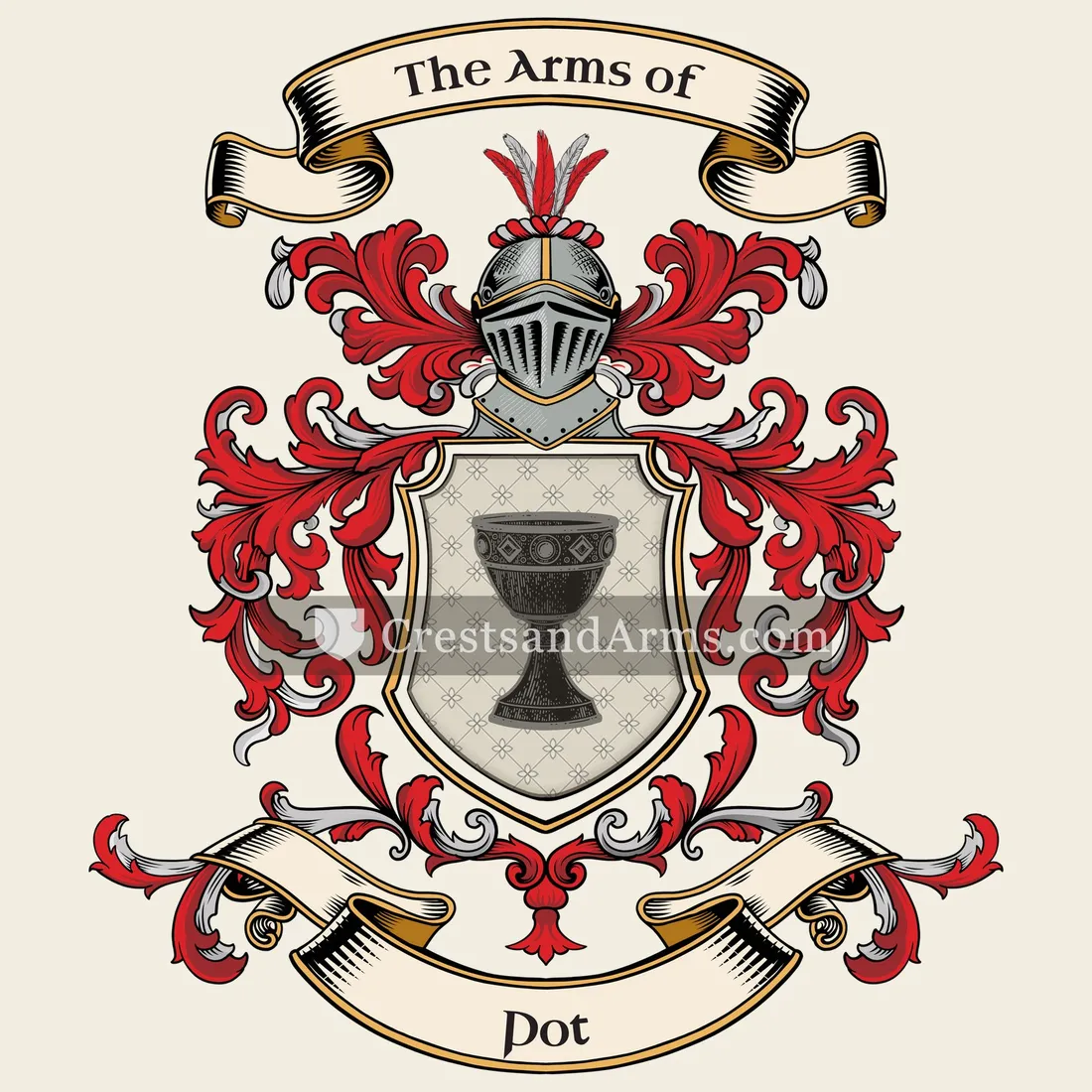
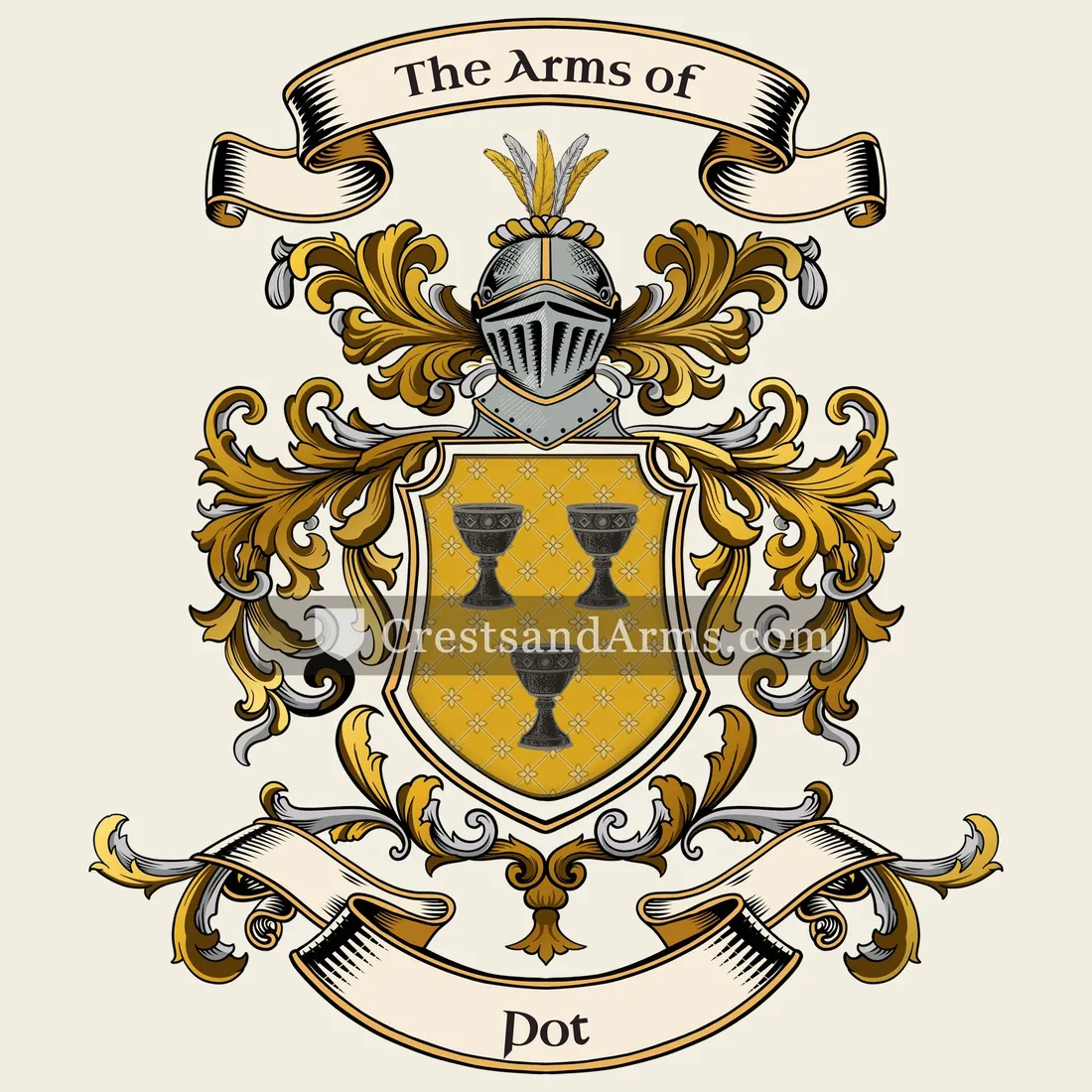
cupFaith, office, and a trust discharged
Colours
Gold (Or)Means: Generosity
Black (Sable)Means: Constancy
Historical info
Source
J. B. Rietstap, Armorial Général, Gouda: G. B. van Goor Zonen, 1884–87
Blazon (the actual original written record)
“D'or à trois marmites de sa. C.: un More iss., tort. d'arg., tenant de sa main dextre levée une masse à picotons et de sa sen. un bouclier.”
BelgiumBruges, c. 1737
Digital archive packCoat of arms PNG, gold border print PDF, vector SVG and the certificate of authenticity. Sent to your email in minutes.
Map of Belgium showing where the Pot arms are recorded
The Pot arms were recorded in Bruges, c. 1737.
This is where the arms were entered in the register. Families often moved to other parts of the country, so the same name can turn up in more than one region.
The body that granted and recorded arms in Belgium in this period.
Charles VI, Holy Roman Emperor
Sovereign of the period
Charles VI, Holy Roman Emperor
1711–1740
Reigning in Netherlands when the Pot arms are first recorded.
How Arms Worked in Belgium
In Belgium, a coat of arms is considered personal property that is passed down through the male line to legitimate descendants. Families often use the same shield design across generations to show their shared heritage. If a branch of the family wants to change the design, they must apply for an official update to their specific version of the arms.
Granting authority
The Conseil héraldique is the official body that regulates and approves all coats of arms in Belgium.
How they got arms
Families obtain their coats of arms through formal royal grants or by confirming their historical right to use existing designs.
Where arms were recorded
All approved coats of arms are officially recorded in the public registers of the Conseil héraldique since 1844.
The family's standing
Recorded among the armigerous families of Belgium.
Origin & History of the Pot Family in Belgium
The family name Pot has deep roots in the historical landscape of Belgium, particularly within the bustling merchant city of Bruges. By the year 1737, records confirm that members of the Pot family were already established residents of this influential trade hub. During this era, the name likely functioned as a descriptive occupational surname, often linked to individuals who worked as potters or makers of earthenware vessels. In the economy of eighteenth-century Flanders, such trades were essential for daily life, as ceramic containers were necessary for storing food and transporting goods across the region. The presence of the family in Bruges suggests they were part of the growing urban middle class that helped sustain the city's reputation for craftsmanship and commerce. As the family navigated life in this historic center, they contributed to the local social fabric that defined the transition from the late medieval period into the modern age.
Meaning of the Pot family crest colors & symbols
Symbols on this shield
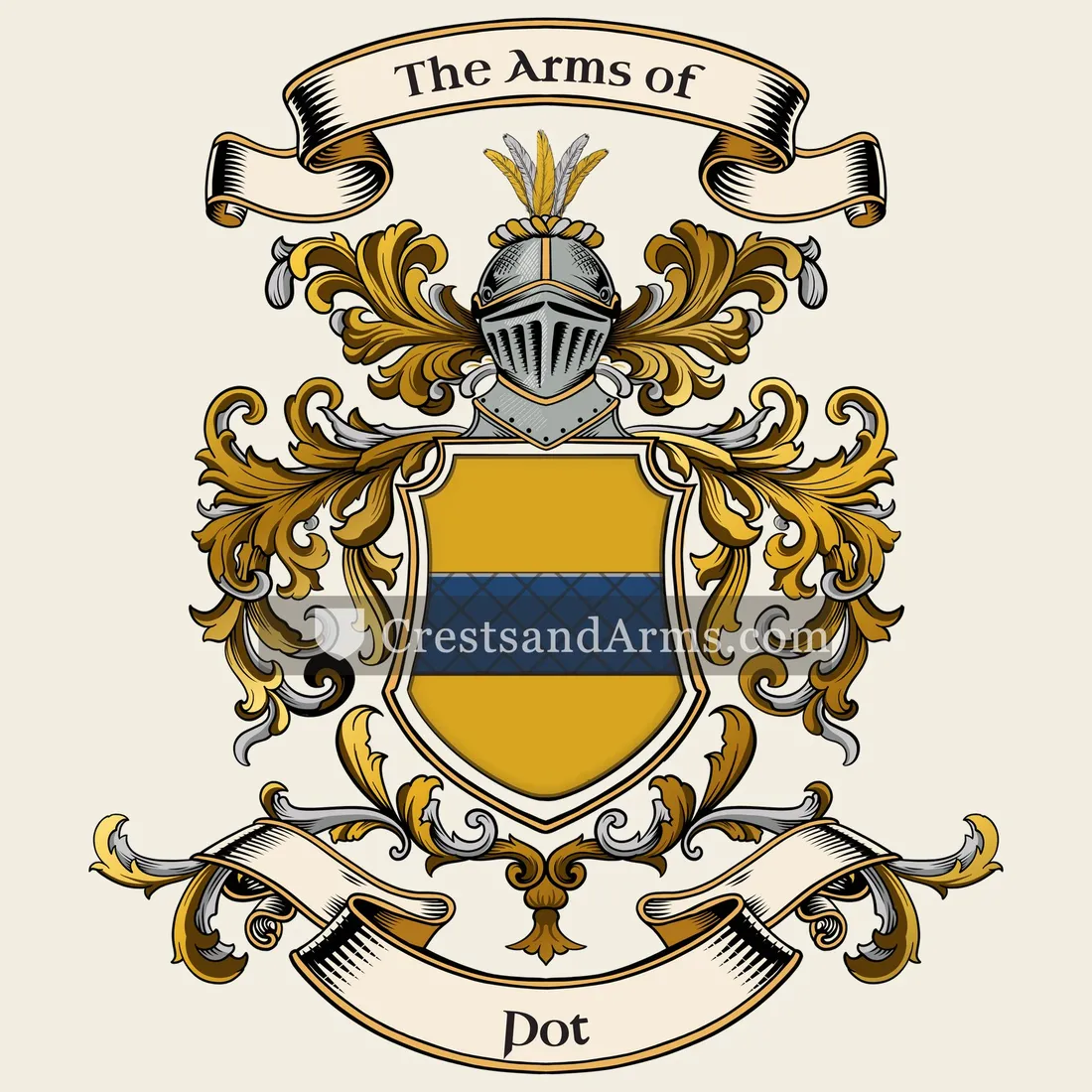
fessThe military belt, and readiness to serve
Colours
Gold (Or)Means: Generosity
Blue (Azure)Means: Loyalty and truth
Historical info
Source
J. B. Rietstap, Armorial Général, Gouda: G. B. van Goor Zonen, 1884–87
Blazon (the actual original written record)
“D'or à la fasce d'azur. C.: une tête d'aigle d'azur, bq. d'or.”
BerryBerry, c. 1663
Digital archive packCoat of arms PNG, gold border print PDF, vector SVG and the certificate of authenticity. Sent to your email in minutes.
Map of France showing where the Pot arms are recorded
The Pot arms were recorded in Berry, c. 1663.
Berry was central French farming country, quiet and long-settled. Its estates were modest and stayed in the same hands for centuries, and steady landholding of that kind is exactly what puts a name into the heraldic records.
This is where the arms were entered in the register. Families often moved to other parts of the country, so the same name can turn up in more than one region.
The body that granted and recorded arms in France in this period.
Louis XIV of France
Sovereign of the period
Louis XIV of France
1643–1715
Reigning in Netherlands when the Pot arms are first recorded.
How Arms Worked in France
In France, a coat of arms was a mark of honor that passed down through the male line to all legitimate descendants. Families often used the same shield without changes to show their shared heritage. If a branch wanted to stand out, they could add a small mark to their shield to show their specific place in the family tree.
Granting authority
The Juge d'armes de France acted as the official authority that regulated and verified coats of arms across the country.
How they got arms
Families typically inherited their arms from ancestors, though they could also receive them through royal grants or by proving their noble status.
Where arms were recorded
Coats of arms were officially recorded in the Armorial Général de France, which began its main collection in the year 1696.
The family's standing
Recorded among the armigerous families of Berry.
Origin & History of the Pot Family in France
The family name Pot has deep roots in the historical province of Berry, where members of the lineage were firmly established by the mid-seventeenth century. During this period, the name was closely tied to the social and agricultural life of central France. Families bearing this name often lived as landholders or local officials, participating in the administrative functions that kept the region running under the French monarchy. Because the name is short and distinct, it likely originated as a descriptive nickname or a reference to a trade involving the crafting of pottery or the use of specific containers. By 1663, the Pot family was already integrated into the local community, leaving behind records in parish registers that document their marriages, births, and daily contributions to the villages of the Berry region. Their presence reflects the broader history of families who lived on the land for generations and helped shape the identity of the French countryside.
Pot Meaning & Related Branches
Root word
pot
A vessel or container made of earthenware or metal.
This name
PotAn occupational name for a maker or seller of pots and earthenware vessels.
also spelled
Pott
Potte
Documented Sources
J. B. Rietstap, Armorial Général, Gouda: G. B. van Goor Zonen, 1884–87
Meertens, P.J., Voornamen en familienamen in Nederland, 1964
Tresoar (Fries Historisch en Letterkundig Centrum), Burgerlijke Stand van Friesland (1811-1950)
Van der Schaar, J., Woordenboek van familienamen, 1992
Digital archive packCoat of arms PNG, gold border print PDF, vector SVG and the certificate of authenticity. Sent to your email in minutes.


 cupFaith, office, and a trust discharged
 cupFaith, office, and a trust discharged




 fessThe military belt, and readiness to serve