A record of documented arms, meaning and origin, researched for the Prekker family lines. Documented in 3 countries.
Reg. 4396 · Dutch, P–S
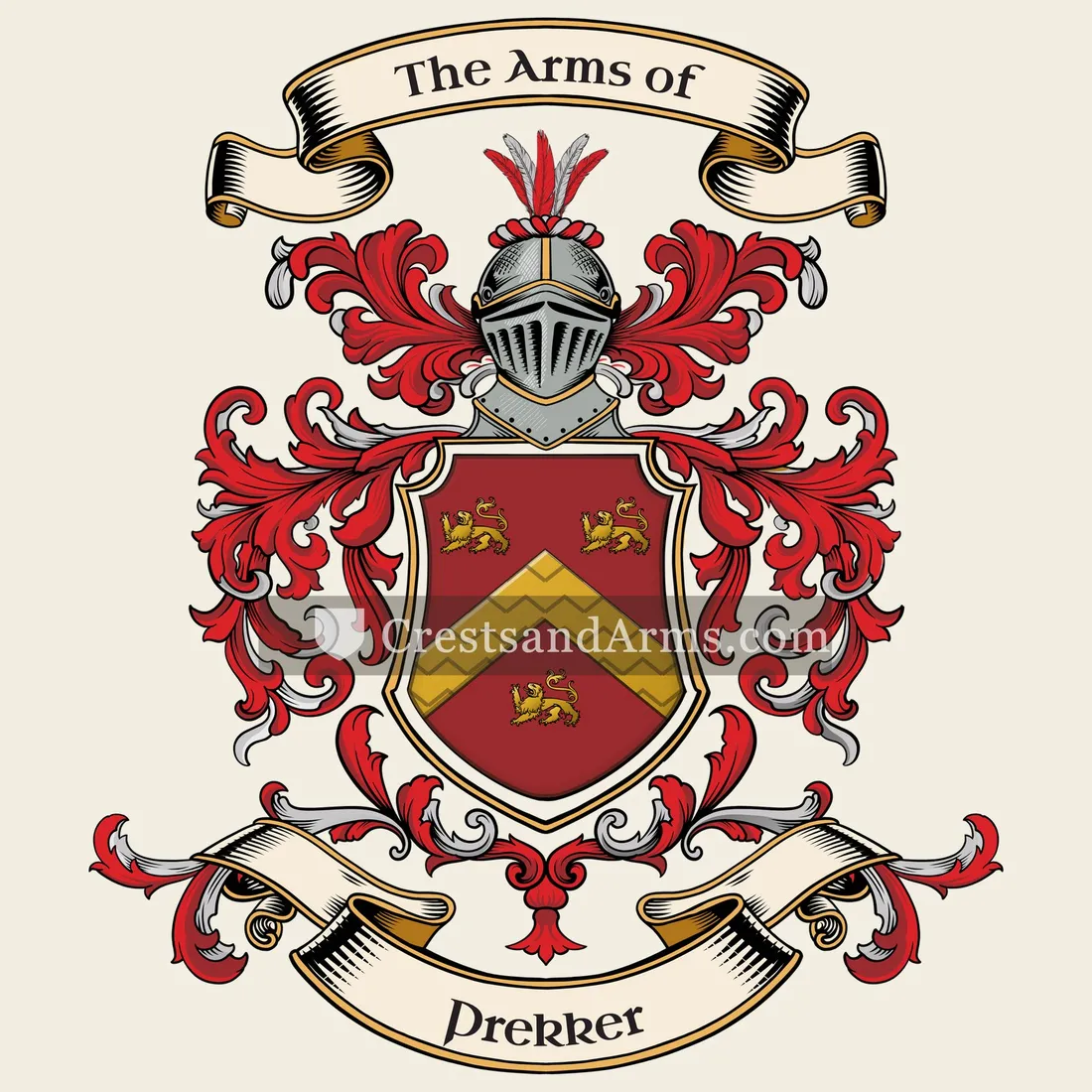
Meaning of the Prekker family crest colors & symbols
Symbols on this shield
chevronProtection, and faithful service completed
lionCourage, strength and royalty
Colours
Red (Gules)Means: Military strength
Gold (Or)Means: Generosity
Historical info
Source
J. B. Rietstap, Armorial Général, Gouda: G. B. van Goor Zonen, 1884–87
Blazon (the actual original written record)
“De gu. au chev. d'or, acc. de trois têtes de léopard du même. C.: une tête et col de léopard d'or, posée de front, coll. d'une couronne de gu. S.: deux léopards naturels, reg., coll. chacun d'une couronne de gu. D.: SAPERE AUDE.”
Netherlandsc. 1715
Digital archive packCoat of arms PNG, gold border print PDF, vector SVG and the certificate of authenticity. Sent to your email in minutes.
Map of Netherlands showing where the Prekker arms are recorded
The Prekker arms were recorded in Netherlands, c. 1715.
Arms such as these were typically recorded in Friesland.
Friesland was low, wet country on the northern coast of the Netherlands, farmed by families who had held the same land for centuries. Free landholders were unusually common there, and a free landholder could carry arms.
This is where the arms were entered in the register. Families often moved to other parts of the country, so the same name can turn up in more than one region.
Region
Friesland
First recorded
1715
Granting Authority for the Prekker Arms
Hoge Raad van Adel
Photograph made by me · CC BY-SA 3.0
The body that granted and recorded arms in Netherlands in this period.
How Arms Worked in Netherlands
In the Netherlands, coats of arms were often used by noble families and those who held specific public offices. These arms were passed down through the generations to legitimate descendants. Younger branches of a family usually kept the original design without needing to add special marks. This system ensured that the family identity remained clear and consistent over many years.
Granting authority
The Hoge Raad van Adel is the official body that regulates and manages noble titles and coats of arms in the Netherlands.
How they got arms
Families typically obtained their coats of arms through official royal grants or by proving their long-standing historical use of the symbols.
Where arms were recorded
Coats of arms are officially recorded in the registers held by the Hoge Raad van Adel, which began its work in 1814.
The family's standing
Recorded among the armigerous families of Netherlands.
Origin & History of the Prekker Family in Netherlands
The family name Prekker finds its early roots in the northern province of Friesland, where records confirm members of the family were established by 1715. During this period in the Netherlands, surnames were often derived from a person’s occupation, physical traits, or their specific location within a village. The name likely evolved from the Middle Dutch word "preken," which relates to the act of preaching or speaking in a formal manner. This suggests that early ancestors may have held roles within their local communities that required public speaking or religious leadership. As the family grew, they became part of the distinct Frisian social structure, which was known for its strong sense of independence and unique regional customs. By settling in this area, the Prekker family participated in the agricultural and maritime traditions that defined life in the Dutch provinces during the eighteenth century.
Meaning of the Prekker family crest colors & symbols
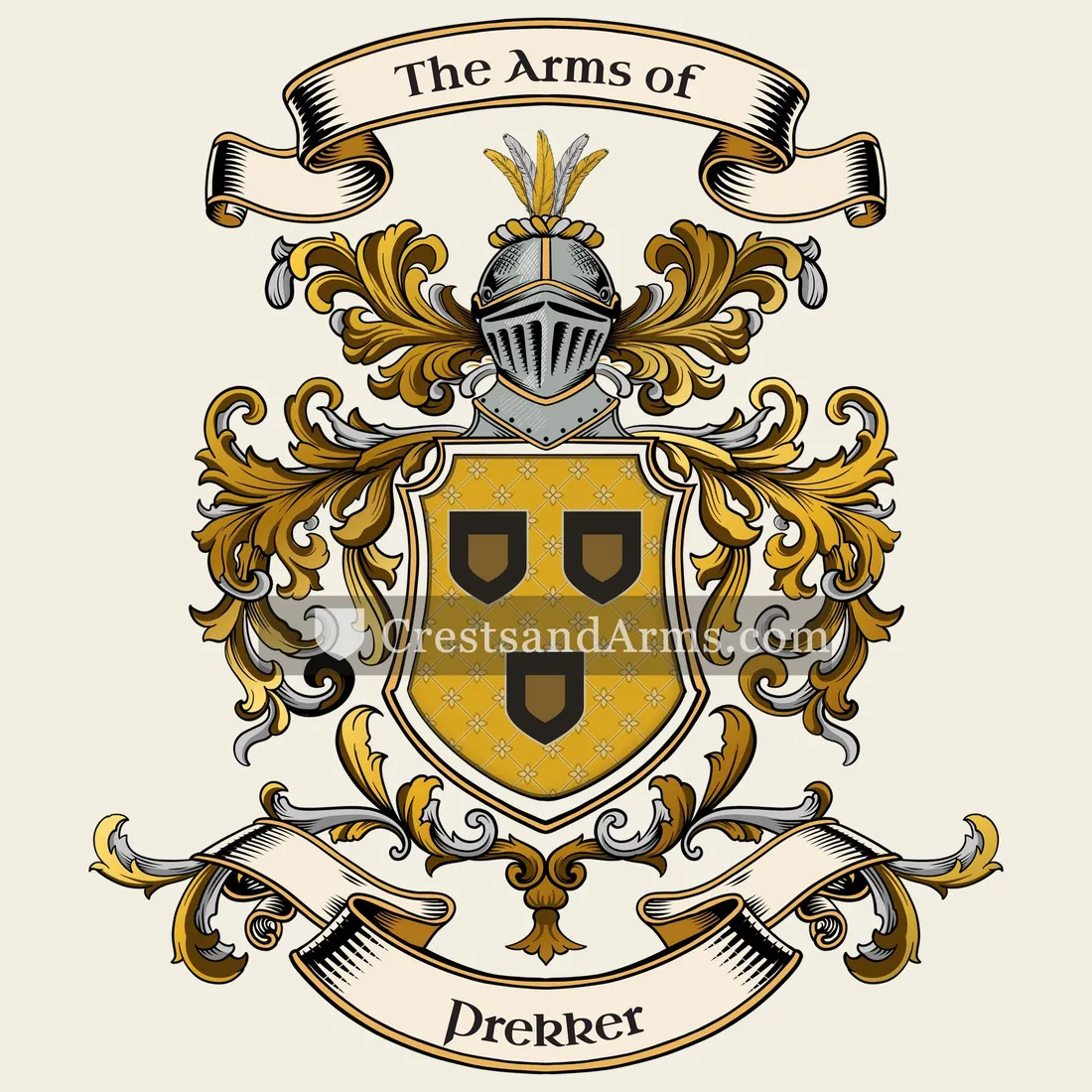
Symbols on this shield
escutcheonA shield within a shield, and a claim inherited
Colours
Gold (Or)Means: Generosity
Black (Sable)Means: Constancy
Historical info
Source
Sir Bernard Burke, The General Armory of England, Scotland, Ireland and Wales, London: Harrison & Sons, 1884
Blazon (the actual original written record)
“Or, three escutcheons sa. each charged with a broad arrowhead of the field”
EssexFryth Hall · Essex, c. 1537
Digital archive packCoat of arms PNG, gold border print PDF, vector SVG and the certificate of authenticity. Sent to your email in minutes.
Map of England showing where the Prekker arms are recorded
The Prekker arms were recorded in Essex, c. 1537.
Essex lay close enough to London for City money to buy land there. Merchants who prospered moved out to estates within a day's ride, and a new landowner almost always wanted arms to go with the ground.
This is where the arms were entered in the register. Families often moved to other parts of the country, so the same name can turn up in more than one region.
The body that granted and recorded arms in England in this period.
Henry VIII of England
Sovereign of the period
Henry VIII of England
1509–1547
Reigning in Netherlands when the Prekker arms are first recorded.
How Arms Worked in England
English heraldry allowed arms to be shared by all legitimate descendants of the original owner. These symbols were treated as personal property that moved through the generations to all children. While the eldest son kept the original design, other family members could use the same shield without needing to change it or register their own unique versions.
Granting authority
The College of Arms in London has regulated the use of coats of arms throughout England and Wales since 1484.
How they got arms
Families typically obtained their coats of arms through a formal grant from the Crown or by proving their ancient right to them.
Where arms were recorded
All official coats of arms are recorded in the registers kept at the College of Arms, which date back to the fifteenth century.
The family's standing
Recorded among the armigerous families of Essex.
Origin & History of the Prekker Family in England
The family name Prekker has roots that stretch back to the rural landscapes of sixteenth-century England. Historical records confirm that members of the family were established in the county of Essex by 1537. During this era, life in Essex was defined by the transition from medieval farming practices to more organized agricultural systems. Families like the Prekkers were typically part of the local yeomanry or tenant farming classes who worked the fertile lands of East Anglia. Because the name is linked to this specific region, it is likely that the family was involved in the local wool trade or grain production, which were the primary economic drivers of the area at the time. By settling in Essex, the early Prekkers became part of a stable community that navigated the significant social and religious changes occurring across England during the Tudor period.
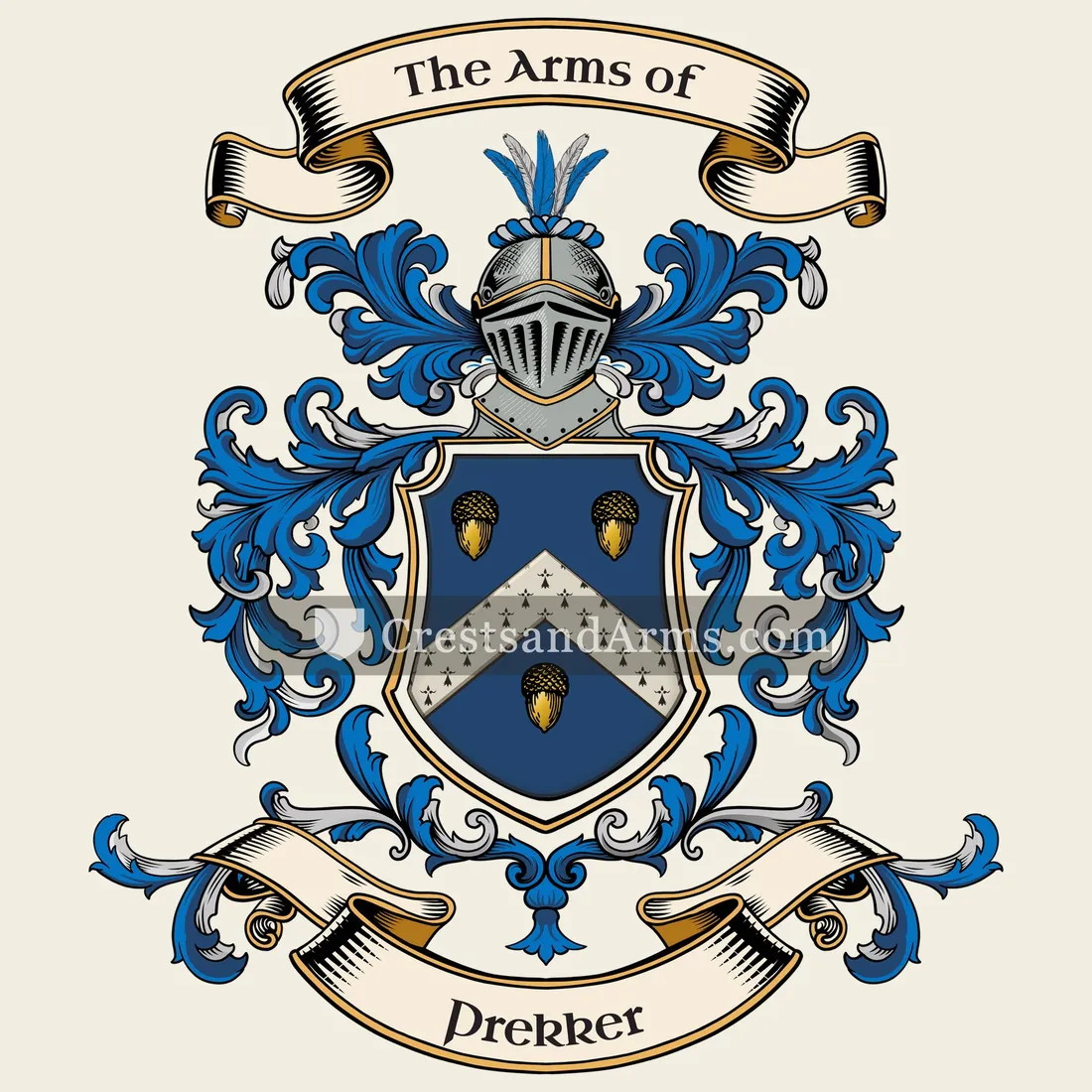
Meaning of the Prekker family crest colors & symbols
Symbols on this shield
chevronProtection, and faithful service completed
acornAntiquity and strength from small beginnings
Colours
Blue (Azure)Means: Loyalty and truth
ErmineMeans: Dignity
Gold (Or)Means: Generosity
Historical info
Source
Sir Bernard Burke, The General Armory of England, Scotland, Ireland and Wales, London: Harrison & Sons, 1884
Blazon (the actual original written record)
“Az. a chev. erm. betw. three acorns slipped or”
Walesc. 1647
Digital archive packCoat of arms PNG, gold border print PDF, vector SVG and the certificate of authenticity. Sent to your email in minutes.
Map of Wales showing where the Prekker arms are recorded
The Prekker arms were recorded in Wales, c. 1647.
Arms such as these were typically recorded in Denbigh.
Denbighshire was north Welsh country of hills and small estates. Land was held by a great many families rather than a few, and each holding brought its own claim to a coat of arms.
This is where the arms were entered in the register. Families often moved to other parts of the country, so the same name can turn up in more than one region.
The body that granted and recorded arms in Wales in this period.
Charles I of England
Sovereign of the period
Charles I of England
1625–1649
Reigning in Netherlands when the Prekker arms are first recorded.
How Arms Worked in Wales
English heraldry allowed arms to be shared by all legitimate descendants of the original owner. These symbols were treated as personal property that moved through the generations to all children. While the eldest son kept the original design, other family members could use the same shield without needing to change it or register their own unique versions.
Granting authority
The College of Arms in London has regulated the use of coats of arms throughout England and Wales since 1484.
How they got arms
Families typically obtained their coats of arms through a formal grant from the Crown or by proving their ancient right to them.
Where arms were recorded
All official coats of arms are recorded in the registers kept at the College of Arms, which date back to the fifteenth century.
The family's standing
Recorded among the armigerous families of Wales.
Origin & History of the Prekker Family in Wales
The Prekker family name has roots that trace back to the rugged landscape of North Wales, where members of the family were firmly established in the town of Denbigh by 1647. During this period, Denbigh was a significant market town and a center of local administration, meaning the Prekkers likely played a role in the agricultural or merchant life of the region. The name itself reflects the linguistic shifts occurring in Wales at the time, as families often adapted their surnames to fit the changing social structures of the seventeenth century. Living in a town dominated by its historic castle and medieval walls, the Prekkers would have experienced the turbulent transition of the English Civil War, which deeply affected Denbigh during the mid-1600s. By settling in this area, the family became part of the long history of Denbighshire, contributing to the local community as it navigated the political and economic challenges of the post-medieval era.
Prekker Meaning & Related Branches
Root word
Preken
To preach or deliver a sermon.
This name
PrekkerAn occupational surname for a preacher or someone who frequently gave sermons.
also spelled
Parkar
Parkor
Documented Sources
J. B. Rietstap, Armorial Général, Gouda: G. B. van Goor Zonen, 1884–87
Tresoar (Fries Historisch en Letterkundig Centrum), Doop-, trouw- en begraafboeken van Friesland (1600-1811)
Winkler, Johan, De Nederlandsche geslachtsnamen in oorsprong, geschiedenis en beteekenis (1885)
Digital archive packCoat of arms PNG, gold border print PDF, vector SVG and the certificate of authenticity. Sent to your email in minutes.


 chevronProtection, and faithful service completed
 lionCourage, strength and royalty
 chevronProtection, and faithful service completed
 lionCourage, strength and royalty

 escutcheonA shield within a shield, and a claim inherited


 acornAntiquity and strength from small beginnings