Map of Belgium showing where the Prévost arms are recorded
The Prévost arms were recorded in Tournaisis, c. 1737.
This is where the arms were entered in the register. Families often moved to other parts of the country, so the same name can turn up in more than one region.
The body that granted and recorded arms in Belgium in this period.
Charles VI, Holy Roman Emperor
Sovereign of the period
Charles VI, Holy Roman Emperor
1711–1740
Reigning in Belgium when the Prévost arms are first recorded.
How Arms Worked in Belgium
In Belgium, a coat of arms is considered personal property that is passed down through the male line to legitimate descendants. Families often use the same shield design across generations to show their shared heritage. If a branch of the family wants to change the design, they must apply for an official update to their specific version of the arms.
Granting authority
The Conseil héraldique is the official body that regulates and approves all coats of arms in Belgium.
How they got arms
Families obtain their coats of arms through formal royal grants or by confirming their historical right to use existing designs.
Where arms were recorded
All approved coats of arms are officially recorded in the public registers of the Conseil héraldique since 1844.
The family's standing
Recorded among the armigerous families of Belgium.
Origin & History of the Prévost Family in Belgium
The family name Prévost finds its roots in the medieval administrative structure of the French-speaking regions of Europe, as the term originally functioned as a title for a local official or a provost. By the time the family established a documented presence in the Tournaisis region of Belgium in 1737, the name had long transitioned from a professional title into a hereditary surname. Families bearing this name in the Tournai area were often integrated into the local agricultural or mercantile classes that defined the social fabric of the Southern Netherlands during the eighteenth century. Because the Tournaisis was a crossroads for trade and cultural exchange between France and the Low Countries, the Prévost family likely navigated a complex landscape of shifting borders and local governance. Their presence in this specific territory suggests a deep connection to the regional history of Hainaut, where they contributed to the local community through their work and daily lives long before the modern borders of Belgium were fully defined.
Coat of Arms & Family Crest Details
Symbols on this shield
dragonA most valiant defender of treasure
Colours
Gold (Or)Means: Generosity
Green (Vert)Means: Hope
Historical info
Source
J. B. Rietstap, Armorial Général, Gouda: G. B. van Goor Zonen, 1884–87
Blazon (the actual original written record)
“D'or à un dragon de sin., lamp. et cour. de gu.”
ArtoisArtois, c. 1663
Digital archive packCoat of arms PNG, gold border print PDF, vector SVG and the certificate of authenticity. Sent to your email in minutes.
Map of France showing where the Prévost arms are recorded
The Prévost arms were recorded in Artois, c. 1663.
Artois lay on the disputed ground between France and the Low Countries and was fought over for centuries. Families there held their land under arms, and a shield was how a fighting household was known.
This is where the arms were entered in the register. Families often moved to other parts of the country, so the same name can turn up in more than one region.
The body that granted and recorded arms in France in this period.
Louis XIV of France
Sovereign of the period
Louis XIV of France
1643–1715
Reigning in Belgium when the Prévost arms are first recorded.
How Arms Worked in France
In France, a coat of arms was a mark of honor that passed down through the male line to all legitimate descendants. Families often used the same shield without changes to show their shared heritage. If a branch wanted to stand out, they could add a small mark to their shield to show their specific place in the family tree.
Granting authority
The Juge d'armes de France acted as the official authority that regulated and verified coats of arms across the country.
How they got arms
Families typically inherited their arms from ancestors, though they could also receive them through royal grants or by proving their noble status.
Where arms were recorded
Coats of arms were officially recorded in the Armorial Général de France, which began its main collection in the year 1696.
The family's standing
Recorded among the armigerous families of Artois.
Origin & History of the Prévost Family in France
The surname Prévost originates from the Old French word *prévôt*, which served as a title for a royal official or a local administrator during the Middle Ages. In the feudal system, a person holding this title acted as a representative of the king or a high-ranking noble, often overseeing legal matters, tax collection, or the maintenance of public order within a specific district. As hereditary surnames became common across France, families who held these administrative positions adopted the title as their permanent family name. By 1663, records confirm that members of the Prévost family were well-established in the northern province of Artois. This region was a significant area of transition and cultural exchange, and families living there often played vital roles in managing the complex social and economic affairs of the territory under the French crown.
Coat of Arms & Family Crest Details
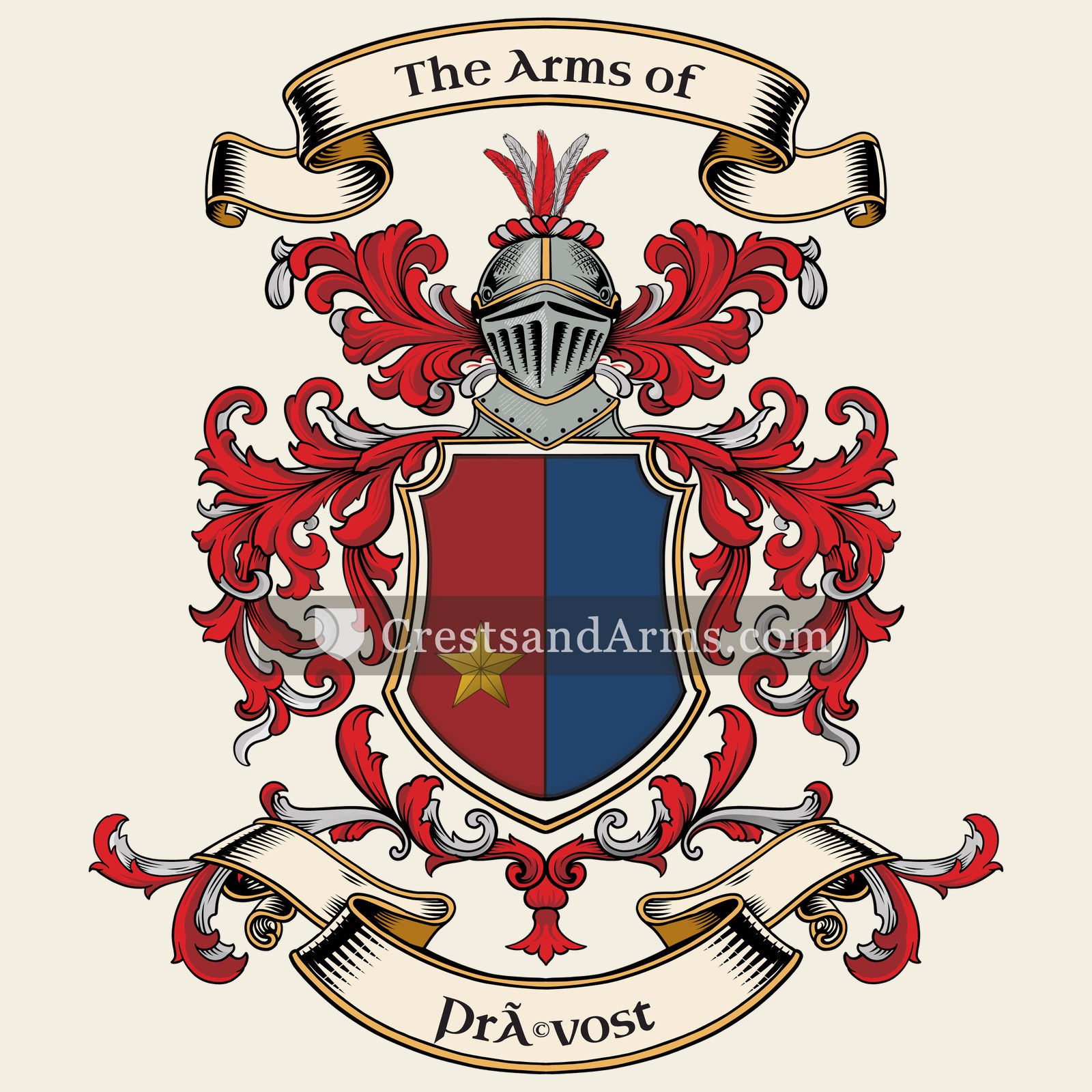
Symbols on this shield
mulletThe third son, and a divine quality from above
Colours
Red (Gules)Means: Military strength
Blue (Azure)Means: Loyalty and truth
Gold (Or)Means: Generosity
Historical info
Source
J. B. Rietstap, Armorial Général, Gouda: G. B. van Goor Zonen, 1884–87
Blazon (the actual original written record)
“Parti de gu. et d'azur; à une étoile d'or, br. sur le parti. Cq. cour. C.: un griffon iss. de sa., cour. d'or.”
Switzerlandc. 1745
Digital archive packCoat of arms PNG, gold border print PDF, vector SVG and the certificate of authenticity. Sent to your email in minutes.
Map of Switzerland showing where the Prévost arms are recorded
The Prévost arms were recorded in Switzerland, c. 1745.
Arms such as these were typically recorded in Bern.
Bern was the largest of the Swiss cantons and ran itself, with its own council and its own courts. Its governing families held office for generations, and office of that kind carried a shield with it.
This is where the arms were entered in the register. Families often moved to other parts of the country, so the same name can turn up in more than one region.
The body that granted and recorded arms in Switzerland in this period.
How Arms Worked in Switzerland
In Switzerland, coats of arms were not restricted to the nobility and were often adopted by common citizens and families. These symbols were passed down through generations to show family identity. When branches of a family grew, they often changed small details of the design to distinguish their own line from the original group.
Granting authority
Cantonal and civic authorities managed the use of coats of arms within their specific regions and local jurisdictions.
How they got arms
Families typically assumed their own coats of arms based on local custom rather than receiving them from a central monarch.
Where arms were recorded
Arms were recorded in various cantonal and civic registers starting from the fourteenth century throughout the Swiss region.
The family's standing
Recorded among the armigerous families of Switzerland.
Origin & History of the Prévost Family in Switzerland
The surname Prévost originates from the Old French word *prévôt*, which served as a title for a high-ranking administrative official or a local magistrate. In the context of Switzerland, the name reflects the historical movement of families across linguistic borders, as the term evolved from its Latin roots to describe those who held authority in legal or judicial matters. By the time members of the Prévost family were documented in Bern in 1745, the name had already become established among families who often served in professional or civic roles within the Swiss cantons. These early residents were part of a broader social structure where surnames acted as identifiers for the specific duties or statuses held by their ancestors. Over generations, the family integrated into the local Swiss landscape, transitioning from their origins as officials into the fabric of the community while maintaining the historical legacy tied to their name.
Related Branches & Arms
Root word
praepositus
A person placed in charge or a superior official.
This name
PrévostRefers to a provost, a high-ranking administrative or ecclesiastical official in medieval society.
also spelled
Prevo
Prevot
Provost
Preveaux
Related arms
Godernauxsimilar arms
Hoppler de Langenhartsimilar arms
Laganesimilar arms
Prévotvariant spelling
Documented Sources
J. B. Rietstap, Armorial Général, Gouda: G. B. van Goor Zonen, 1884–87
Archives de l'État à Tournai, Registres paroissiaux de l'ancien régime, 1737
Dion, M., Histoire de la ville et de la province de Tournai, 1839
Henne, A. and Wauters, A., Histoire de la ville de Bruxelles, 1845
Digital archive packCoat of arms PNG, gold border print PDF, vector SVG and the certificate of authenticity. Sent to your email in minutes.


 chiefAuthority, wisdom and dominion
 buckleFidelity, and a bond firmly held
 lionCourage, strength and royalty
 chiefAuthority, wisdom and dominion
 buckleFidelity, and a bond firmly held
 lionCourage, strength and royalty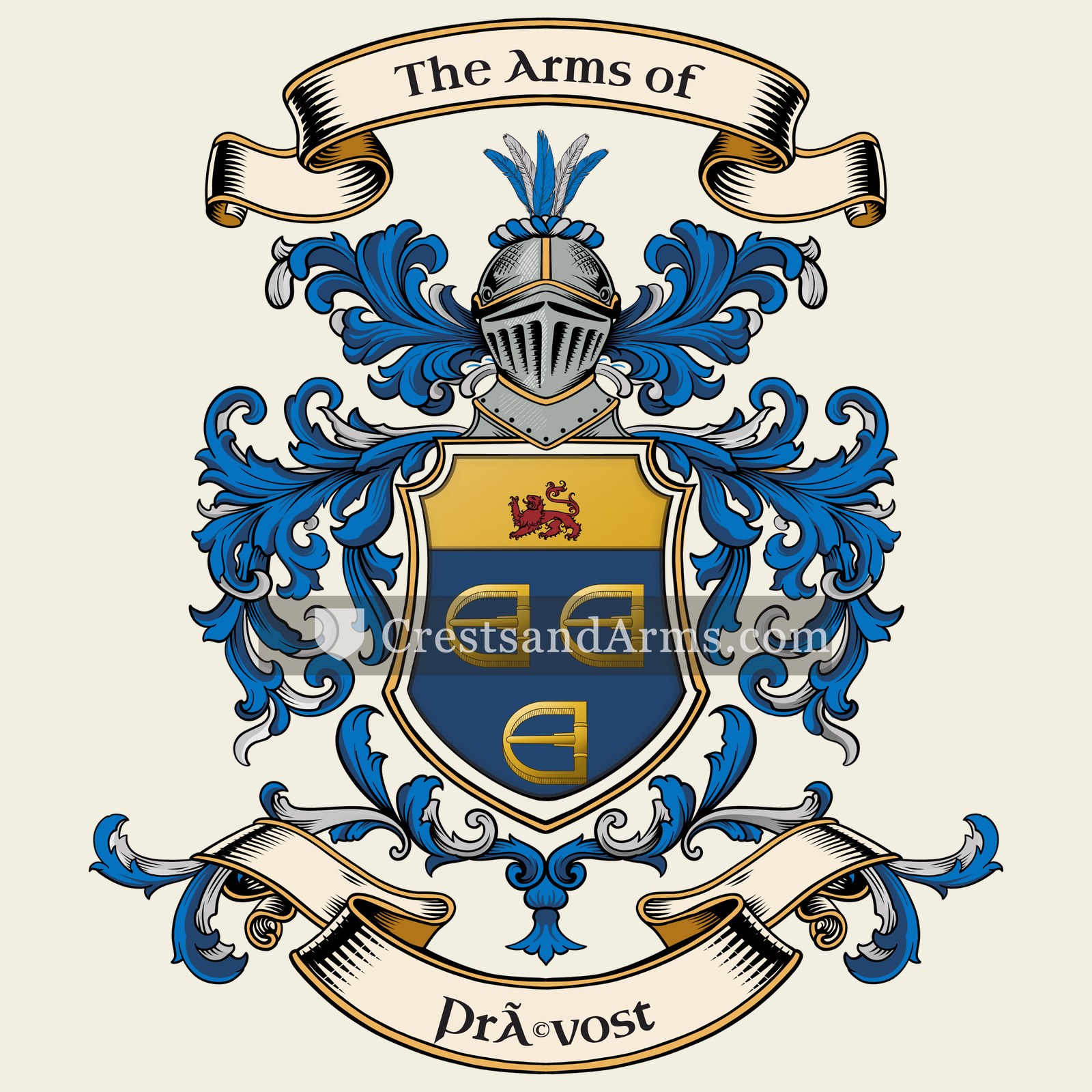


 dragonA most valiant defender of treasure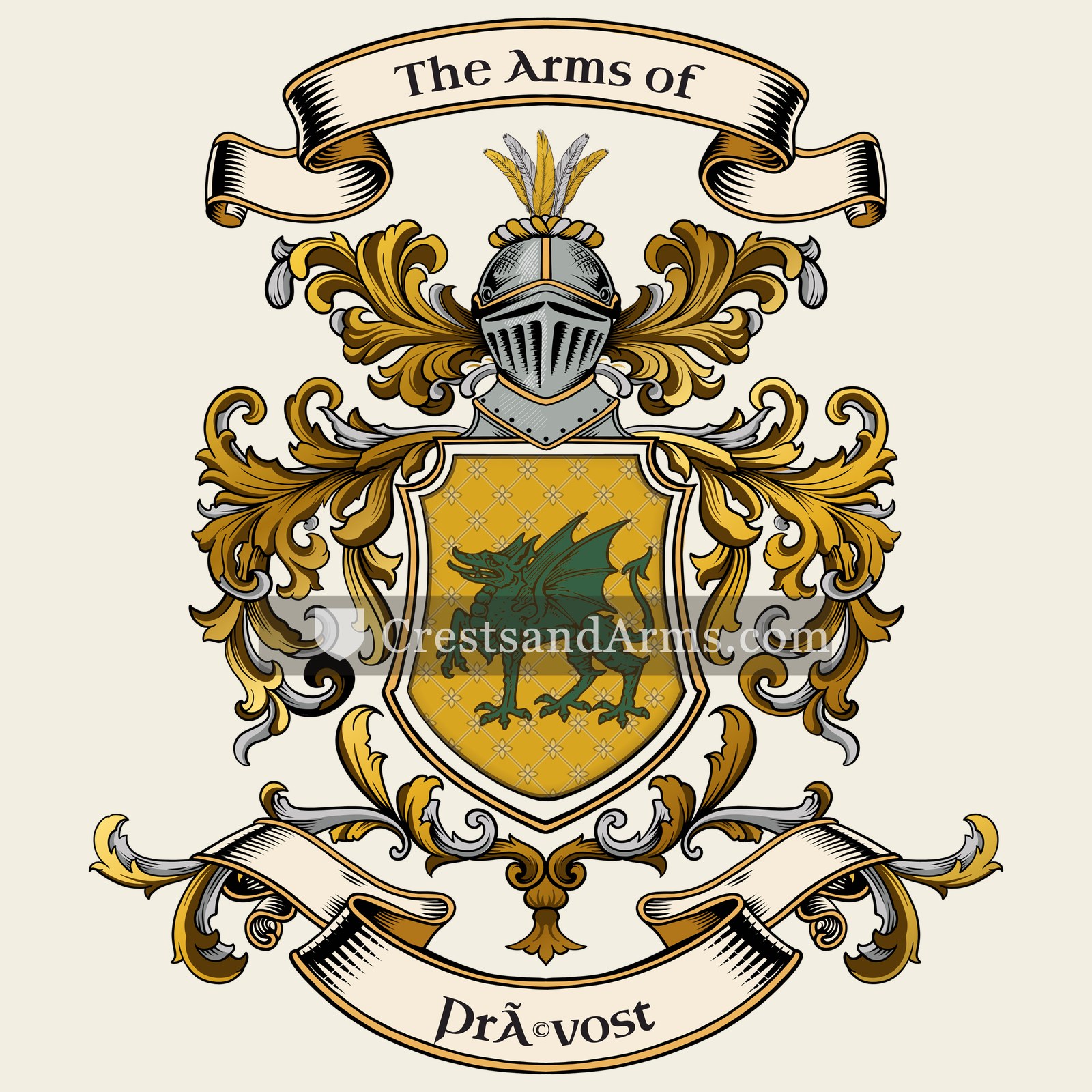


 mulletThe third son, and a divine quality from above