A record of documented arms, meaning and origin, researched for the Prince family lines. Documented in 3 countries.
Reg. 5828 · Dutch, P–S
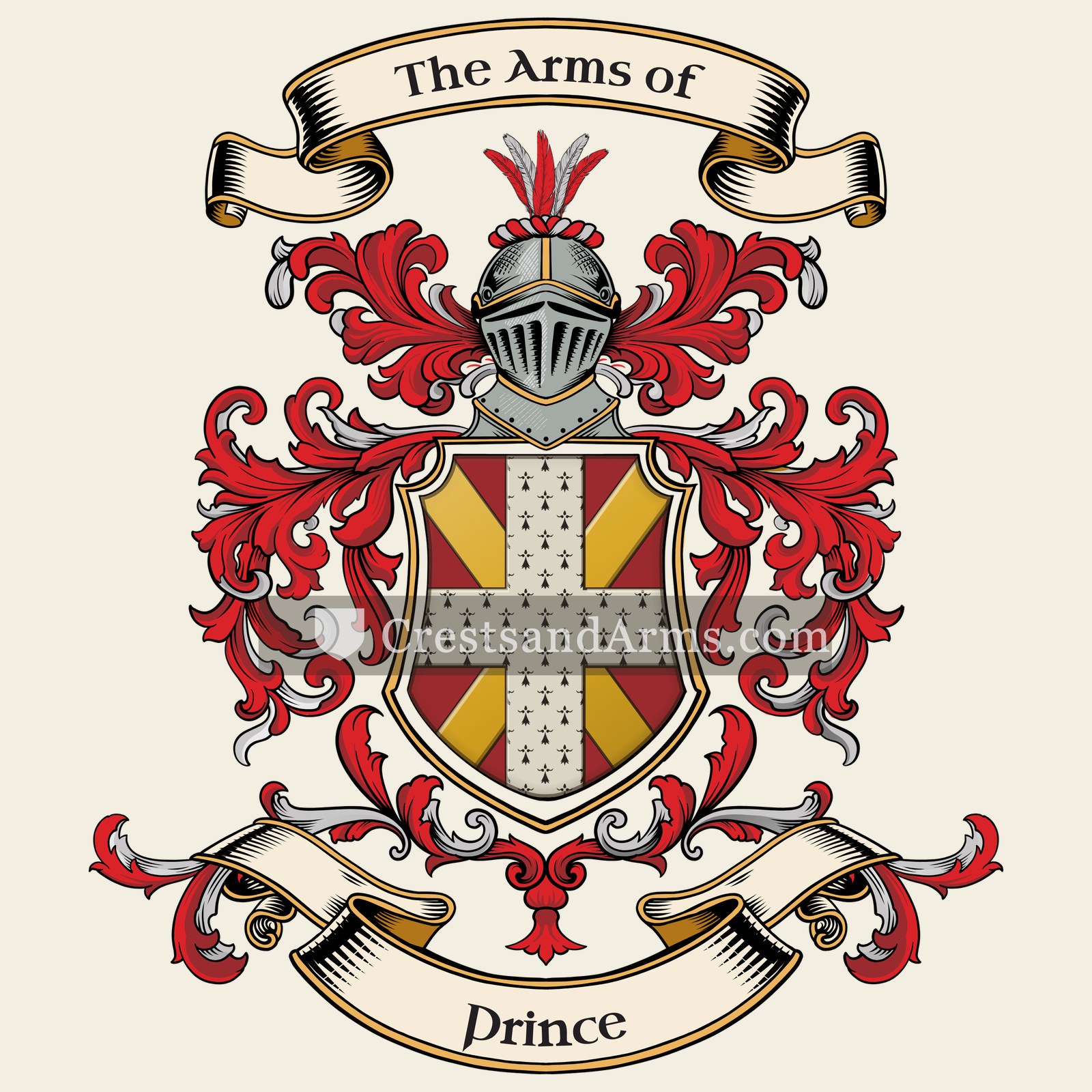
Coat of Arms & Family Crest Details
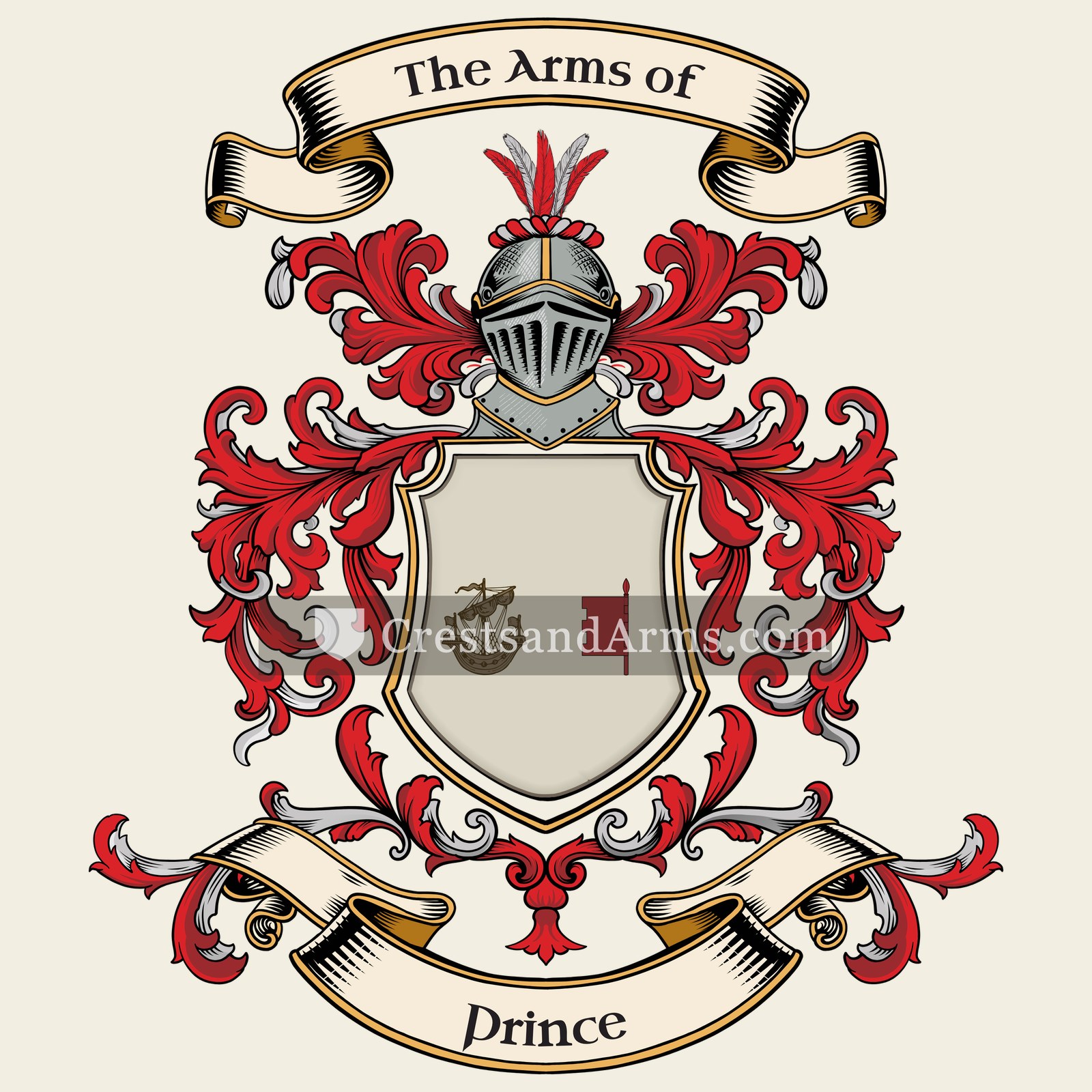
Symbols on this shield
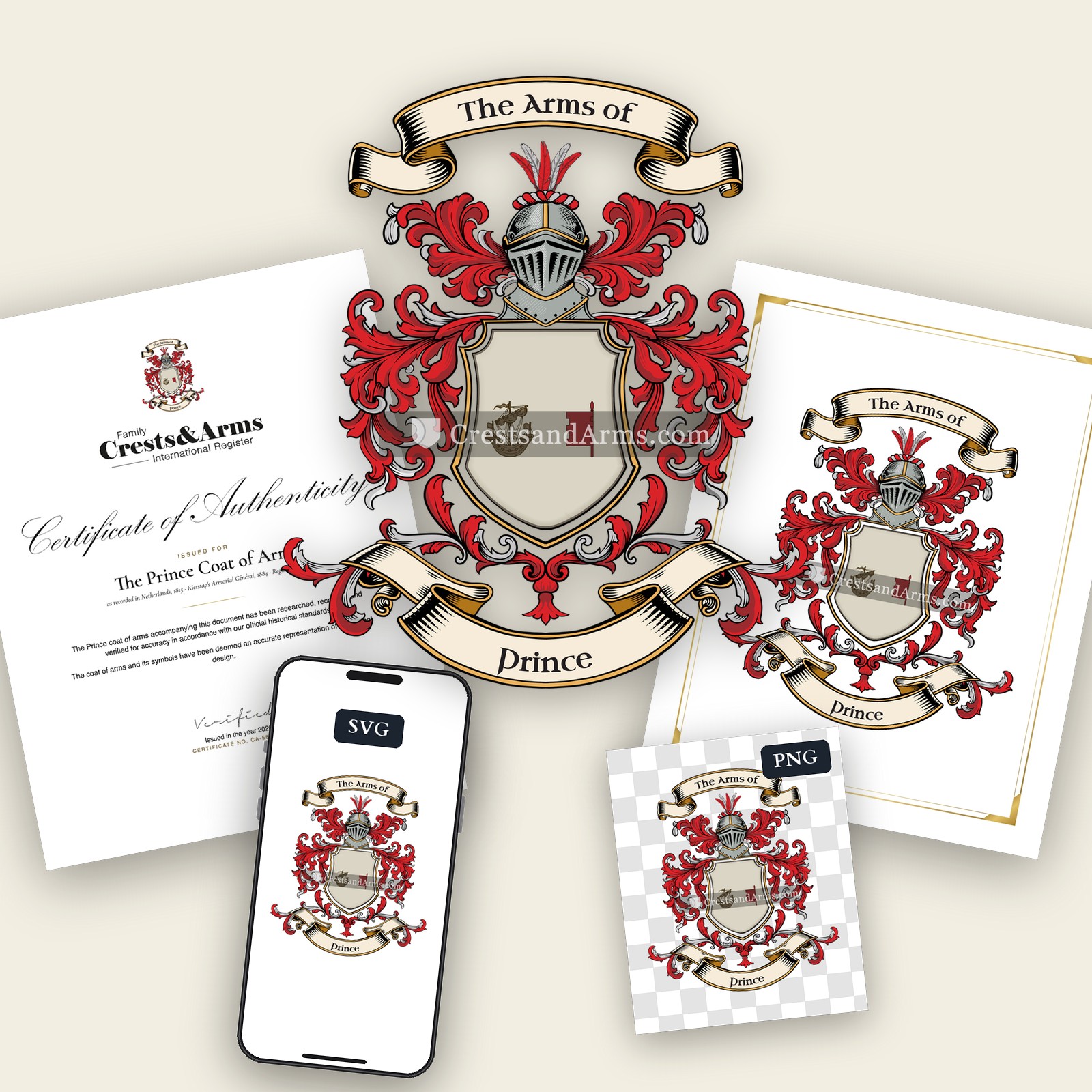
shipEnterprise, and a great voyage undertaken
flag / pennantA command held, and a following kept
Colours
Silver (Argent)Means: Peace and sincerity
Red (Gules)Means: Military strength
Historical info
Source
J. B. Rietstap, Armorial Général, Gouda: G. B. van Goor Zonen, 1884–87
Blazon (the actual original written record)
“D'arg. à un vaisseau à trois mâts au nat., voguant sur une mer d'azur, portant sur la poupe le pavillon hollandais (tiercé en fasce de gu., d'arg. et d'azur). C.: une ancre. [V. de Bruyn-Prince.]”
Netherlandsc. 1815
Digital archive packCoat of arms PNG, gold border print PDF, vector SVG and the certificate of authenticity. Sent to your email in minutes.
Map of Netherlands showing where the Prince arms are recorded
The Prince arms were recorded in Netherlands, c. 1815.
Arms such as these were typically recorded in Friesland.
Friesland was low, wet country on the northern coast of the Netherlands, farmed by families who had held the same land for centuries. Free landholders were unusually common there, and a free landholder could carry arms.
This is where the arms were entered in the register. Families often moved to other parts of the country, so the same name can turn up in more than one region.
Region
Friesland
First recorded
1815
Granting Authority for the Prince Arms
Hoge Raad van Adel
Photograph made by me · CC BY-SA 3.0
The body that granted and recorded arms in Netherlands in this period.
William I of the Netherlands
Sovereign of the period
William I of the Netherlands
1815–1840
Reigning in Netherlands when the Prince arms are first recorded.
How Arms Worked in Netherlands
In the Netherlands, coats of arms were often used by noble families and those who held specific public offices. These arms were passed down through the generations to legitimate descendants. Younger branches of a family usually kept the original design without needing to add special marks. This system ensured that the family identity remained clear and consistent over many years.
Granting authority
The Hoge Raad van Adel is the official body that regulates and manages noble titles and coats of arms in the Netherlands.
How they got arms
Families typically obtained their coats of arms through official royal grants or by proving their long-standing historical use of the symbols.
Where arms were recorded
Coats of arms are officially recorded in the registers held by the Hoge Raad van Adel, which began its work in 1814.
The family's standing
Recorded among the armigerous families of Netherlands.
Origin & History of the Prince Family in Netherlands
The surname Prince in the Netherlands often reflects the social and political landscape of the nineteenth century, particularly within the northern province of Friesland. By 1815, the Netherlands had recently transitioned into a kingdom, and the government required all citizens to register permanent family names to improve tax collection and military conscription. Many families adopted names that reflected their occupation, their physical traits, or their status within the local community. The name Prince likely originated as a descriptive nickname, perhaps referring to someone who held a position of authority or carried themselves with a dignified air. In the Frisian context, families bearing this name were often integrated into the agricultural and maritime sectors that defined the region. As these families moved through the Dutch civil registry system, the name became a fixed identifier that connected them to their specific ancestral roots in the northern provinces.
Coat of Arms & Family Crest Details
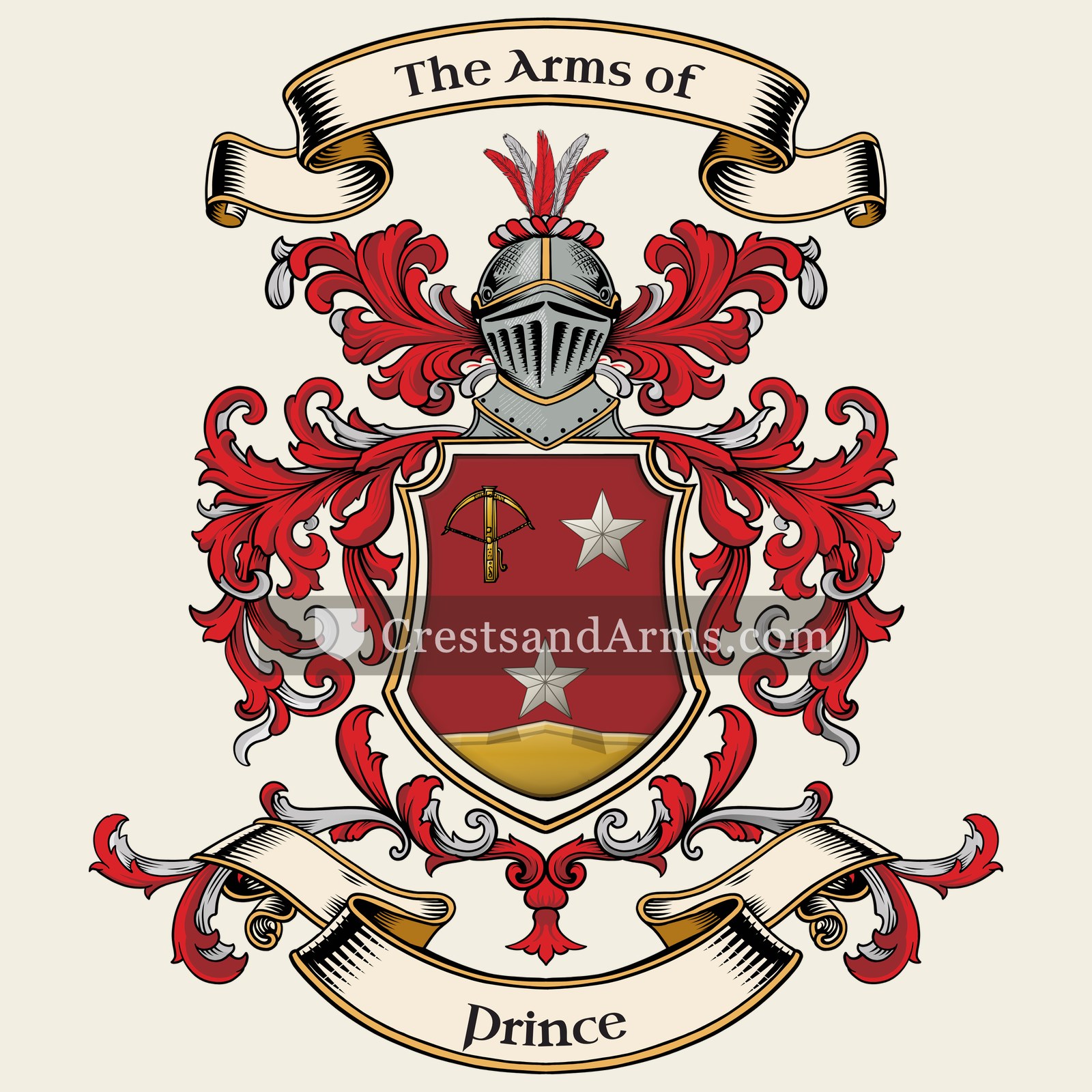
Symbols on this shield
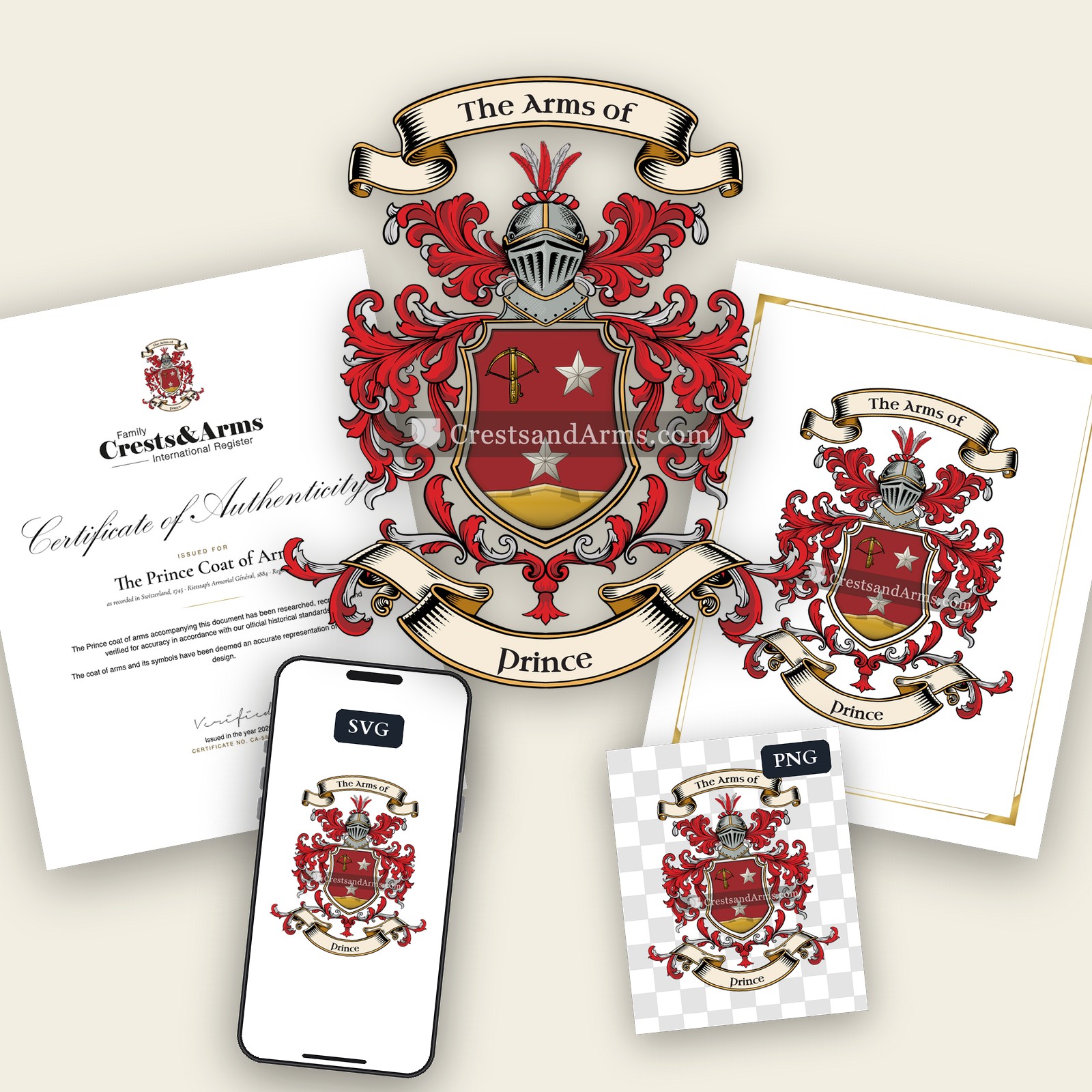
mountThe ground held, and steadfastness upon it
crossbowReadiness for battle and skill at arms
mulletThe third son, and a divine quality from above
Colours
Red (Gules)Means: Military strength
Gold (Or)Means: Generosity
Silver (Argent)Means: Peace and sincerity
Historical info
Source
J. B. Rietstap, Armorial Général, Gouda: G. B. van Goor Zonen, 1884–87
Blazon (the actual original written record)
“De gu. à une arbalète d'or, accostée de deux étoiles (5) d'arg. et surmontant un tertre de trois coupeaux du sec.”
SwitzerlandNeufchâtel, c. 1745
Digital archive packCoat of arms PNG, gold border print PDF, vector SVG and the certificate of authenticity. Sent to your email in minutes.
Map of Switzerland showing where the Prince arms are recorded
The Prince arms were recorded in Neufchâtel, c. 1745.
This is where the arms were entered in the register. Families often moved to other parts of the country, so the same name can turn up in more than one region.
The body that granted and recorded arms in Switzerland in this period.
How Arms Worked in Switzerland
In Switzerland, coats of arms were not restricted to the nobility and were often adopted by common citizens and families. These symbols were passed down through generations to show family identity. When branches of a family grew, they often changed small details of the design to distinguish their own line from the original group.
Granting authority
Cantonal and civic authorities managed the use of coats of arms within their specific regions and local jurisdictions.
How they got arms
Families typically assumed their own coats of arms based on local custom rather than receiving them from a central monarch.
Where arms were recorded
Arms were recorded in various cantonal and civic registers starting from the fourteenth century throughout the Swiss region.
The family's standing
Recorded among the armigerous families of Switzerland.
Origin & History of the Prince Family in Switzerland
The history of the Prince family in Switzerland is deeply rooted in the region of Neuchâtel, where records confirm their presence by the year 1745. During the eighteenth century, Neuchâtel was a unique principality that maintained a complex political relationship with the Prussian monarchy while operating under its own local customs and administrative structures. Families like the Princes often integrated into the local social fabric by participating in the watchmaking industry or agricultural trade that defined the Jura mountain landscape. Because the name itself suggests a connection to leadership or high status, it is likely that early ancestors held positions of local influence or managed land within the cantonal borders. These families were typically part of the Reformed Church, which played a central role in documenting births, marriages, and deaths during this era. By settling in this region, the Prince family became part of a resilient community that navigated the shifting borders and cultural transitions of central Europe throughout the late Enlightenment period.
Coat of Arms & Family Crest Details
Symbols on this shield
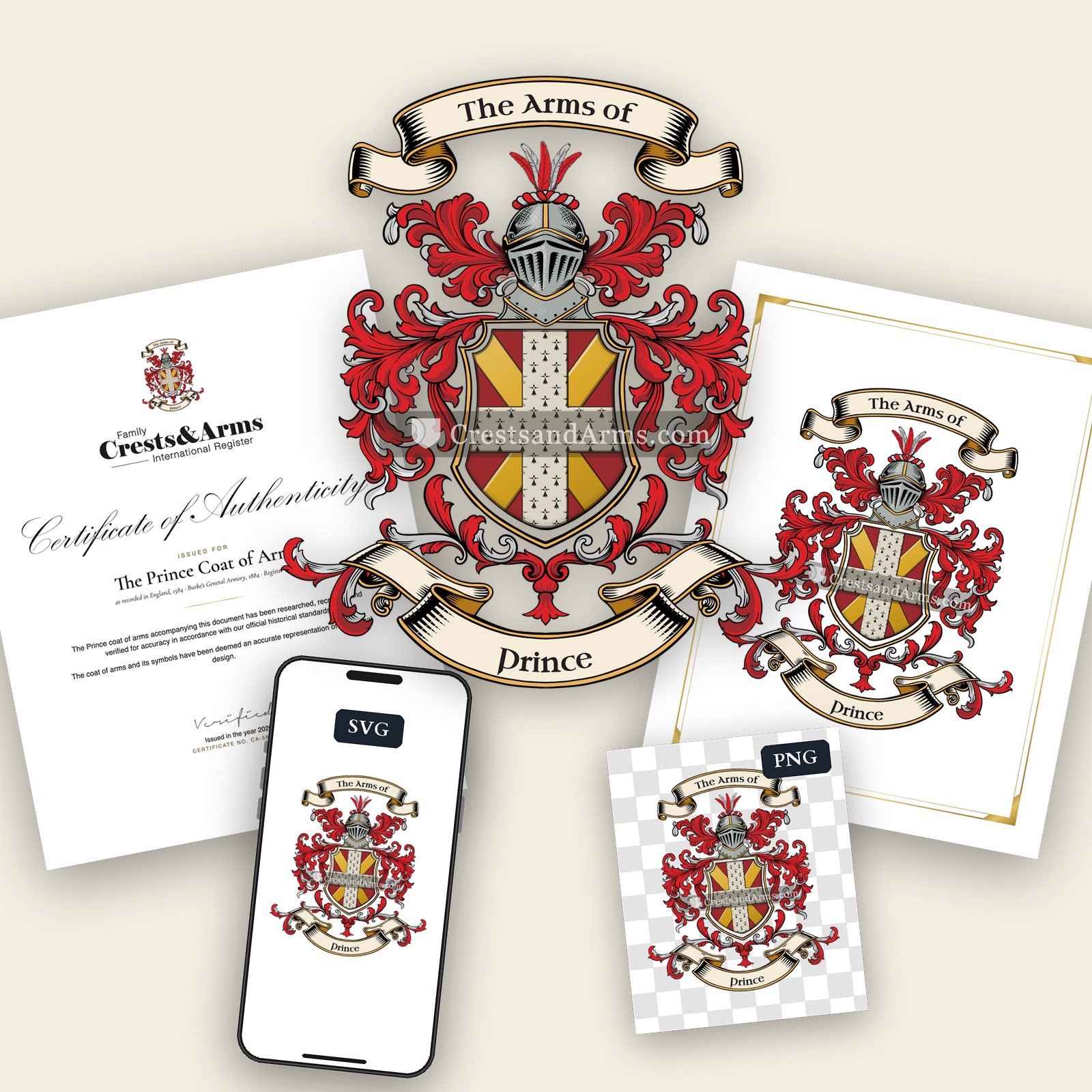
saltireResolution, and St Andrew's cross
cross symbolChristian faith and service
Colours
Red (Gules)Means: Military strength
Gold (Or)Means: Generosity
ErmineMeans: Dignity
Historical info
Source
Sir Bernard Burke, The General Armory of England, Scotland, Ireland and Wales, London: Harrison & Sons, 1884
Blazon (the actual original written record)
“Gu. a saltire or, surmounted of a cross engr. erm”
SalopShrewsbury · Salop, c. 1584
Digital archive packCoat of arms PNG, gold border print PDF, vector SVG and the certificate of authenticity. Sent to your email in minutes.
Map of England showing where the Prince arms are recorded
The Prince arms were recorded in Salop, c. 1584.
Shropshire lay on the Welsh border, and border country needed men who could fight. Families held their land in return for service, and service in arms is what a coat of arms was originally for.
This is where the arms were entered in the register. Families often moved to other parts of the country, so the same name can turn up in more than one region.
The body that granted and recorded arms in England in this period.
Elizabeth I of England
Sovereign of the period
Elizabeth I of England
1558–1603
Reigning in Netherlands when the Prince arms are first recorded.
How Arms Worked in England
English heraldry allowed arms to be shared by all legitimate descendants of the original owner. These symbols were treated as personal property that moved through the generations to all children. While the eldest son kept the original design, other family members could use the same shield without needing to change it or register their own unique versions.
Granting authority
The College of Arms in London has regulated the use of coats of arms throughout England and Wales since 1484.
How they got arms
Families typically obtained their coats of arms through a formal grant from the Crown or by proving their ancient right to them.
Where arms were recorded
All official coats of arms are recorded in the registers kept at the College of Arms, which date back to the fifteenth century.
The family's standing
Recorded among the armigerous families of Salop.
Origin & History of the Prince Family in England
The surname Prince emerged in England as a descriptive name, likely originating from a nickname for someone who acted in a regal manner or perhaps someone who played the role of a prince in medieval pageants and local plays. By the late 16th century, the family established a notable presence in the county of Shropshire, historically known as Salop. Records from 1584 confirm that members of the Prince family were active in this region, where they became integrated into the local social and economic life of the English countryside. During this era, families with this name often worked as landowners or tradespeople, gradually building their influence within their specific parishes. This period marked a time when the name moved from being a simple descriptor to a permanent family identifier passed down through generations of English residents.
Prince Meaning & Related Branches
Root word
princeps
Latin term meaning first in rank or chief leader.
This name
PrinceAn occupational or nickname denoting someone who acted like royalty or served in a princely household.
also spelled
Prynce
Prins
Pryns
Related arms
Prinsvariant spelling
Poolrecorded with Prince, same area
Documented Sources
J. B. Rietstap, Armorial Général, Gouda: G. B. van Goor Zonen, 1884–87
Meertens, P.J., De betekenis van de Nederlandse familienamen, 1970
Tresoar (Fries Historisch en Letterkundig Centrum), Burgerlijke Stand Friesland 1811-1950
Van der Schaar, J., Woordenboek van familienamen, 1992
Digital archive packCoat of arms PNG, gold border print PDF, vector SVG and the certificate of authenticity. Sent to your email in minutes.


 shipEnterprise, and a great voyage undertaken
 flag / pennantA command held, and a following kept
 shipEnterprise, and a great voyage undertaken
 flag / pennantA command held, and a following kept


 mountThe ground held, and steadfastness upon it
 crossbowReadiness for battle and skill at arms
 mulletThe third son, and a divine quality from above

 saltireResolution, and St Andrew's cross
 cross symbolChristian faith and service