A record of documented arms, meaning and origin, researched for the Prior family lines. Documented in 3 countries.
Reg. 3710 · Spanish, P–S
Coat of Arms & Family Crest Details
Symbols on this shield
cross symbolChristian faith and service
mountThe ground held, and steadfastness upon it
ermineDignity and rank
horseshoeGood fortune and protection from harm
lionCourage, strength and royalty
Colours
Red (Gules)Means: Military strength
Silver (Argent)Means: Peace and sincerity
Gold (Or)Means: Generosity
Black (Sable)Means: Constancy
Historical info
Source
J. B. Rietstap, Armorial Général, Gouda: G. B. van Goor Zonen, 1884–87
Blazon (the actual original written record)
“Parti: au 1 de gu. au lion d'or, la tête sommée d'une croisette du même; au 2 coupé: a. d'arg. à un rocher sommé d'un chardonneret, au nat.; b. de sin. à un fer-à-cheval d'or, cloué de sa. L'écu entouré d'une bord. d'arg., ch. de huit mouch. d'herm. de sa.”
Spainc. 1722
Digital archive packCoat of arms PNG, gold border print PDF, vector SVG and the certificate of authenticity. Sent to your email in minutes.
Map of Spain showing where the Prior arms are recorded
The Prior arms were recorded in Spain, c. 1722.
Arms such as these were typically recorded in Castile.
Castile was the heart of Spain and the source of most of its noble families. Land won in the long wars against the Moors was granted out to fighting men, and a man granted land was granted arms along with it.
This is where the arms were entered in the register. Families often moved to other parts of the country, so the same name can turn up in more than one region.
The body that granted and recorded arms in Spain in this period.
Philip V of Spain
Sovereign of the period
Philip V of Spain
1714–1724
Reigning in Spain when the Prior arms are first recorded.
How Arms Worked in Spain
In Spain, a coat of arms was considered a form of property that belonged to the entire family line. These arms were passed down from a father to all his children equally. Younger branches of the family usually kept the original design without needing to add any special marks to distinguish their specific line.
Granting authority
The Cronista Rey de Armas was the official body that regulated and granted coats of arms throughout Spain.
How they got arms
Families often obtained their arms through royal grants or by proving their noble status to the official heraldic authority.
Where arms were recorded
Coats of arms were officially recorded in the registers of the Cronista Rey de Armas starting in 1496.
The family's standing
Recorded among the armigerous families of Spain.
Origin & History of the Prior Family in Spain
The family name Prior originated as a descriptive title, likely referring to an individual who held a position of authority within a religious house or a local administrative office. By the early 18th century, records confirm that members of the family were established in the region of Castile. During this period, Castile served as the political and cultural heart of Spain, and families living there were often deeply integrated into the local social hierarchy. Because the name functioned as a professional designation, those who carried it were frequently associated with church governance or the management of monastic lands. As these individuals settled into the Castilian landscape, they became part of the long-standing tradition of families who maintained records of their lineage through parish registers and local administrative documents. This history highlights how a simple occupational title evolved into a lasting family name that persisted through generations of Spanish life.
Coat of Arms & Family Crest Details
Symbols on this shield
escallopThe pilgrim's shell, and a long journey made
Colours
Red (Gules)Means: Military strength
Silver (Argent)Means: Peace and sincerity
Historical info
Source
Sir Bernard Burke, The General Armory of England, Scotland, Ireland and Wales, London: Harrison & Sons, 1884
Blazon (the actual original written record)
“Gu. three escallops ar”
KentParagon House · Kent, c. 1620
Digital archive packCoat of arms PNG, gold border print PDF, vector SVG and the certificate of authenticity. Sent to your email in minutes.
Map of England showing where the Prior arms are recorded
The Prior arms were recorded in Kent, c. 1620.
Kent sits between London and the short crossing to Europe, and the trade passing through made it wealthy. Merchant families bought land with that money, and it was landowners who took coats of arms.
This is where the arms were entered in the register. Families often moved to other parts of the country, so the same name can turn up in more than one region.
The body that granted and recorded arms in England in this period.
James VI and I
Sovereign of the period
James VI and I
1603–1625
Reigning in Spain when the Prior arms are first recorded.
How Arms Worked in England
English heraldry allowed arms to be shared by all legitimate descendants of the original owner. These symbols were treated as personal property that moved through the generations to all children. While the eldest son kept the original design, other family members could use the same shield without needing to change it or register their own unique versions.
Granting authority
The College of Arms in London has regulated the use of coats of arms throughout England and Wales since 1484.
How they got arms
Families typically obtained their coats of arms through a formal grant from the Crown or by proving their ancient right to them.
Where arms were recorded
All official coats of arms are recorded in the registers kept at the College of Arms, which date back to the fifteenth century.
The family's standing
Recorded among the armigerous families of Kent.
Origin & History of the Prior Family in England
The surname Prior originated in medieval England as an occupational name, identifying individuals who held the position of a prior within a monastery. Because a prior was the official in charge of a religious house, the name was often given to someone who served in that role or perhaps to a person who worked for the local priory. By the time the family was firmly established in Kent during the early 17th century, the name had transitioned from a formal title into a hereditary surname passed down through generations. Records from 1620 suggest that members of the Prior family were already settled in the region, likely participating in the agricultural and local community life that defined the English countryside at that time. As the family grew, they became part of the social fabric of Kent, living through a period of significant religious and political change in England.
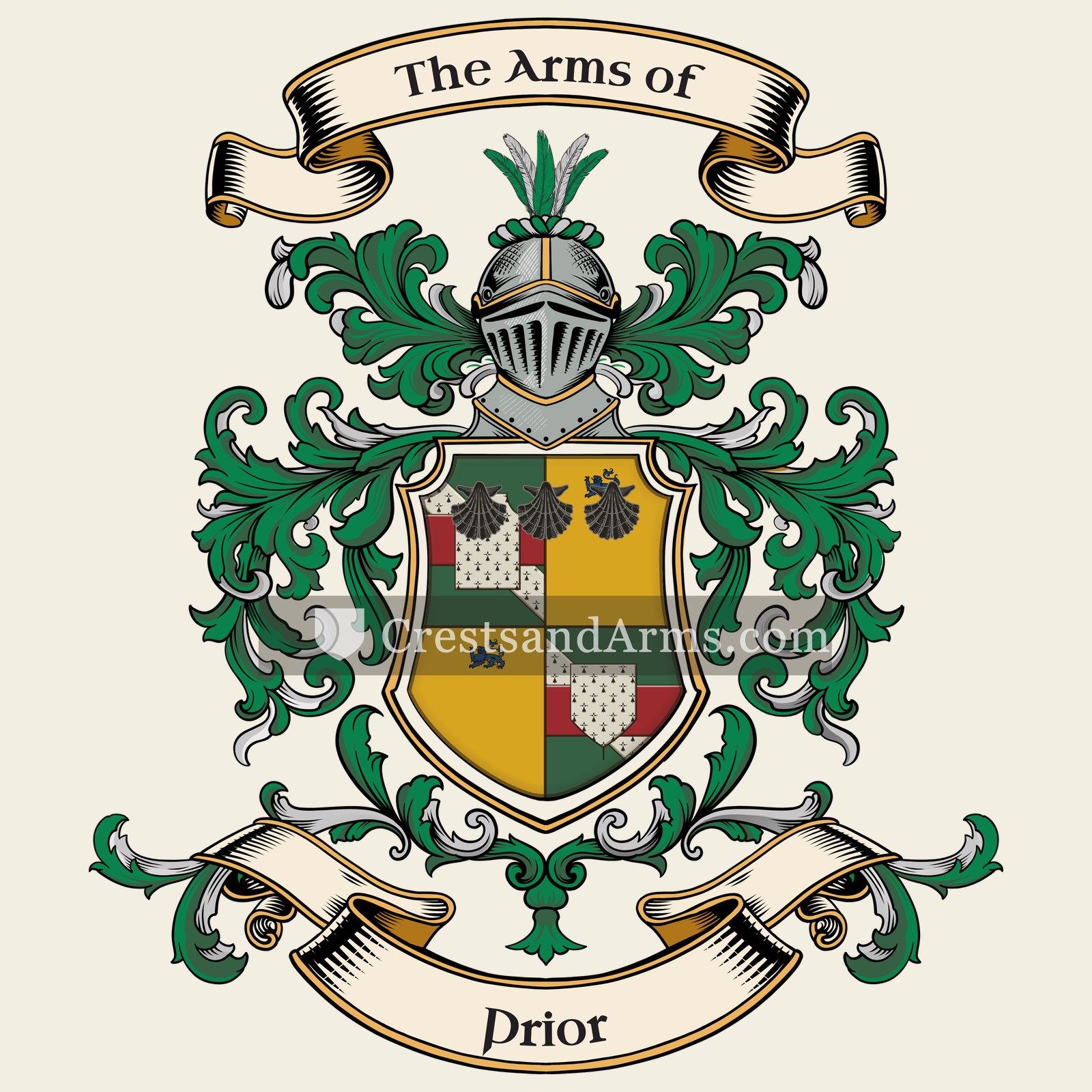
Coat of Arms & Family Crest Details
Symbols on this shield
bendDefence, and the scarf of a commander
fessThe military belt, and readiness to serve
lionCourage, strength and royalty
escallopThe pilgrim's shell, and a long journey made
Colours
Green (Vert)Means: Hope
Gold (Or)Means: Generosity
ErmineMeans: Dignity
Red (Gules)Means: Military strength
Black (Sable)Means: Constancy
Blue (Azure)Means: Loyalty and truth
Historical info
Source
Sir Bernard Burke, The General Armory of England, Scotland, Ireland and Wales, London: Harrison & Sons, 1884
Blazon (the actual original written record)
“Quarterly, 1st and 4th, vert on a bend erm. three chevronels gu., for PRIOR; 2nd and 3rd, per bend or and ar. a fess gu. in chief a lion pass. az., for WALLIS; surmounted by an inescutcheon erm. a lion ramp. gu. in chief three escallops sa., for RUSSELL”
IrelandBarrister-at-law, c. 1645
Digital archive packCoat of arms PNG, gold border print PDF, vector SVG and the certificate of authenticity. Sent to your email in minutes.
Map of Ireland showing where the Prior arms are recorded
The Prior arms were recorded in Barrister-at-law, c. 1645.
Arms such as these were typically recorded in Dublin.
Dublin was the seat of government in Ireland and the place where grants were sought and recorded. Families with business at the castle or the courts settled nearby, and settling there put their arms on record.
This is where the arms were entered in the register. Families often moved to other parts of the country, so the same name can turn up in more than one region.
The body that granted and recorded arms in Ireland in this period.
Charles I of England
Sovereign of the period
Charles I of England
1625–1649
Reigning in Spain when the Prior arms are first recorded.
How Arms Worked in Ireland
The Ulster King of Arms granted coats of arms to individuals who proved their social standing and good character. These symbols were typically inherited by all legitimate descendants of the original holder. If a family branch wanted a unique look, they could apply for a specific change to their design through the office to ensure their identity remained distinct.
Granting authority
The Ulster King of Arms acted as the official body that regulated and issued all coats of arms throughout Ireland.
How they got arms
Families obtained their arms through formal grants issued by the office after proving their eligibility and paying the required fees.
Where arms were recorded
All official grants were recorded in the registers held by the Ulster King of Arms starting from the year 1552.
The family's standing
Recorded among the armigerous families of Ireland.
Origin & History of the Prior Family in Ireland
The surname Prior originated as an occupational title, identifying individuals who held the position of a prior or a high-ranking official within a religious monastery. By the mid-seventeenth century, the name was firmly established in Ireland, with specific records confirming the presence of the Prior family in Dublin by 1645. During this era, Dublin served as a central hub for administration and trade, attracting families who often held roles in civic or ecclesiastical service. As the family settled into the social fabric of the city, they became part of the broader demographic shifts occurring in Ireland during the seventeenth century. Over time, the name transitioned from a description of a religious office into a hereditary family name, reflecting the deep integration of these early settlers into the local community.
Related Branches & Arms
Root word
Prior
Latin term for one who is first or superior in rank.
This name
PriorAn occupational surname for someone who held the position of a monastic leader or head of a priory.
also spelled
Pryor
Pryer
Prier
Related arms
Pryervariant spelling
Griffinrecorded with Prior, same area
Hoeyrecorded with Prior, same area
Staveleyrecorded with Prior, same area
Documented Sources
J. B. Rietstap, Armorial Général, Gouda: G. B. van Goor Zonen, 1884–87
Archivo de la Real Chancillería de Valladolid, Registro de Ejecutorias
Archivo Histórico Nacional, Sección Nobleza
Moll, Francesc de Borja, Els llinatges catalans, 1959
Pescador del Hoyo, María del Carmen, La población de Castilla en el siglo XVIII, 1964
Digital archive packCoat of arms PNG, gold border print PDF, vector SVG and the certificate of authenticity. Sent to your email in minutes.


 cross symbolChristian faith and service
 mountThe ground held, and steadfastness upon it
 ermineDignity and rank
 horseshoeGood fortune and protection from harm
 lionCourage, strength and royalty
 cross symbolChristian faith and service
 mountThe ground held, and steadfastness upon it
 ermineDignity and rank
 horseshoeGood fortune and protection from harm
 lionCourage, strength and royalty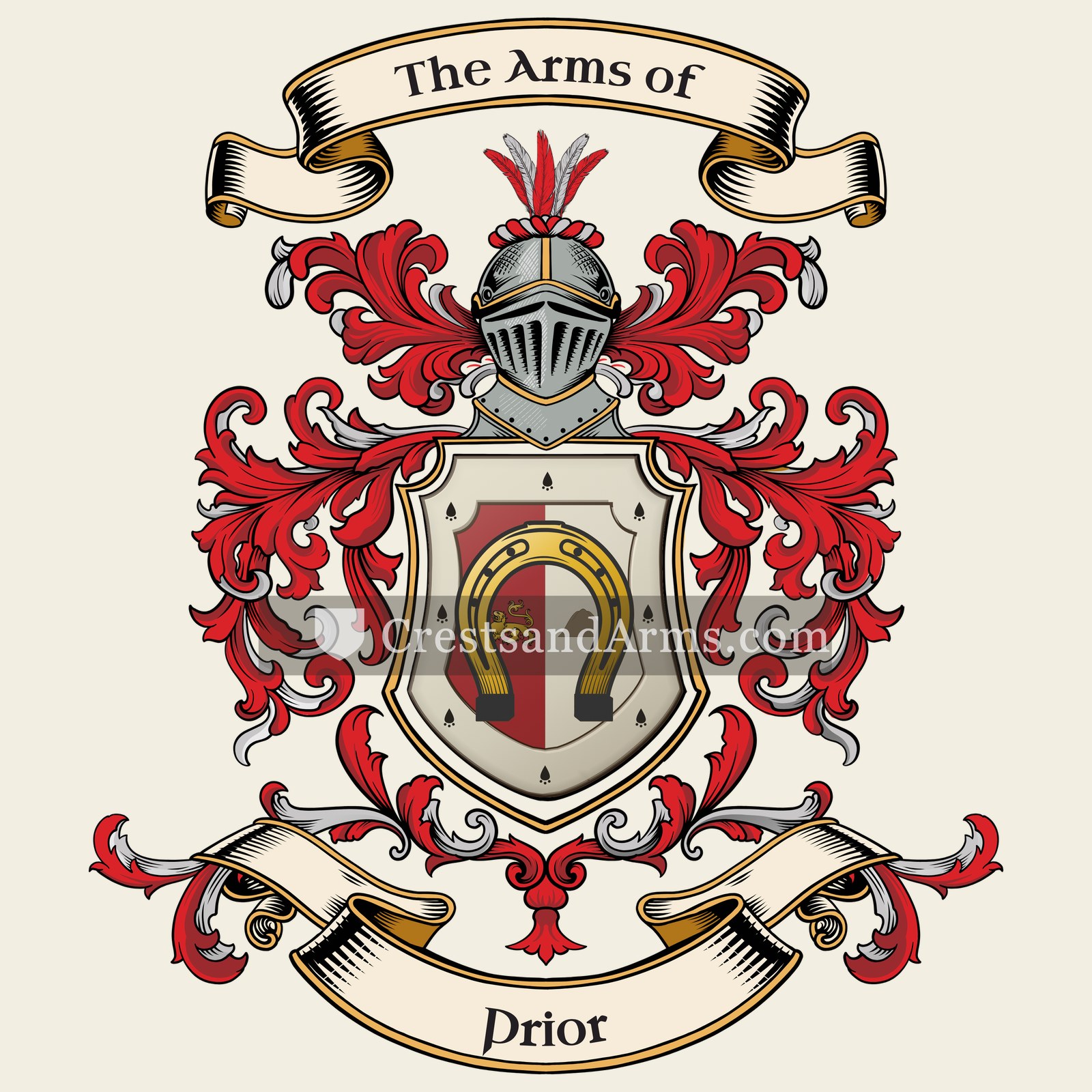


 escallopThe pilgrim's shell, and a long journey made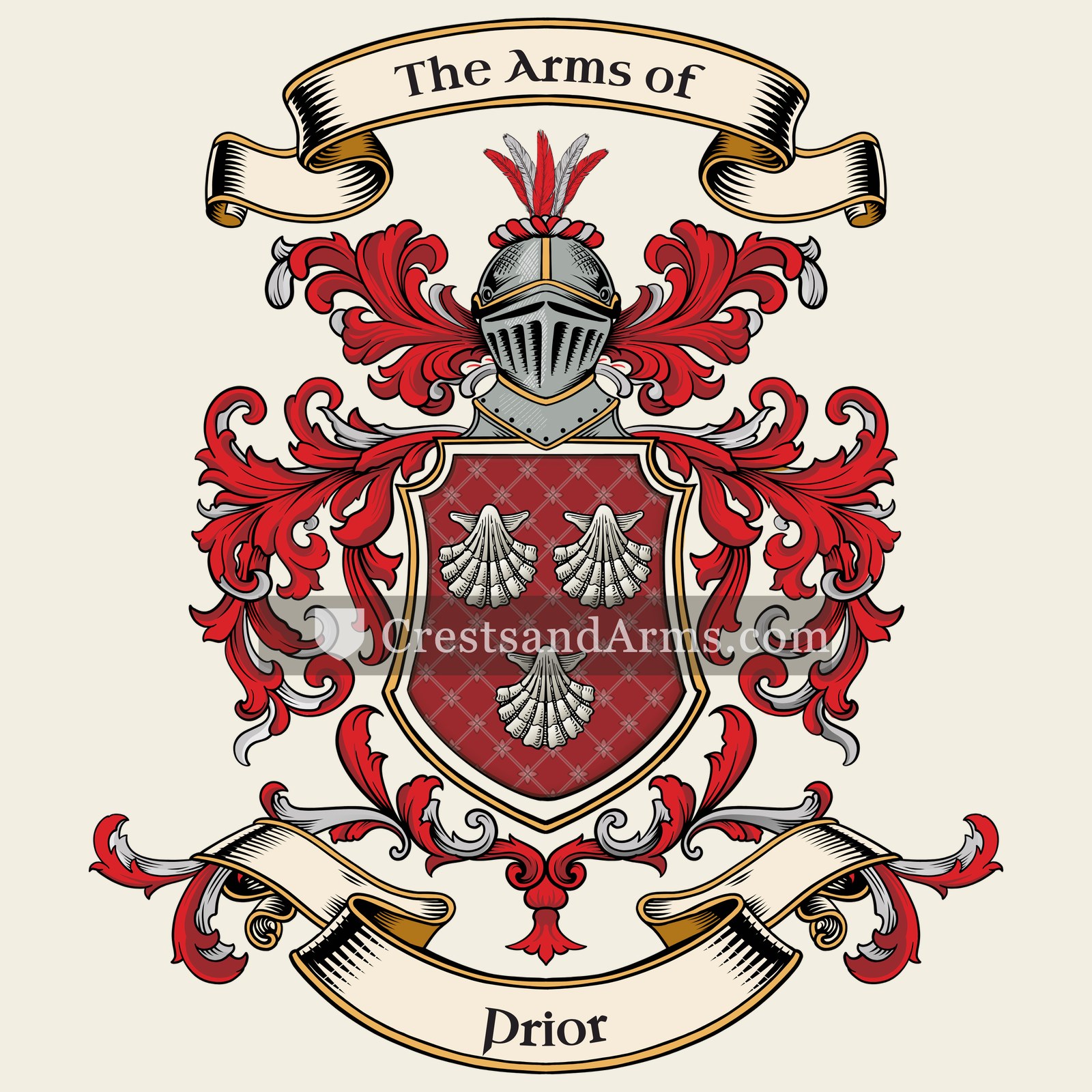


 bendDefence, and the scarf of a commander
 fessThe military belt, and readiness to serve