Map of England showing where the Proctor arms are recorded
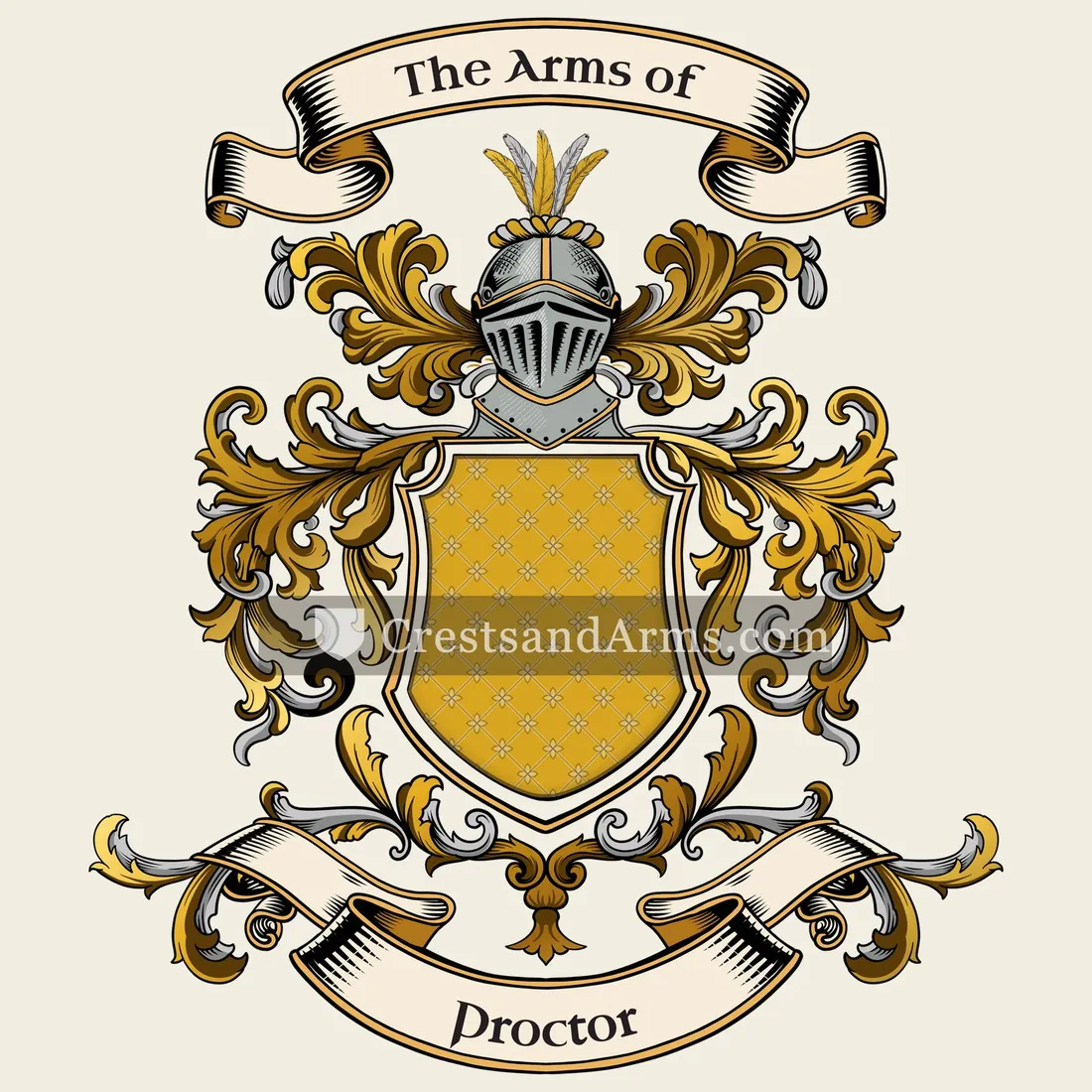
The Proctor arms were recorded in Cambridge, c. 1620.
Cambridgeshire was flat, rich farming country with the university at its centre. Fen drainage made new land and new fortunes, and families who gained by it bought manors and took arms to match.
This is where the arms were entered in the register. Families often moved to other parts of the country, so the same name can turn up in more than one region.
The body that granted and recorded arms in England in this period.
James VI and I
Sovereign of the period
James VI and I
1603–1625
Reigning in England when the Proctor arms are first recorded.
How Arms Worked in England
English heraldry allowed arms to be shared by all legitimate descendants of the original owner. These symbols were treated as personal property that moved through the generations to all children. While the eldest son kept the original design, other family members could use the same shield without needing to change it or register their own unique versions.
Granting authority
The College of Arms in London has regulated the use of coats of arms throughout England and Wales since 1484.
How they got arms
Families typically obtained their coats of arms through a formal grant from the Crown or by proving their ancient right to them.
Where arms were recorded
All official coats of arms are recorded in the registers kept at the College of Arms, which date back to the fifteenth century.
The family's standing
Recorded among the armigerous families of Cambridge.
Origin & History of the Proctor Family in England
The surname Proctor originated in England as a professional title derived from the Latin word *procurator*, which referred to an official who acted on behalf of others. In the medieval period, this term specifically identified someone authorized to manage legal or financial affairs for a church, a university, or a private individual. By the time the family established a presence in Cambridge, England, around 1620, the name had transitioned from a formal job description into a hereditary surname passed down through generations. These early Proctors were often associated with the academic and religious life of the region, reflecting the scholarly roots of the name. As the family moved from these professional roles into civilian life, the name remained a marker of their ancestors' status as trusted representatives within their local communities.
Proctor Meaning & Related Branches
Root word
procurator
A person who manages the affairs of another or acts as agent.
This name
ProctorAn occupational surname for an official, steward, or attorney acting on behalf of others.
also spelled
Procter
Prockter
Proketer
Related arms
Avelingrecorded with Proctor, same area
Buckrecorded with Proctor, same area
Cobbrecorded with Proctor, same area
Gouldwellrecorded with Proctor, same area
Documented Sources
Sir Bernard Burke, The General Armory of England, Scotland, Ireland and Wales, London: Harrison & Sons, 1884
Reaney, P.H. and Wilson, R.M., A Dictionary of English Surnames, 1991
Cottle, Basil, The Penguin Dictionary of Surnames, 1967
Cambridgeshire Archives, Bishop’s Transcripts of Parish Registers, 1600–1650
Digital archive packCoat of arms PNG, gold border print PDF, vector SVG and the certificate of authenticity. Sent to your email in minutes.