Map of Belgium showing where the Prull arms are recorded
The Prull arms were recorded in Brabant, c. 1737.
Brabant lay at the heart of the Low Countries, where the trade routes met. Its towns were wealthy and its landowners many, and both kinds of family kept arms, which is why the region is so heavily represented.
This is where the arms were entered in the register. Families often moved to other parts of the country, so the same name can turn up in more than one region.
The body that granted and recorded arms in Belgium in this period.
Charles VI, Holy Roman Emperor
Sovereign of the period
Charles VI, Holy Roman Emperor
1711–1740
Reigning in Belgium when the Prull arms are first recorded.
How Arms Worked in Belgium
In Belgium, a coat of arms is considered personal property that is passed down through the male line to legitimate descendants. Families often use the same shield design across generations to show their shared heritage. If a branch of the family wants to change the design, they must apply for an official update to their specific version of the arms.
Granting authority
The Conseil héraldique is the official body that regulates and approves all coats of arms in Belgium.
How they got arms
Families obtain their coats of arms through formal royal grants or by confirming their historical right to use existing designs.
Where arms were recorded
All approved coats of arms are officially recorded in the public registers of the Conseil héraldique since 1844.
The family's standing
Recorded among the armigerous families of Brabant.
Origin & History of the Prull Family in Belgium
The family name Prull has deep roots in the historic region of Brabant, where records confirm members of the family were established by 1737. During this period, Brabant was a central hub of trade and agriculture within the Austrian Netherlands. Families like the Prulls often lived in rural or semi-urban communities where they were likely involved in local crafts or land management. Because surnames were becoming more standardized during the eighteenth century, the name Prull likely emerged from a specific local dialect or a descriptive nickname used to identify the family within their parish. Life in Brabant at this time was shaped by the influence of the Catholic Church and the administrative oversight of the local nobility. As the family grew, they became part of the social fabric of the region, navigating the economic shifts and political changes that defined the eighteenth-century Low Countries.
Meaning of the Prull family crest colors & symbols
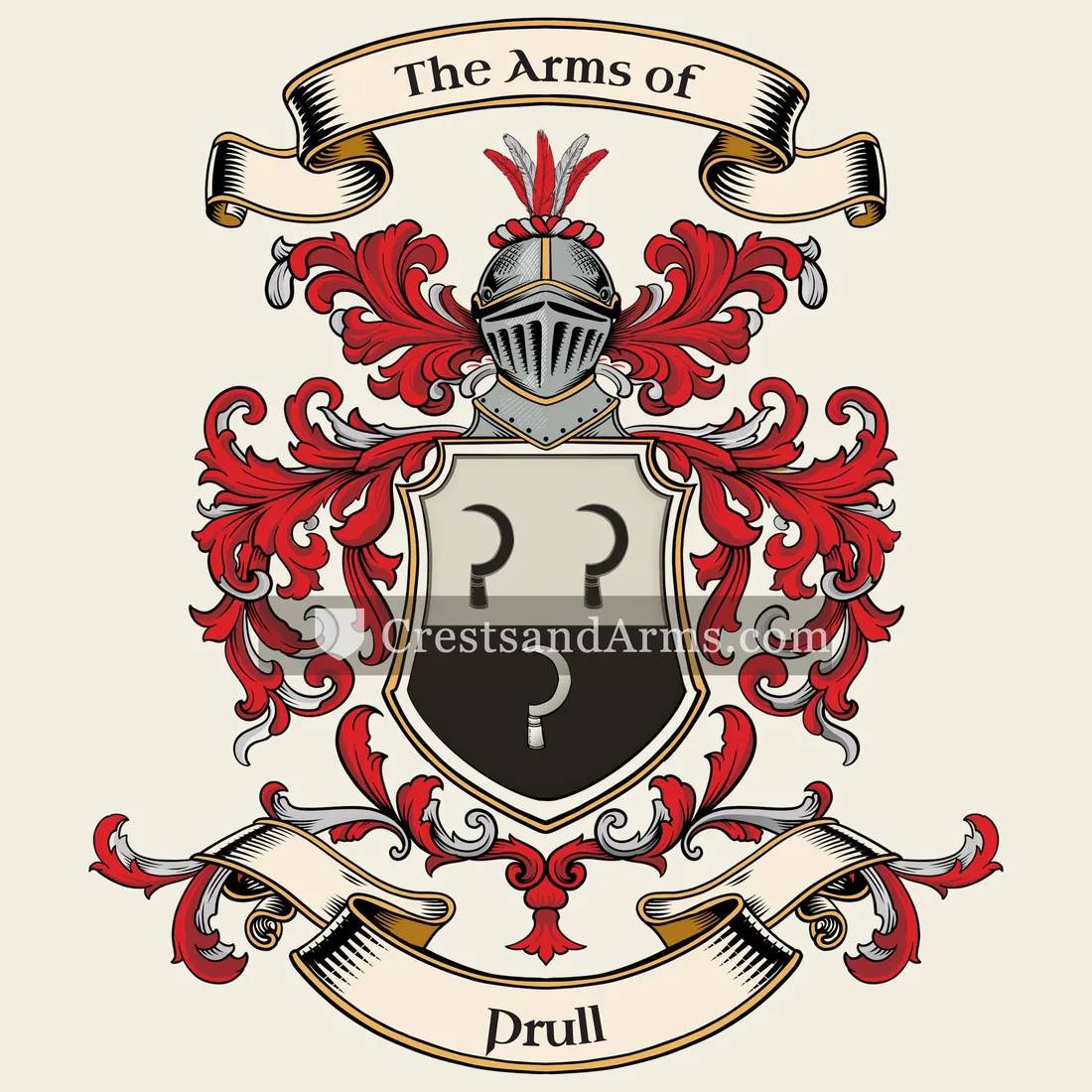
Symbols on this shield
sickleThe harvest, and the reaping of what was sown
Colours
Silver (Argent)Means: Peace and sincerity
Black (Sable)Means: Constancy
Historical info
Source
J. B. Rietstap, Armorial Général, Gouda: G. B. van Goor Zonen, 1884–87
Blazon (the actual original written record)
“Coupé d'arg. sur sa.; à trois bèches de l'un en l'autre, br. sur le coupé, une en pal, les deux autres en saut. C.: un vol à l'antique, aux armes de l'écu.”
GermanyRothenburg Bav, c. 1765
Digital archive packCoat of arms PNG, gold border print PDF, vector SVG and the certificate of authenticity. Sent to your email in minutes.
Map of Germany showing where the Prull arms are recorded
The Prull arms were recorded in Rothenburg Bav, c. 1765.
This is where the arms were entered in the register. Families often moved to other parts of the country, so the same name can turn up in more than one region.
The body that granted and recorded arms in Germany in this period.
Francis I, Holy Roman Emperor
Sovereign of the period
Francis I, Holy Roman Emperor
1745–1765
Reigning in Belgium when the Prull arms are first recorded.
How Arms Worked in Germany
In the Holy Roman Empire, coats of arms were often granted to individuals by the Emperor or his representatives. These arms were then passed down through the generations to all legitimate descendants of the original holder. Younger branches of a family usually kept the same shield design without needing to change it, as the arms belonged to the entire lineage.
Granting authority
The Holy Roman Emperor held the sole power to grant new coats of arms throughout his vast imperial territories.
How they got arms
Families typically obtained their coats of arms through a formal imperial grant or by proving their noble status to the authorities.
Where arms were recorded
These grants were officially recorded in the Imperial Chancery registers, which began keeping formal records of such honors during the Middle Ages.
The family's standing
Recorded among the armigerous families of Germany.
Origin & History of the Prull Family in Germany
The family name Prull has deep roots in the German region of Franconia, where the name was firmly established in the city of Rothenburg ob der Tauber by the mid-18th century. During this era, Rothenburg was a center of trade and craft, and families like the Prulls were often integrated into the local burgher class. The name itself is thought to be a topographic or occupational descriptor, likely originating from Middle High German terms that referred to people living near a specific type of marshy land or a small pond. By 1765, the family was well-documented within the city’s parish records, which served as the primary way for officials to track births, marriages, and deaths for tax and social purposes. These early ancestors were part of a stable community that navigated the complex social changes of the Holy Roman Empire, contributing to the local economy and the cultural life of the walled city.
Prull Meaning & Related Branches
Root word
Prulle
Middle Dutch term for a trifle, worthless object, or small scrap.
This name
PrullA nickname for a person considered insignificant, a peddler of trinkets, or a maker of small items.
also spelled
Prol
Documented Sources
J. B. Rietstap, Armorial Général, Gouda: G. B. van Goor Zonen, 1884–87
State Archives in Belgium (Rijksarchief te België), Parochieregisters: Brabant (Parish Registers: Brabant)
State Archives in Belgium (Rijksarchief te België), Schepenbanken van Brabant (Aldermen's Benches of Brabant)
Fruin, Robert, Geschiedenis der Staatsinstellingen in Nederland tot den val der Republiek (1901)
Wouters, Alphonse, Histoire de la ville de Louvain (1898)
Digital archive packCoat of arms PNG, gold border print PDF, vector SVG and the certificate of authenticity. Sent to your email in minutes.


 paleMilitary strength, and a fortified defence
 chiefAuthority, wisdom and dominion
 paleMilitary strength, and a fortified defence
 chiefAuthority, wisdom and dominion
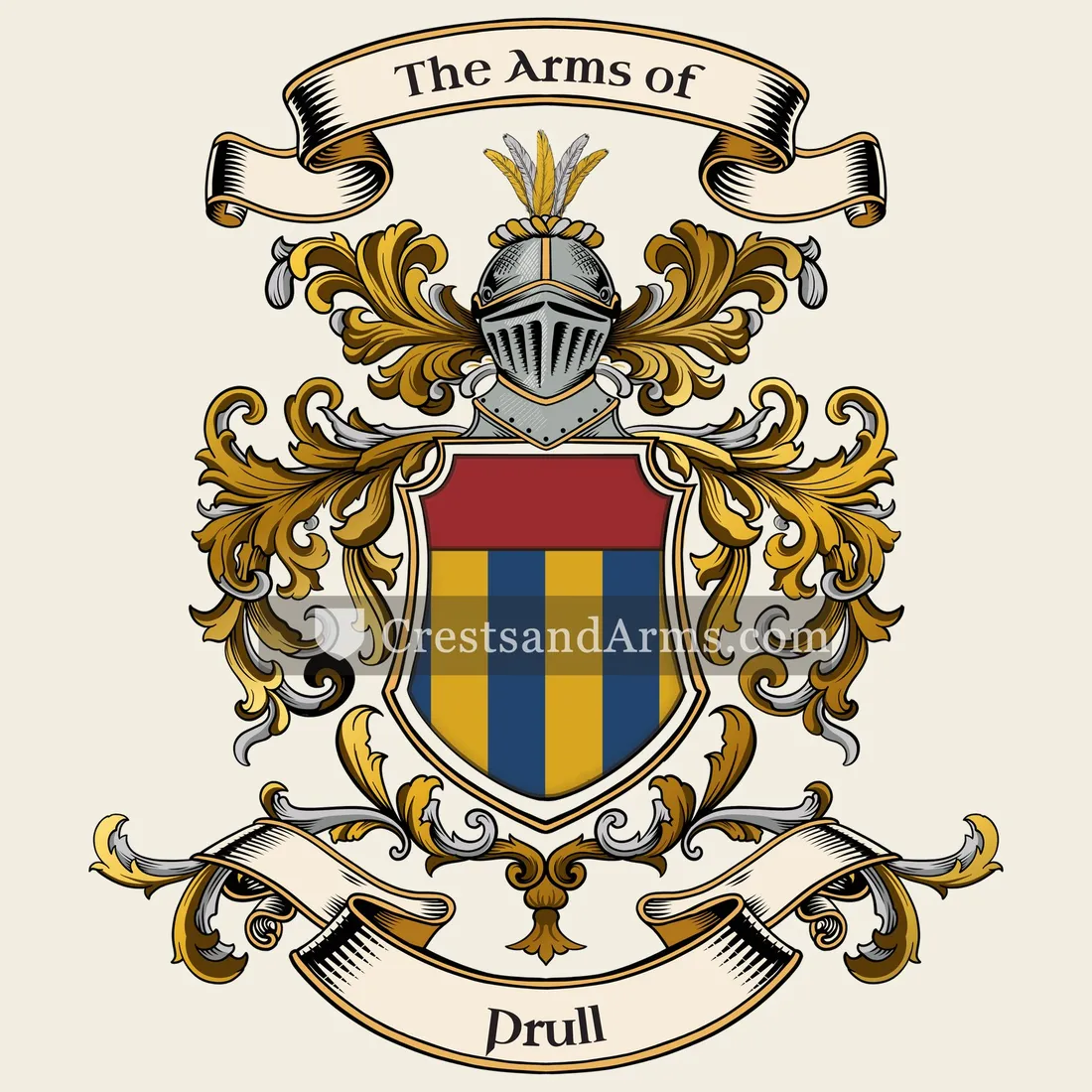


 sickleThe harvest, and the reaping of what was sown