Map of Netherlands showing where the Puche arms are recorded
The Puche arms were recorded in Amsterdam, c. 1815.
This is where the arms were entered in the register. Families often moved to other parts of the country, so the same name can turn up in more than one region.
Region
Amsterdam
Town
Amsterdam
First recorded
1815
Granting Authority for the Puche Arms
Hoge Raad van Adel
Photograph made by me · CC BY-SA 3.0
The body that granted and recorded arms in Netherlands in this period.
William I of the Netherlands
Sovereign of the period
William I of the Netherlands
1815–1840
Reigning in Netherlands when the Puche arms are first recorded.
How Arms Worked in Netherlands
In the Netherlands, coats of arms were often used by noble families and those who held specific public offices. These arms were passed down through the generations to legitimate descendants. Younger branches of a family usually kept the original design without needing to add special marks. This system ensured that the family identity remained clear and consistent over many years.
Granting authority
The Hoge Raad van Adel is the official body that regulates and manages noble titles and coats of arms in the Netherlands.
How they got arms
Families typically obtained their coats of arms through official royal grants or by proving their long-standing historical use of the symbols.
Where arms were recorded
Coats of arms are officially recorded in the registers held by the Hoge Raad van Adel, which began its work in 1814.
The family's standing
Recorded among the armigerous families of Netherlands.
Origin & History of the Puche Family in Netherlands
The history of the Puche family in the Netherlands centers on their life in Amsterdam during the early nineteenth century. By 1815, members of the family were already established residents of this bustling city, which was then recovering from the period of French occupation. During this era, the Dutch government began to formalize civil registration, requiring families to officially record their births, marriages, and deaths in standardized registers. The name Puche likely arrived in the Netherlands through migration patterns common to the time, as Amsterdam served as a major hub for trade and labor. Families with this name were part of the urban working class, contributing to the city’s growth as it transitioned into a modern industrial center. While the name is not native to the Dutch language, the family integrated into the local community by participating in the city's legal and social structures. Their presence in the 1815 records provides a clear snapshot of a family building a new life in a city defined by its history of commerce and cultural exchange.
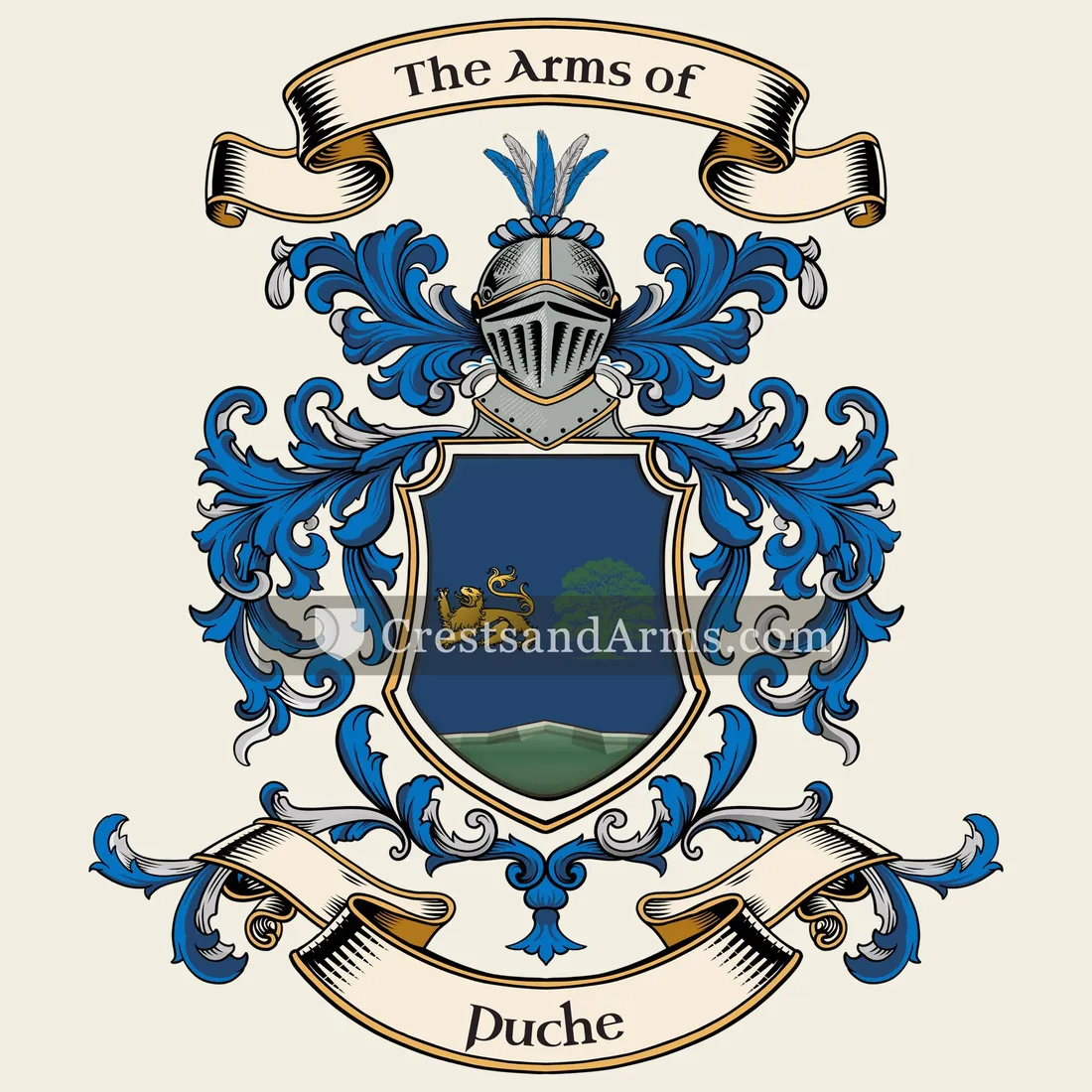
Meaning of the Puche family crest colors & symbols
Symbols on this shield
mountThe ground held, and steadfastness upon it
lionCourage, strength and royalty
treeLife, endurance and deep roots
Colours
Blue (Azure)Means: Loyalty and truth
Green (Vert)Means: Hope
Gold (Or)Means: Generosity
Historical info
Source
J. B. Rietstap, Armorial Général, Gouda: G. B. van Goor Zonen, 1884–87
Blazon (the actual original written record)
“D'azur au lion d'or, s'élançant d'un bosquet de sin., posé à dextre; le tout soutenu d'une terrasse de sin. C.: trois pl. d'aut., une d'or entre deux d'azur. L. d'or et d'azur.”
Germanyc. 1765
Digital archive packCoat of arms PNG, gold border print PDF, vector SVG and the certificate of authenticity. Sent to your email in minutes.
Map of Germany showing where the Puche arms are recorded
The Puche arms were recorded in Germany, c. 1765.
Arms such as these were typically recorded in Bavaria.
Bavaria was a country of old landed families and walled market towns. Estates passed down the same line for centuries, and both the landowners and the leading townsmen kept arms, which is why so many Bavarian names sit in the registers.
This is where the arms were entered in the register. Families often moved to other parts of the country, so the same name can turn up in more than one region.
The body that granted and recorded arms in Germany in this period.
Francis I, Holy Roman Emperor
Sovereign of the period
Francis I, Holy Roman Emperor
1745–1765
Reigning in Netherlands when the Puche arms are first recorded.
How Arms Worked in Germany
In the Holy Roman Empire, coats of arms were often granted to individuals by the Emperor or his representatives. These arms were then passed down through the generations to all legitimate descendants of the original holder. Younger branches of a family usually kept the same shield design without needing to change it, as the arms belonged to the entire lineage.
Granting authority
The Holy Roman Emperor held the sole power to grant new coats of arms throughout his vast imperial territories.
How they got arms
Families typically obtained their coats of arms through a formal imperial grant or by proving their noble status to the authorities.
Where arms were recorded
These grants were officially recorded in the Imperial Chancery registers, which began keeping formal records of such honors during the Middle Ages.
The family's standing
Recorded among the armigerous families of Germany.
Origin & History of the Puche Family in Germany
The family name Puche has deep roots in the historical landscape of Bavaria, where records confirm the presence of family members as early as 1765. During this period, Bavaria was part of the Holy Roman Empire, and the name likely emerged as a descriptive identifier linked to the local geography or the specific trade of its early bearers. In the eighteenth century, many families in this region were closely tied to the land, often living in small agrarian communities where names were passed down through generations to track lineage and property rights. As the family established itself in the Bavarian countryside, they became part of the social fabric of the region, navigating the economic shifts and local governance that defined life in southern Germany. This era was marked by a strong emphasis on parish records, which served as the primary way to document births, marriages, and deaths, ensuring that the Puche name remained a consistent part of the local historical narrative.
Puche Meaning & Related Branches
Root word
Puch
A Middle High German term referring to a hill or mound.
This name
PucheA topographic name for someone who lived near a prominent hill or elevated terrain.
also spelled
Pusche
Push
Documented Sources
J. B. Rietstap, Armorial Général, Gouda: G. B. van Goor Zonen, 1884–87
Stadsarchief Amsterdam, Burgerlijke Stand (Civil Registry), Registers van de Burgerlijke Stand, 1811–1842
H.F.J.M. van den Eerenbeemt, Ontwikkelingslijnen en scharnierpunten in het sociaal-economisch leven van Noord-Nederland, 1978
J.C.H. Blom and E. Lamberts, Geschiedenis van de Nederlanden, 2006
Digital archive packCoat of arms PNG, gold border print PDF, vector SVG and the certificate of authenticity. Sent to your email in minutes.


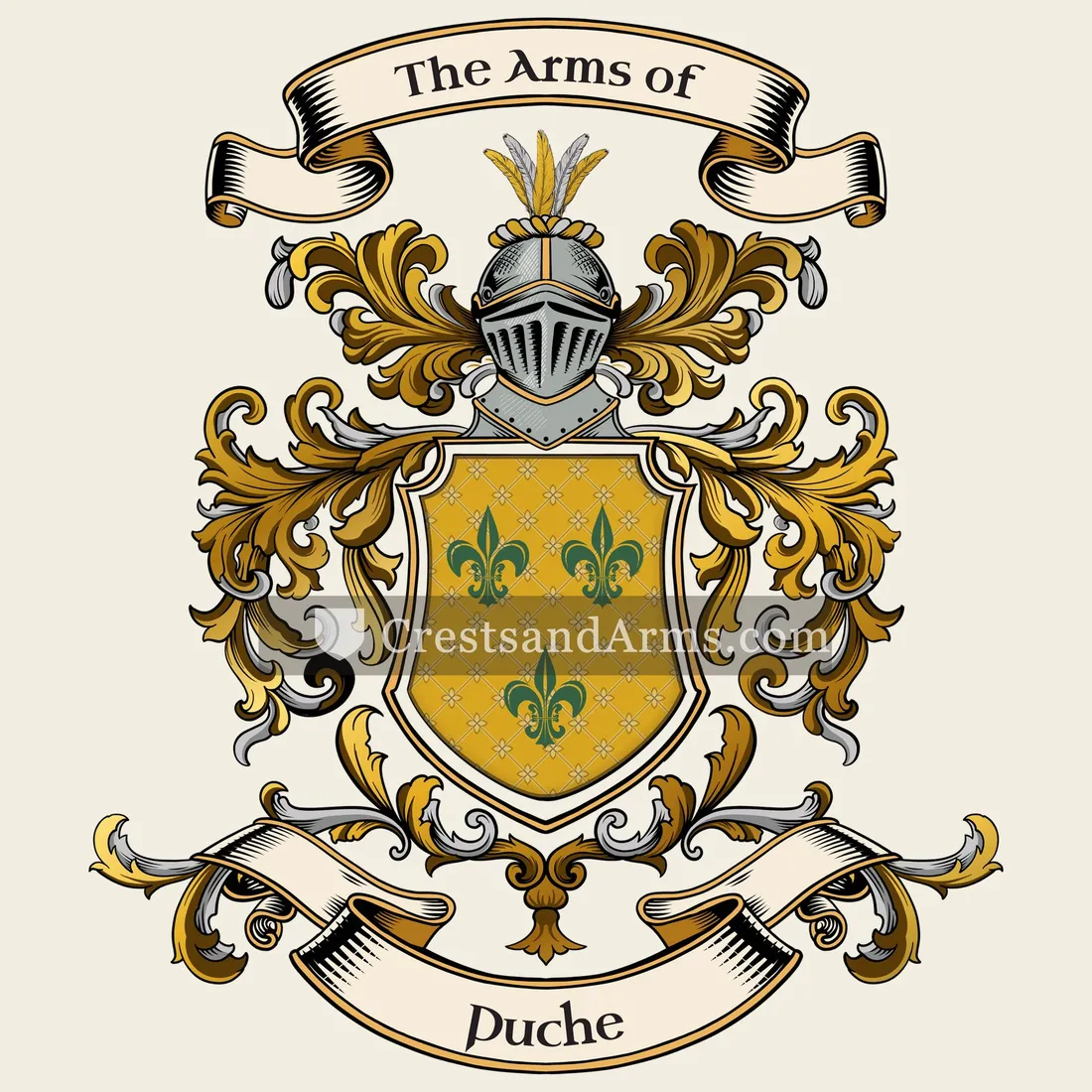
 fleur de lisPurity, light, and the sixth son
 fleur de lisPurity, light, and the sixth son


 mountThe ground held, and steadfastness upon it
 lionCourage, strength and royalty
 treeLife, endurance and deep roots