Map of Belgium showing where the Purol arms are recorded
The Purol arms were recorded in Brabant, c. 1737.
Brabant lay at the heart of the Low Countries, where the trade routes met. Its towns were wealthy and its landowners many, and both kinds of family kept arms, which is why the region is so heavily represented.
This is where the arms were entered in the register. Families often moved to other parts of the country, so the same name can turn up in more than one region.
The body that granted and recorded arms in Belgium in this period.
Charles VI, Holy Roman Emperor
Sovereign of the period
Charles VI, Holy Roman Emperor
1711–1740
Reigning in Belgium when the Purol arms are first recorded.
How Arms Worked in Belgium
In Belgium, a coat of arms is considered personal property that is passed down through the male line to legitimate descendants. Families often use the same shield design across generations to show their shared heritage. If a branch of the family wants to change the design, they must apply for an official update to their specific version of the arms.
Granting authority
The Conseil héraldique is the official body that regulates and approves all coats of arms in Belgium.
How they got arms
Families obtain their coats of arms through formal royal grants or by confirming their historical right to use existing designs.
Where arms were recorded
All approved coats of arms are officially recorded in the public registers of the Conseil héraldique since 1844.
The family's standing
Recorded among the armigerous families of Brabant.
Origin & History of the Purol Family in Belgium
The history of the Purol family in Belgium is rooted in the fertile lands of the Brabant region, where records confirm their presence as early as 1737. During this period, Brabant was a central hub of agricultural and economic activity under the rule of the Austrian Netherlands. Families like the Purols were typically part of the local rural community, often working as skilled laborers or tenant farmers who maintained the traditions of the village. Because the name appears in parish registers from the eighteenth century, it is likely that the family was well-integrated into the social fabric of the local church and community life. These early ancestors lived through a time of transition as the region navigated shifting political borders and the slow modernization of farming practices. By settling in Brabant, the Purol family established a foundation that allowed them to remain a part of the regional history for generations to come.
Coat of Arms & Family Crest Details
Symbols on this shield
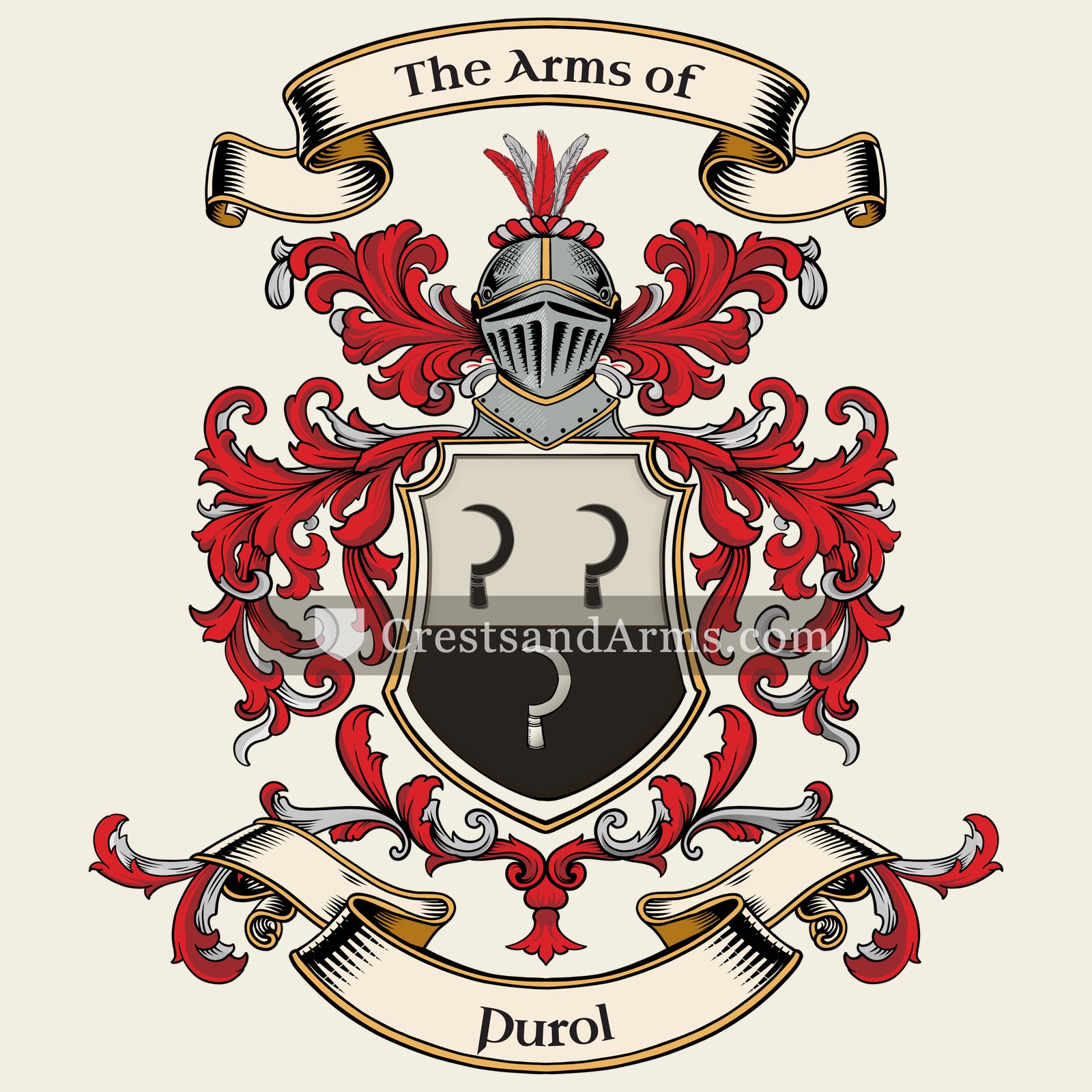
saltireResolution, and St Andrew's cross
sickleThe harvest, and the reaping of what was sown
Colours
Silver (Argent)Means: Peace and sincerity
Black (Sable)Means: Constancy
Historical info
Source
J. B. Rietstap, Armorial Général, Gouda: G. B. van Goor Zonen, 1884–87
Blazon (the actual original written record)
“Coupé d'arg. sur sa.; à trois bèches de l'un en l'autre, br. sur le coupé, une en pal, les deux autres en saut. C.: un vol à l'antique, aux armes de l'écu.”
GermanyRothenburg Bav, c. 1765
Digital archive packCoat of arms PNG, gold border print PDF, vector SVG and the certificate of authenticity. Sent to your email in minutes.
Map of Germany showing where the Purol arms are recorded
The Purol arms were recorded in Rothenburg Bav, c. 1765.
This is where the arms were entered in the register. Families often moved to other parts of the country, so the same name can turn up in more than one region.
The body that granted and recorded arms in Germany in this period.
Francis I, Holy Roman Emperor
Sovereign of the period
Francis I, Holy Roman Emperor
1745–1765
Reigning in Belgium when the Purol arms are first recorded.
How Arms Worked in Germany
In the Holy Roman Empire, coats of arms were often granted to individuals by the Emperor or his representatives. These arms were then passed down through the generations to all legitimate descendants of the original holder. Younger branches of a family usually kept the same shield design without needing to change it, as the arms belonged to the entire lineage.
Granting authority
The Holy Roman Emperor held the sole power to grant new coats of arms throughout his vast imperial territories.
How they got arms
Families typically obtained their coats of arms through a formal imperial grant or by proving their noble status to the authorities.
Where arms were recorded
These grants were officially recorded in the Imperial Chancery registers, which began keeping formal records of such honors during the Middle Ages.
The family's standing
Recorded among the armigerous families of Germany.
Origin & History of the Purol Family in Germany
The family name Purol is deeply rooted in the historical landscape of the Franconia region in Germany. By the year 1765, records confirm that members of the family were established residents of the medieval town of Rothenburg ob der Tauber. During this period, Rothenburg was a center of trade and craft, and families like the Purols were often integrated into the local guild systems that defined town life. The name itself likely evolved from regional dialects or occupational descriptors common to the Germanic populations of the eighteenth century. As residents of a walled imperial city, the early Purol family lived through a time of significant transition as the Holy Roman Empire began to shift toward the modern era. Their presence in such a well-documented town suggests they were part of the stable middle class that maintained the social and economic fabric of German society during the late Enlightenment.
Related Branches & Arms
Root word
purus
Latin term meaning clean, pure, or unblemished.
This name
PurolA descriptive surname likely referring to a person of pure character or clean habits.
also spelled
Prol
Documented Sources
J. B. Rietstap, Armorial Général, Gouda: G. B. van Goor Zonen, 1884–87
State Archives in Belgium (Rijksarchief in België), Parochieregisters van de provincie Brabant
State Archives in Belgium (Rijksarchief in België), Burgerlijke Stand van de provincie Brabant
Wauters, Alphonse, Histoire des environs de Bruxelles, 1855
Verhulst, Adriaan, Précis d'histoire rurale de la Belgique, 1990
Digital archive packCoat of arms PNG, gold border print PDF, vector SVG and the certificate of authenticity. Sent to your email in minutes.


 paleMilitary strength, and a fortified defence
 chiefAuthority, wisdom and dominion
 paleMilitary strength, and a fortified defence
 chiefAuthority, wisdom and dominion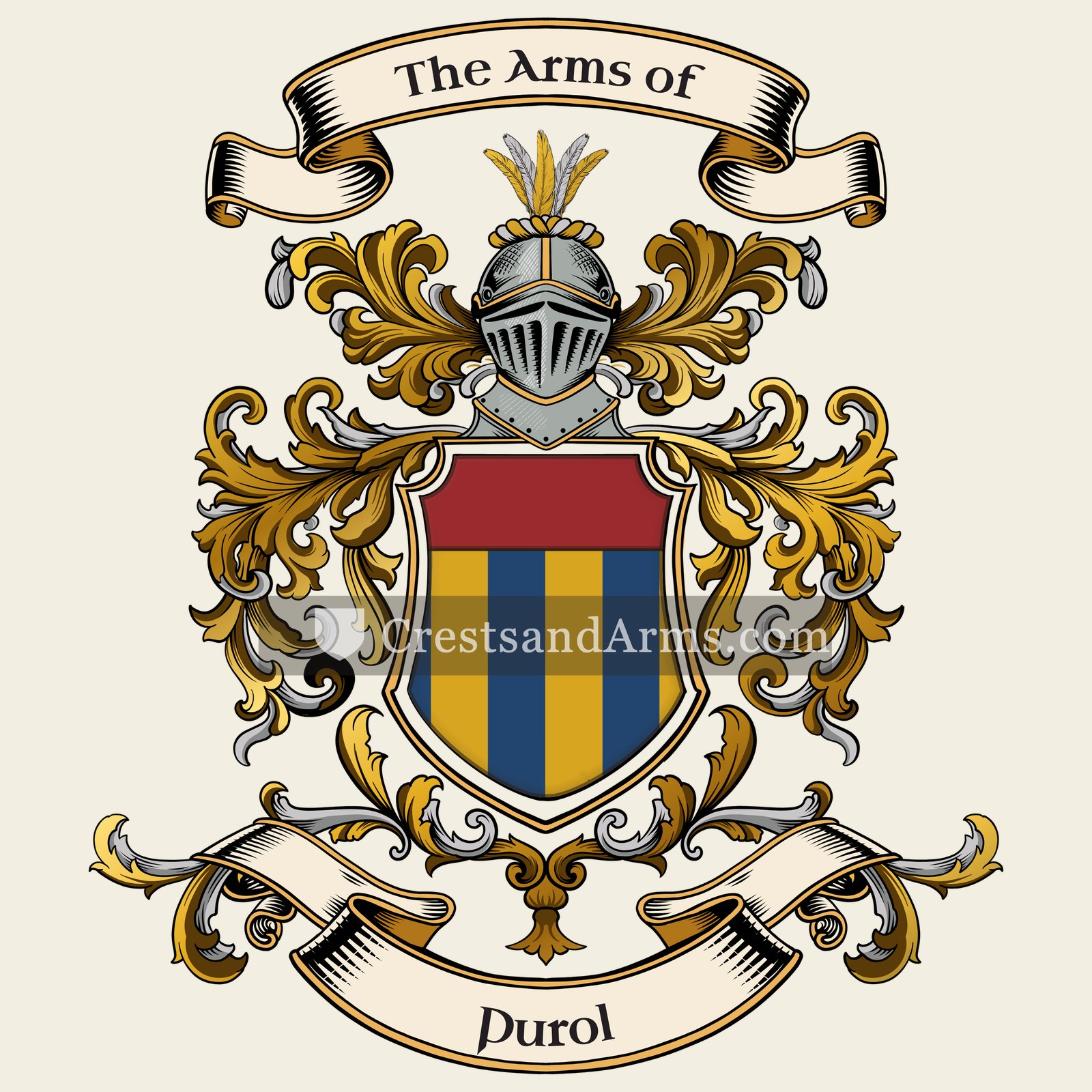


 saltireResolution, and St Andrew's cross
 sickleThe harvest, and the reaping of what was sown