Map of Netherlands showing where the Rahim arms are recorded
The Rahim arms were recorded in Netherlands, c. 1815.
Arms such as these were typically recorded in Friesland.
Friesland was low, wet country on the northern coast of the Netherlands, farmed by families who had held the same land for centuries. Free landholders were unusually common there, and a free landholder could carry arms.
This is where the arms were entered in the register. Families often moved to other parts of the country, so the same name can turn up in more than one region.
Region
Friesland
First recorded
1815
Granting Authority for the Rahim Arms
Hoge Raad van Adel
Photograph made by me · CC BY-SA 3.0
The body that granted and recorded arms in Netherlands in this period.
William I of the Netherlands
Sovereign of the period
William I of the Netherlands
1815–1840
Reigning in Netherlands when the Rahim arms are first recorded.
How Arms Worked in Netherlands
In the Netherlands, coats of arms were often used by noble families and those who held specific public offices. These arms were passed down through the generations to legitimate descendants. Younger branches of a family usually kept the original design without needing to add special marks. This system ensured that the family identity remained clear and consistent over many years.
Granting authority
The Hoge Raad van Adel is the official body that regulates and manages noble titles and coats of arms in the Netherlands.
How they got arms
Families typically obtained their coats of arms through official royal grants or by proving their long-standing historical use of the symbols.
Where arms were recorded
Coats of arms are officially recorded in the registers held by the Hoge Raad van Adel, which began its work in 1814.
The family's standing
Recorded among the armigerous families of Netherlands.
Origin & History of the Rahim Family in Netherlands
The history of the Rahim family in the Netherlands begins in the early nineteenth century, specifically appearing in the historical records of Friesland by 1815. During this period, the Netherlands was undergoing significant administrative changes, including the implementation of the Napoleonic civil registry, which required families to formally register their surnames for the first time. The presence of the Rahim name in this northern province suggests a unique migration story, as the name itself carries roots that trace back to Arabic origins meaning merciful or compassionate. While many families in Friesland held traditional Frisian names, the arrival and integration of the Rahim family highlights the diverse movement of people across Europe during the post-Napoleonic era. These early ancestors likely navigated the challenges of a new social landscape while maintaining their distinct identity within the local Frisian community. Their inclusion in the 1815 records serves as a vital anchor point, marking the moment their family history became officially woven into the broader tapestry of Dutch society.
Meaning of the Rahim family crest colors & symbols
Symbols on this shield
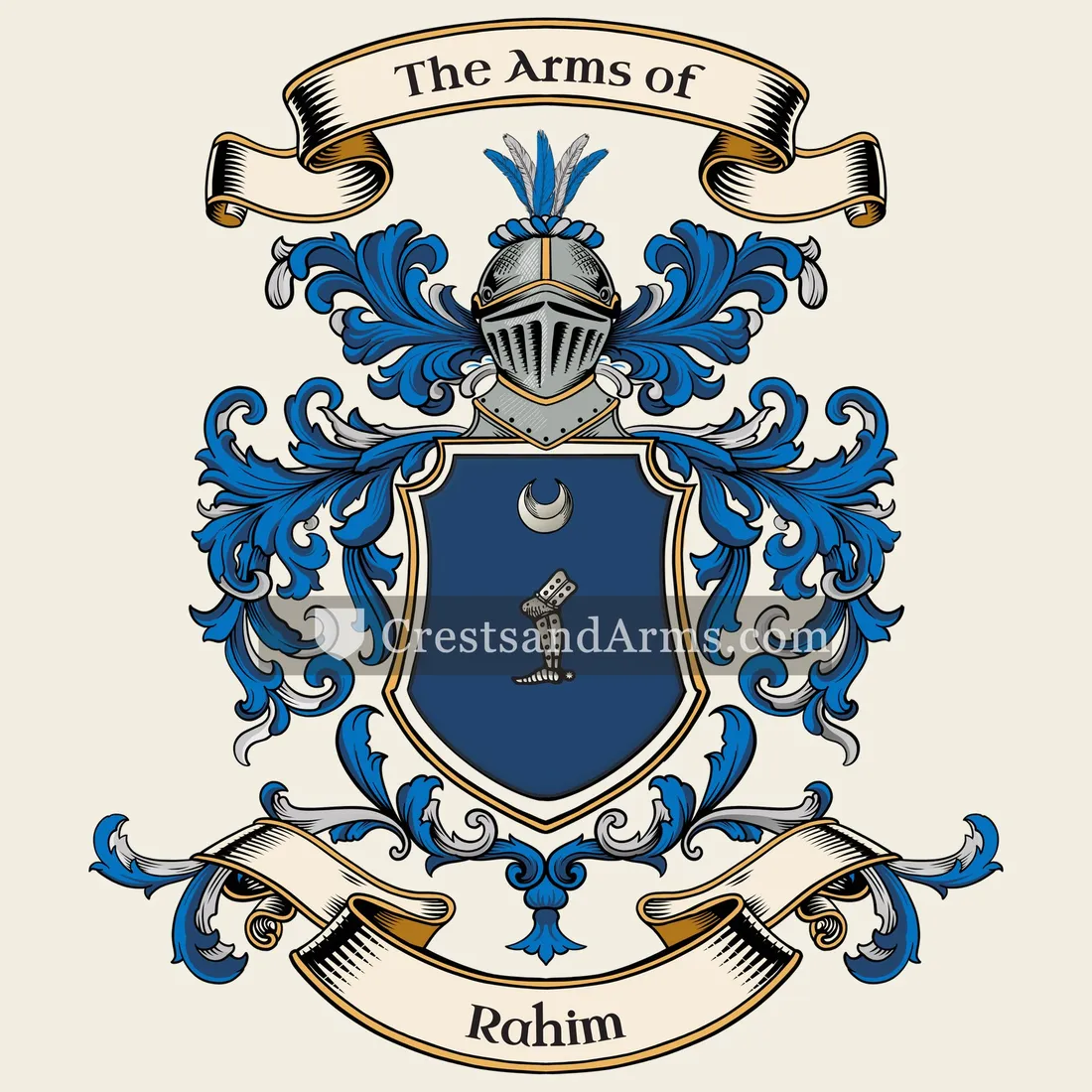
legStrength and swiftness
crescentHonour by the sovereign, and the second son
Colours
Blue (Azure)Means: Loyalty and truth
Silver (Argent)Means: Peace and sincerity
Historical info
Source
J. B. Rietstap, Armorial Général, Gouda: G. B. van Goor Zonen, 1884–87
Blazon (the actual original written record)
“D'azur à un membre d'aigle d'arg., surmontant un croiss. du même. C.: trois pl. d'aut., une d'azur entre deux d'or.”
Swedenc. 1625
Digital archive packCoat of arms PNG, gold border print PDF, vector SVG and the certificate of authenticity. Sent to your email in minutes.
Map of Sweden showing where the Rahim arms are recorded
The Rahim arms were recorded in Sweden, c. 1625.
Arms such as these were typically recorded in Stockholm.
Stockholm held the Swedish court and the House of Nobility, where every noble family's arms were entered and kept. Families ennobled for service registered there, which is why so many are recorded around the city.
This is where the arms were entered in the register. Families often moved to other parts of the country, so the same name can turn up in more than one region.
The body that granted and recorded arms in Sweden in this period.
Gustavus Adolphus of Sweden
Sovereign of the period
Gustavus Adolphus of Sweden
1611–1632
Reigning in Netherlands when the Rahim arms are first recorded.
How Arms Worked in Sweden
In Sweden, a coat of arms belonged to a noble family as a whole rather than just one individual. These arms were passed down through the generations to all legitimate descendants. Younger branches of the family used the same shield without needing to change it. This system ensured that the entire lineage shared the same identity and status under the law.
Granting authority
The Riddarhuset, or House of Nobility, regulated all noble coats of arms in Sweden under royal authority.
How they got arms
Families received their coats of arms through royal grants of nobility which were then officially registered with the House.
Where arms were recorded
Coats of arms were officially recorded in the Swedish House of Nobility register starting in the year 1626.
The family's standing
Recorded among the armigerous families of Sweden.
Origin & History of the Rahim Family in Sweden
The history of the Rahim family in Sweden begins in the early seventeenth century, marking a unique chapter in the nation's cultural development. Historical records confirm that members of the family were established in Stockholm by 1625, a time when the city was rapidly growing into a major European capital. During this period, Stockholm served as a melting pot for merchants, diplomats, and skilled laborers arriving from various parts of the world. The presence of the Rahim name in these early city archives suggests that the family integrated into the urban fabric of the Swedish capital during the reign of King Gustav II Adolf. While the name itself carries roots that stretch far beyond the borders of Scandinavia, its early documentation in Sweden reflects the family's role in the diverse social and economic life of the seventeenth-century Baltic region. By settling in Stockholm during this era, the family became part of the long tradition of international influence that helped shape the city into the cosmopolitan center it is today.
Meaning of the Rahim family crest colors & symbols
Symbols on this shield
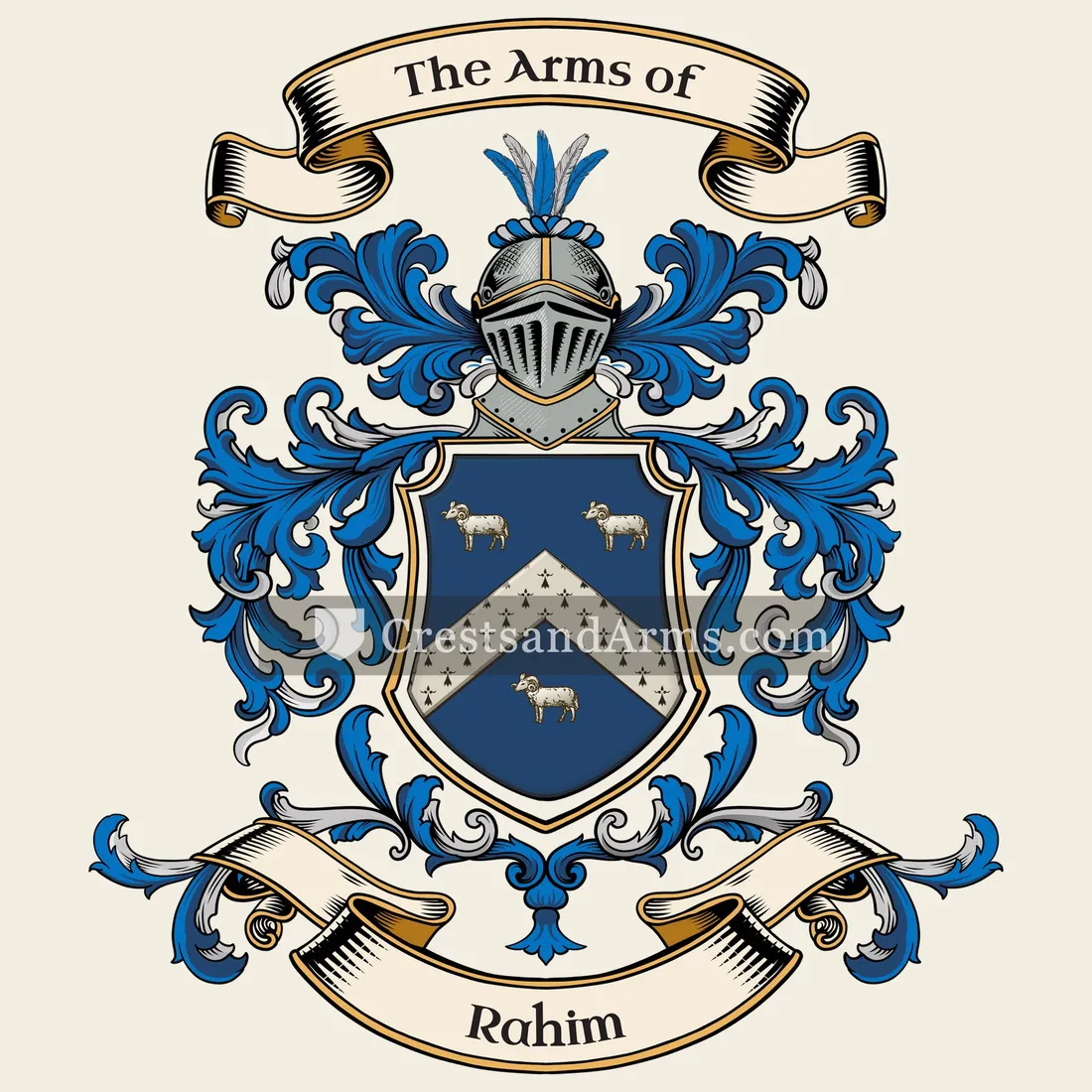
chevronProtection, and faithful service completed
ramLeadership and authority
Colours
Blue (Azure)Means: Loyalty and truth
ErmineMeans: Dignity
Silver (Argent)Means: Peace and sincerity
Historical info
Source
Sir Bernard Burke, The General Armory of England, Scotland, Ireland and Wales, London: Harrison & Sons, 1884
Blazon (the actual original written record)
“Az. a chev. erm. betw. three rams' heads cabossed ar”
EssexHornchurch · Essex, c. 1620
Digital archive packCoat of arms PNG, gold border print PDF, vector SVG and the certificate of authenticity. Sent to your email in minutes.
Map of England showing where the Rahim arms are recorded
The Rahim arms were recorded in Essex, c. 1620.
Essex lay close enough to London for City money to buy land there. Merchants who prospered moved out to estates within a day's ride, and a new landowner almost always wanted arms to go with the ground.
This is where the arms were entered in the register. Families often moved to other parts of the country, so the same name can turn up in more than one region.
The body that granted and recorded arms in England in this period.
James VI and I
Sovereign of the period
James VI and I
1603–1625
Reigning in Netherlands when the Rahim arms are first recorded.
How Arms Worked in England
English heraldry allowed arms to be shared by all legitimate descendants of the original owner. These symbols were treated as personal property that moved through the generations to all children. While the eldest son kept the original design, other family members could use the same shield without needing to change it or register their own unique versions.
Granting authority
The College of Arms in London has regulated the use of coats of arms throughout England and Wales since 1484.
How they got arms
Families typically obtained their coats of arms through a formal grant from the Crown or by proving their ancient right to them.
Where arms were recorded
All official coats of arms are recorded in the registers kept at the College of Arms, which date back to the fifteenth century.
The family's standing
Recorded among the armigerous families of Essex.
Origin & History of the Rahim Family in England
The history of the Rahim family in England begins with documented evidence of members living in the county of Essex as early as 1620. During the seventeenth century, Essex was a region defined by its close proximity to London and its bustling agricultural trade, which likely provided a stable environment for new families to establish roots. While the name itself carries deep linguistic roots in Arabic, meaning mercy or compassion, its appearance in English parish records from this period suggests that the family integrated into the local social fabric of the English countryside. These early settlers were part of a broader movement of people who navigated the changing religious and economic landscapes of Stuart-era England. By maintaining a presence in Essex, the family became part of the local history of the region, contributing to the diverse demographic tapestry that defined rural communities during the early modern period.
Rahim Meaning & Related Branches
Root word
Rahima
Arabic root meaning to have mercy, compassion, or kindness.
This name
RahimDerived from an Arabic term signifying the compassionate or the merciful one.
also spelled
Raam
Ramm
Ramme
Documented Sources
J. B. Rietstap, Armorial Général, Gouda: G. B. van Goor Zonen, 1884–87
Tresoar (Fries Historisch en Letterkundig Centrum), Burgerlijke Stand van Friesland, 1811-1950
Nationaal Archief, Registers van de Burgerlijke Stand, 1811-1815
Digital archive packCoat of arms PNG, gold border print PDF, vector SVG and the certificate of authenticity. Sent to your email in minutes.


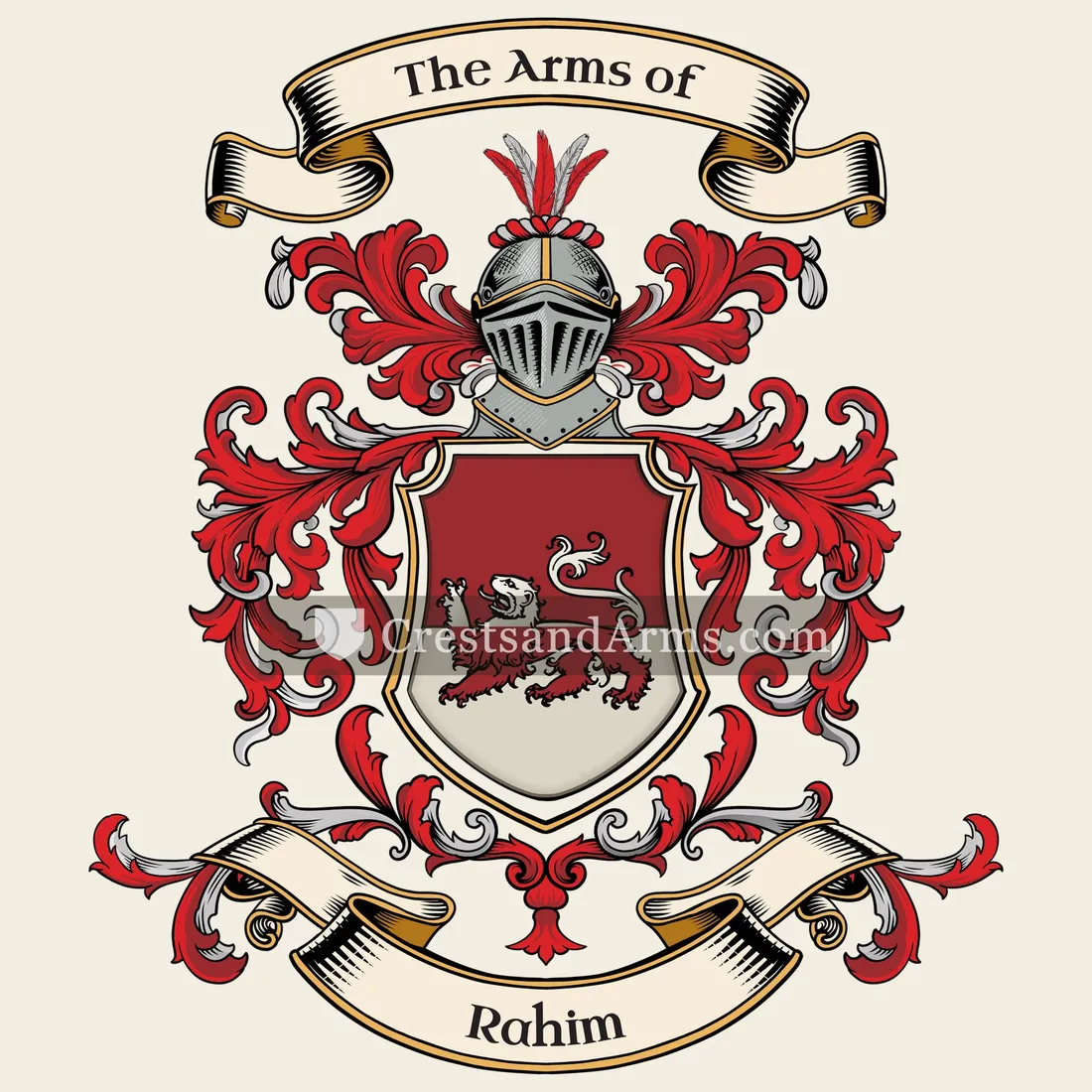
 lionCourage, strength and royalty
 lionCourage, strength and royalty


 legStrength and swiftness
 crescentHonour by the sovereign, and the second son


 chevronProtection, and faithful service completed
 ramLeadership and authority