Map of France showing where the Raison arms are recorded
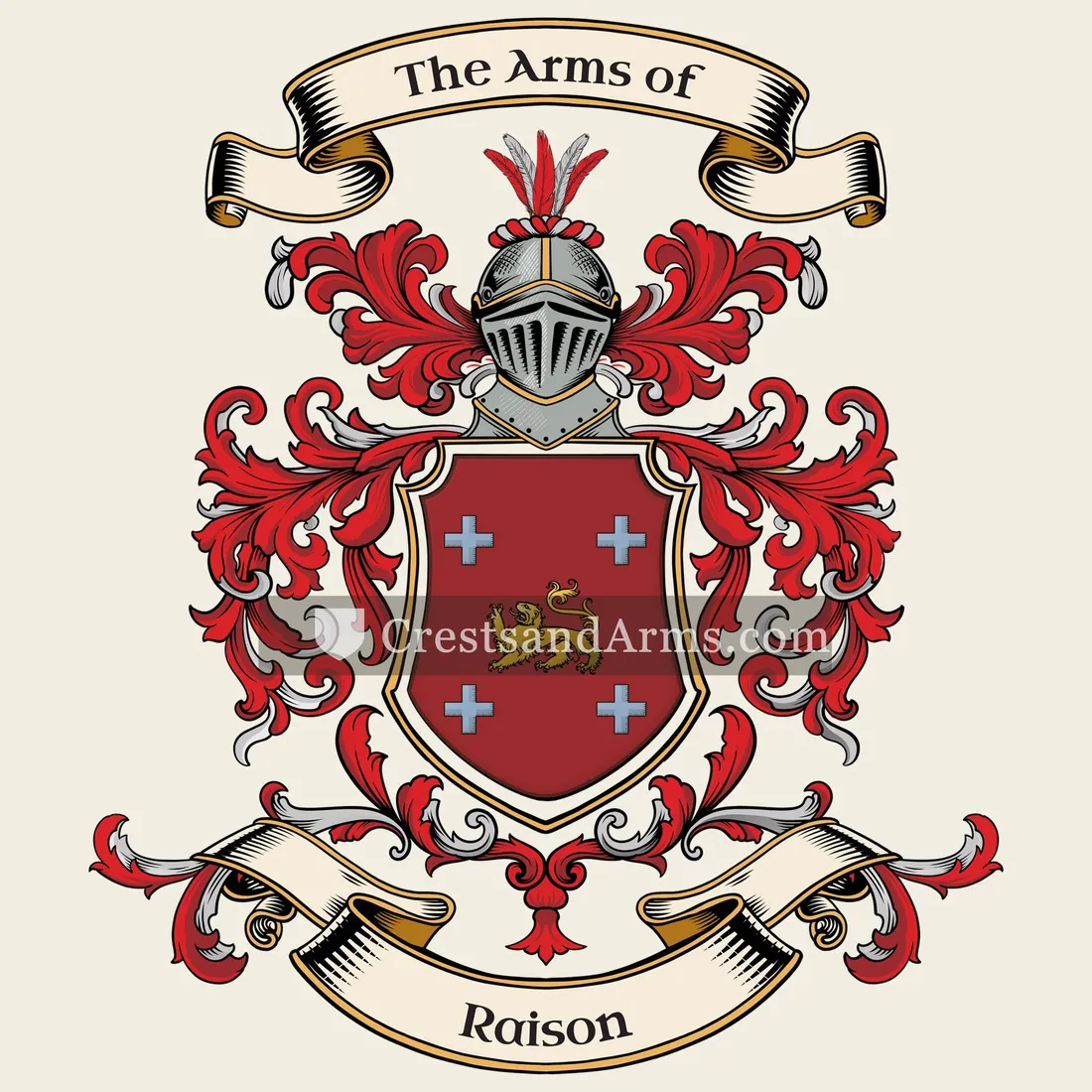
The Raison arms were recorded in France, c. 1663.
Arms such as these were typically recorded in Bretagne.
More families held coats of arms in Bretagne than anywhere else in France. The land was divided into many small estates rather than a few large ones, so far more households counted as gentry, and each needed a shield of its own to be told apart.
This is where the arms were entered in the register. Families often moved to other parts of the country, so the same name can turn up in more than one region.
The body that granted and recorded arms in France in this period.
Louis XIV of France
Sovereign of the period
Louis XIV of France
1643–1715
Reigning in France when the Raison arms are first recorded.
How Arms Worked in France
In France, a coat of arms was a mark of honor that passed down through the male line to all legitimate descendants. Families often used the same shield without changes to show their shared heritage. If a branch wanted to stand out, they could add a small mark to their shield to show their specific place in the family tree.
Granting authority
The Juge d'armes de France acted as the official authority that regulated and verified coats of arms across the country.
How they got arms
Families typically inherited their arms from ancestors, though they could also receive them through royal grants or by proving their noble status.
Where arms were recorded
Coats of arms were officially recorded in the Armorial Général de France, which began its main collection in the year 1696.
The family's standing
Recorded among the armigerous families of France.
Origin & History of the Raison Family in France
The family name Raison has deep roots in the French region of Brittany, where records confirm members of the family were living as early as 1663. In the French language, the word *raison* translates to reason or logic, suggesting that the name may have originally functioned as a descriptive nickname for a person known for their sound judgment or clear thinking. During the seventeenth century, Brittany was a distinct province with its own customs and social structure, and families like the Raisons were often tied to the land through agricultural work or local trade. As the family grew, they became part of the fabric of rural Breton life, navigating the challenges of a changing kingdom while maintaining their presence in the western coastal provinces. This early period reflects a time when surnames were becoming more permanent, helping to define the identity of families as they established their place within the local community.
Meaning of the Raison family crest colors & symbols
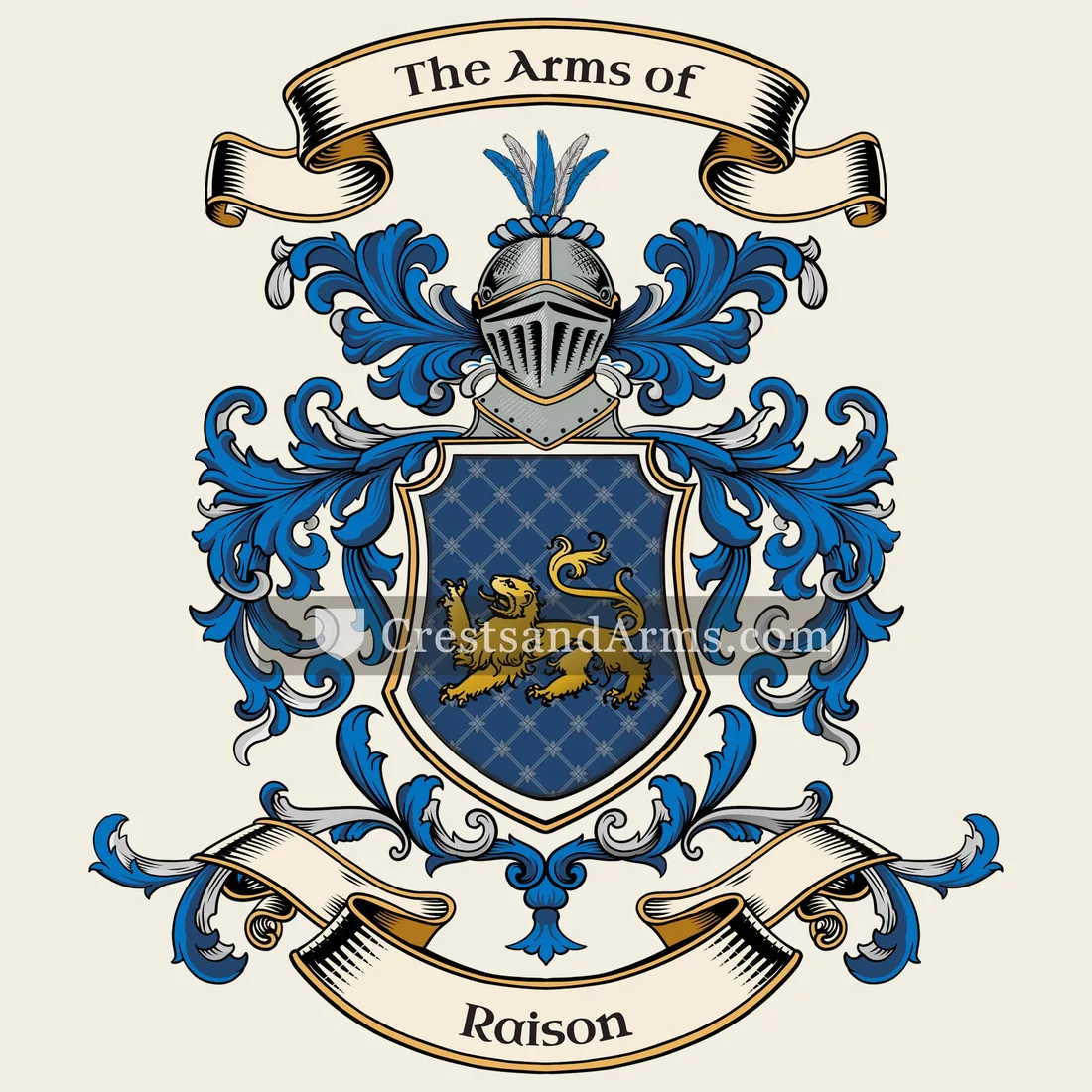
Symbols on this shield
hammerHonest labour, and the smith's craft
eagleNobility, strength and a keen mind
lionCourage, strength and royalty
Colours
Silver (Argent)Means: Peace and sincerity
Gold (Or)Means: Generosity
Green (Vert)Means: Hope
Black (Sable)Means: Constancy
Red (Gules)Means: Military strength
Historical info
Source
J. B. Rietstap, Armorial Général, Gouda: G. B. van Goor Zonen, 1884–87
Blazon (the actual original written record)
“Coupé : au 1 parti : a. d'arg. à une aigle de Prusse, la tête cont.; b. d'arg. au lion de gu., cour. d'or; au 2 d'or à trois maillets de sin. L'écu bordé d'or. Cq. cour. C.: trois pl. d'aut., une d'or entre deux d'arg. L. d'or et de sin.”
Germanyc. 1787
Digital archive packCoat of arms PNG, gold border print PDF, vector SVG and the certificate of authenticity. Sent to your email in minutes.
Map of Germany showing where the Raison arms are recorded
The Raison arms were recorded in Germany, c. 1787.
Arms such as these were typically recorded in Bavaria.
Bavaria was a country of old landed families and walled market towns. Estates passed down the same line for centuries, and both the landowners and the leading townsmen kept arms, which is why so many Bavarian names sit in the registers.
This is where the arms were entered in the register. Families often moved to other parts of the country, so the same name can turn up in more than one region.
The body that granted and recorded arms in Germany in this period.
Joseph II, Holy Roman Emperor
Sovereign of the period
Joseph II, Holy Roman Emperor
1765–1790
Reigning in France when the Raison arms are first recorded.
How Arms Worked in Germany
In the Holy Roman Empire, coats of arms were often granted to individuals by the Emperor or his representatives. These arms were then passed down through the generations to all legitimate descendants of the original holder. Younger branches of a family usually kept the same shield design without needing to change it, as the arms belonged to the entire lineage.
Granting authority
The Holy Roman Emperor held the sole power to grant new coats of arms throughout his vast imperial territories.
How they got arms
Families typically obtained their coats of arms through a formal imperial grant or by proving their noble status to the authorities.
Where arms were recorded
These grants were officially recorded in the Imperial Chancery registers, which began keeping formal records of such honors during the Middle Ages.
The family's standing
Recorded among the armigerous families of Germany.
Origin & History of the Raison Family in Germany
The family name Raison has deep roots in the historical landscape of Bavaria, where records confirm members of the family were established by 1787. During this era, the name likely emerged as a descriptive identifier or a nickname within the local German-speaking population. In the late 18th century, Bavaria was a region defined by its transition from a traditional agricultural society toward a more centralized administrative state. Families like the Raisons often lived in small village communities where they were deeply integrated into the local parish and tax systems. Because the name appears in Bavarian records during this period, it suggests that the family was part of the common citizenry who helped shape the social and economic life of the region before the major political shifts of the 19th century. Their presence in these early documents highlights a history of stability and long-term residency in southern Germany.
Meaning of the Raison family crest colors & symbols
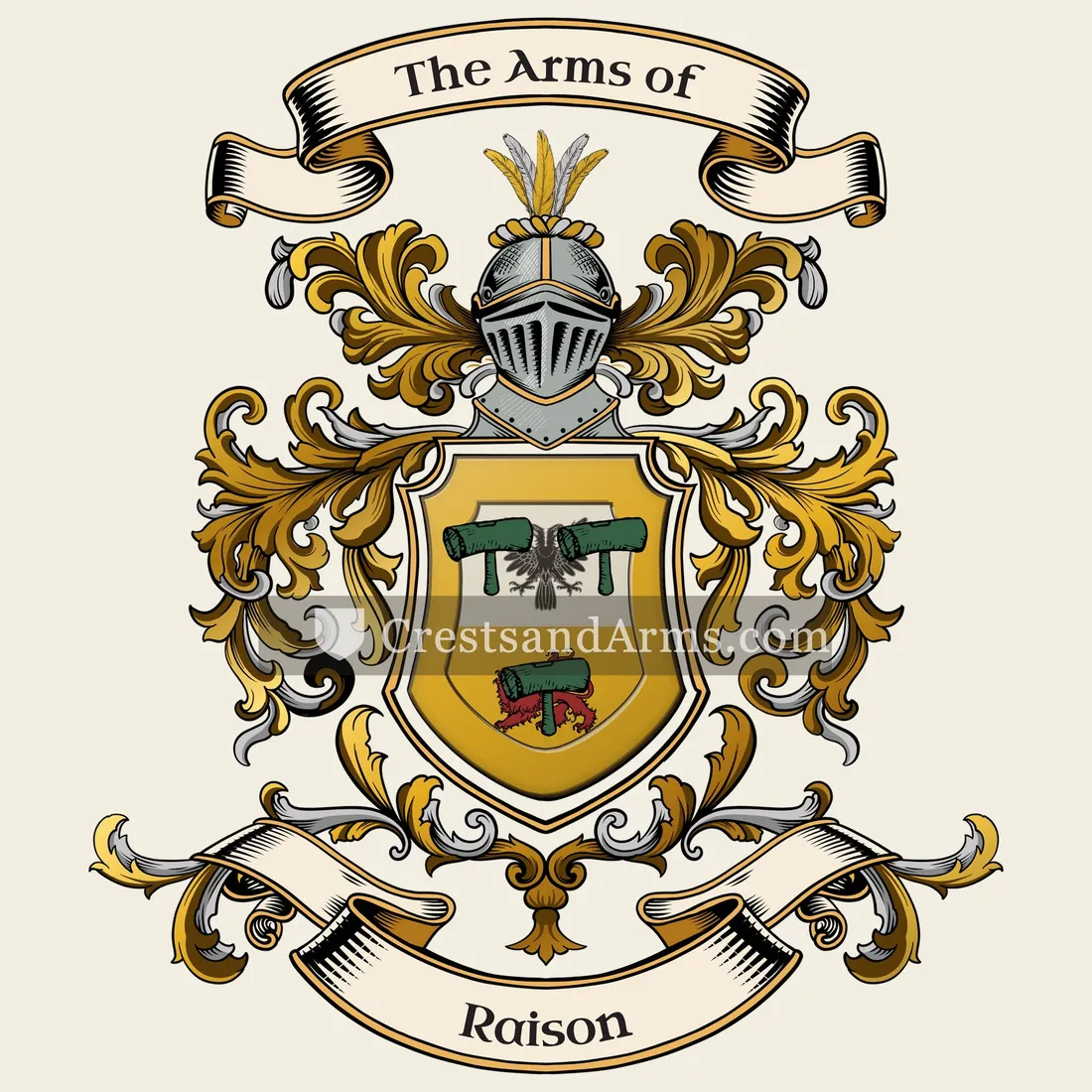
Symbols on this shield
cross symbolChristian faith and service
vairProtection, and the winter fur
lionCourage, strength and royalty
Colours
Red (Gules)Means: Military strength
Gold (Or)Means: Generosity
VairMeans: Protection
Historical info
Source
Sir Bernard Burke, The General Armory of England, Scotland, Ireland and Wales, London: Harrison & Sons, 1884
Blazon (the actual original written record)
“Gu. a lion ramp. or, betw. four crosses patonce vair”
Englandc. 1620
Digital archive packCoat of arms PNG, gold border print PDF, vector SVG and the certificate of authenticity. Sent to your email in minutes.
Map of England showing where the Raison arms are recorded
The Raison arms were recorded in England, c. 1620.
Arms such as these were typically recorded in York.
Yorkshire is the largest of the English counties, and it held more gentry families than any other. Land there was split among a great many households rather than a few, so a great many of them carried arms.
This is where the arms were entered in the register. Families often moved to other parts of the country, so the same name can turn up in more than one region.
The body that granted and recorded arms in England in this period.
James VI and I
Sovereign of the period
James VI and I
1603–1625
Reigning in France when the Raison arms are first recorded.
How Arms Worked in England
English heraldry allowed arms to be shared by all legitimate descendants of the original owner. These symbols were treated as personal property that moved through the generations to all children. While the eldest son kept the original design, other family members could use the same shield without needing to change it or register their own unique versions.
Granting authority
The College of Arms in London has regulated the use of coats of arms throughout England and Wales since 1484.
How they got arms
Families typically obtained their coats of arms through a formal grant from the Crown or by proving their ancient right to them.
Where arms were recorded
All official coats of arms are recorded in the registers kept at the College of Arms, which date back to the fifteenth century.
The family's standing
Recorded among the armigerous families of England.
Origin & History of the Raison Family in England
The surname Raison has deep roots in the English landscape, appearing in historical records long before the seventeenth century. The name is generally classified as a nickname surname, likely derived from the Old French word *raison*, which meant reason or sense. In medieval England, such names were often given to individuals who were known for their wisdom, their logical way of speaking, or perhaps their tendency to use the word frequently in conversation. By the time members of the family were documented in York in 1620, the name had already been established in various parts of the country for generations. These early Raisons in York were part of a growing urban population during the Stuart period, living in a city that served as a major northern hub for trade and administration. Their presence in the city records suggests they were integrated into the local community, likely working in the skilled trades or merchant guilds that defined the economic life of York at that time.
Raison Meaning & Related Branches
Root word
Ratio
Latin term meaning calculation, reckoning, or reason.
This name
RaisonA nickname for a sensible or logical person, or a name for a merchant.
also spelled
Rayson
Raysoun
Raisoun
Documented Sources
J. B. Rietstap, Armorial Général, Gouda: G. B. van Goor Zonen, 1884–87
Archives Départementales d'Ille-et-Vilaine, Registres paroissiaux et d'état civil, 1663
Dauzat, Albert, Dictionnaire étymologique des noms et prénoms de France, 1951
Morlet, Marie-Thérèse, Dictionnaire étymologique des noms de famille, 1991
Digital archive packCoat of arms PNG, gold border print PDF, vector SVG and the certificate of authenticity. Sent to your email in minutes.


 lionCourage, strength and royalty
 lionCourage, strength and royalty


 hammerHonest labour, and the smith's craft
 eagleNobility, strength and a keen mind


 cross symbolChristian faith and service