A record of documented arms, meaning and origin, researched for the Raiter family lines. Documented in 3 countries.
Reg. 0879 · German, P–S
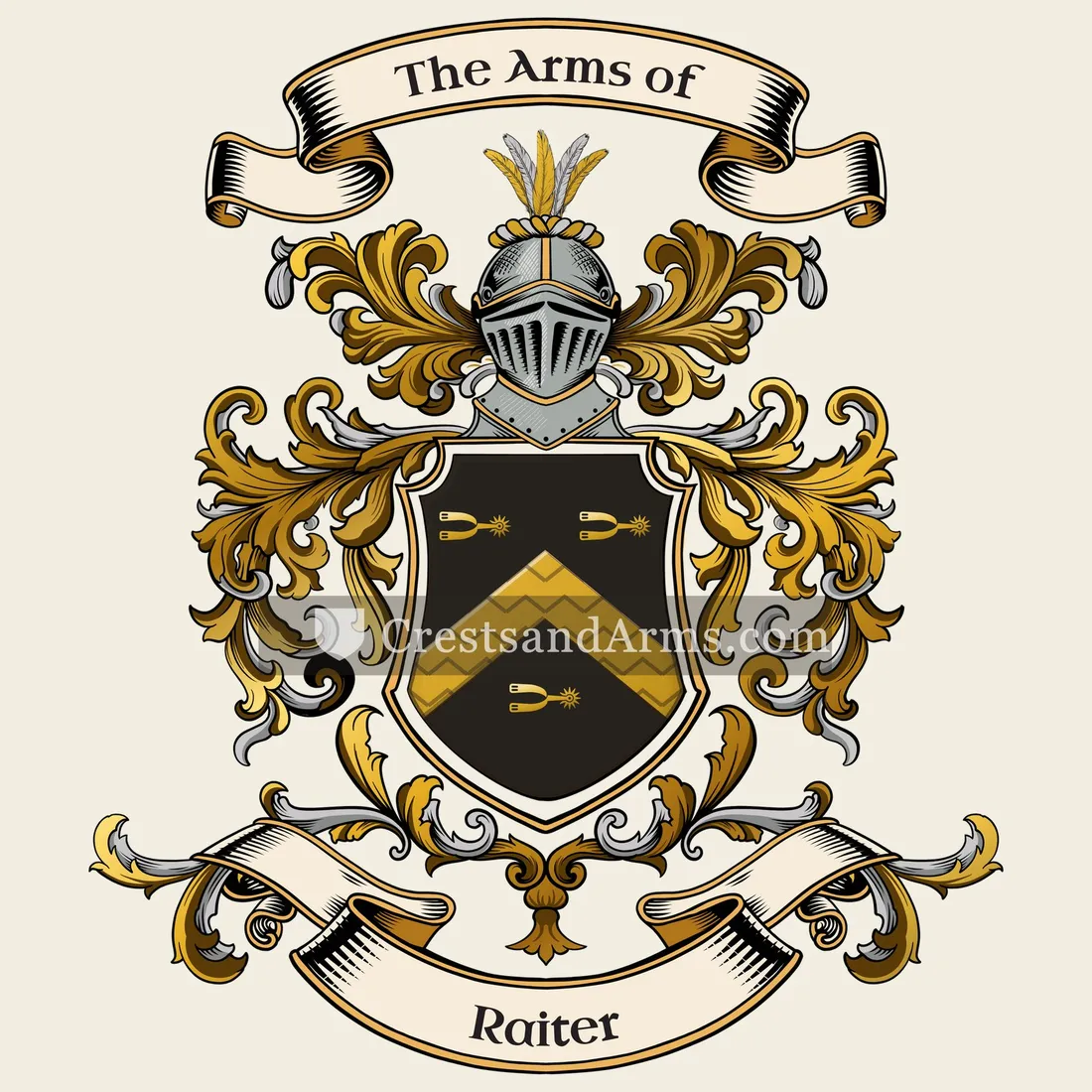
Meaning of the Raiter family crest colors & symbols
Symbols on this shield
chevronProtection, and faithful service completed
spurKnighthood, and readiness to spur on
Colours
Black (Sable)Means: Constancy
Gold (Or)Means: Generosity
Historical info
Source
J. B. Rietstap, Armorial Général, Gouda: G. B. van Goor Zonen, 1884–87
Blazon (the actual original written record)
“De sa. au chev. d'or, acc. de trois molettes d'éperon colletées du même, les molettes en haut. Cq. cour. C.: une licorne iss., coupée d'or sur sa. [V. Ritter de Ritterstein.]”
Germanyc. 1551
Digital archive packCoat of arms PNG, gold border print PDF, vector SVG and the certificate of authenticity. Sent to your email in minutes.
Map of Germany showing where the Raiter arms are recorded
The Raiter arms were recorded in Germany, c. 1551.
Arms such as these were typically recorded in Bavaria.
Bavaria was a country of old landed families and walled market towns. Estates passed down the same line for centuries, and both the landowners and the leading townsmen kept arms, which is why so many Bavarian names sit in the registers.
This is where the arms were entered in the register. Families often moved to other parts of the country, so the same name can turn up in more than one region.
The body that granted and recorded arms in Germany in this period.
Charles V
Sovereign of the period
Charles V
1519–1556
Reigning in Germany when the Raiter arms are first recorded.
How Arms Worked in Germany
In the Holy Roman Empire, coats of arms were often granted to individuals by the Emperor or his representatives. These arms were then passed down through the generations to all legitimate descendants of the original holder. Younger branches of a family usually kept the same shield design without needing to change it, as the arms belonged to the entire lineage.
Granting authority
The Holy Roman Emperor held the sole power to grant new coats of arms throughout his vast imperial territories.
How they got arms
Families typically obtained their coats of arms through a formal imperial grant or by proving their noble status to the authorities.
Where arms were recorded
These grants were officially recorded in the Imperial Chancery registers, which began keeping formal records of such honors during the Middle Ages.
The family's standing
Recorded among the armigerous families of Germany.
Origin & History of the Raiter Family in Germany
The surname Raiter finds its historical roots in the southern German region of Bavaria, where records confirm the presence of the family as early as 1551. The name is derived from the Middle High German word "reiter," which translates to a rider or a mounted soldier. During the sixteenth century, this name was often used as an occupational descriptor for individuals who served in the cavalry or worked as professional horsemen. Living in Bavaria during this period meant that the family likely navigated the complex social and religious shifts of the Reformation era. As a name tied to a specific trade, it suggests that early ancestors were valued for their mobility and their ability to manage horses, which were essential assets for travel, trade, and defense in the rural landscape of the Holy Roman Empire. Over time, the name became a permanent identifier for families who established themselves in local communities, reflecting a history rooted in the practical demands of early modern German life.
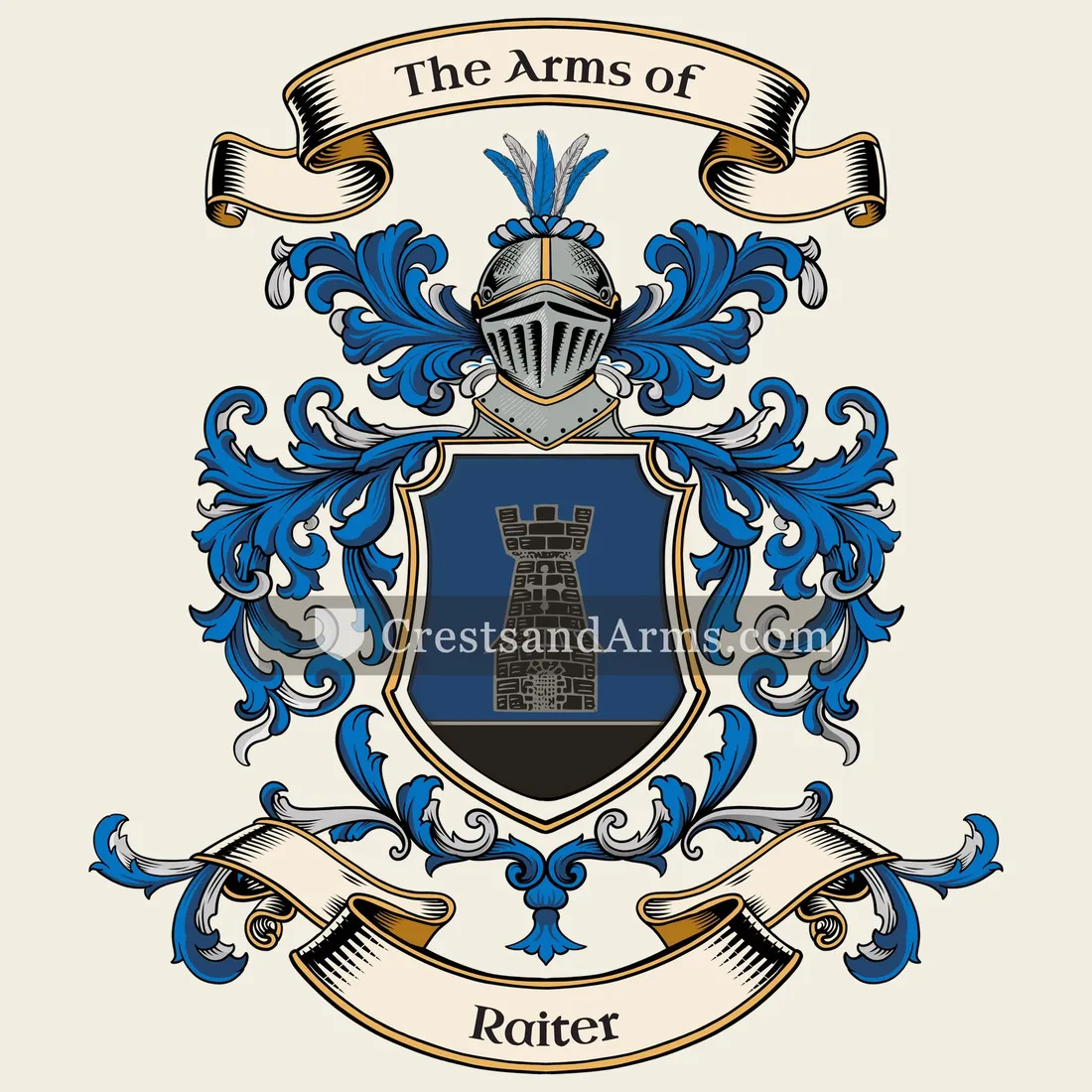
Meaning of the Raiter family crest colors & symbols
Symbols on this shield
towerGrandeur and solidity, and a stronghold defended
Colours
Blue (Azure)Means: Loyalty and truth
Black (Sable)Means: Constancy
Historical info
Source
J. B. Rietstap, Armorial Général, Gouda: G. B. van Goor Zonen, 1884–87
Blazon (the actual original written record)
“D'azur à un mur crén. de sa., mouv. de la p., surm. de deux lances de tournoi d'arg., passées en saut. Cq. cour. C.: un chevalier iss., la visière baissée, le casque panaché d'arg., tenant une épée posée sur son épaule. L. d'arg. et d'azur.”
Austriac. 1866
Digital archive packCoat of arms PNG, gold border print PDF, vector SVG and the certificate of authenticity. Sent to your email in minutes.
Map of Austria showing where the Raiter arms are recorded
The Raiter arms were recorded in Austria, c. 1866.
Arms such as these were typically recorded in Tyrol.
Tyrol was mountain country in western Austria, where the valleys were held by families who had been there a very long time. Old tenure counted for more than money, and old families carried arms.
This is where the arms were entered in the register. Families often moved to other parts of the country, so the same name can turn up in more than one region.
Region
Tyrol
First recorded
1866
Granting Authority for the Raiter Arms
Imperial and Royal chancery
Sodacan · CC BY-SA 3.0
The body that granted and recorded arms in Austria in this period.
Franz Joseph I of Austria
Sovereign of the period
Franz Joseph I of Austria
1848–1916
Reigning in Germany when the Raiter arms are first recorded.
How Arms Worked in Austria
Austrian coats of arms were often linked directly to noble titles granted by the Emperor. These symbols belonged to the entire family line rather than just one individual. When a family grew, new branches kept the original design without needing to change it. This system allowed all members of a noble house to share the same identity across many generations.
Granting authority
The Imperial and Royal chancery managed all heraldic matters and controlled the official granting of arms throughout the Austrian lands.
How they got arms
Families typically received their arms through a formal imperial decree that often accompanied the elevation of a person to noble status.
Where arms were recorded
Official records of these grants were kept in the Imperial Register of Nobility which began its formal documentation process in 1453.
The family's standing
Recorded among the armigerous families of Austria.
Origin & History of the Raiter Family in Austria
The name Raiter has deep roots in the mountainous landscape of Tyrol, where families bearing this name were well established by the mid-19th century. Historically, the name is linked to the German word *Reiter*, which translates to rider or horseman. In the rugged terrain of the Austrian Alps, this suggests that early ancestors likely served as messengers, scouts, or mounted guards who navigated the difficult mountain passes. By 1866, these families were integrated into the local social fabric of Tyrol, a region defined by its strategic importance within the Austrian Empire. As the area underwent significant political changes during this period, families like the Raiters played a quiet but essential role in the agricultural and administrative life of their mountain villages. Their history reflects the broader movement of people across Central Europe, where surnames often evolved from the specific trades or roles individuals performed within their local communities.
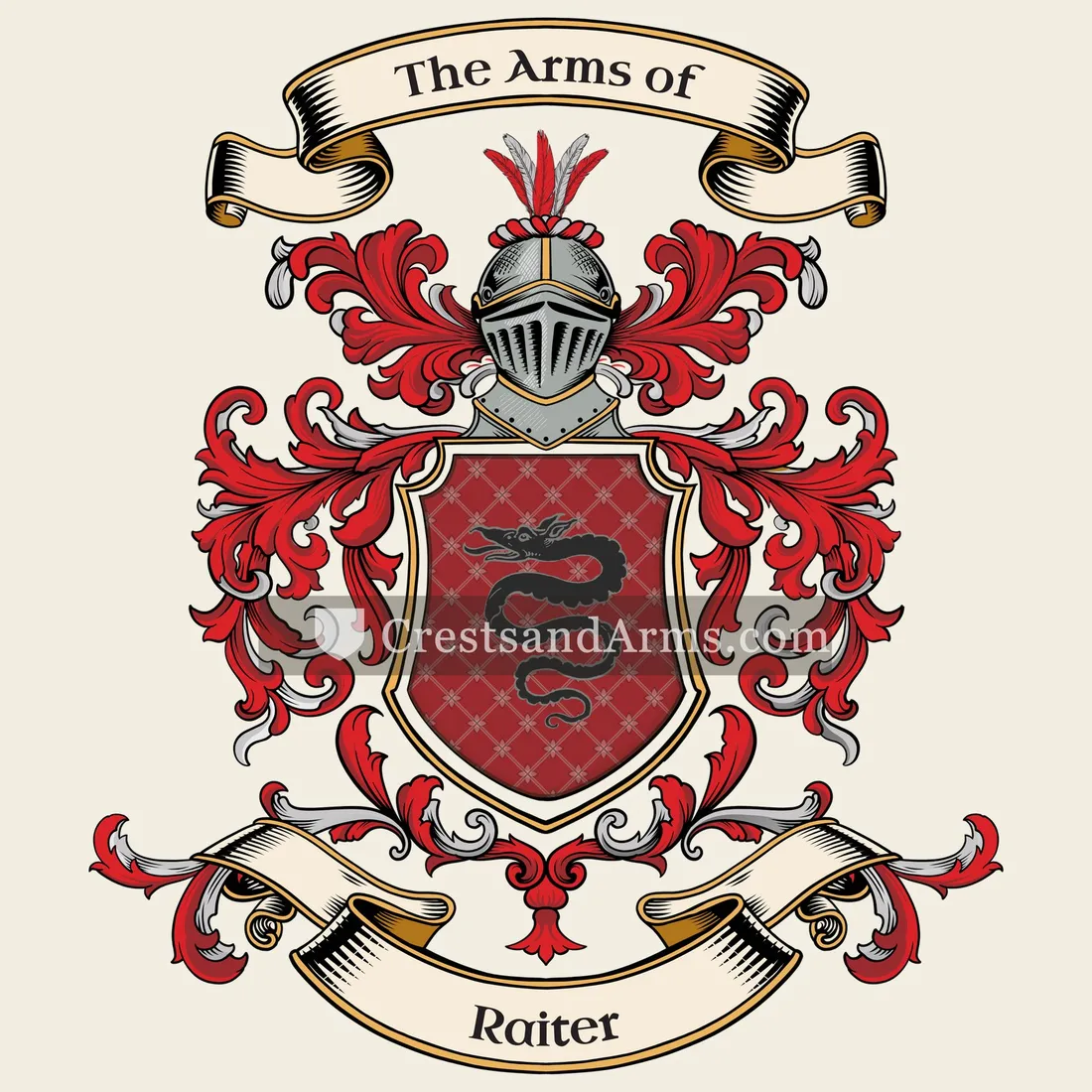
Meaning of the Raiter family crest colors & symbols
Symbols on this shield
serpentWisdom, healing and prudence
Colours
Red (Gules)Means: Military strength
Historical info
Source
J. B. Rietstap, Armorial Général, Gouda: G. B. van Goor Zonen, 1884–87
Blazon (the actual original written record)
“De gu. à un serpent ondoyant en”
SwitzerlandBâle, c. 1745
Digital archive packCoat of arms PNG, gold border print PDF, vector SVG and the certificate of authenticity. Sent to your email in minutes.
Map of Switzerland showing where the Raiter arms are recorded
The Raiter arms were recorded in Bâle, c. 1745.
This is where the arms were entered in the register. Families often moved to other parts of the country, so the same name can turn up in more than one region.
The body that granted and recorded arms in Switzerland in this period.
How Arms Worked in Switzerland
In Switzerland, coats of arms were not restricted to the nobility and were often adopted by common citizens and families. These symbols were passed down through generations to show family identity. When branches of a family grew, they often changed small details of the design to distinguish their own line from the original group.
Granting authority
Cantonal and civic authorities managed the use of coats of arms within their specific regions and local jurisdictions.
How they got arms
Families typically assumed their own coats of arms based on local custom rather than receiving them from a central monarch.
Where arms were recorded
Arms were recorded in various cantonal and civic registers starting from the fourteenth century throughout the Swiss region.
The family's standing
Recorded among the armigerous families of Switzerland.
Origin & History of the Raiter Family in Switzerland
The family name Raiter has deep roots in the historical landscape of Switzerland, particularly within the city of Basel where records confirm their presence by 1745. The name is generally understood to be an occupational surname, likely derived from the Middle High German word for a rider or a mounted soldier. In the social structure of eighteenth-century Basel, a city known for its strong guilds and merchant traditions, families with this name often integrated into the local economy as skilled tradespeople or craftsmen. Because Basel served as a major crossroads for trade and intellectual exchange in Europe, the Raiter family likely benefited from the city’s stability and its focus on education and commerce. Over time, these early ancestors helped shape the local community by participating in the civic life that defined the Swiss Confederation during the Enlightenment. Their presence in the city archives during this era reflects a period of growth and transition for many families who were establishing permanent legacies in the region.
Raiter Meaning & Related Branches
Root word
reiten
To ride a horse or travel by vehicle.
This name
RaiterAn occupational surname for a mounted soldier, horseman, or a professional coachman.
also spelled
Ryter
Riter
Documented Sources
J. B. Rietstap, Armorial Général, Gouda: G. B. van Goor Zonen, 1884–87
Bahlow, Hans, Deutsches Namenlexikon: Familien- und Vornamen nach Ursprung und Sinn erklärt, 1967
Heintze, Albert, Die deutschen Familien-Namen: geschichtlich, geographisch, sprachlich, 1903


 chevronProtection, and faithful service completed
 spurKnighthood, and readiness to spur on
 chevronProtection, and faithful service completed
 spurKnighthood, and readiness to spur on


 towerGrandeur and solidity, and a stronghold defended


 serpentWisdom, healing and prudence