Map of Netherlands showing where the Ram arms are recorded
The Ram arms were recorded in Netherlands, c. 1815.
Arms such as these were typically recorded in Friesland.
Friesland was low, wet country on the northern coast of the Netherlands, farmed by families who had held the same land for centuries. Free landholders were unusually common there, and a free landholder could carry arms.
This is where the arms were entered in the register. Families often moved to other parts of the country, so the same name can turn up in more than one region.
Region
Friesland
First recorded
1815
Granting Authority for the Ram Arms
Hoge Raad van Adel
Photograph made by me · CC BY-SA 3.0
The body that granted and recorded arms in Netherlands in this period.
William I of the Netherlands
Sovereign of the period
William I of the Netherlands
1815–1840
Reigning in Netherlands when the Ram arms are first recorded.
How Arms Worked in Netherlands
In the Netherlands, coats of arms were often used by noble families and those who held specific public offices. These arms were passed down through the generations to legitimate descendants. Younger branches of a family usually kept the original design without needing to add special marks. This system ensured that the family identity remained clear and consistent over many years.
Granting authority
The Hoge Raad van Adel is the official body that regulates and manages noble titles and coats of arms in the Netherlands.
How they got arms
Families typically obtained their coats of arms through official royal grants or by proving their long-standing historical use of the symbols.
Where arms were recorded
Coats of arms are officially recorded in the registers held by the Hoge Raad van Adel, which began its work in 1814.
The family's standing
Recorded among the armigerous families of Netherlands.
Origin & History of the Ram Family in Netherlands
The family name Ram has deep roots in the northern region of the Netherlands known as Friesland. By the early 19th century, the name was already well-established among the local population. In 1811, Napoleon Bonaparte introduced the Civil Registry in the Netherlands, which required all citizens to adopt or formalize a permanent surname. Many families in Friesland chose names that reflected their trade, their physical traits, or their connection to the land. The name Ram likely originated as a descriptive nickname, possibly referring to a person’s strength or their stubborn nature. Records from 1815 show that members of the Ram family were active participants in the social and economic life of their Frisian communities during this period of transition. These early ancestors were part of a society that was shifting from traditional naming customs to the modern system of hereditary surnames that we use today.
Coat of Arms & Family Crest Details
Symbols on this shield
legStrength and swiftness
crescentHonour by the sovereign, and the second son
Colours
Blue (Azure)Means: Loyalty and truth
Silver (Argent)Means: Peace and sincerity
Historical info
Source
J. B. Rietstap, Armorial Général, Gouda: G. B. van Goor Zonen, 1884–87
Blazon (the actual original written record)
“D'azur à un membre d'aigle d'arg., surmontant un croiss. du même. C.: trois pl. d'aut., une d'azur entre deux d'or.”
Swedenc. 1625
Digital archive packCoat of arms PNG, gold border print PDF, vector SVG and the certificate of authenticity. Sent to your email in minutes.
Map of Sweden showing where the Ram arms are recorded
The Ram arms were recorded in Sweden, c. 1625.
Arms such as these were typically recorded in Stockholm.
Stockholm held the Swedish court and the House of Nobility, where every noble family's arms were entered and kept. Families ennobled for service registered there, which is why so many are recorded around the city.
This is where the arms were entered in the register. Families often moved to other parts of the country, so the same name can turn up in more than one region.
The body that granted and recorded arms in Sweden in this period.
Gustavus Adolphus of Sweden
Sovereign of the period
Gustavus Adolphus of Sweden
1611–1632
Reigning in Netherlands when the Ram arms are first recorded.
How Arms Worked in Sweden
In Sweden, a coat of arms belonged to a noble family as a whole rather than just one individual. These arms were passed down through the generations to all legitimate descendants. Younger branches of the family used the same shield without needing to change it. This system ensured that the entire lineage shared the same identity and status under the law.
Granting authority
The Riddarhuset, or House of Nobility, regulated all noble coats of arms in Sweden under royal authority.
How they got arms
Families received their coats of arms through royal grants of nobility which were then officially registered with the House.
Where arms were recorded
Coats of arms were officially recorded in the Swedish House of Nobility register starting in the year 1626.
The family's standing
Recorded among the armigerous families of Sweden.
Origin & History of the Ram Family in Sweden
The family name Ram first appears in the historical records of Stockholm during the early seventeenth century. By 1625, members of the family were already established within the capital city as active participants in the urban life of the Swedish Empire. During this era, Stockholm was expanding rapidly as a center for trade and government administration. Families like the Ram line often found opportunities in these growing sectors, moving from local roles into positions that allowed them to influence the development of the city. While the name itself carries a simple meaning, its presence in the capital during the 1620s suggests that the family was part of the rising middle class that helped shape the social and economic landscape of Sweden during its rise to power in Europe.
Coat of Arms & Family Crest Details
Symbols on this shield
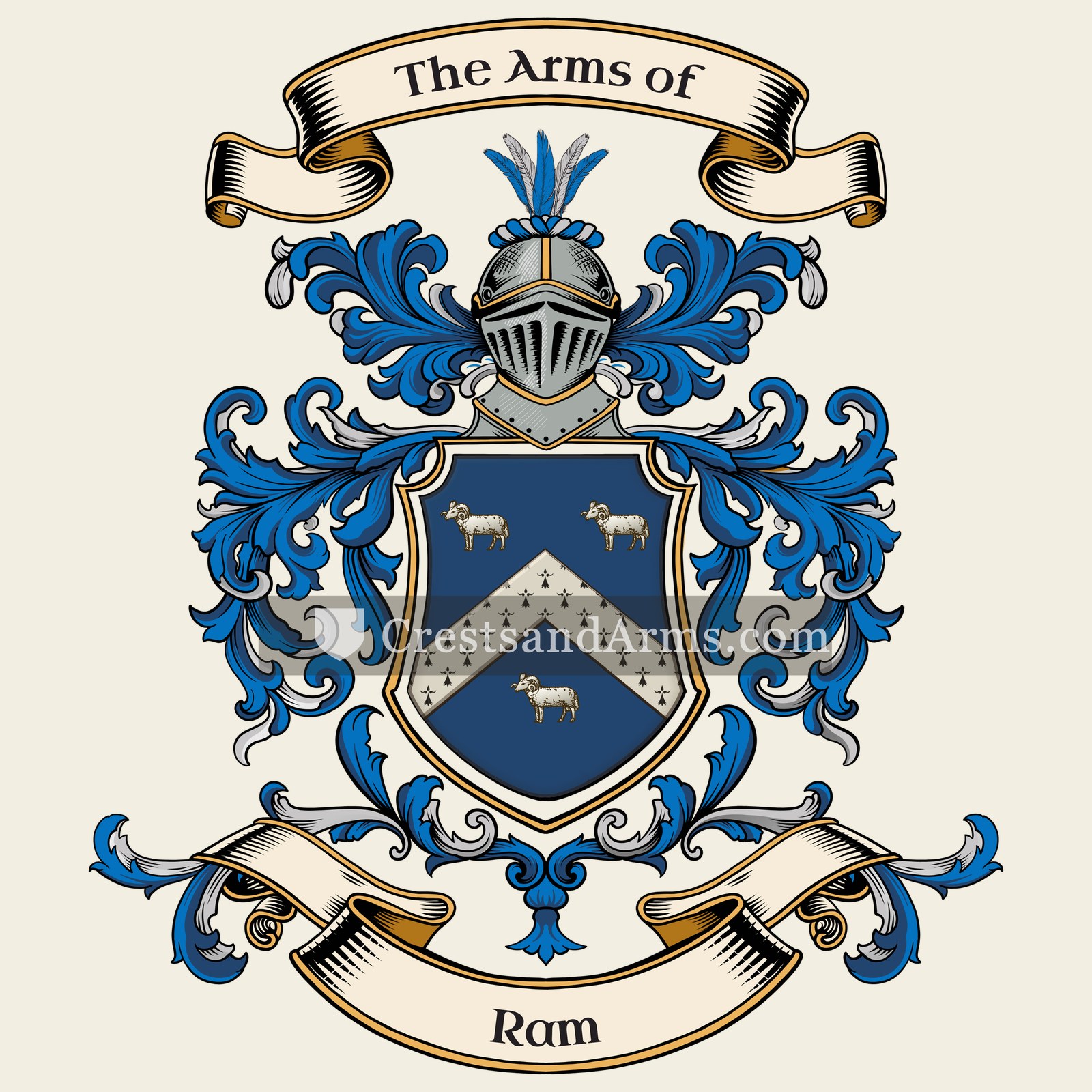
chevronProtection, and faithful service completed
ramLeadership and authority
Colours
Blue (Azure)Means: Loyalty and truth
ErmineMeans: Dignity
Silver (Argent)Means: Peace and sincerity
Historical info
Source
Sir Bernard Burke, The General Armory of England, Scotland, Ireland and Wales, London: Harrison & Sons, 1884
Blazon (the actual original written record)
“Az. a chev. erm. betw. three rams' heads cabossed ar”
EssexHornchurch · Essex, c. 1620
Digital archive packCoat of arms PNG, gold border print PDF, vector SVG and the certificate of authenticity. Sent to your email in minutes.
Map of England showing where the Ram arms are recorded
The Ram arms were recorded in Essex, c. 1620.
Essex lay close enough to London for City money to buy land there. Merchants who prospered moved out to estates within a day's ride, and a new landowner almost always wanted arms to go with the ground.
This is where the arms were entered in the register. Families often moved to other parts of the country, so the same name can turn up in more than one region.
The body that granted and recorded arms in England in this period.
James VI and I
Sovereign of the period
James VI and I
1603–1625
Reigning in Netherlands when the Ram arms are first recorded.
How Arms Worked in England
English heraldry allowed arms to be shared by all legitimate descendants of the original owner. These symbols were treated as personal property that moved through the generations to all children. While the eldest son kept the original design, other family members could use the same shield without needing to change it or register their own unique versions.
Granting authority
The College of Arms in London has regulated the use of coats of arms throughout England and Wales since 1484.
How they got arms
Families typically obtained their coats of arms through a formal grant from the Crown or by proving their ancient right to them.
Where arms were recorded
All official coats of arms are recorded in the registers kept at the College of Arms, which date back to the fifteenth century.
The family's standing
Recorded among the armigerous families of Essex.
Origin & History of the Ram Family in England
The surname Ram has deep roots in the English landscape, appearing in historical records as early as the thirteenth century. While the name is often associated with the animal, it likely began as a descriptive nickname for a person who possessed the strength or stubbornness of a ram, or perhaps for someone who lived near a house marked by a sign of a ram. By the year 1620, members of the Ram family were well-established in the county of Essex. During this period, families in Essex were often involved in local agriculture and trade, contributing to the steady growth of the region. These early settlers helped shape the local community, and their presence in the county records provides a clear link to the social fabric of seventeenth-century England. As the family grew, they became part of the long history of English surnames that reflect both the natural world and the daily lives of ancestors from centuries past.
Related Branches & Arms
Root word
Ram
A male sheep or a battering ram used in medieval warfare.
This name
RamA nickname for a stubborn person or a sign for a house.
also spelled
Raam
Ramm
Ramme
Related arms
Ghirardinisimilar arms
Jackmanrecorded with Ram, same area
Legattrecorded with Ram, same area
Thorogoodrecorded with Ram, same area
Documented Sources
J. B. Rietstap, Armorial Général, Gouda: G. B. van Goor Zonen, 1884–87
Tresoar (Fries Historisch en Letterkundig Centrum), Burgerlijke Stand van Friesland
Nationaal Archief, Registers van de Burgerlijke Stand
Van Berkel, Gerald and Samplonius, Kees, Nederlandse plaatsnamen verklaard, 2018
Meertens, P.J., De betekenis van de Nederlandse familienamen, 1948
Digital archive packCoat of arms PNG, gold border print PDF, vector SVG and the certificate of authenticity. Sent to your email in minutes.


 lionCourage, strength and royalty
 lionCourage, strength and royalty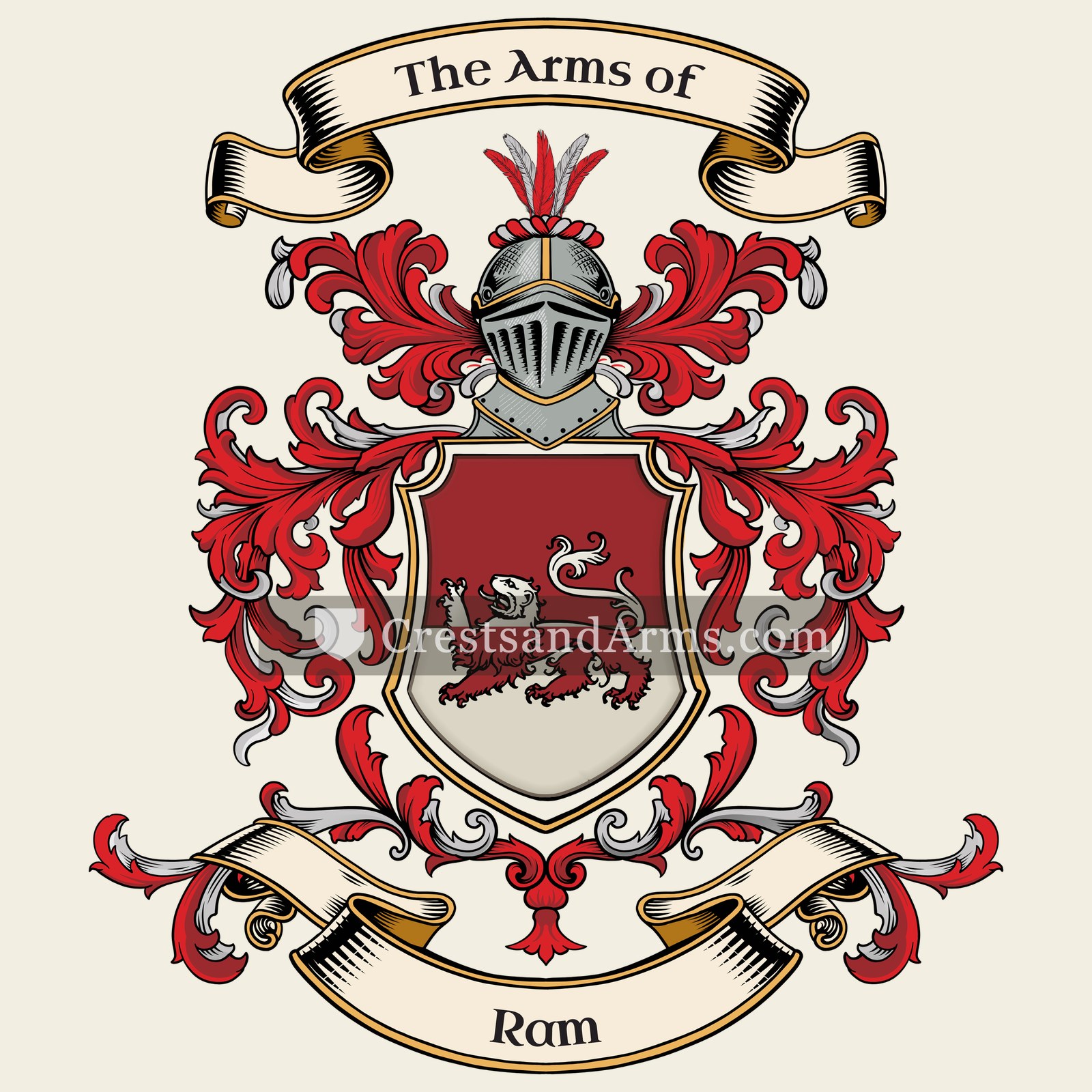


 legStrength and swiftness
 crescentHonour by the sovereign, and the second son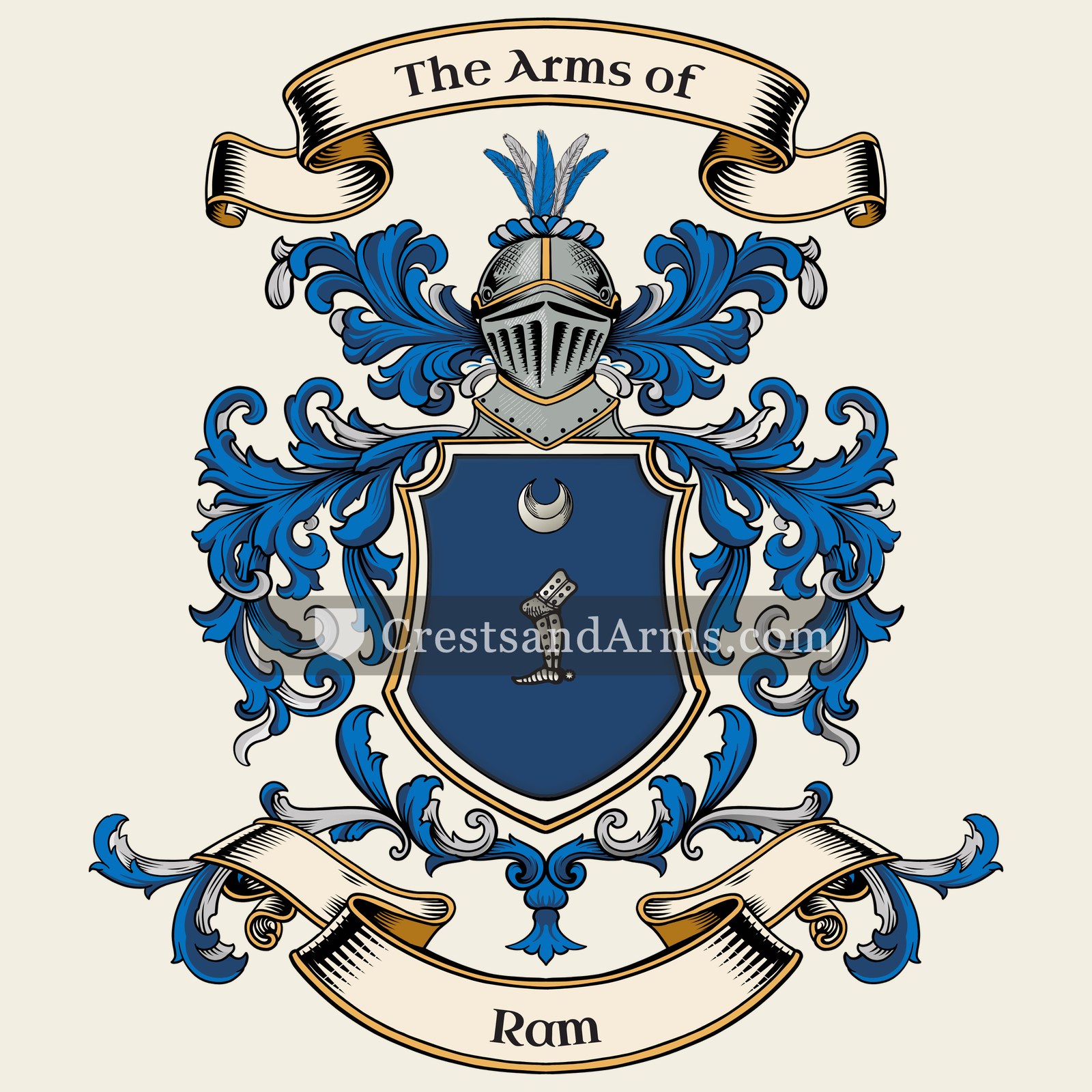


 chevronProtection, and faithful service completed
 ramLeadership and authority