Map of Netherlands showing where the Rasch arms are recorded
The Rasch arms were recorded in Netherlands, c. 1815.
Arms such as these were typically recorded in Friesland.
Friesland was low, wet country on the northern coast of the Netherlands, farmed by families who had held the same land for centuries. Free landholders were unusually common there, and a free landholder could carry arms.
This is where the arms were entered in the register. Families often moved to other parts of the country, so the same name can turn up in more than one region.
Region
Friesland
First recorded
1815
Granting Authority for the Rasch Arms
Hoge Raad van Adel
Photograph made by me · CC BY-SA 3.0
The body that granted and recorded arms in Netherlands in this period.
William I of the Netherlands
Sovereign of the period
William I of the Netherlands
1815–1840
Reigning in Netherlands when the Rasch arms are first recorded.
How Arms Worked in Netherlands
In the Netherlands, coats of arms were often used by noble families and those who held specific public offices. These arms were passed down through the generations to legitimate descendants. Younger branches of a family usually kept the original design without needing to add special marks. This system ensured that the family identity remained clear and consistent over many years.
Granting authority
The Hoge Raad van Adel is the official body that regulates and manages noble titles and coats of arms in the Netherlands.
How they got arms
Families typically obtained their coats of arms through official royal grants or by proving their long-standing historical use of the symbols.
Where arms were recorded
Coats of arms are officially recorded in the registers held by the Hoge Raad van Adel, which began its work in 1814.
The family's standing
Recorded among the armigerous families of Netherlands.
Origin & History of the Rasch Family in Netherlands
The surname Rasch has deep roots in the northern regions of the Netherlands, particularly within the province of Friesland. By the early 19th century, records confirm that families bearing this name were well-established in Frisian communities. The name itself is often linked to linguistic origins in Germanic languages, where the term "rasch" carried the meaning of being quick, swift, or energetic. This suggests that the name may have originally served as a descriptive nickname for an ancestor known for their speed or active nature. As the Dutch population became more settled and record-keeping became standardized in the early 1800s, families like the Raschs were documented in local civil registries. These records provide a clear window into their lives as they transitioned through a period of significant social and political change in the Netherlands.
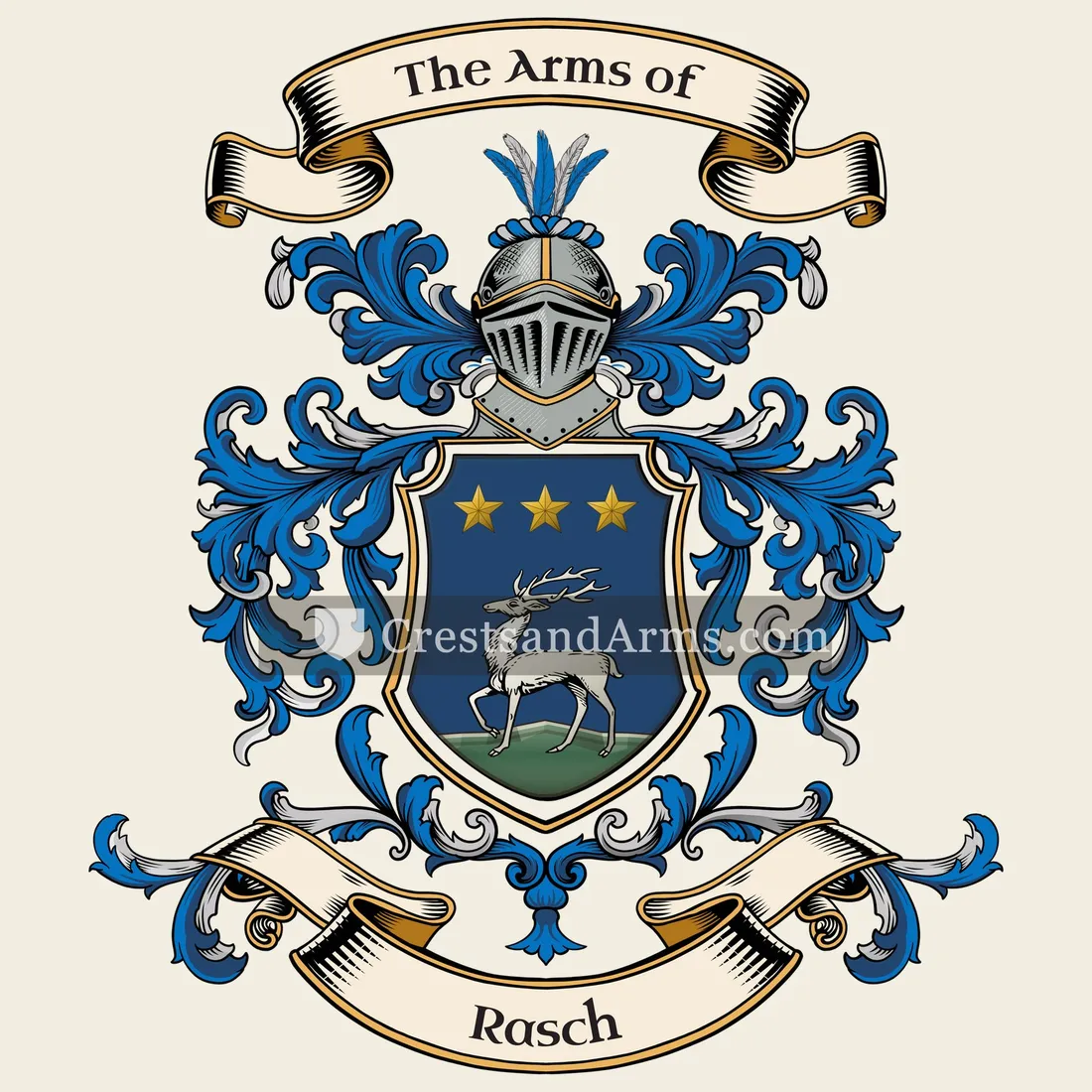
Meaning of the Rasch family crest colors & symbols
Symbols on this shield
mountThe ground held, and steadfastness upon it
stagPeace and harmony, and one who will not fight unprovoked
mulletThe third son, and a divine quality from above
Colours
Blue (Azure)Means: Loyalty and truth
Green (Vert)Means: Hope
Silver (Argent)Means: Peace and sincerity
Gold (Or)Means: Generosity
Historical info
Source
J. B. Rietstap, Armorial Général, Gouda: G. B. van Goor Zonen, 1884–87
Blazon (the actual original written record)
“D'azur à une biche saillante d'arg., coll. d'une couronne d'or, soutenue d'une terrasse de sin. et acc. de trois étoiles d'or, rangées en chef. Cq. cour. C.: un bras arm., brandissant une épée, le tout au nat.”
Denmarkc. 1680
Digital archive packCoat of arms PNG, gold border print PDF, vector SVG and the certificate of authenticity. Sent to your email in minutes.
Map of Denmark showing where the Rasch arms are recorded
The Rasch arms were recorded in Denmark, c. 1680.
Arms such as these were typically recorded in Sjaælland.
Zealand held the Danish court, the crown's offices and Copenhagen itself. Families who served the king kept estates within reach of it, and royal service was the ordinary route to a coat of arms.
This is where the arms were entered in the register. Families often moved to other parts of the country, so the same name can turn up in more than one region.
The body that granted and recorded arms in Denmark in this period.
Christian V of Denmark
Sovereign of the period
Christian V of Denmark
1670–1699
Reigning in Netherlands when the Rasch arms are first recorded.
How Arms Worked in Denmark
Danish heraldry during this period was closely tied to noble status and royal favor rather than being open to all citizens. Arms were typically granted by the monarch to individuals, and these symbols were then shared by all members of the noble house. If a family line died out, the right to use those specific arms ended with them.
Granting authority
The Danish royal chancery held the power to issue and regulate official coats of arms for the kingdom.
How they got arms
Families usually received their arms through a formal royal grant that confirmed their noble status and rights.
Where arms were recorded
These grants were officially recorded in the Danish Royal Chancery records starting in the sixteenth century.
The family's standing
Recorded among the armigerous families of Denmark.
Origin & History of the Rasch Family in Denmark
The surname Rasch has deep roots in the Danish landscape, with documented traces of the family appearing in the region of Sjælland as early as 1680. During this period, the name was often associated with individuals who held roles in local administration, the military, or the growing merchant class of the Danish realm. As the seventeenth century transitioned into the eighteenth, families bearing this name became part of the social fabric of rural and urban communities alike. The name itself likely originated as a descriptive nickname, as the word "rasch" in older Germanic languages often implied a person who was quick, active, or energetic in their daily affairs. By settling in Sjælland, these early ancestors established a foundation that allowed the family name to persist through generations of Danish history, reflecting the broader shifts in society as Denmark moved toward a more centralized and recorded state.
Rasch Meaning & Related Branches
Root word
ras
A Middle Dutch term referring to a quick, rash, or hasty person.
This name
RaschA descriptive nickname for an individual characterized by impulsive or energetic behavior.
also spelled
Rash
Documented Sources
J. B. Rietstap, Armorial Général, Gouda: G. B. van Goor Zonen, 1884–87
AlleFriezen, Burgerlijke Stand Geboorteakten (1811–1915)
Nationaal Archief, Bevolkingsregisters van de provincie Friesland
Van der Schaar, J., Woordenboek van voornamen, 1964
Debrabandere, Frans, Woordenboek van de familienamen in België en Noord-Frankrijk, 2003
Digital archive packCoat of arms PNG, gold border print PDF, vector SVG and the certificate of authenticity. Sent to your email in minutes.


 mountThe ground held, and steadfastness upon it
 stagPeace and harmony, and one who will not fight unprovoked
 treeLife, endurance and deep roots
 mountThe ground held, and steadfastness upon it
 stagPeace and harmony, and one who will not fight unprovoked
 treeLife, endurance and deep roots
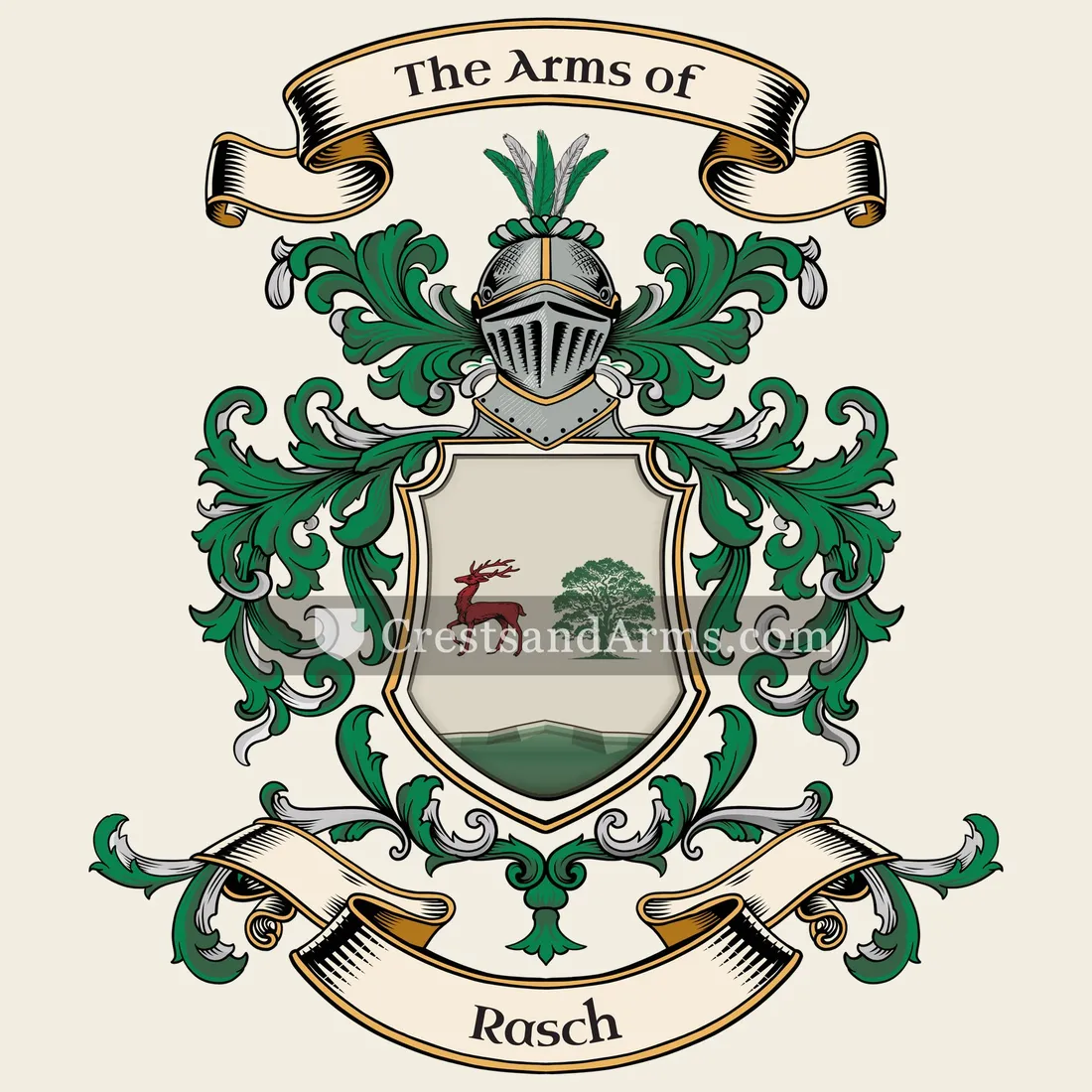


 mulletThe third son, and a divine quality from above