A record of documented arms, meaning and origin, researched for the Rau family lines. Documented in 3 countries.
Reg. 2591 · Dutch, P–S
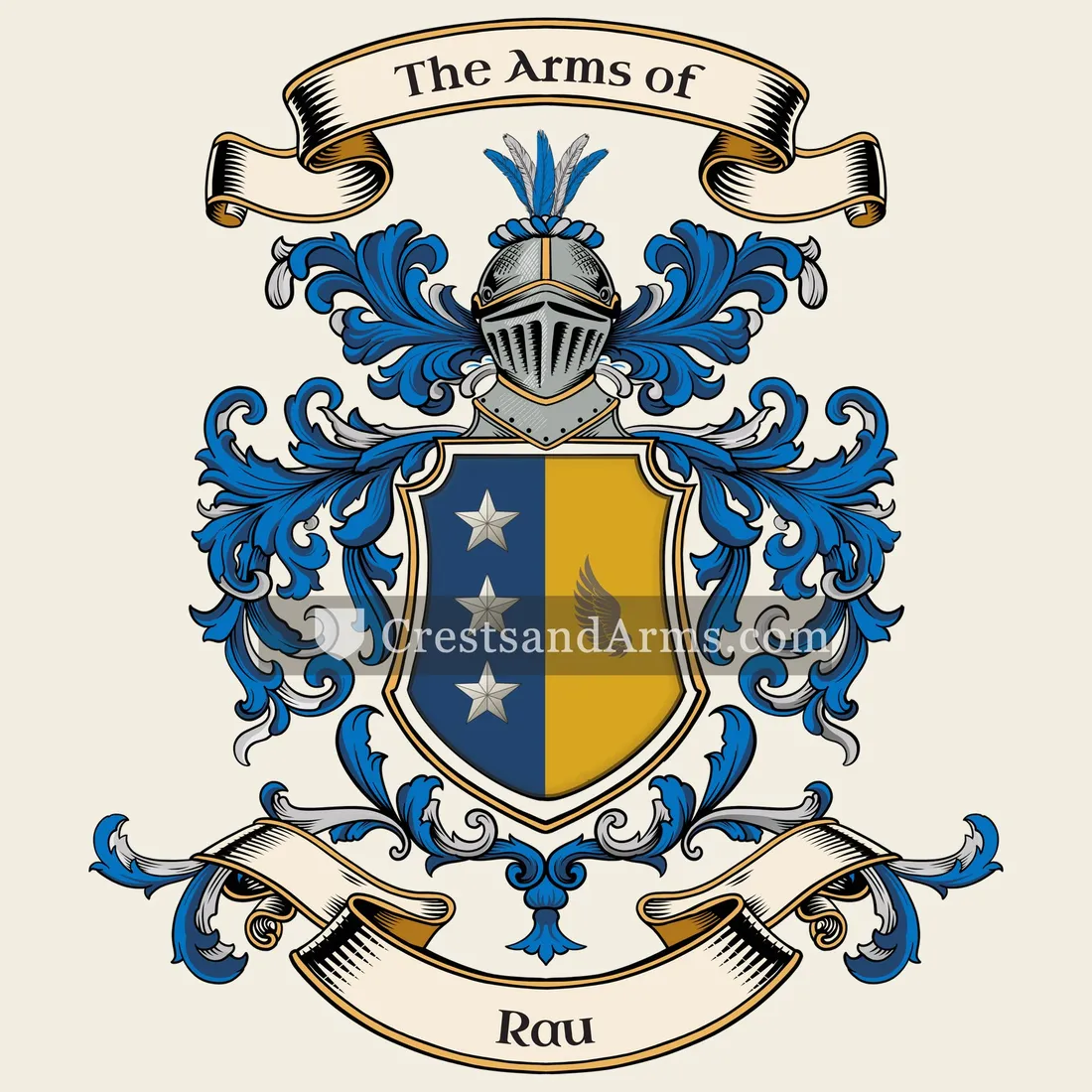
Meaning of the Rau family crest colors & symbols
Symbols on this shield
mulletThe third son, and a divine quality from above
wingSwiftness, and protection under a raised wing
Colours
Blue (Azure)Means: Loyalty and truth
Gold (Or)Means: Generosity
Silver (Argent)Means: Peace and sincerity
Historical info
Source
J. B. Rietstap, Armorial Général, Gouda: G. B. van Goor Zonen, 1884–87
Blazon (the actual original written record)
“Parti: au 1 d'azur à trois étoiles d'arg., rangées en pal; au 2 d'or à un demi-vol au nat. [Armes du professeur Sebaldus R., décédé le 10 janv. 1818.]”
GueldersGuelders, c. 1815
Digital archive packCoat of arms PNG, gold border print PDF, vector SVG and the certificate of authenticity. Sent to your email in minutes.
Map of Netherlands showing where the Rau arms are recorded
The Rau arms were recorded in Guelders, c. 1815.
Guelders was river country in the east of the Netherlands, held by families whose estates sat along the water. Land there stayed in the same hands for generations, and long tenure is what fills a register of arms.
This is where the arms were entered in the register. Families often moved to other parts of the country, so the same name can turn up in more than one region.
Region
Guelders
First recorded
1815
Granting Authority for the Rau Arms
Hoge Raad van Adel
Photograph made by me · CC BY-SA 3.0
The body that granted and recorded arms in Netherlands in this period.
William I of the Netherlands
Sovereign of the period
William I of the Netherlands
1815–1840
Reigning in Netherlands when the Rau arms are first recorded.
How Arms Worked in Netherlands
In the Netherlands, coats of arms were often used by noble families and those who held specific public offices. These arms were passed down through the generations to legitimate descendants. Younger branches of a family usually kept the original design without needing to add special marks. This system ensured that the family identity remained clear and consistent over many years.
Granting authority
The Hoge Raad van Adel is the official body that regulates and manages noble titles and coats of arms in the Netherlands.
How they got arms
Families typically obtained their coats of arms through official royal grants or by proving their long-standing historical use of the symbols.
Where arms were recorded
Coats of arms are officially recorded in the registers held by the Hoge Raad van Adel, which began its work in 1814.
The family's standing
Recorded among the armigerous families of Guelders.
Origin & History of the Rau Family in Netherlands
The surname Rau has deep roots in the historical region of Guelders, where the family was firmly established by the early nineteenth century. In the Dutch language, the name is closely associated with the Middle Dutch word "rauw," which translates to raw, rough, or unrefined. Historically, this name likely functioned as a descriptive nickname for a person with a rugged personality or a harsh physical appearance. During the period around 1815, when the Netherlands was transitioning into a centralized kingdom, families in Guelders were increasingly required to formalize their surnames in civil registries. The presence of the Rau family in this specific province suggests they were part of the local agrarian or artisan classes who lived in the eastern river landscapes. Over generations, the name became a permanent fixture of the region, reflecting the linguistic shifts and the bureaucratic changes that defined Dutch identity during the Napoleonic era and the subsequent formation of the United Kingdom of the Netherlands.
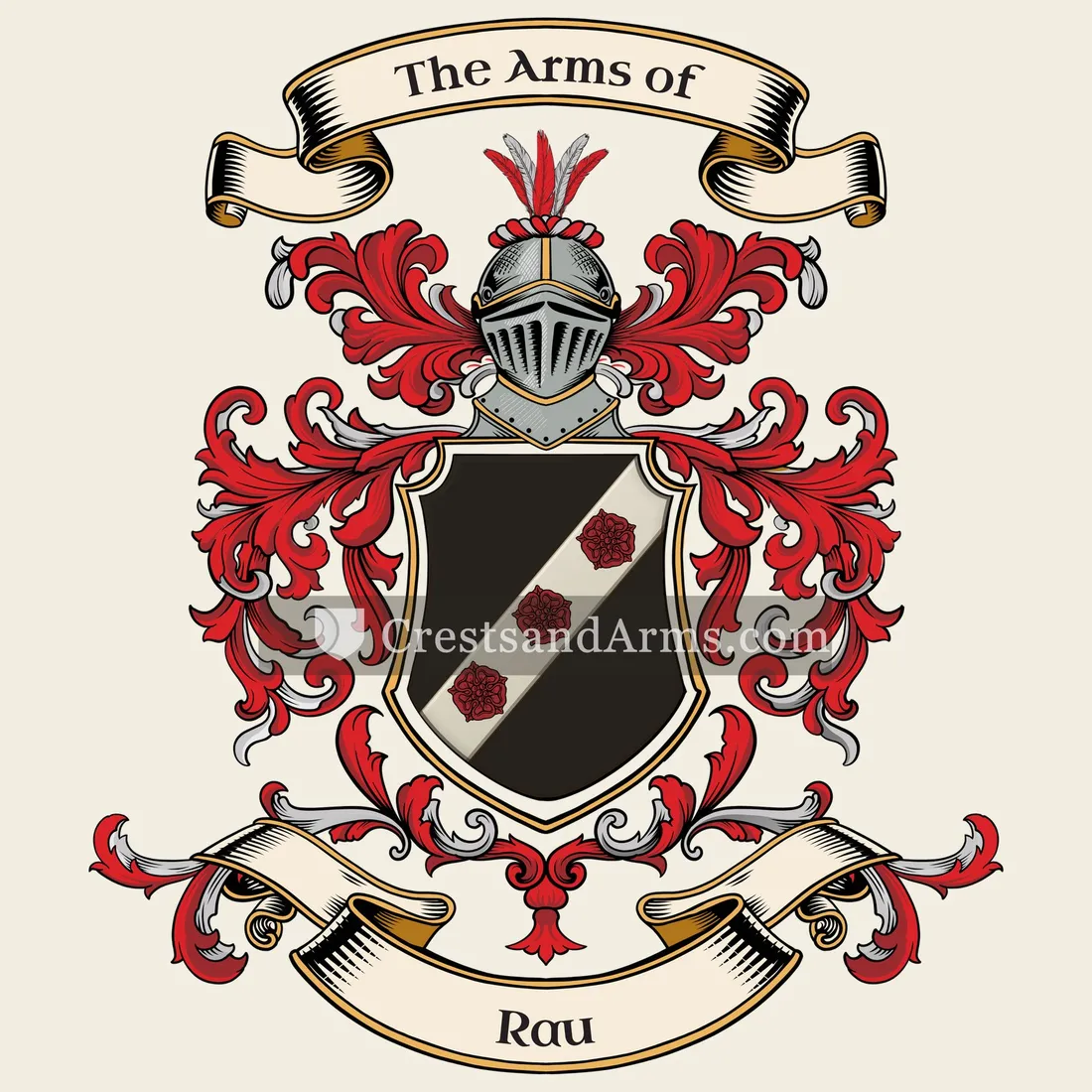
Meaning of the Rau family crest colors & symbols
Symbols on this shield
roseThe seventh son, and beauty with grace
Colours
Black (Sable)Means: Constancy
Silver (Argent)Means: Peace and sincerity
Red (Gules)Means: Military strength
Historical info
Source
J. B. Rietstap, Armorial Général, Gouda: G. B. van Goor Zonen, 1884–87
Blazon (the actual original written record)
“De sa. à la barre d'arg., ch. de trois roses de gu. Cq. cour. C.: un demi-vol, aux armes de l'écu.”
SaxonySaxony, c. 1790
Digital archive packCoat of arms PNG, gold border print PDF, vector SVG and the certificate of authenticity. Sent to your email in minutes.
Map of Germany showing where the Rau arms are recorded
The Rau arms were recorded in Saxony, c. 1790.
Saxony had mines, trade and old landed families all at once. Silver made some fortunes and land held others, and both sorts of family kept arms, which is why Saxon names appear so often in the registers.
This is where the arms were entered in the register. Families often moved to other parts of the country, so the same name can turn up in more than one region.
The body that granted and recorded arms in Germany in this period.
Joseph II, Holy Roman Emperor
Sovereign of the period
Joseph II, Holy Roman Emperor
1765–1790
Reigning in Netherlands when the Rau arms are first recorded.
How Arms Worked in Germany
In the Holy Roman Empire, coats of arms were often granted to individuals by the Emperor or his representatives. These arms were then passed down through the generations to all legitimate descendants of the original holder. Younger branches of a family usually kept the same shield design without needing to change it, as the arms belonged to the entire lineage.
Granting authority
The Holy Roman Emperor held the sole power to grant new coats of arms throughout his vast imperial territories.
How they got arms
Families typically obtained their coats of arms through a formal imperial grant or by proving their noble status to the authorities.
Where arms were recorded
These grants were officially recorded in the Imperial Chancery registers, which began keeping formal records of such honors during the Middle Ages.
The family's standing
Recorded among the armigerous families of Saxony.
Origin & History of the Rau Family in Germany
The surname Rau is a classic example of a German descriptive name that originated during the Middle Ages. In the German language, the word "rau" translates to "rough" or "hairy," and it was originally used as a nickname to describe a person with a rugged appearance or a coarse texture of hair. By the time your ancestors were documented in Saxony in 1790, the name had long transitioned from a simple nickname into a formal hereditary surname passed down through generations. During the late 18th century, Saxony was a hub of agricultural and industrial development, and families like yours were often deeply rooted in the local village structures. Living in this region suggests that your forebears were part of the hardworking population that helped shape the cultural and economic landscape of central Germany before the major political shifts of the 19th century.
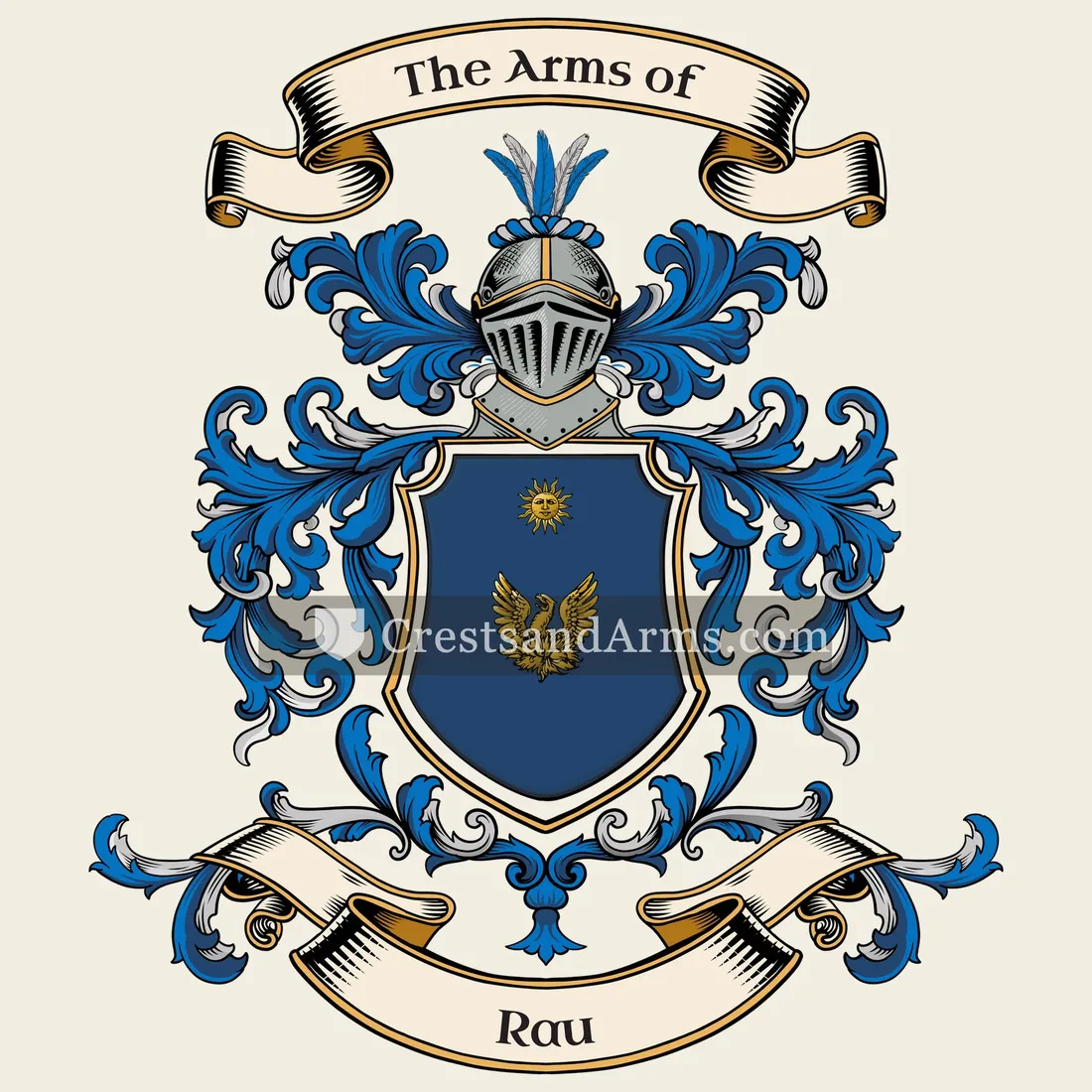
Meaning of the Rau family crest colors & symbols
Symbols on this shield
phoenixRebirth, and survival through fire
sunGlory, splendour and the source of life
Colours
Blue (Azure)Means: Loyalty and truth
Gold (Or)Means: Generosity
Historical info
Source
J. B. Rietstap, Armorial Général, Gouda: G. B. van Goor Zonen, 1884–87
Blazon (the actual original written record)
“D'azur à un phénix d'or sur son immortalité de gu., fixant un soleil d'or, mouv. du canton dextre du chef.”
SicilySicily, c. 1775
Digital archive packCoat of arms PNG, gold border print PDF, vector SVG and the certificate of authenticity. Sent to your email in minutes.
Map of Italy showing where the Rau arms are recorded
The Rau arms were recorded in Sicily, c. 1775.
Sicily was ruled in turn by Normans, Germans, French and Spanish, and each left landed families behind. The island kept formal lists of its noble houses, which is why so many Sicilian names carry recorded arms.
This is where the arms were entered in the register. Families often moved to other parts of the country, so the same name can turn up in more than one region.
The body that granted and recorded arms in Italy in this period.
Alvise Giovanni Mocenigo
Sovereign of the period
Alvise Giovanni Mocenigo
1763–1778
Reigning in Netherlands when the Rau arms are first recorded.
How Arms Worked in Italy
In the Italian states, coats of arms were often used by noble families to show their status and history. These symbols were passed down through the generations to all legitimate male descendants. Younger branches of a family usually kept the original design but sometimes added small changes to distinguish their specific line from the main branch.
Granting authority
Various local rulers and city governments controlled the use of coats of arms across the different Italian states.
How they got arms
Families often assumed their own arms or received them as official grants from local lords, popes, or city councils.
Where arms were recorded
Arms were recorded in local city archives or private family books rather than in one single national register.
The family's standing
Recorded among the armigerous families of Sicily.
Origin & History of the Rau Family in Italy
The history of the Rau family in Italy is deeply rooted in the cultural landscape of Sicily, where documented records confirm their presence by the year 1775. While the name Rau is often associated with Germanic origins, its migration into the Mediterranean suggests a family that moved across borders to establish new roots in Southern Europe. During the late eighteenth century, Sicily served as a crossroads for trade and administration, providing a stable environment for families to integrate into local society. Members of the Rau family during this period were likely involved in the agricultural or merchant classes that defined the island economy. By settling in Sicily, the family became part of the long tradition of diverse lineages that shaped the island's unique social fabric. Their presence in official records from this era highlights a transition from transient settlers to established residents who contributed to the local community for generations.
Rau Meaning & Related Branches
Root word
Rau
Derived from the Middle High German word for rough or hairy.
This name
RauA descriptive nickname for a person with a rough appearance or coarse hair.
also spelled
Reau
Rea
Row
Related arms
de Langesimilar arms
Fénissimilar arms
Gramsimilar arms
Réauvariant spelling
Documented Sources
J. B. Rietstap, Armorial Général, Gouda: G. B. van Goor Zonen, 1884–87
Gelders Archief, Burgerlijke Stand Gelderland (Civil Registry of Guelders)


 mulletThe third son, and a divine quality from above
 wingSwiftness, and protection under a raised wing
 mulletThe third son, and a divine quality from above
 wingSwiftness, and protection under a raised wing


 roseThe seventh son, and beauty with grace


 phoenixRebirth, and survival through fire
 sunGlory, splendour and the source of life