A record of documented arms, meaning and origin, researched for the Rauh family lines. Documented in 3 countries.
Reg. 9727 · Dutch, P–S
Meaning of the Rauh family crest colors & symbols
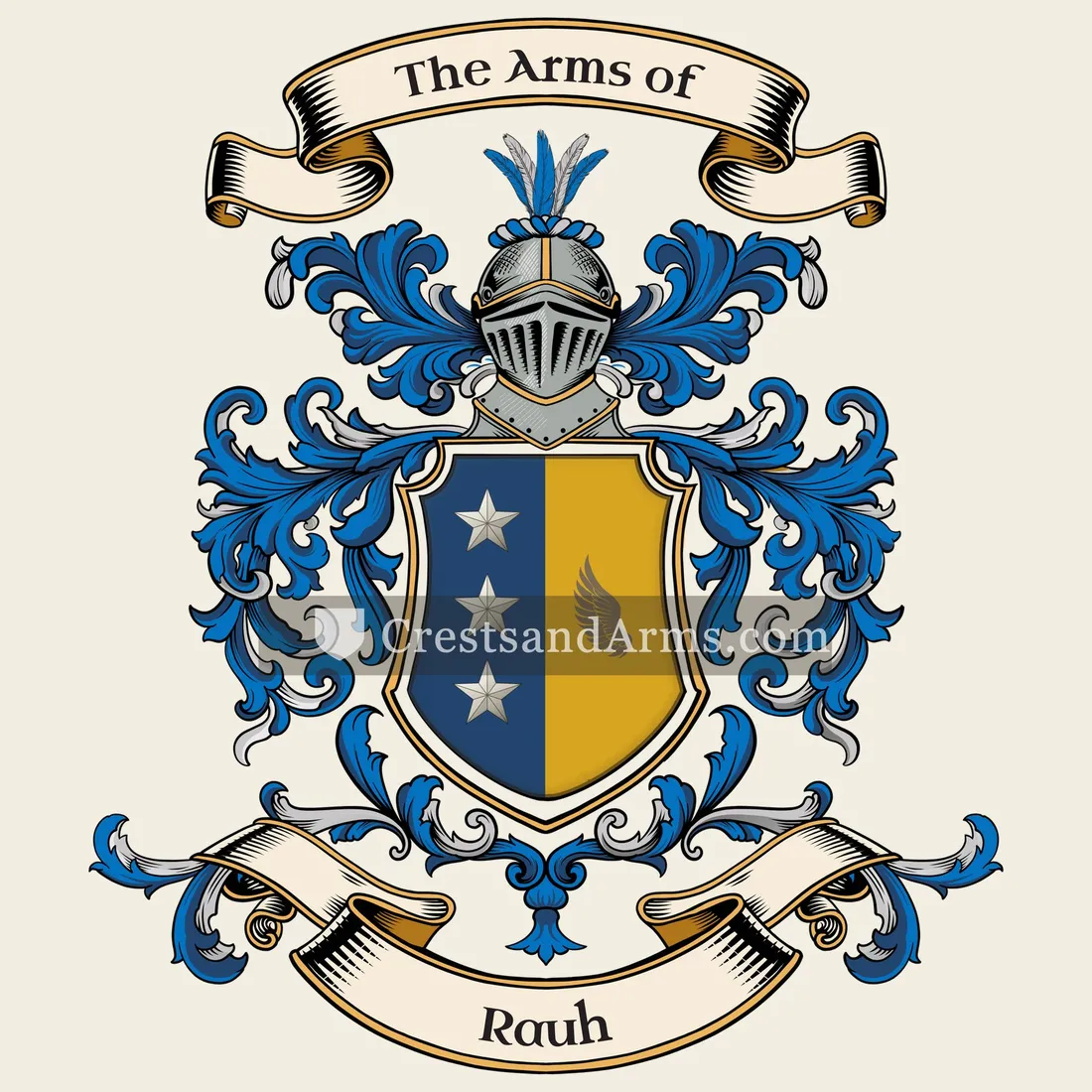
Symbols on this shield
mulletThe third son, and a divine quality from above
wingSwiftness, and protection under a raised wing
Colours
Blue (Azure)Means: Loyalty and truth
Gold (Or)Means: Generosity
Silver (Argent)Means: Peace and sincerity
Historical info
Source
J. B. Rietstap, Armorial Général, Gouda: G. B. van Goor Zonen, 1884–87
Blazon (the actual original written record)
“Parti: au 1 d'azur à trois étoiles d'arg., rangées en pal; au 2 d'or à un demi-vol au nat. [Armes du professeur Sebaldus R., décédé le 10 janv. 1818.]”
GueldersGuelders, c. 1815
Digital archive packCoat of arms PNG, gold border print PDF, vector SVG and the certificate of authenticity. Sent to your email in minutes.
Map of Netherlands showing where the Rauh arms are recorded
The Rauh arms were recorded in Guelders, c. 1815.
Guelders was river country in the east of the Netherlands, held by families whose estates sat along the water. Land there stayed in the same hands for generations, and long tenure is what fills a register of arms.
This is where the arms were entered in the register. Families often moved to other parts of the country, so the same name can turn up in more than one region.
Region
Guelders
First recorded
1815
Granting Authority for the Rauh Arms
Hoge Raad van Adel
Photograph made by me · CC BY-SA 3.0
The body that granted and recorded arms in Netherlands in this period.
William I of the Netherlands
Sovereign of the period
William I of the Netherlands
1815–1840
Reigning in Netherlands when the Rauh arms are first recorded.
How Arms Worked in Netherlands
In the Netherlands, coats of arms were often used by noble families and those who held specific public offices. These arms were passed down through the generations to legitimate descendants. Younger branches of a family usually kept the original design without needing to add special marks. This system ensured that the family identity remained clear and consistent over many years.
Granting authority
The Hoge Raad van Adel is the official body that regulates and manages noble titles and coats of arms in the Netherlands.
How they got arms
Families typically obtained their coats of arms through official royal grants or by proving their long-standing historical use of the symbols.
Where arms were recorded
Coats of arms are officially recorded in the registers held by the Hoge Raad van Adel, which began its work in 1814.
The family's standing
Recorded among the armigerous families of Guelders.
Origin & History of the Rauh Family in Netherlands
The family name Rauh has deep roots in the region of Guelders, a province in the eastern Netherlands where members of the family were officially documented as early as 1815. The name itself is of Germanic origin and often relates to the Middle High German word *ruh*, which describes someone with a rough or untamed nature, or perhaps someone who lived in a rugged, forested area. During the early nineteenth century, the Netherlands underwent significant administrative changes following the Napoleonic era, which led to more formal record-keeping for families living in provinces like Guelders. Because this region served as a crossroads for trade and migration between the Dutch territories and the German states, the Rauh family likely settled there as part of the movement of people across these porous borders. By the time the family appeared in the 1815 records, they were already integrated into the local community, reflecting the broader history of families who moved across Northern Europe to find new opportunities in the changing Dutch landscape.
Meaning of the Rauh family crest colors & symbols
Symbols on this shield
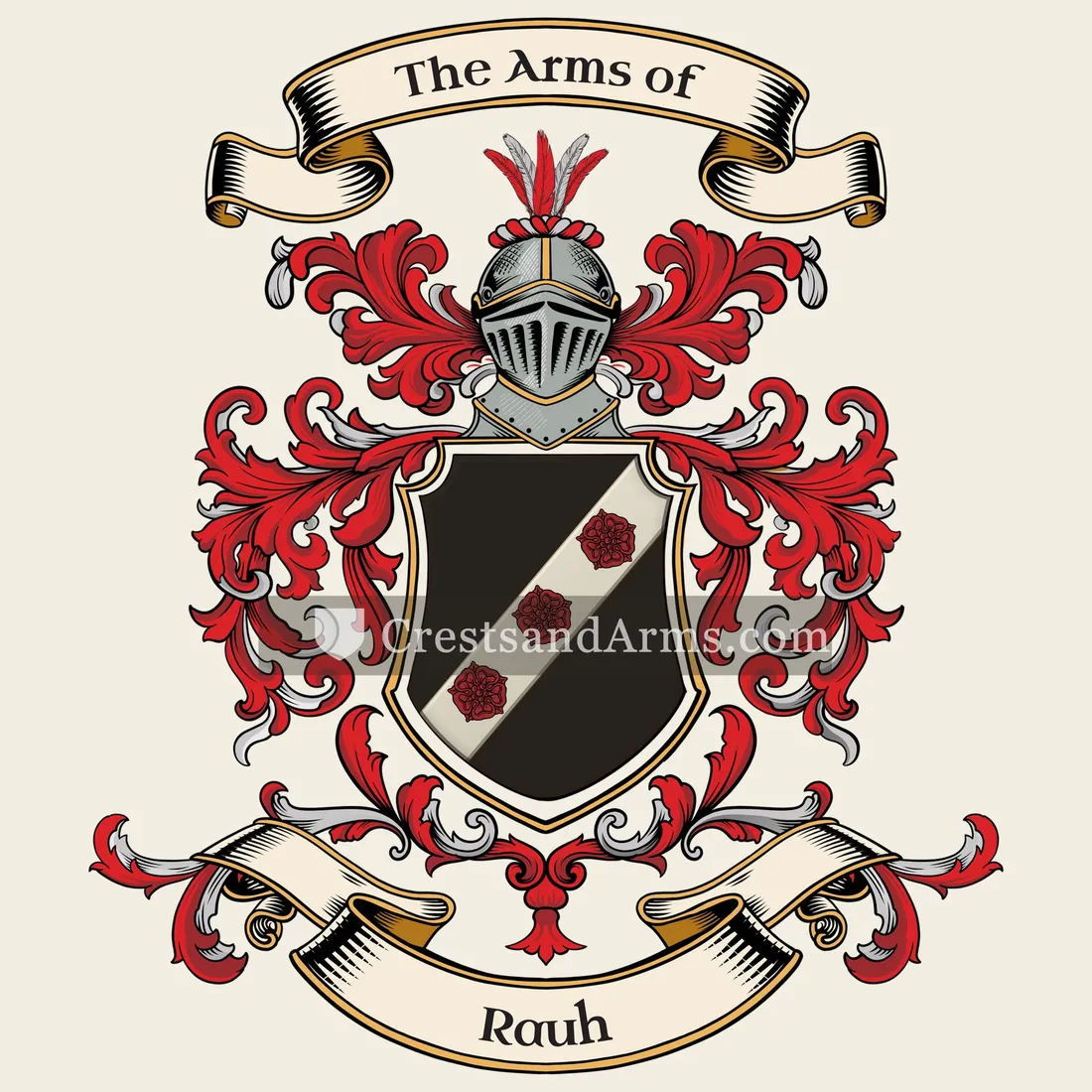
roseThe seventh son, and beauty with grace
Colours
Black (Sable)Means: Constancy
Silver (Argent)Means: Peace and sincerity
Red (Gules)Means: Military strength
Historical info
Source
J. B. Rietstap, Armorial Général, Gouda: G. B. van Goor Zonen, 1884–87
Blazon (the actual original written record)
“De sa. à la barre d'arg., ch. de trois roses de gu. Cq. cour. C.: un demi-vol, aux armes de l'écu.”
SaxonySaxony, c. 1790
Digital archive packCoat of arms PNG, gold border print PDF, vector SVG and the certificate of authenticity. Sent to your email in minutes.
Map of Germany showing where the Rauh arms are recorded
The Rauh arms were recorded in Saxony, c. 1790.
Saxony had mines, trade and old landed families all at once. Silver made some fortunes and land held others, and both sorts of family kept arms, which is why Saxon names appear so often in the registers.
This is where the arms were entered in the register. Families often moved to other parts of the country, so the same name can turn up in more than one region.
The body that granted and recorded arms in Germany in this period.
Joseph II, Holy Roman Emperor
Sovereign of the period
Joseph II, Holy Roman Emperor
1765–1790
Reigning in Netherlands when the Rauh arms are first recorded.
How Arms Worked in Germany
In the Holy Roman Empire, coats of arms were often granted to individuals by the Emperor or his representatives. These arms were then passed down through the generations to all legitimate descendants of the original holder. Younger branches of a family usually kept the same shield design without needing to change it, as the arms belonged to the entire lineage.
Granting authority
The Holy Roman Emperor held the sole power to grant new coats of arms throughout his vast imperial territories.
How they got arms
Families typically obtained their coats of arms through a formal imperial grant or by proving their noble status to the authorities.
Where arms were recorded
These grants were officially recorded in the Imperial Chancery registers, which began keeping formal records of such honors during the Middle Ages.
The family's standing
Recorded among the armigerous families of Saxony.
Origin & History of the Rauh Family in Germany
The surname Rauh originates from the Middle High German word *ruh*, which translates to rough or shaggy. During the Middle Ages, this name was typically used as a descriptive nickname for a person with a rugged appearance, a coarse personality, or perhaps someone who wore untamed, hairy clothing. By the time the family was firmly established in the region of Saxony around 1790, the name had transitioned from a simple descriptor into a formal hereditary surname. In the social landscape of 18th-century Saxony, families like the Rauhs were often part of the hardworking rural or artisan classes. They lived through a period of significant political change as the region transitioned from the influence of the Holy Roman Empire toward the modern German state. The name reflects a history rooted in the everyday lives of common people who helped shape the cultural and agricultural identity of the Saxon landscape.
Meaning of the Rauh family crest colors & symbols
Symbols on this shield
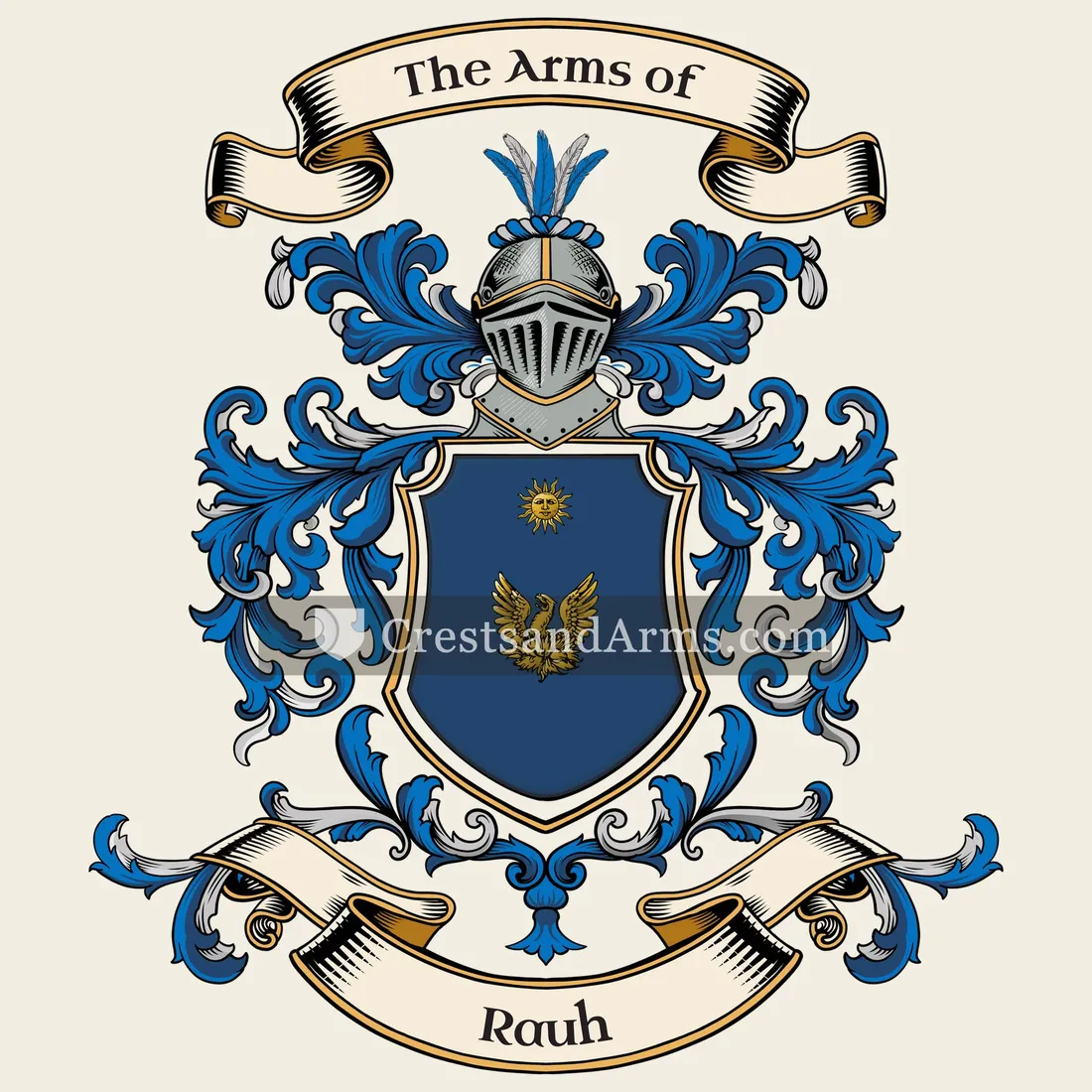
phoenixRebirth, and survival through fire
sunGlory, splendour and the source of life
Colours
Blue (Azure)Means: Loyalty and truth
Gold (Or)Means: Generosity
Historical info
Source
J. B. Rietstap, Armorial Général, Gouda: G. B. van Goor Zonen, 1884–87
Blazon (the actual original written record)
“D'azur à un phénix d'or sur son immortalité de gu., fixant un soleil d'or, mouv. du canton dextre du chef.”
SicilySicily, c. 1775
Digital archive packCoat of arms PNG, gold border print PDF, vector SVG and the certificate of authenticity. Sent to your email in minutes.
Map of Italy showing where the Rauh arms are recorded
The Rauh arms were recorded in Sicily, c. 1775.
Sicily was ruled in turn by Normans, Germans, French and Spanish, and each left landed families behind. The island kept formal lists of its noble houses, which is why so many Sicilian names carry recorded arms.
This is where the arms were entered in the register. Families often moved to other parts of the country, so the same name can turn up in more than one region.
The body that granted and recorded arms in Italy in this period.
Alvise Giovanni Mocenigo
Sovereign of the period
Alvise Giovanni Mocenigo
1763–1778
Reigning in Netherlands when the Rauh arms are first recorded.
How Arms Worked in Italy
In the Italian states, coats of arms were often used by noble families to show their status and history. These symbols were passed down through the generations to all legitimate male descendants. Younger branches of a family usually kept the original design but sometimes added small changes to distinguish their specific line from the main branch.
Granting authority
Various local rulers and city governments controlled the use of coats of arms across the different Italian states.
How they got arms
Families often assumed their own arms or received them as official grants from local lords, popes, or city councils.
Where arms were recorded
Arms were recorded in local city archives or private family books rather than in one single national register.
The family's standing
Recorded among the armigerous families of Sicily.
Origin & History of the Rauh Family in Italy
The history of the Rauh family in Italy is deeply tied to the social and cultural landscape of Sicily during the late eighteenth century. By 1775, members of the family were already established within the island’s complex administrative and social structures. During this period, Sicily was a crossroads of Mediterranean influence, and families like the Rauhs often navigated the transition between local landholding traditions and the shifting political oversight of the Bourbon monarchy. The name itself suggests roots that likely moved across European borders before settling into the Italian peninsula, where the family integrated into the local economy and community life. Their presence in official records from this era indicates that they were recognized participants in the regional development of Sicily, contributing to the unique blend of cultural identities that defined the island during the Enlightenment.
Rauh Meaning & Related Branches
Root word
Rau
Middle High German term for rough, shaggy, or unkempt.
This name
RauhA descriptive nickname for a person with a rough appearance or coarse hair.
also spelled
Reau
Rea
Row
Documented Sources
J. B. Rietstap, Armorial Général, Gouda: G. B. van Goor Zonen, 1884–87
Gelders Archief, Burgerlijke Stand Gelderland, Geboorte-, huwelijks- en overlijdensakten
Beiderbecke, F., Etymologisches Wörterbuch der deutschen Familiennamen, 2005
Van Berkel, G. and Samplonius, K., Nederlandse plaatsnamen verklaard, 2018
Digital archive packCoat of arms PNG, gold border print PDF, vector SVG and the certificate of authenticity. Sent to your email in minutes.


 mulletThe third son, and a divine quality from above
 wingSwiftness, and protection under a raised wing
 mulletThe third son, and a divine quality from above
 wingSwiftness, and protection under a raised wing


 roseThe seventh son, and beauty with grace


 phoenixRebirth, and survival through fire
 sunGlory, splendour and the source of life