Map of England showing where the Ready arms are recorded
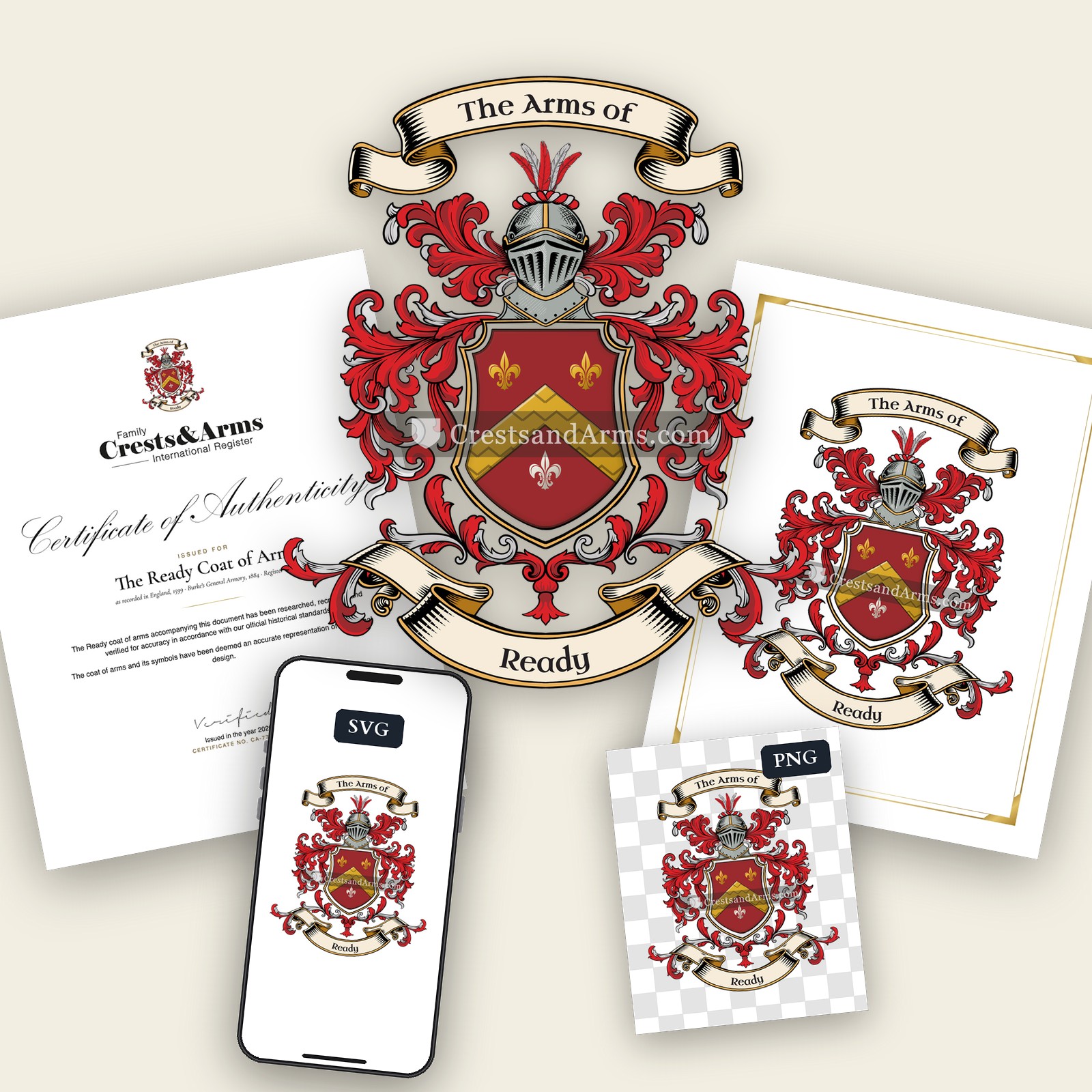
The Ready arms were recorded in London, c. 1599.
This is where the arms were entered in the register. Families often moved to other parts of the country, so the same name can turn up in more than one region.
The body that granted and recorded arms in England in this period.
Elizabeth I of England
Sovereign of the period
Elizabeth I of England
1558–1603
Reigning in England when the Ready arms are first recorded.
How Arms Worked in England
English heraldry allowed arms to be shared by all legitimate descendants of the original owner. These symbols were treated as personal property that moved through the generations to all children. While the eldest son kept the original design, other family members could use the same shield without needing to change it or register their own unique versions.
Granting authority
The College of Arms in London has regulated the use of coats of arms throughout England and Wales since 1484.
How they got arms
Families typically obtained their coats of arms through a formal grant from the Crown or by proving their ancient right to them.
Where arms were recorded
All official coats of arms are recorded in the registers kept at the College of Arms, which date back to the fifteenth century.
The family's standing
Recorded among the armigerous families of England.
Origin & History of the Ready Family in England
The surname Ready emerged in England as a descriptive nickname, likely used to identify someone who was quick, prompt, or prepared in their daily affairs. By the late sixteenth century, the name was firmly established in the bustling environment of London. Records show that members of the Ready family were active residents of the city by 1599, living among the merchants, tradespeople, and laborers who defined the capital during the reign of Queen Elizabeth I. As London grew into a global center for trade and culture, families like the Readys integrated into the urban fabric, contributing to the city’s rapid expansion. The name reflects a time when surnames were often derived from personal traits, serving as a permanent reminder of the qualities that early ancestors were known for within their local communities.
Meaning of the Ready family crest colors & symbols
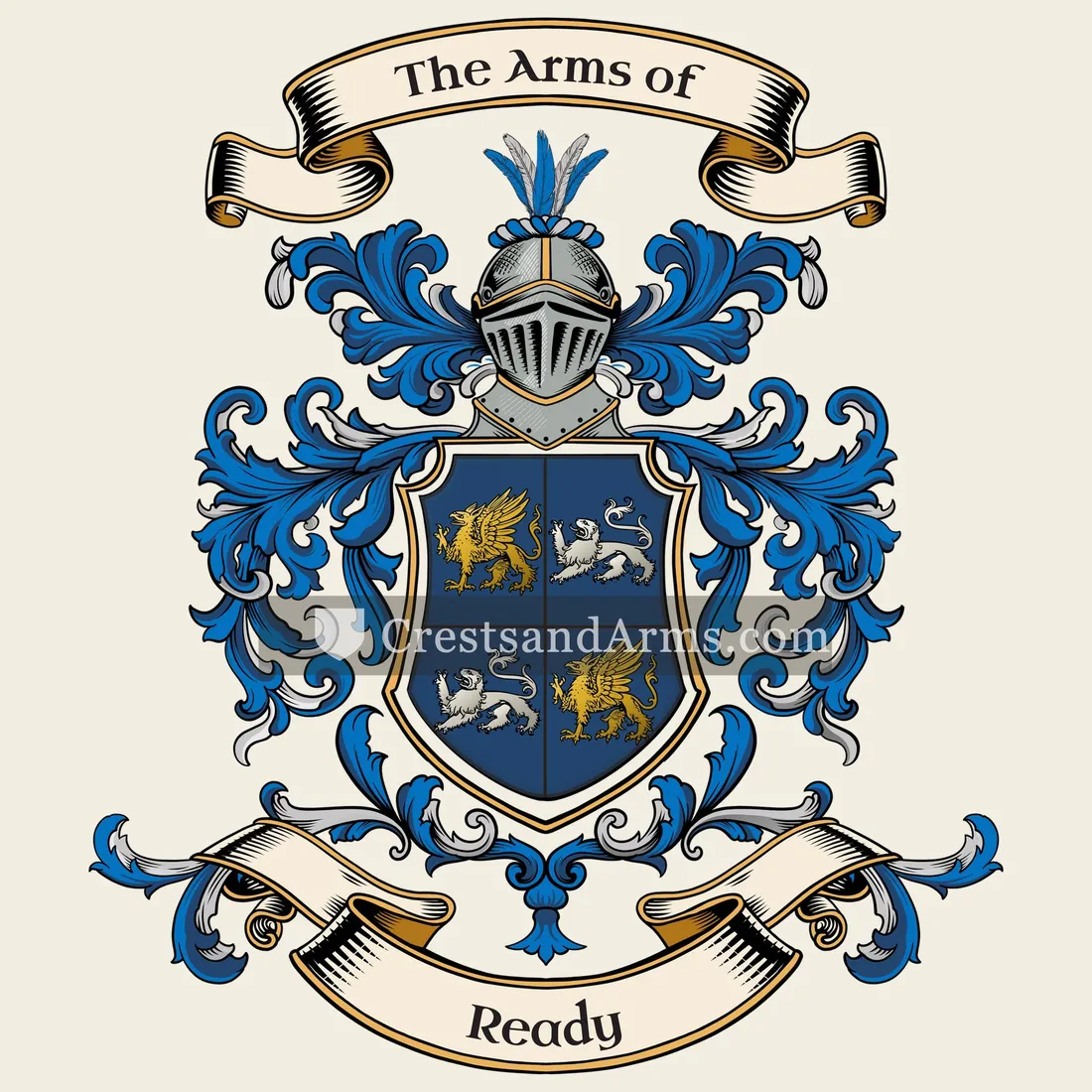
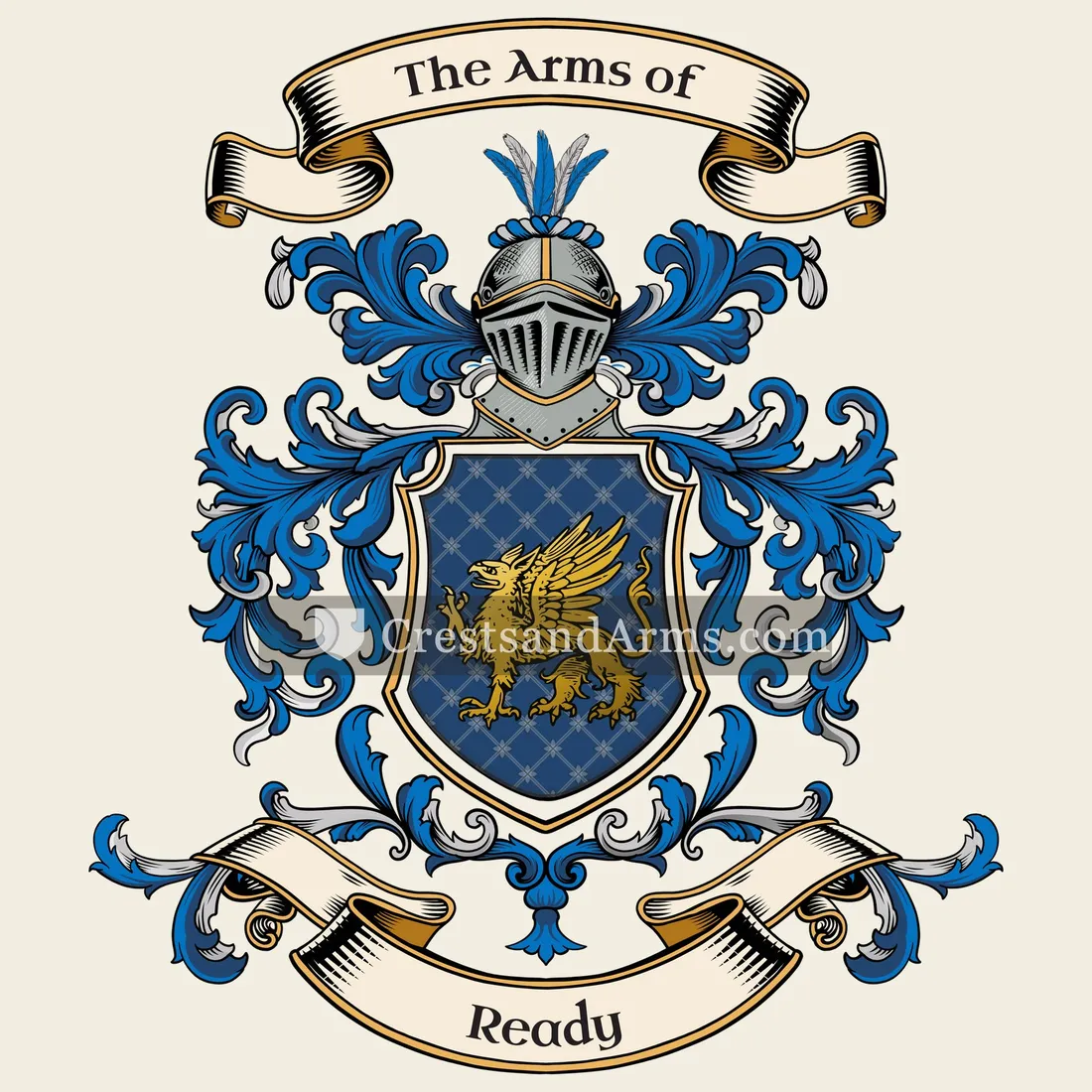
Symbols on this shield
griffinValour and vigilance, guarding great treasure
Colours
Blue (Azure)Means: Loyalty and truth
Gold (Or)Means: Generosity
Historical info
Source
Sir Bernard Burke, The General Armory of England, Scotland, Ireland and Wales, London: Harrison & Sons, 1884
Blazon (the actual original written record)
“Az. a griffin segreant or”
MeathDunboyne · Meath, c. 1715
Digital archive packCoat of arms PNG, gold border print PDF, vector SVG and the certificate of authenticity. Sent to your email in minutes.
Map of Ireland showing where the Ready arms are recorded
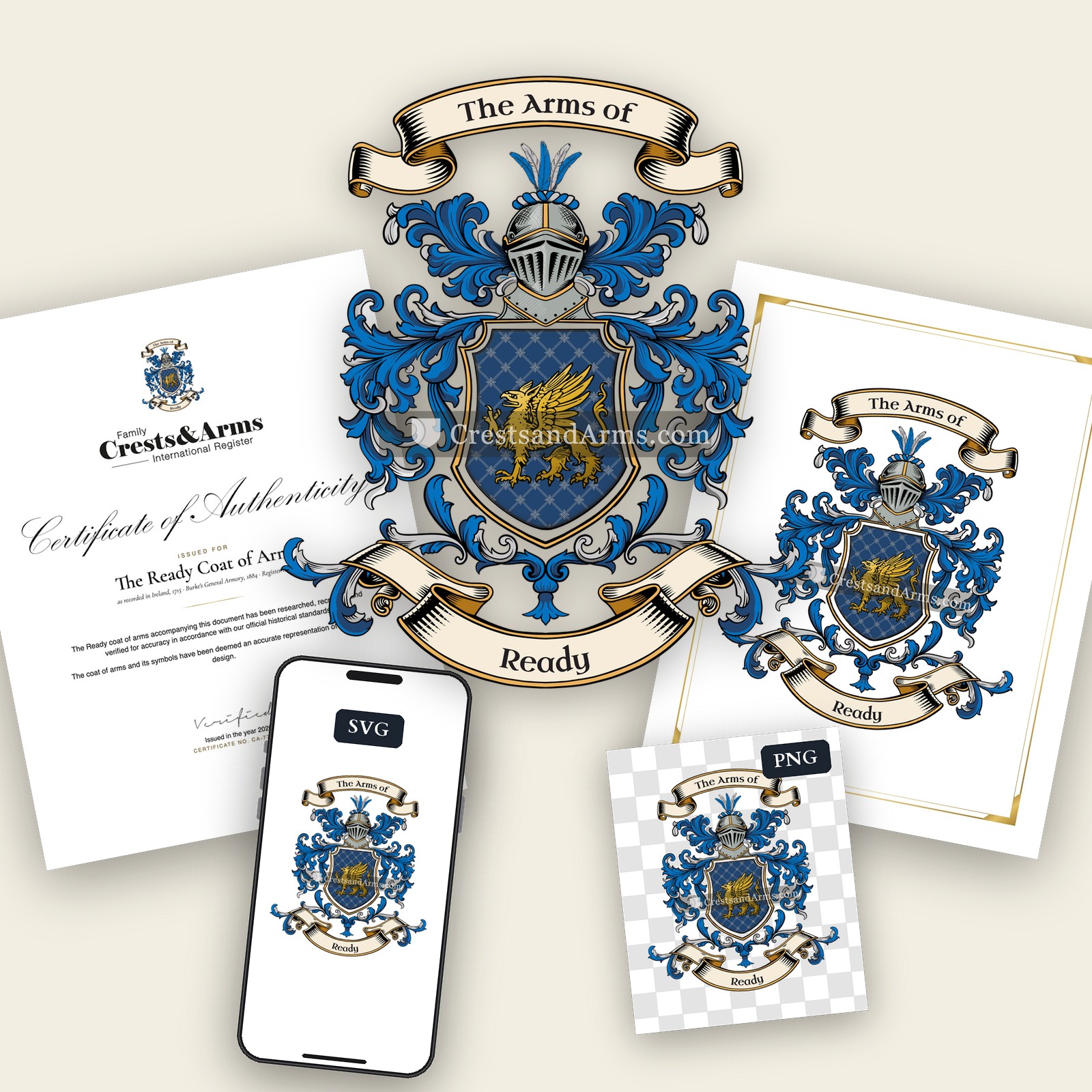
The Ready arms were recorded in Meath, c. 1715.
Meath was the best farmland in Ireland and the old seat of its high kings. Norman families took it early and held it, and land of that quality kept the same families on it for centuries.
This is where the arms were entered in the register. Families often moved to other parts of the country, so the same name can turn up in more than one region.
The body that granted and recorded arms in Ireland in this period.
George I of Great Britain
Sovereign of the period
George I of Great Britain
1714–1727
Reigning in England when the Ready arms are first recorded.
How Arms Worked in Ireland
The Ulster King of Arms granted coats of arms to individuals who proved their social standing and good character. These symbols were typically inherited by all legitimate descendants of the original holder. If a family branch wanted a unique look, they could apply for a specific change to their design through the office to ensure their identity remained distinct.
Granting authority
The Ulster King of Arms acted as the official body that regulated and issued all coats of arms throughout Ireland.
How they got arms
Families obtained their arms through formal grants issued by the office after proving their eligibility and paying the required fees.
Where arms were recorded
All official grants were recorded in the registers held by the Ulster King of Arms starting from the year 1552.
The family's standing
Recorded among the armigerous families of Meath.
Origin & History of the Ready Family in Ireland
The surname Ready in Ireland is primarily associated with the anglicization of the Gaelic name Ó Rodaigh, which translates to a descendant of the spirited or red-haired one. While the name has roots in various parts of the country, historical records confirm that members of the family were well-established in County Meath by 1715. During this period, the family lived in a region deeply influenced by the aftermath of the Williamite War and the implementation of the Penal Laws, which significantly altered land ownership and social structures for many Irish families. Living in Meath placed the Ready family in the heart of Ireland’s agricultural landscape, where they likely navigated the complex tenant farming systems of the early eighteenth century. As they settled into the local community, the family name became a permanent fixture in the parish records of the region, reflecting the broader movement of families transitioning from traditional Gaelic structures to the evolving administrative systems of the time.
Meaning of the Ready family crest colors & symbols
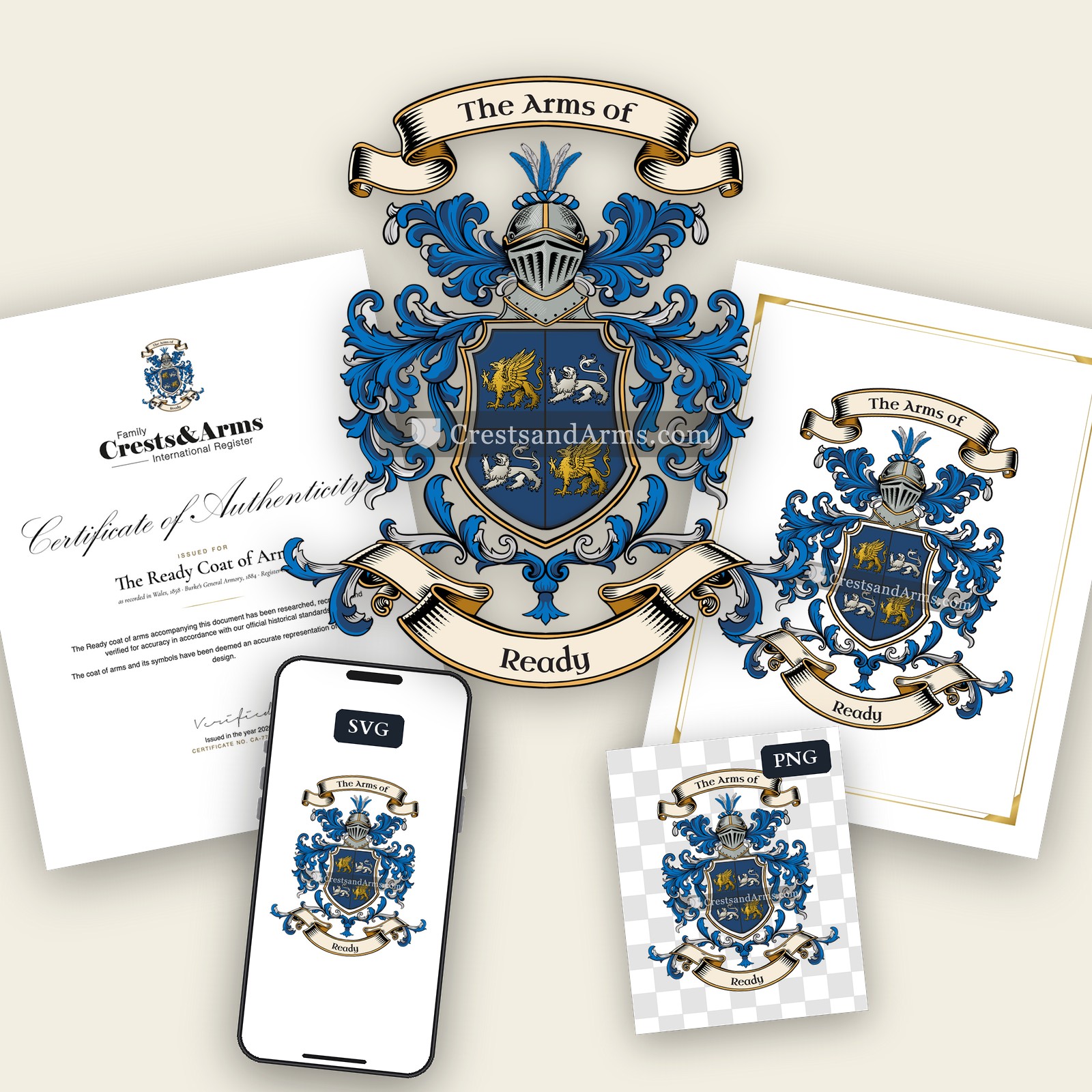
Symbols on this shield
griffinValour and vigilance, guarding great treasure
lionCourage, strength and royalty
Colours
Blue (Azure)Means: Loyalty and truth
Gold (Or)Means: Generosity
Silver (Argent)Means: Peace and sincerity
Historical info
Source
Sir Bernard Burke, The General Armory of England, Scotland, Ireland and Wales, London: Harrison & Sons, 1884
Blazon (the actual original written record)
“Quarterly, 1st and 4th, az. a griffin segreant or, for READ; 2nd and 3rd, az. a lion ramp. ar., for CREWE”
MontgomeryLlandinam Hall · Montgomery, c. 1858
Digital archive packCoat of arms PNG, gold border print PDF, vector SVG and the certificate of authenticity. Sent to your email in minutes.
Map of Wales showing where the Ready arms are recorded
The Ready arms were recorded in Montgomery, c. 1858.
Montgomeryshire was mid-Welsh border country where land was held in return for keeping it quiet. Families were expected to arm, and an armed household carried a shield.
This is where the arms were entered in the register. Families often moved to other parts of the country, so the same name can turn up in more than one region.
The body that granted and recorded arms in Wales in this period.
Victoria
Sovereign of the period
Victoria
1837–1901
Reigning in England when the Ready arms are first recorded.
How Arms Worked in Wales
English heraldry allowed arms to be shared by all legitimate descendants of the original owner. These symbols were treated as personal property that moved through the generations to all children. While the eldest son kept the original design, other family members could use the same shield without needing to change it or register their own unique versions.
Granting authority
The College of Arms in London has regulated the use of coats of arms throughout England and Wales since 1484.
How they got arms
Families typically obtained their coats of arms through a formal grant from the Crown or by proving their ancient right to them.
Where arms were recorded
All official coats of arms are recorded in the registers kept at the College of Arms, which date back to the fifteenth century.
The family's standing
Recorded among the armigerous families of Montgomery.
Origin & History of the Ready Family in Wales
The surname Ready is primarily recognized as an anglicized version of the Welsh name Rheddyg, which carries roots tied to the descriptive qualities of an individual. In the context of Welsh history, names often evolved from nicknames that highlighted a person's physical traits or their readiness to act. By the mid-19th century, families bearing this name were well-established in the border county of Montgomeryshire. The presence of the family in Montgomery by 1858 suggests they were part of the local agricultural or trade communities that defined the region during the Victorian era. As the Welsh language gradually shifted toward English usage in administrative records, the spelling of the name stabilized into its modern form. This transition reflects the broader cultural integration of Welsh families into the wider British social structure during the 1800s.
Ready Meaning & Related Branches
Root word
Raed
Old English word meaning prepared or prompt.
This name
ReadyA descriptive nickname for a person who was quick, alert, or well-prepared.
also spelled
Reed
Rede
Documented Sources
Sir Bernard Burke, The General Armory of England, Scotland, Ireland and Wales, London: Harrison & Sons, 1884
Bardsley, Charles Wareing. A Dictionary of English and Welsh Surnames. 1901
Reaney, P.H. A Dictionary of British Surnames. 1958
The National Archives, Kew. Prerogative Court of Canterbury and Related Probate Jurisdictions: Will Registers, PROB 11
Digital archive packCoat of arms PNG, gold border print PDF, vector SVG and the certificate of authenticity. Sent to your email in minutes.


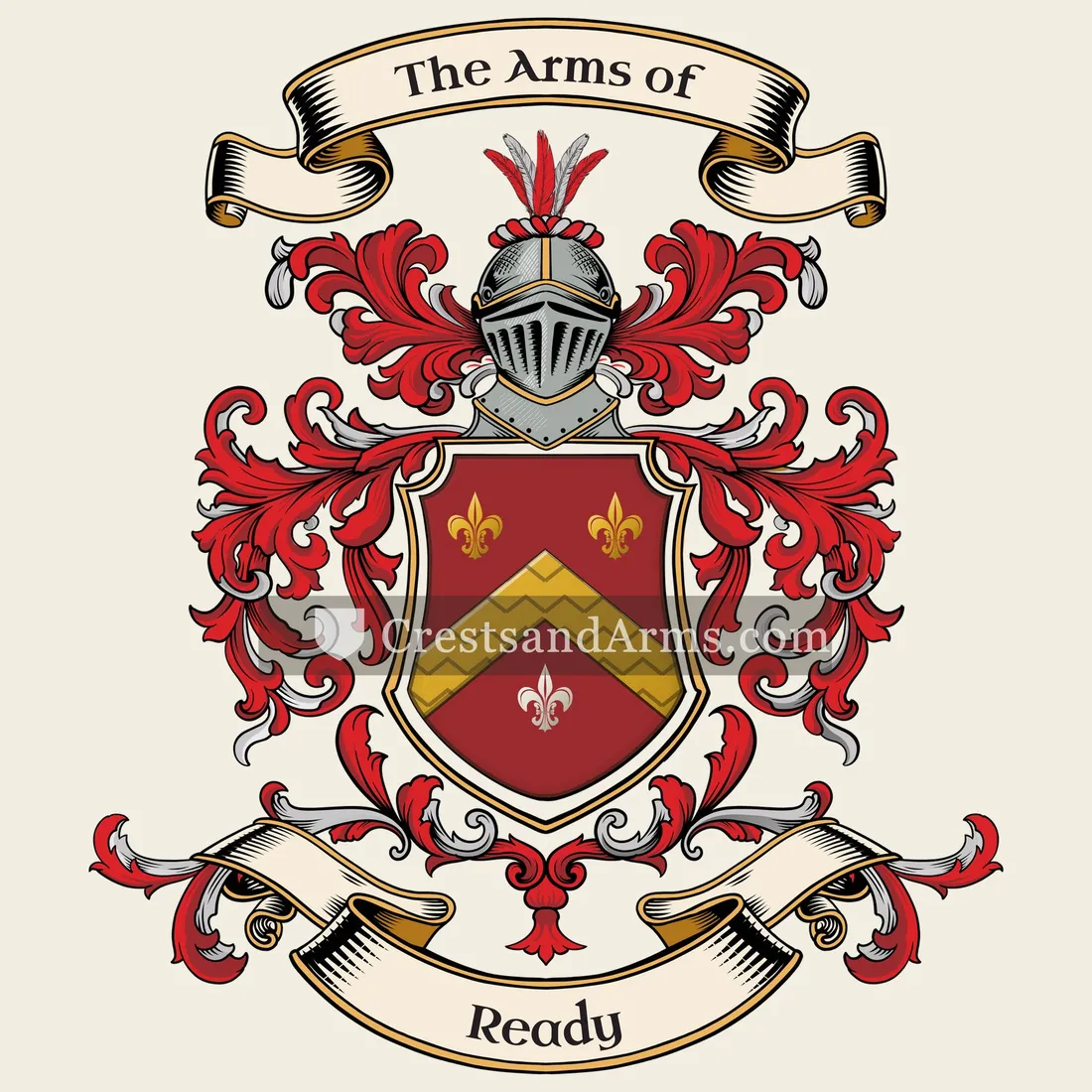
 chevronProtection, and faithful service completed
 fleur de lisPurity, light, and the sixth son
 chevronProtection, and faithful service completed
 fleur de lisPurity, light, and the sixth son


 griffinValour and vigilance, guarding great treasure


 lionCourage, strength and royalty