Map of Spain showing where the Reca arms are recorded
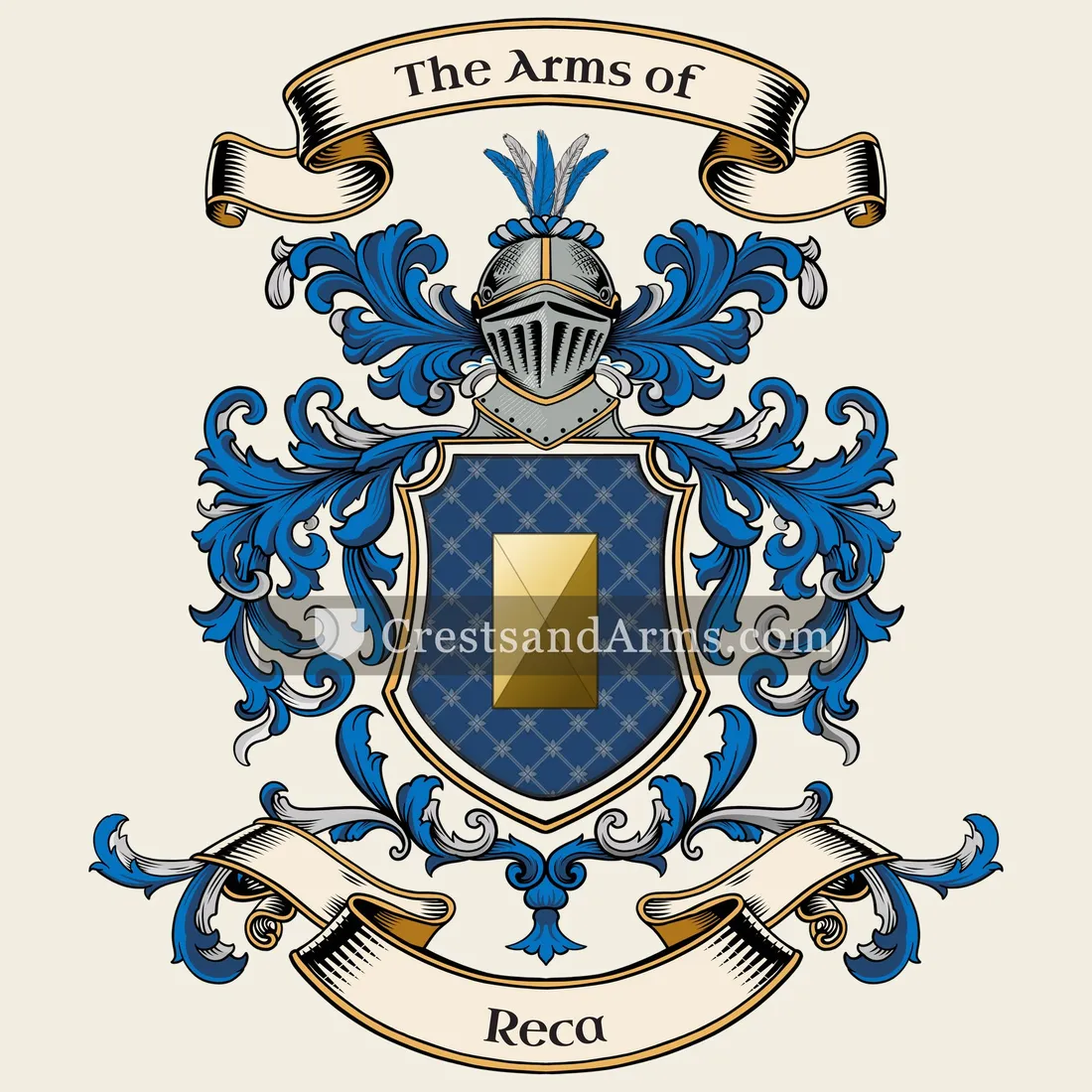
The Reca arms were recorded in Spain, c. 1722.
Arms such as these were typically recorded in Castile.
Castile was the heart of Spain and the source of most of its noble families. Land won in the long wars against the Moors was granted out to fighting men, and a man granted land was granted arms along with it.
This is where the arms were entered in the register. Families often moved to other parts of the country, so the same name can turn up in more than one region.
The body that granted and recorded arms in Spain in this period.
Philip V of Spain
Sovereign of the period
Philip V of Spain
1714–1724
Reigning in Spain when the Reca arms are first recorded.
How Arms Worked in Spain
In Spain, a coat of arms was considered a form of property that belonged to the entire family line. These arms were passed down from a father to all his children equally. Younger branches of the family usually kept the original design without needing to add any special marks to distinguish their specific line.
Granting authority
The Cronista Rey de Armas was the official body that regulated and granted coats of arms throughout Spain.
How they got arms
Families often obtained their arms through royal grants or by proving their noble status to the official heraldic authority.
Where arms were recorded
Coats of arms were officially recorded in the registers of the Cronista Rey de Armas starting in 1496.
The family's standing
Recorded among the armigerous families of Spain.
Origin & History of the Reca Family in Spain
The family name Reca finds its historical roots in the rugged landscape of northern Spain. By the year 1722, records confirm that members of the family were established within the Kingdom of Castile. During this period, Castile was the heart of the Spanish Empire, and families living there often played vital roles in local agriculture, trade, or regional administration. The name itself likely evolved from local geographic markers or descriptive terms used to identify people living near specific landmarks in the countryside. As the family grew, they became part of the social fabric of the Castilian provinces, contributing to the development of their local communities through generations of work and civic life. Their presence in 18th-century records suggests they were settled, land-holding, or professional individuals who helped shape the identity of their home region during a time of significant cultural change in Spain.
Reca Meaning & Related Branches
Root word
Reccaredus
Derived from Germanic elements meaning advice or counsel and strong or brave.
This name
RecaA patronymic or toponymic surname likely originating from Visigothic roots denoting wise strength.
also spelled
Rocca
Roka
Rock
Documented Sources
J. B. Rietstap, Armorial Général, Gouda: G. B. van Goor Zonen, 1884–87
Archivo de la Real Chancillería de Valladolid, Registro de Ejecutorias
Ministerio de Cultura y Deporte, Catálogo de la Sección Nobleza del Archivo Histórico Nacional
Digital archive packCoat of arms PNG, gold border print PDF, vector SVG and the certificate of authenticity. Sent to your email in minutes.


 billetThe sealed letter, and a message delivered
 billetThe sealed letter, and a message delivered